Spa Massage vs. Hilot Binabaylan Treatment: Reclaiming Indigenous Wisdom for Optimal Health and Wellness

Introduction

In today’s fast-paced world, people increasingly seek ways to restore balance, relieve stress, and maintain overall health. Two common approaches to bodywork and healing are modern spa massage and the traditional Filipino practice of Hilot Binabaylan. While both involve touch and therapeutic intent, they differ profoundly in philosophy, process, and impact.

This article explores these differences and highlights why Indigenous Filipino healing arts, particularly Hilot Binabaylan, offer a deeper and more holistic pathway toward optimal health and wellness.

Understanding the Two Systems

Spa Massage

Spa massage is part of the global wellness industry. It is:

  • Client-driven (the client chooses the service)
  • Designed primarily for relaxation, stress relief, and muscle tension release
  • Standardized and often commercialized
  • Focused mainly on the physical body

It operates within a service model: the client pays for a predefined experience.

Hilot Binabaylan Treatment

Hilot Binabaylan is an indigenous Filipino system of healing rooted in ancestral knowledge and spiritual tradition.

It is:

  • Healer-guided (the Manghihilot diagnoses and prescribes treatment)
  • Holistic, addressing body, mind, energy, spirit, and environment
  • Ritual-based and culturally grounded
  • A sacred encounter, not merely a service

It operates within a healing relationship, where the Manghihilot serves as a mediator of balance and harmony.

Key Differences in Practice

1. Decision-Making and Authority

Spa MassageHilot Binabaylan
Client chooses treatmentManghihilot determines treatment after diagnosis
Preference-basedCondition-based

Insight:
Hilot recognizes that the body’s needs are not always consciously known by the client. Healing requires discernment, not preference.

2. Assessment and Diagnosis

Spa Massage:

  • Brief consultation
  • Focus on pain areas or desired pressure

Hilot Binabaylan:

  • Comprehensive diagnostic system:
    • Pasubay (Finger Alignment)
    • Tudluan (Poking Assessment)
    • Pulse Reading
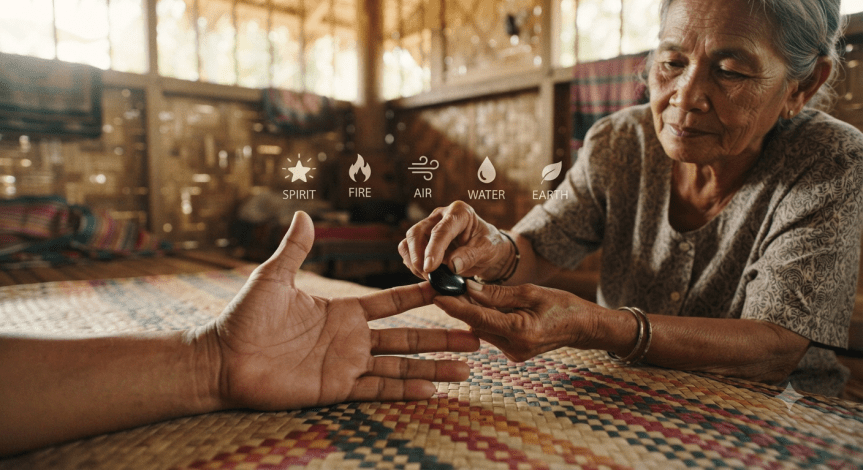
    • Sensory observation (5 senses)
  • Energetic, physical, and intuitive evaluation

Insight:
Hilot treats the root cause, not just the symptoms—bridging physical and energetic imbalances.

3. Preparation and Cleansing

Spa Massage:

  • Optional shower or foot soak
  • Focus on hygiene and comfort

Hilot Binabaylan:

  • Ritual cleansing is essential:
    • Foot cleansing (spiritual grounding and purification)
    • Punas (wiping away negative energy)
    • Suob (herbal steaming)
    • Paligo with hilod (deep cleansing)

Insight:
Hilot acknowledges that illness may arise from energetic and environmental impurities, not just physical strain.

4. Treatment Approach

Spa Massage:

  • Uses a single modality (e.g., Swedish, deep tissue)
  • Focus on muscle relaxation

Hilot Binabaylan:

  • Multi-layered approach based on diagnosis:
    • Pagsasala (leaf scanning)
    • Bentusa (cupping)
    • Dagdagay (pressure stick therapy)
    • Hilot masahe (manual manipulation)

Insight:
Hilot is adaptive and integrative, addressing multiple dimensions of imbalance simultaneously.

5. Role of the Body and Clothing

Spa Massage:

  • Often requires partial undressing
  • Direct skin contact is standard

Hilot Binabaylan:

  • Can be performed with clothing
  • Works through energy pathways and body awareness
  • Often begins in supine position (face up)

Insight:
Hilot affirms that healing is not dependent on exposure of the body, but on alignment and flow.

6. Spiritual and Cultural Dimension

Spa Massage:

  • Secular, commercial environment
  • Focus on ambiance and comfort

Hilot Binabaylan:

  • Sacred healing space
  • May include:
    • Prayer or invocation
    • Connection to Diwata and ancestral guidance
    • Respect for nature and elements

Insight:
Hilot restores the sacred relationship between human, nature, and spirit, often missing in modern wellness practices.

7. Aftercare and Integration

Spa Massage:

  • Water or tea
  • Minimal follow-up

Hilot Binabaylan:

  • Herbal tea and nourishment
  • Home care recommendations
  • Follow-up sessions

Insight:
Hilot is not a one-time relief—it is part of a continuing journey toward balance and transformation.

Why Hilot Binabaylan is Essential for Optimal Health and Wellness

1. Holistic Healing

Hilot addresses:

  • Physical pain
  • Emotional stress
  • Energetic imbalance
  • Spiritual disconnection

This leads to deeper and longer-lasting healing.

2. Preventive Care

Through early detection via Pasubay and pulse reading, Hilot can:

  • Identify imbalance before it becomes illness
  • Restore flow and harmony proactively

3. Cultural Identity and Ancestral Connection

Hilot reconnects individuals to:

  • Indigenous Filipino knowledge
  • Ancestral healing traditions
  • Cultural identity and pride

Healing becomes not only personal, but cultural restoration.

4. Energy Awareness and Balance

Unlike spa massage, Hilot recognizes:

  • Lamig (cold imbalance)
  • Bara (blockage)
  • Disruptions in life force (UliRat)

This expands healing beyond anatomy into vital energy systems.

5. Sacredness of Healing Space

Hilot transforms treatment into a:

  • Ritual of purification
  • Space of transformation
  • Act of reverence for life

Conclusion

While spa massage provides comfort and temporary relief, Hilot Binabaylan offers a more profound and transformative healing experience rooted in Indigenous Filipino wisdom.

  • Spa massage relaxes the body
  • Hilot Binabaylan restores the whole being

In reclaiming and practicing Hilot, we are not only healing individuals—we are:

  • Reviving ancestral knowledge
  • Strengthening cultural identity
  • Re-establishing harmony between humans, nature, and the unseen

Final Reflection

In the language of healing:

  • Spa asks: “What feels good right now?”
  • Hilot asks: “What must be restored for you to be whole?”

The Sanctity of the Hilot Binabaylan Lineage: Becoming an Instrument of the Divine

In the sacred path of Hilot Binabaylan, the title we carry is not merely a name—it is a responsibility, a vow, and a living embodiment of a lineage that traces back to the Divine Source of Life itself.

To be called a Hilot Binabaylan Practitioner is to stand as a bridge between the human and the sacred, between the seen and the unseen, between the suffering and the Source of healing. This title carries weight—not because it elevates the self, but because it demands humility, discipline, and deep surrender.

Who Truly Heals?

Recently, I spoke with a student who chose to stop practicing Hilot. His reason was filled with pain: despite his efforts, his practice did not heal his sick father.

In that moment, I asked him a simple question: “Who do you think truly heals? Who gave life to your father?”

This question brings us back to the very heart of Hilot Binabaylan.

It is not the practitioner who heals.
It is not the technique that restores life.

All healing comes from the Supreme Divine Creator—the Source of all life, breath, and existence.

What we do, as Hilot practitioners, is to participate in that sacred process. Our touch, our movements, our rituals, our presence—these are not acts of personal power. They are forms of prayer in motion, humble offerings that call upon the Divine to bring forth healing where it is needed.

We are not the source.
We are the instrument.

The Practice Beyond the Title

In today’s time, especially among those in the diaspora, there are individuals who hold tightly to the title of Hilot Binabaylan, yet hesitate to embody its practice. They speak about the tradition, identify with its name, but do not walk the path through action and service.

But lineage is not preserved through words alone.

It is lived.
It is practiced.
It is offered in service to others.

To carry the name without honoring its responsibility is to separate oneself from the living current of the lineage. Hilot is not an identity to display—it is a sacred duty to fulfill.

A Gift Belonging to the People

It must also be clearly understood:
Hilot is not owned by any institution, organization, or individual.

Hilot is a Divine Gift entrusted to the Filipino people—a sacred inheritance rooted in care, community, and connection to the natural and spiritual worlds.

What we uphold within:

  • Hilot Academy of Binabaylan
  • Templong Anituhan
  • Luntiang Aghama Natural Divine Arts Shrine of Healing Inc.
  • Bahay Siadtala Binabaylan Inc.

…is not ownership of Hilot itself.

Rather, what we offer is structure, guidance, and discipline through a carefully developed curriculum and standardized techniques—refined through decades of lived practice, from 1998 to the present, under my work as Apu Adman Aghama.

These frameworks exist to guide practitioners into integrity, not to claim authority over a sacred tradition that ultimately belongs to the Divine and the people.

Hilot as Complement, Not Competition

True Hilot does not seek to compete.

It does not position itself above other healing modalities, nor does it claim exclusivity in restoring health and well-being.

Instead, Hilot stands as a complementary sacred art, working in harmony with other forms of healing—modern and traditional alike. Its purpose is to serve, to contribute, and to integrate for the greater good of humanity.

Where there is suffering, Hilot offers support.
Where there is imbalance, Hilot offers alignment.
Where there is disconnection, Hilot restores relationship—with self, nature, and Spirit.

Honoring the Lineage

At the heart of Hilot Binabaylan is ancestral reverence.

We do not take pride in ourselves as healers.
We do not glorify the individual practitioner.

Instead, we give honor where it belongs:

  • To our ancestors, who preserved this knowledge through generations
  • To the Diwata and Anito, who guide and sustain the unseen realms
  • And ultimately, to the Supreme Divine Creator, from whom all healing flows

Our lineage is not something we invented—it is something we have received, honored, and are now entrusted to continue.

Walking as an Instrument of the Divine

To be a Hilot Binabaylan Practitioner is to live in constant remembrance:

  • That our hands are not our own—they are guided
  • That our knowledge is not for self-gain—it is for service
  • That our work is not to prove power—but to express devotion

Each session becomes a prayer.
Each touch becomes an offering.
Each healing moment becomes an act of surrender.

We do not command healing.
We invite it.

We do not create life.
We honor it.

We do not heal.
We become instruments through which the Divine heals.


A Call to Practitioners

Let this be a reminder to all who carry the name Hilot Binabaylan:

Walk the path.
Live the practice.
Serve with humility.

Return always to the Source.

For in the end, the sanctity of our lineage is not preserved by titles—but by the sincerity of our devotion, the integrity of our actions, and our unwavering recognition that we are, and will always be,

Instruments of the Divine.

DECLARATION ON THE RIGHTS OF HILOT BINABAYLAN PRACTITIONERS (A Declaration on the Rights of Manghihilot)

Preamble

We, the stewards, practitioners, and custodians of the sacred healing tradition known as Hilot Binabaylan, rooted in the indigenous knowledge systems of the Filipino people,

Recognizing that healing is a sacred exchange of energy, trust, and responsibility between the practitioner and the one seeking care;

Affirming that while the rights of patients are widely upheld and protected, there exists an equal necessity to recognize and protect the dignity, welfare, and integrity of the Hilot practitioner;

Guided by the principles enshrined in the 1987 Philippine Constitution, the Indigenous Peoples’ Rights Act (RA 8371), and the global recognition of traditional and indigenous healing systems;

We hereby declare and affirm the following rights of the Hilot Binabaylan Practitioner, to serve as a standard of ethical practice, cultural preservation, and professional respect within the Hilot Academy of Binabaylan and allied communities:

Article I: General Principles

Section 1. Sacred Nature of Practice

Hilot Binabaylan is recognized as a sacred and holistic healing practice, encompassing physical, emotional, mental, cultural, and spiritual dimensions.

Section 2. Equality of Dignity

The relationship between practitioner and client is founded on mutual respect, shared responsibility, and balanced dignity.

Article II: Rights of the Hilot Binabaylan Practitioner

Section 1. Right to Respect and Dignified Treatment

Every practitioner shall be accorded respect, honor, and recognition as a legitimate bearer of indigenous healing knowledge, free from discrimination, ridicule, or cultural invalidation.

Section 2. Right to Professional and Personal Boundaries

Every practitioner has the right to:

  • Establish and maintain appropriate professional, emotional, and spiritual boundaries
  • Refuse or discontinue services in cases that exceed their competence, ethical standards, or personal well-being

Section 3. Right to Safety and Protection

Every practitioner is entitled to a safe and secure environment, free from:

  • Harassment, abuse, coercion, or violence
  • Any condition that threatens physical, emotional, or spiritual well-being

The practitioner reserves the right to terminate sessions if safety is compromised.

Section 4. Right to Fair and Just Compensation

Every practitioner has the right to receive fair, agreed, and respectful compensation for services rendered, whether in monetary form, offerings, or other culturally appropriate exchanges, free from exploitation or undue pressure.

Section 5. Right to Recognition and Protection of Indigenous Knowledge

Every practitioner has the right to:

  • Uphold and preserve Hilot as part of Filipino indigenous cultural heritage
  • Protect their practices, rituals, and knowledge from misappropriation, misuse, or unauthorized representation

Section 6. Right to Informed Practice

Every practitioner has the right to receive complete, truthful, and accurate information from the client regarding their health condition, personal history, and relevant concerns, and may refuse responsibility in cases of withheld or falsified information.

Section 7. Right to Spiritual IntegrityEvery practitioner has the right to practice according to their:

  • Lineage, calling, and spiritual discipline
  • Guidance of the Diwata, Anito, and ancestral forces

No practitioner shall be compelled to alter or compromise sacred practices in violation of their spiritual integrity.

Section 8. Right to Rest and Energetic RenewalEvery practitioner has the right to:

  • Adequate rest, recovery, and energy protection
  • Engage in personal rituals of cleansing, grounding, and renewal
  • Decline or limit engagements to preserve their well-being

Section 9. Right to Continuing Development and Recognition

Every practitioner has the right to pursue continuous learning, training, and spiritual growth, and to receive appropriate recognition of their level of mastery within the Hilot Binabaylan tradition.

Section 10. Right to Ethical and Professional Protection

Every practitioner has the right to:

  • Protection against false accusations, misrepresentation, or reputational harm
  • Maintain confidentiality over sacred knowledge, methods, and practices in accordance with ethical and spiritual discretion

Article III: Implementation and Commitment

Section 1. Institutional Adoption

This Declaration shall serve as a guiding framework for all programs, trainings, and practices under the Hilot Academy of Binabaylan and its affiliated institutions.

Section 2. Ethical Standard

This Declaration shall be upheld as part of the Code of Ethics and Professional Conduct of all Hilot Binabaylan Practitioners.

Section 3. Advocacy and Cultural Preservation

This Declaration shall support ongoing efforts toward:

  • Recognition of Hilot in national and global health frameworks
  • Protection of indigenous healing systems
  • Promotion of ethical and culturally grounded healing practices

🌺 Closing Statement

In affirming these rights, we uphold that the Hilot Binabaylan Practitioner is not merely a service provider, but a guardian of balance, a vessel of ancestral wisdom, and a living bridge between the seen and unseen realms.

May this Declaration preserve the dignity of the healer, protect the sacredness of the practice, and ensure harmony in every act of healing.

“This Declaration shall serve as the foundational ethical and professional framework for the recognition and protection of Hilot Binabaylan Practitioners in the Philippines and internationally.”

Adopted by:

Hilot Academy of Binabaylan
Under the Spiritual Guidance of
Templong Anituhan ng Luntiang Aghama

Public Statement and ManifestoOn the Integrity of the Title “Hilot Doctor”

A Sacred Path, Not a Shortcut


In this time of renewed interest in complementary, integrative, and traditional healing, we at the Hilot Academy of Binabaylan express our deep gratitude to all who seek holistic approaches to health and wellness.
At the same time, we also recognize a growing concern:


The increasing use of titles such as “Doctor” in various alternative healing fields without a clear, consistent, and rigorous process of formation.

This reality invites us to speak—not in opposition, but in clarity, truth, and responsibility.

On the Use of the Title “Hilot Doctor”
Within our tradition, the title “Hilot Doctor” is not a label, a certification, or a title conferred by membership.
It is the fruit of a long-term journey of academic, cultural, and spiritual formation rooted in Indigenous Filipino Healing Arts and Sciences.

This pathway includes:


•Four (4) years — Bachelor’s Degree in Indigenous Filipino Healing Arts and Science
•Two (2) years — Master’s Degree in Ministry on Hilot Binabaylan Practice
•Three (3) years — Doctorate Degree in Indigenous Filipino Traditional Medicine

This nine-year formation is not only academic—it is experiential, relational, and sacred.


It involves:.


•Guided practice under lineage
•Cultural immersion
•Spiritual discipline and alignment
•Service to community

Formation Over Certification


We acknowledge that there are organizations that provide:


•Certificates
•Membership recognitions
•Internal accreditations

While these may serve their purpose within their respective communities, we respectfully affirm:


Certification is not equivalent to formation.

Recognition is not equivalent to mastery.
Membership is not equivalent to lineage.
The healing traditions of our ancestors cannot be reduced to short-term training or institutional titles detached from lived practice.

On Integrity and Responsibility


Hilot is not merely a technique.
Hilot is not a modality.


Hilot is:


•A cultural inheritance
•A spiritual calling
•A sacred responsibility to the people
To carry the title “Hilot Doctor” is to:
•Represent a lineage
•Embody a discipline
•Uphold the dignity of Indigenous knowledge

A Call to Discernment


We do not speak to invalidate others, nor to diminish the contributions of different healing systems.


Rather, we offer this as a call to:


•Discernment among practitioners
•Clarity among students
•Integrity within the healing community

We invite all who feel called to the path of Hilot to enter not for title, but for transformation.

Our Commitment


We remain steadfast in our mission:


To preserve, protect, and elevate Indigenous Filipino Healing Arts through authentic formation, responsible teaching, and sacred practice.


We will continue to:


•Uphold rigorous academic and spiritual standards
•Honor the guidance of the Diwata and the Anito
•Form healers who serve not only with skill, but with humility and wisdom

Closing Declaration


A title can be given in a moment.
But a healer is formed through years of discipline, devotion, and transformation.

In the Hilot Academy of Binabaylan,
we do not produce titles—
we cultivate lineage.

🌿 Mabuhay ang manggagamot ng bayan.
🌿 Mabuhay ang buhay na tradisyon ng Hilot.

Official Announcement: Program Fee Adjustment and Credential Update for Hilot Binabaylan Training (Effective 2026–2027)

In faithful service to the preservation, elevation, and global transmission of Indigenous Filipino healing traditions, the Hilot Academy of Binabaylan announces important updates regarding both program credentials and training program fees, effective June 2026 and January 2027 respectively.

I. Credential Update (Effective June 2026)

Beginning June 2026, all graduates of the Hilot Binabaylan Training Program shall be conferred the title:

Certified Hilot Binabaylan Practitioner (CHBP)

This development reflects the Academy’s commitment to aligning its certification structure with academic and ministerial standards, ensuring clarity in the distinction between foundational training and advanced theological education.

At the same time, the Academy affirms that:

The Master’s Degree in Ministry in Hilot Binabaylan Practice (M.Min.HBp.) shall be conferred only upon individuals who have successfully completed the required Bachelor’s Degree in Ministry in Indigenous Filipino Healing Arts and Science or its recognized equivalent.

This structured pathway ensures that advanced degrees are grounded in both academic formation and spiritual discipline, in accordance with the standards of the Templong Anituhan Religious Education Program.

II. Program Fee Adjustment (Effective January 2027)

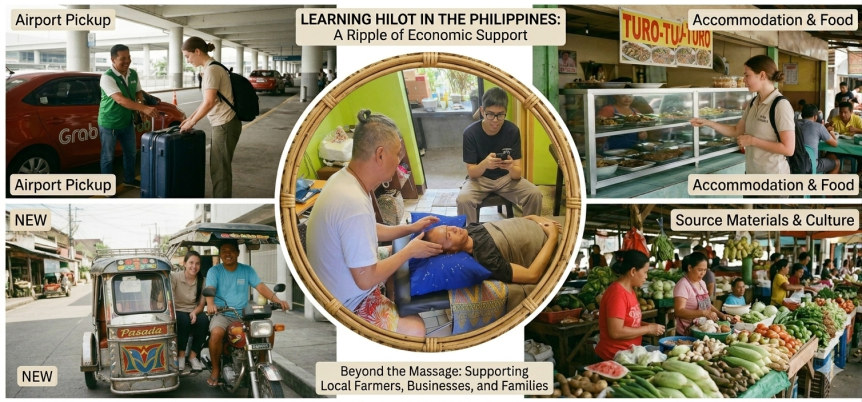
Since 2023, the 9-Day Hilot Binabaylan Training Program has been offered at ₱70,000, providing a fully immersive and all-inclusive learning experience.

Due to the rising costs of operations—including transportation, accommodation, food, utilities, and personnel—the Academy will implement a program fee adjustment:

New Program Fee: ₱85,000 (Effective January 2027)

This adjustment ensures the continued delivery of high-quality training while sustaining the well-being of our trainers, staff, and facilities.

III. Comprehensive Program Inclusions

The Hilot Binabaylan Training remains a fully immersive, all-inclusive program, covering:

✈️ Transportation

  • Airport pick-up and drop-off (NAIA Terminal 1)
  • Daily hotel-to-training center transfers (up to 4 times per day)

🏨 Accommodation

  • 10-day stay at Channel Paris Overlooking Hotel or equivalent

🍽️ Nourishment

  • 5 meals daily for 10 days
    (Breakfast, Morning Snack, Lunch, Afternoon Snack, Dinner)

🧑‍🏫 Training & Learning

  • 9 days intensive Hilot Binabaylan Training
  • Venue use (including electricity and water)
  • Learning materials and instructional tools
  • Massage bed access and reading materials
  • Laundry services (training-related use)
  • Professional trainers and support staff

🎁 Cultural & Ceremonial Items

  • Dagdagay stick
  • Malong
  • Other ritual tools and materials

🎓 Certification

  • Title: Certified Hilot Binabaylan Practitioner (CHBP)
  • Training Certificate
  • Graduation rites and recognition ceremony

🌍 IV. Global Perspective and Value

Despite this adjustment, the Philippine-based training remains one of the most accessible and comprehensive programs globally:

  • United States Training: USD 4,995 (~₱300,000+)
    • Does not include food or accommodation
  • Philippine Training (2027): ₱85,000 (~USD 1,500)
    • Fully inclusive with cultural immersion

This positions the Academy as a global center for authentic, origin-based Indigenous healing education.


🌺 V. Commitment to Excellence and Living Tradition

These updates represent not only an operational adjustment but a reaffirmation of the Academy’s sacred mission:

To transmit Hilot Binabaylan as a living tradition, grounded in ancestral wisdom, spiritual integrity, and embodied healing practice.

Through this structured pathway of certification and education, the Academy ensures that every practitioner is formed with competence, discipline, and reverence for the lineage of the Binabaylan.


🌿 Closing Invitation

We warmly invite healers, seekers, and cultural practitioners from around the world to embark on this transformative journey.

The Hilot Binabaylan Training is more than a course—it is an initiation into ancestral knowledge, a deep healing experience, and a return to the sacred roots of Filipino identity.

For inquiries and enrollment:
Hilot Academy of Binabaylan

50,026 Years of Healing: The Living Tradition of Filipino Medicine from Tabon to Hilot Binabaylan

In a world where healing systems are often traced to written texts and institutional traditions, the story of Filipino healing begins much earlier—far beyond recorded history, deep within the consciousness of our earliest ancestors.

Today, in the year 2026, we stand in what may be understood as:

Year 50,026 of Filipino Healing Tradition
—a lineage that began with the first inhabitants of our land and continues to live through us.

This is not merely history.
This is inheritance.

The Beginning: Healing as Instinct (Tabon Era, ~48,000 BCE)

The earliest known humans in the Philippines, discovered in Tabon Cave, Palawan, lived around 48,000 BCE.

They left no written records.
No carvings of rituals.
No identified healers.

And yet, they survived.

From this alone, we understand something essential:

They knew how to heal.

Their healing was not yet called medicine. It was:

  • instinctive
  • embodied
  • rooted in nature

They likely:

  • treated wounds using plants, ash, and natural materials
  • cared for one another through touch and presence
  • learned through observation of nature and experience

This was the first form of Filipino healing:

Healing as survival.
Healing as intuition.
Healing as part of life itself.

The Emergence of Ritual Healing (~10,000–5,000 BCE)

As communities grew and knowledge passed through generations, healing evolved.

The appearance of burial practices in the Philippines shows a shift:

  • the dead were handled with care
  • bodies were positioned intentionally
  • there was a belief in continuity beyond death

These are not just cultural acts—they are healing responses to life and loss.

Healing became ritual.

Care was no longer only for the living body, but also for:

  • the spirit
  • the departing soul
  • the balance between worlds

Healing as Sacred Expression (Angono Petroglyphs, ~3000 BCE)

The Angono Petroglyphs in Rizal mark a turning point.

Here, for the first time, Filipino spirituality and healing were expressed in symbol.

The carvings suggest:

  • ritual actions
  • communal gatherings
  • symbolic representations of life and energy

Some interpretations connect them to:

  • healing rites
  • sympathetic magic
  • spiritual invocation

Healing was no longer only practiced—it was expressed and shared.

Understanding the Soul: The Manunggul Jar (~900–700 BCE)

The Manunggul Jar from Palawan reveals one of the most profound aspects of Filipino healing:

  • a belief in the soul
  • a journey beyond death
  • the transition between worlds

The image of two figures in a boat represents:

  • the soul being guided to the afterlife

This signifies a deeper development:

Healing now includes understanding the journey of the spirit.

Healing becomes:

  • physical
  • emotional
  • spiritual

Honoring Identity: The Maitum Jars (~200 BCE – 300 CE)

The Maitum Anthropomorphic Burial Jars of Mindanao show:

  • human faces and identities preserved in burial vessels
  • recognition of individuality even after death

This teaches us:

Healing includes remembrance.

The ancestors were not forgotten.
They were honored, preserved, and spiritually present.

Movement and Balance: The Balangay Tradition (~300 CE onward)

Ancient balangay boats symbolize more than travel—they represent:

  • life as a journey
  • movement between physical and spiritual realms
  • connection between communities

Some were even ritually buried, showing that:

Even movement, transition, and journey were part of healing and sacred life.

The Rise of Indigenous Healing Traditions

From these foundations emerged a rich and complex system:

  • Hilot — body-based healing and energy balance
  • Binabaylan / Babaylan — spiritual healers and mediators
  • Anito — ancestral spirits
  • Diwata — divine beings of nature

Here, healing became fully integrated:

✅ Body
✅ Mind
✅ Spirit
✅ Community
✅ Nature

This is a complete healing system—developed long before colonization

50,026 Years of Living Healing

From Tabon to the present:

  • Healing began as instinct
  • Became ritual
  • Became expression
  • Became understanding
  • Became system
  • And now becomes practice once again

We are not reviving something lost.
We are continuing something that never ended.

Hilot Academy of Binabaylan: The Healing Continuum Today

Today, Hilot Academy of Binabaylan stands not as a new creation—but as a living continuation.

It carries:

  • the instinct of Tabon
  • the ritual of early ancestors
  • the symbols of Angono
  • the soul wisdom of Manunggul
  • the ancestral connection of Maitum
  • the journey of the Balangay

Through:

  • Hilot
  • ritual practice
  • spiritual teaching
  • community healing

The 50,026-year lineage lives on.

A Call to Reclaim Our Healing Heritage

This is your inheritance.

Not something foreign.
Not something borrowed.
But something deeply Filipino.

The ability to heal has always been within us.

🔥 Your Invitation

🌿 Reconnect

Learn from your ancestors, your body, and your land.

🤲 Practice

Begin with simple acts:

  • mindful touch
  • gratitude to nature
  • awareness of your energy

🕯️ Remember

Honor those who came before you.

🌊 Walk the Path

Join the living tradition.

Final Reflection

For 50,026 years, the Filipino people have been healing—
through touch, through spirit, through community, and through the sacred connection to life itself.

Now, that lineage continues through you.


👉 Be part of the living tradition.
👉 Learn, heal, and walk with us at Hilot Academy of Binabaylan.

Guardians of the Sacred: A Declaration of Autonomy, Integrity, and Governance of Hilot Binabaylan

Hilot Binabaylan is an autonomous religious and cultural healing practice, self‑governed within its own spiritual tradition and operating independently of state credentialing or regulatory bodies such as TESDA and PITAHC. This autonomy, however, does not imply the absence of standards. On the contrary, it demands unwavering discipline, accountability, and integrity.

The standards that guide Hilot Binabaylan were established and continually strengthened by Apu Adman through decades of practice, study, and research. These standards are deeply rooted in his family lineage and further enriched by the wisdom of local healers and communities with whom he has worked over the years. They arise not from convenience or compliance, but from lived tradition and ancestral responsibility.

Hilot itself is neither owned nor created by Apu Adman, the Hilot Academy of Binabaylan, nor Templong Anituhan. Equally, it is not owned, developed, or defined by any government agency or private organization. Hilot is the collective heritage of the Filipino people. We therefore stand not as proprietors, but as trustees and stewards of the sacred healing arts and sciences entrusted to us by our ancestors.

Prior to the establishment of the Hilot Academy of Binabaylan, many sacred components of Hilot were gradually set aside in order to conform to modern social, medical, and institutional systems. Traditional birthing knowledge and practices, once integral to Hilot, were separated and absorbed into clinical settings, now primarily handled by licensed nurses and midwives in lying‑in and birthing centers. Traditional bone‑setting practices likewise yielded to osteopathic and orthopedic disciplines. More recently, even Hilot diagnostic practices have faced increasing pressure and risk of discontinuation due to perceived conflicts with prevailing religious beliefs in the Philippines.

In response to this steady erosion, Apu Adman took a deliberate and principled stand. Through sustained research and discernment, he formally established the Hilot Academy of Binabaylan on April 5, 2016, as a dedicated source and sanctuary of authentic Filipino indigenous and traditional healing arts and sciences—preserved in their original spirit and form, and not altered merely to fit modern trends, market demands, or institutional convenience.

As I continue to share the sacred knowledge and wisdom of our Filipino ancestral healing arts and sciences, it is my earnest intention that the practices transmitted through this lineage remain faithful to the teachings from which they arise. While Hilot Binabaylan has not yet been formally recognized by government agencies, it has gained resonance, legitimacy, and influence through the communities and practitioners we have formed both locally and internationally.

In this spirit, I call upon all practitioners of Hilot Binabaylan and Hilot Tanglaw to honor their vows and commitments, and to uphold the credibility, integrity, and living essence of this sacred practice.

Standards of Practice and Governance

  1. All practitioners of Hilot Binabaylan shall render practice only under the guidance and supervision of a duly accredited Hilot Doctor.
  2. Hilot Doctors are accredited authorities empowered to administer healing services, conduct formal training, and transmit teachings within duly recognized clinics and ministerial centers.
  3. Hilot Tanglaw practitioners shall possess demonstrable competence in knowledge, skills, abilities, and mentoring disposition. All mentoring activities must be conducted under the supervision and governance of an accredited Ministerial Center administered by an ordained and accredited Hilot Doctor.

The Healing Power of Shared Meals: Food as Nourishment of Body, Heart, and Spirit

In modern society, food is often evaluated through numbers and labels—calories, nutrients, price, or presentation. We ask: Is it healthy? Is it delicious? Is it affordable? While these questions are important, they do not fully capture the deeper meaning of food.

From an indigenous and holistic perspective, the true richness of food is revealed not only in what we eat, but in how and with whom we eat.

The delight of food is not measured by taste, nutrition, or price. 
Its true richness is measured by how it is shared—especially when it is shared with someone you love.

Food as Relationship, Not Just Consumption

In traditional Filipino culture, pagkain is never merely an individual act. It is relational. Meals are invitations to connect—with family, community, ancestors, and the unseen. A simple dish, when shared, becomes abundant. A modest table, when surrounded by loved ones, becomes sacred.

This reflects an ancient wisdom: healing does not happen in isolation. Just as Hilot views the body as interconnected—physical, emotional, mental, spiritual, and cultural—food too nourishes more than the body. It nourishes belonging.

Shared Meals as a Form of Healing

In Hilot Binabaylan practice, imbalance often arises not only from physical causes but from emotional and relational disconnection. Loneliness, grief, and separation weaken the spirit. In contrast, shared meals restore harmony.

When food is shared:
– The body receives nourishment 
– The heart feels seen and included 
– The spirit experiences warmth and grounding 

This is why meals prepared with care and shared in love often feel more satisfying than expensive or elaborate food eaten alone.

Love as an Invisible Ingredient

There is an ingredient that cannot be measured or listed on any label: pagmamahal.

Food prepared or shared with love carries a different quality. It slows us down. It opens conversation. It invites presence. In many indigenous traditions, intention is as important as the material itself. What we feel and offer while eating becomes part of what we ingest.

In this way, every shared meal becomes a quiet ritual—a moment of embodiment, where care is made tangible.

Embodiment in Everyday Life

At Hilot Academy of Binabaylan, we speak of embodiment—not only as a concept, but as a lived practice. Embodiment happens when wisdom is expressed through daily acts: how we touch, how we listen, how we eat, and how we gather.

Sharing food is one of the simplest yet most profound ways to embody healing values:
– Presence over haste 
– Relationship over consumption 
– Gratitude over excess 

A Gentle Reminder

In a world that often eats quickly and alone, let us remember:
Food heals best when it is shared. 
Nourishment deepens when love is present. 
And the table, no matter how simple, becomes a place of restoration when hearts meet.

This is the kind of wellness we uphold at Hilot Academy of Binabaylan—a healing that honors the body, strengthens relationships, and nourishes the spirit.

Hilot Then and Now: Autonomy, Community, and a Modern Framework for Continuity 

By Rev. Rolando Gomez Comon (Apu Adman), Developer and Reviver of Hilot Binabaylan, Founder of Hilot Academy of Binabaylan


Overview

This article clarifies three intertwined questions:

  1. Was hilot a “business” in pre‑colonial times?
  2. How do “necessity” and “commodity” differ—and where does hilot belong?
  3. Did manghihilot have formal groups and leaders in ancient times—and how does that history inform modern debates over legitimacy and leadership?

It closes with a Position Paper presenting the historical‑theological justification for the leadership of the Hilot Academy of Binabaylan, and a peaceful indigenous response to critiques of legitimacy—grounded in culture, service, and spiritual calling.


I. Was Hilot a “Business” in Pre‑Colonial Times?

Short answer: No—not in the modern market sense. In pre‑colonial Philippine communities, hilot was a community health service embedded in spiritual practice, herbal knowledge, and manual healing, provided by manghihilot, albularyo, and babaylan. Compensation typically came through reciprocity—food, portions of harvest, help, or other gifts—rather than profit margins or standardized prices. The work was spirit‑led and community‑validated, not market‑driven.
Sources: Overviews consistently describe hilot as a holistic, culturally embedded practice rather than mere massage or commerce, emphasizing its role in childbirth, midwifery, herbalism, and spiritual healing. [beholdphil…ppines.com], [en.wikipedia.org], [nipino.com]


II. Necessity vs. Commodity—And Where Hilot Belongs

A. Definitions

  • Necessity: Goods or services essential to life and well‑being; demand is relatively inelastic because people need them regardless of price (e.g., food, water, shelter, basic healthcare). [difference.wiki], [fiveable.me]
  • Commodity: A good or service produced for trade, often fungible (interchangeable) and subject to market pricing and speculation (e.g., grains, metals, oil). [en.wikipedia.org], [merriam-webster.com]

B. Where Hilot Belongs

Pre‑colonial hilot functioned as a necessity: it was the primary healthcare for many communities—covering musculoskeletal care, prenatal and childbirth support, herbal medicine, and spiritual balance. Its demand derived from communal need and spiritual obligation, not price sensitivity or brand competition. [beholdphil…ppines.com], [nipino.com]

Modern hilot can be commodified (e.g., spa menus, wellness tourism, branded trainings) when offered through market channels with fees, packages, and certifications. That shift—from necessity to commodity—is a feature of contemporary market systems, not ancient practice. [insights.m…ourism.com]


III. Did Ancient Manghihilot Have Groups and Leadership?

A. Autonomy and Place‑Based Calling

Pre‑colonial healers (manghihilot, babaylan/katalonan, mumbaki, walian, etc.) were typically autonomous, place‑based, and lineage/apprenticeship‑trained. Their recognition flowed from efficacy, ritual authority, and the community’s trust, rather than from a centralized guild or national hierarchy. [en.wikipedia.org], [centerforb…tudies.org]

B. Functional Differentiation, Not Bureaucratic Hierarchy

Communities often distinguished roles—e.g., bone setting and soft‑tissue manipulation (manghihilot), herbal pharmacopeia (albularyo), and ritual leadership (babaylan). This was functional diversity, not a top‑down chain of command. [en.wikipedia.org]

C. Spirit‑Led Leadership

Authority was relational, situational, and spirit‑led. Healers “bowed” to Divine/Diwata/Anito and served communal welfare. Their “leadership” was service‑based: respected because their practice worked, their counsel guided, and their rituals healed. [en.wikipedia.org]

Conclusion: Your understanding is correct. Ancient healers were independent and community‑anchored; modern inter‑group competition is largely a post‑colonial/market phenomenon.


IV. Why Do Modern Legitimacy Conflicts Arise?

  1. Marketization & Branding: As hilot enters market frameworks (pricing, certifications, brand identities), groups understandably advocate for their models and standards—sometimes sliding into competitive claims. [insights.m…ourism.com]
  2. Colonial & Post‑Colonial Disruptions: Historic suppression of indigenous spiritual healing fractured lineages, creating a vacuum later filled by new institutions seeking validation—occasionally through gatekeeping or delegitimization. Scholarly descriptions of babaylan roles and suppression across the archipelago contextualize this dynamic. [en.wikipedia.org]

V. The Role of Hilot Academy of Binabaylan (HAB)

The Hilot Academy of Binabaylan is not a “supreme authority.” It is a modern container—a learning community that preserves, organizes, and passes on indigenous healing knowledge responsibly. HAB provides structure for continuity amidst contemporary realities (urbanization, fragmented lineages, global students), while honoring spirit‑led autonomy and community service as the core of hilot. [beholdphil…ppines.com], [nipino.com]


VI. Position Paper

Historical‑Theological Justification of Leadership in the Hilot Academy of Binabaylan

A. Premises

  1. Historical Continuity: Pre‑colonial hilot thrived as a necessity embedded in communal life, stewarded by healers recognized through efficacy and service, not bureaucratic titles. [beholdphil…ppines.com], [en.wikipedia.org]
  2. Disruption and Need for a Modern Framework: Colonial/post‑colonial disruptions fragmented lineages and ritual ecologies, necessitating contemporary educational structures to safeguard and transmit knowledge. [en.wikipedia.org]
  3. Theological Grounding: In indigenous perspectives, calling (tawag) originates from the Divine/Diwata/Anito. Leadership is diakonia (service), not dominion: a covenant with community well‑being and spiritual balance. [en.wikipedia.org]

B. Claim

HAB leadership is an instrumental guardianship—a service mandate to preserve and cultivate Hilot Binabaylan as living tradition within modern contexts. It organizes curricula, mentorships, and ethics not to supplant community healers but to support, strengthen, and transmit the practice responsibly.

C. Justification

  1. Historical Justification: Establishing an academy aligns with historical patterns of apprenticeship and communal validation, translated into a modern educational container because the original village matrices are often unavailable. [beholdphil…ppines.com]
  2. Theological Justification: Leadership is vocational—rooted in a call to serve. As with babaylan, authority is measured by healing efficacy, ethical conduct, and faithfulness to the spirits and community, not by claims of supremacy. HAB’s leadership adopts this servant‑covenant model. [en.wikipedia.org]
  3. Cultural Justification: HAB functions as cultural stewardship against commodification without context—ensuring that when hilot enters modern venues (spas, tourism, global education), it carries its cosmology, ethics, and community orientation intact. [insights.m…ourism.com]

D. Principles of HAB Leadership

  • Service over Supremacy: Leadership exists to equip, not to dominate.
  • Spirit‑Led Autonomy: Honor practitioners’ place‑based callings and local lineages. [en.wikipedia.org]
  • Community‑First Ethics: Measure success in community welfare and healing outcomes, not in market share. [beholdphil…ppines.com]
  • Scholarly Integrity: Teach hilot’s history, techniques, and cosmology with rigor and respect. [en.wikipedia.org]
  • Reciprocity and Respect: Maintain mutual recognition across diverse hilot traditions and regions. [centerforb…tudies.org]

VII. Peaceful Indigenous Response to Critiques of Legitimacy

When confronted with questions about legitimacy or leadership, HAB offers this peaceful, culturally rooted response:

  1. Affirm the Shared Ground “We honor all who respond to the call of healing. Our ancestors recognized many paths—manghihilot, albularyo, babaylan—each serving the people.”
    Rationale: Pre‑colonial healing was plural, autonomous, and community‑validated. [en.wikipedia.org]
  2. Clarify HAB’s Role “We are an academy—an educational home—built to preserve, teach, and responsibly transmit Hilot Binabaylan amidst modern realities. We do not claim supremacy; we offer structure for continuity.”
    Rationale: HAB is a container, not an empire. [beholdphil…ppines.com]
  3. Invite Reciprocity “Let us collaborate on standards that protect communities and learners—grounded in cosmology, efficacy, ethics, and service—so hilot remains a necessity, not merely a commodity.”
    Rationale: Collaboration resists commodification without context and prioritizes community health. [insights.m…ourism.com]
  4. Return to Calling and Outcomes “Authority in hilot arises from calling, conduct, and healing outcomes. Where practice heals and uplifts, legitimacy follows.”
    Rationale: Spirit‑led, outcome‑based validation mirrors ancestral norms. [en.wikipedia.org]
  5. Keep the Conversation Sacred > “We offer dialogue with respect, mindful that hilot is a sacred trust. May our words and works serve the people and honor the spirits.”
    > Rationale: Ritual respect maintains cultural integrity. [centerforb…tudies.org]

VIII. Practical Implications for Modern Practitioners and Groups

  • For Practitioners: Cultivate efficacy, ethics, community relationships, and ongoing learning. Let your legitimacy arise from service and outcomes. [beholdphil…ppines.com]
  • For Schools/Groups: Build curricula that embed cosmology, herbal knowledge, manual techniques, ritual respect, and community‑first ethics—not just marketable skills. [en.wikipedia.org]
  • For the Public/Students: Seek training that honors hilot’s identity as necessity (health service) rather than commodity (brand alone). Verify community impact and cultural grounding. [difference.wiki], [en.wikipedia.org]

IX. Summary Table (Conceptual)

DimensionPre‑Colonial HilotModern Hilot (Market Context)
Economic NatureNecessity (community health)Commodity (when branded/sold)
ValidationCommunity & Spirits (efficacy, ethics)Market & Certification (branding, fees)
LeadershipAutonomous, spirit‑ledInstitutional roles (school, org leaders)
Core AimHealing & BalanceHealing + structure for continuity
RiskNone (market)Commodification without cultural context

Sources across sections: [beholdphil…ppines.com], [en.wikipedia.org], [nipino.com], [insights.m…ourism.com], [en.wikipedia.org], [centerforb…tudies.org], [difference.wiki], [en.wikipedia.org], [fiveable.me]


X. Closing

Hilot Binabaylan is not a brand to win a market contest; it is a living covenant between healer, community, and the spirits. The Hilot Academy of Binabaylan stands as a modern sanctuary—preserving, teaching, and transmitting a tradition whose legitimacy rests upon calling, conduct, and healing. In dialogue and collaboration, may we ensure that hilot remains what it has always been at heart: a necessity of communal life, not merely a commodity on the shelf.


References

  • Behold Philippines, Hilot: The Ancient Filipino Art of Healing (Aug 14, 2024) – overview of hilot as holistic tradition and community healthcare. [beholdphil…ppines.com]
  • Wikipedia, Hilot – origins, practices, and relation to shamanic traditions. [en.wikipedia.org]
  • Wikipedia, Filipino shamans (babaylan) – roles, spiritual mediation, and community significance. [en.wikipedia.org]
  • Center for Babaylan Studies, What is Babaylan? – descriptions of indigenous spiritual leadership and healing roles. [centerforb…tudies.org]
  • Medical Tourism Magazine, The Ancient Practice of Hilot: Traditional Healing in the Modern World – modern integration and wellness contexts. [insights.m…ourism.com]
  • Nipino.com, Hilot: Nurturing Body, Mind, and Spirit in Traditional Filipino Healing – historical roots and holistic principles. [nipino.com]
  • Merriam‑Webster, Commodity – definitions and market framing. [merriam-webster.com]
  • Wikipedia, Commodity – economic features and fungibility. [en.wikipedia.org]
  • Fiveable, Necessities – Principles of Economics Key Term – demand inelasticity and essential goods. [fiveable.me]

Is Hilot Filipino, or Is Hilot Human?  A Manifesto and Practical Guide for Ethical Practice

Hilot is often asked to define itself.
Is it Filipino, or is it human?

This question does not seek to divide—it seeks clarity: Who may carry the wisdom of Hilot? How is it practiced with integrity today? And how do we safeguard it from appropriation while allowing it to heal beyond borders?

The answer is both simple and sacred:

Hilot is Filipino in ancestry, human in service, and Divine in origin.

Hilot: Filipino in Origin, Human in Purpose

Hilot is undeniably Filipino in origin, born from the land, the ancestors, and the cosmology of the Philippine archipelago. Its rituals, medicines, and ethics were shaped by our relationship with nature and the unseen world.

Yet Hilot is also human in purpose. 
Healing does not discriminate. When someone comes before a healer, we do not ask if they are Filipino or foreigner, wealthy or poor, male, female, lesbian, gay, transgender, or cisgender, religious or non‑religious, left or right in politics.

We see first a soul in need of care.

And Hilot reminds us of a profound truth: the medicine we need is where we live. The healer’s task is to restore right relationship with place—learning from the plants in the yard, the trees in the neighborhood, the waters, winds, and soils that hold the wisdom of our locality. In this way, Hilot is rooted, not replicated; contextual, not colonial.

Who Is a Cultural Bearer Today?

In our time, being a bearer of indigenous wisdom is not only a matter of birth—it is a matter of devotion, discipline, and continuity.

History shows that some who were not indigenous by birth nonetheless served as careful documentarians and allies of Filipino lifeways. But their contributions never replace indigenous voices; they demonstrate that calling and responsibility sometimes transcend ancestry—provided that practice remains accountable to community custodians, elders, and ethical boards.

We also face a poignant reality: many are disconnected from indigenous lifeways due to colonization, modernization, and survival pressures. Meanwhile, some sacred roles—Babaylan, Mumbaki—are sometimes reduced to performance rather than vocation. Authenticity demands daily discipline, ethical responsibility, and living relationship with the ancestors, the Diwata, the land, and community.

The invitation is not to gatekeep healing, but to guard its integrity.

Foundational Manifesto of the Hilot Path


*For Hilot Academy of Binabaylan • Templong Anituhan • Bahay SiAdtala Binabaylan*

Preamble


Hilot is Filipino in ancestry, human in service, and Divine in origin.*
We affirm Hilot as a sacred healing tradition entrusted to humanity through ancestral wisdom and relationship with place. We commit to carrying it as a living vocation—never as spectacle—so its compassion endures and its integrity is preserved.

Vision


A world where ancestral healing is practiced with dignity, ecological reciprocity, and spiritual integrity—bringing balance to individuals, families, and communities across cultures, while honoring Hilot’s Filipino roots.

Core Premises


1. Ancestry & Universality: Hilot’s origin is Filipino; its service is human; its source is Divine. 
2. Place‑Based Medicine: Healing begins with the medicine of one’s own land—plants, elements, and local ecology. 
3. Relational Ethics: Hilot is sustained by right relationship with elders, community, land, spirit, and the person seeking care. 
4. Consent & Sovereignty: Knowledge custodians and communities hold the right to decide how, when, and by whom sacred teachings are shared. 
5. Guardianship of Knowledge: Rites, names, language, symbols, and cosmology are protected against exploitation and misuse. 
6. Economic Justice: We reject profiteering and extractive commerce; we practice fair exchange and prioritize community benefit. 
7. Ecological Reciprocity: We take only what is needed, replant and restore, and leave no harm in our healing. 
8. Accountability: We welcome feedback, submit to ethical review, and repair trust when harm occurs.

Commitments (Practitioner Oath)


As a bearer of the Hilot Path, I pledge to:
– Serve all who seek healing, without discrimination or gatekeeping. 
– Honor elders and cite teachers, sources, and lineages. 
– Practice with place—prioritize local plants, elements, and ecology. 
– Seek consent from community custodians before sharing sensitive rites. 
– Name Hilot as Filipino ancestral medicine; never erase its origin. 
– Avoid appropriation: no rebranding, repackaging, or commercialization of sacred rites. 
– Maintain fair pricing and community care provisions (scholarships, clinics). 
– Keep ritual discipline—study, supervision, reflection, and service. 
– Uphold safety and competence, referring out when needed. 
– Respect interfaith diversity and spiritual autonomy. 
– Build global solidarity without diluting the tradition.

Operational Standards


– Training Pathways: Study via Hilot Academy of Binabaylan programs—Hilot Binabaylan Training, Aghamic Divinity & Ministry, and the Master’s in Ministry on Hilot Binabaylan Practice. 
– Supervision: Maintain mentorship under recognized practitioners and engage in peer review. 
– Practice Protocols: Use thorough assessment, place‑based pharmacognosy, ethical bodywork, and culturally rooted ritual. 
– Community Protocols: Offer free/low‑cost clinics; respond to disaster recovery with trauma‑informed care; contribute to local public health. 
– Safeguarding: Establish ethics boards to protect sacred rites, names, and symbols; require consent for publication or teaching.

Public Pledge (Publishable)


I recognize Hilot as Filipino ancestral medicine gifted by the Divine. I vow to study with integrity, practice with humility, honor the elders, protect sacred knowledge, and serve all who seek healing. I will not exploit, rebrand, or commercialize rites. I will learn from the land where I stand, give credit where due, share benefits fairly, and remain accountable to community and spirit. So I pledge, as a guardian of the Hilot Path.

How to Walk the Hilot Path—Without Appropriation


*A Practical Guide for Seekers, Practitioners, and Allies*

Why This Matters


When Hilot is shared without context or consent, its integrity is eroded and communities are harmed. When it is learned responsibly—through relationship, study, and reciprocity—Hilot lives and heals across generations.

What Is Cultural Appropriation?


– Appropriation is taking elements of a tradition without permission, context, or benefit to its source community—often for profit or prestige. 
-Respectful participation means practicing with consent, mentorship, proper attribution, cultural context, and fair benefit‑sharing.

12 Practical Steps to Walk the Path Responsibly


1. Self‑Location: Name who you are (ancestry, location, privilege, purpose). Know your motivations and limits. 
2. Relationship First: Seek elders, recognized practitioners, or community leaders. Prioritize listening and service over performing. 
3. Formal Study & Supervision: Enroll in Hilot Academy of Binabaylan programs; commit to ongoing mentorship and peer review. 
4. Place‑Based Practice: Use local plants and ecology; avoid importing materials to claim authenticity. 
5. Learn the Language & Cosmology: Study terms (Diwata, Anito), prayers, ethics, and context. 
6. Consent & Boundaries: Ask before teaching or sharing rites; honor restrictions and lineage‑specific practices. 
7. Transparent Attribution: Always credit teachers, elders, communities, and sources. Never rename Hilot into your brand. 
8. Fair Exchange & Community Benefit: Price ethically, offer scholarships, and reinvest in community health initiatives. 
9. Safeguard Sacred Rites: Distinguish public vs. restricted ceremonies; avoid filming or publishing sacred moments without consent. 
10. Accountability Mechanisms: Join an ethics circle, invite feedback, and repair harm with humility and tangible action. 
11. Responsible Storytelling: Avoid sensationalizing “exotic” elements; share narratives that uplift dignity and context. 
12. Sustainable Ecology: Harvest respectfully, replant, and favor non‑extractive methods; the land is a teacher, not a resource.

Before You Offer a Hilot Service (Checklist)


– Have you completed recognized study and secured mentorship? 
– Do you understand assessment, contraindications, and safe practice? 
– Have you obtained consent for any ritual or cultural element you’ll use? 
– Is your pricing aligned with fair exchange and community benefit? 
– Are your materials sourced ecologically and locally when possible? 
– Do you have a plan for referrals and ongoing supervision?

Red Flags vs. Green Flags


– 🚩 Red Flags: Rebranding Hilot; selling sacred rites as workshops; using imported herbs to claim authenticity; no elders credited; filming rituals without consent; “instant certification.” 
– ✅ Green Flags: Clear lineage and teachers; consent protocols; place‑based medicine; ethics policy; mentorship; fair pricing; community clinics.

Scenarios & Guidance
– Diaspora Filipino: Reconnect through study, language, and local ecology; serve your local Filipino community with consent and accountability. 
– Non‑Filipino Practitioner: Name Hilot’s Filipino ancestry; commit to mentorship and benefit‑sharing; avoid rebranding; listen more than you speak. 
– Wellness Entrepreneur: Build models that prioritize community benefit over profit; never commodify sacred rites; maintain transparent attribution. 
– Content Creator: Obtain permission; avoid filming sacred rites; credit sources; educate without sensationalism. 
– Academic Researcher: Practice ethical review; co‑author with community where applicable; share results and benefits transparently.

How to Start—Today


1. Enroll in Hilot Academy’s orientation and foundational training. 
2. Join a mentorship circle with recognized Hilot Binabaylan practitioners. 
3. Map local plants and ecological allies where you live. 
4. Draft your personal ethics statement aligned with the Foundational Manifesto. 
5. Offer one community service per month (clinic, class, or garden day). 
6. Set a learning plan: cosmology, language, ritual, clinical safety.

From Curiosity to Commitment: A Convincing Call to Action

Do not merely learn Hilot. 
Live it.

Do not consume indigenous wisdom. 
Serve it.

Do not ask what Hilot can give you. 
Ask what you are willing to give—time, humility, discipline, and respect—to ensure its survival for generations to come.

If you feel called to:


– study Hilot beyond technique, 
– honor Filipino indigenous spirituality with integrity, 
– and practice healing rooted in responsibility, not entitlement—

then the door is open.

Answer the Call


– Sign the Manifesto: Publicly pledge to ethical practice and guardianship. 
– Join Mentorship: Enroll in Hilot Academy of Binabaylan programs and secure supervision with recognized Hilot Binabaylan mentors. 
– Build Local Practice: Create community clinics, plant medicine gardens, and ethical service models where you live. 
– Protect the Sacred: Form or join a local ethics circle to safeguard rites, names, and symbols.

📩 Ready to begin?
Reply with “Hilot Orientation” to receive your introductory session, the Foundational Manifesto signatory form, and the mentorship pathway through Hilot Academy of Binabaylan and Templong Anituhan.

🌱 The ancestors are calling. The Diwata are watching. 
Will you carry this medicine with integrity?