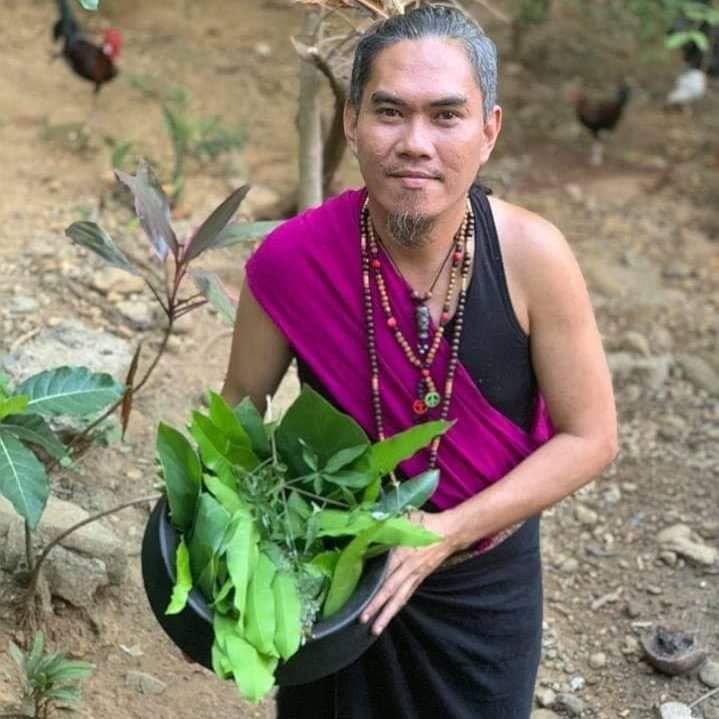
“Before I learned how to touch the body as a Manghihilot, I first learned how to touch the soil.”
Many people assume that the journey of a Manghihilot begins with healing aches and pains, performing therapeutic massage, or learning traditional diagnostic methods. Yet my own story began somewhere far simpler—inside a small patch of soil.
As a child, I was fascinated by growing plants.
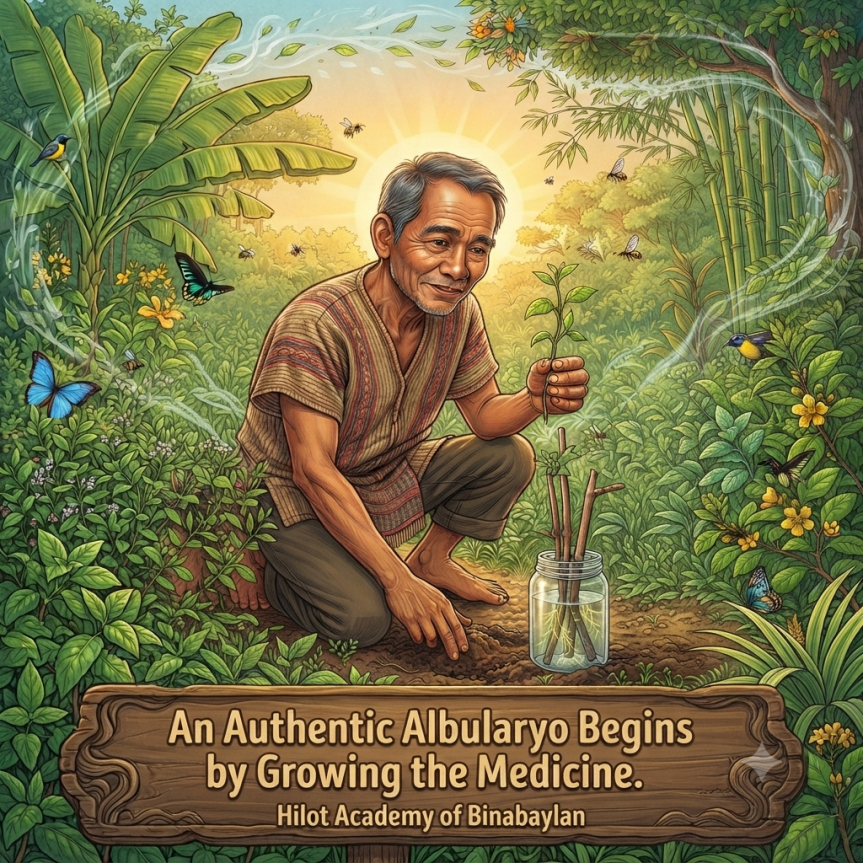
I would collect soil from around our home and improve it using what we now call composting. I buried vegetable peels, kitchen scraps, and the dust I gathered while sweeping the floor. At that age, I did not know the scientific terms for decomposition, organic matter, or microbial activity. I only knew that healthy plants required healthy soil.
After patiently caring for the soil, I planted seeds. Tomatoes and chili peppers were among my favorites. Later, I learned how to grow herbs through stem cuttings. What seemed almost magical to me then was how a small cutting from a living plant could become a completely new plant when given enough care and patience.
When I was young, propagating plants felt effortless.
As I grew older, life became busier. Responsibilities expanded. My attention shifted toward ministry, healing, teaching, and community work. Somewhere along the way, I began to feel that I had lost my natural ability to grow plants. Attempts at gardening became less successful than before, and I wondered if the gift had somehow disappeared.
Then something unexpected happened.
The Return of an Old Gift
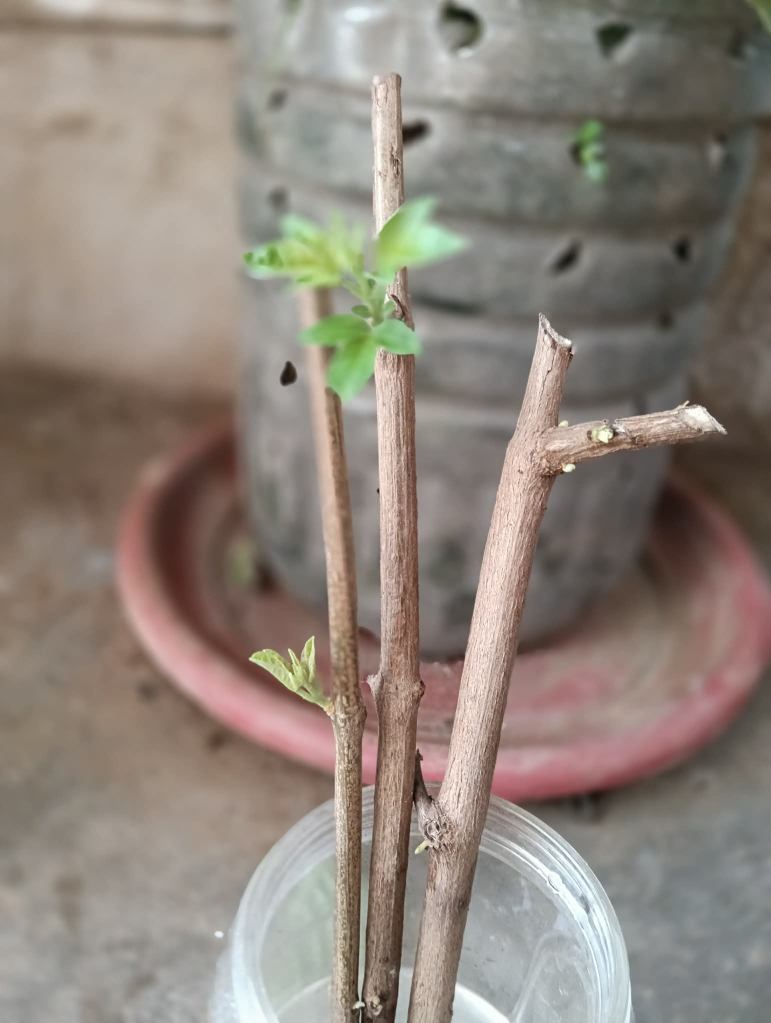
On June 22, 2026, I returned to our ancestral home and shared lunch with my sister. During that visit, I noticed a Lagundi plant. On impulse, I cut several stems and decided to grow them.
The cuttings were placed in water.
Days passed.
Then something remarkable occurred.
Tiny leaves began to emerge.
One stem sprouted. Then another. Then all three.
As I watched those fresh green leaves unfold, I felt a deep sense of gratitude. The ability I thought I had lost had never truly disappeared. It had simply been waiting for the right moment to be remembered.
Today, those Lagundi cuttings are still developing their roots. Soon they will be transferred into healthy soil where they can continue their journey of growth.
For me, these small buds represent more than gardening. They are a reminder that healing traditions must also be planted, nurtured, and passed forward.
Healing Beyond the Human Body
Modern people often associate Hilot exclusively with physical healing. While bodywork is certainly important, traditional Filipino healing has always encompassed much more.
A true Manghihilot understands that healing involves the body, mind, spirit, community, and environment.
This is where the role of the Albularyo, Herbularyo, or traditional plant medicine practitioner becomes important.
The term “Albularyo” became widely used during the colonial period, but throughout the Philippines, traditional healers are known by different names.
In the Visayas, many are known as Mananambal.
In my father’s hometown in Siargao Island, traditional healers are often referred to as Binisaya. While I am not entirely certain about the historical origin of this local term, the healers known by this name are respected for their knowledge of medicinal plants and their ability to communicate with unseen spiritual forces in seeking healing for those who come to them.
Long before the arrival of foreign colonizers, there were no universities, medical colleges, or certification programs teaching plant medicine.
There were no laboratory reports.
No scientific journals.
No botanical databases.
Yet our ancestors developed an intimate understanding of the healing properties of plants.
Their classroom was the forest.
Their library was nature.
Their teacher was direct experience.
Many traditional healers learned through observation, practice, dreams, spiritual experiences, mentorship, and generations of oral transmission.
Ancient Wisdom in the Age of AI
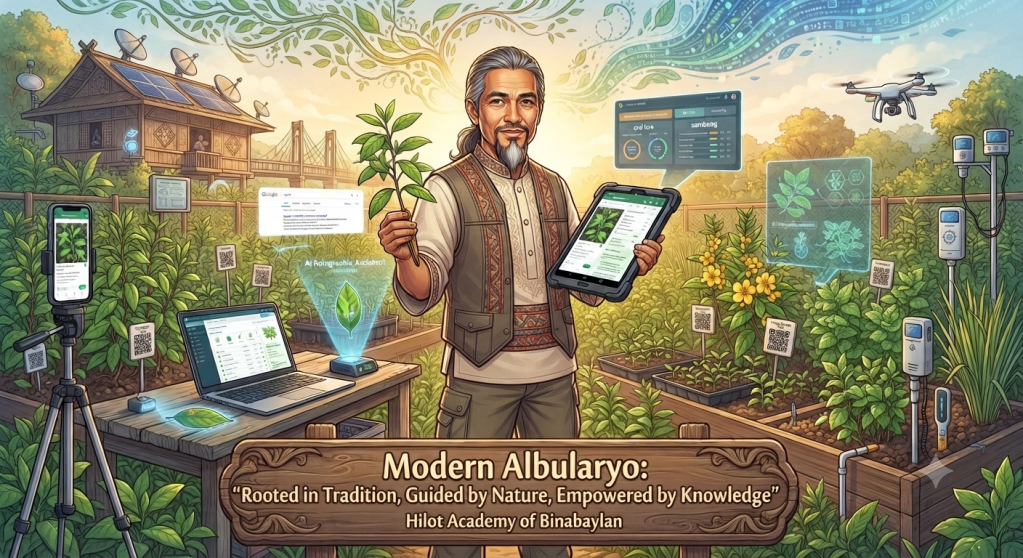
Today we live in a different world.
Information that once took years to acquire can now be accessed in seconds through search engines, online libraries, and artificial intelligence platforms such as Microsoft Copilot, ChatGPT, and Gemini.
This is both a blessing and a challenge.
Technology allows us to identify plants, research traditional uses, compare scientific studies, and explore healing traditions from around the world. However, information alone does not create wisdom.
Reading about a plant is different from growing it.
Looking at a photograph is different from caring for it daily.
Memorizing medicinal uses is different from developing a relationship with the living plant itself.
Traditional healing requires participation.
It requires dirt beneath the fingernails.
It requires patience.
It requires observation.
It requires respect.
Introducing the Certificate Program on Albularyo
At Hilot Academy of Binabaylan, we believe that traditional healing must remain connected to lived experience.
This is why we are preparing to offer a Certificate Program on Albularyo, alongside our programs in Hilot Binabaylan Practice, Magtatawas, and Hilot Diagnostics.
The Albularyo Certification Program is not designed to be a spoon-feeding course.
Students should not expect to simply watch videos, memorize information, and receive a certificate.
Instead, they will be challenged to become students of nature itself.
Participants may be required to:
- Create and nourish their own soil.
- Learn basic composting practices.
- Grow medicinal plants from seeds.
- Propagate plants through roots and stem cuttings.
- Observe plant growth and development.
- Identify medicinal herbs in their local environment.
- Research traditional and modern uses of plants.
- Learn safe preparation methods for herbal remedies.
- Maintain a personal herbal garden.
- Document experiences and observations through practical assignments.
This approach ensures that learning moves beyond theory and enters direct experience.
A student who successfully grows Lagundi understands something that cannot be fully taught in a lecture.
A student who nurtures a medicinal plant from seed learns patience.
A student who observes growth cycles learns timing.
A student who works with soil learns humility.
These are qualities that every healer needs.
A Call to Future Albularyos
The future of traditional Filipino healing depends not only on preserving knowledge but also on preserving our relationship with the living world.
The next generation of Albularyos must be willing to learn from both tradition and modern research.
They must be comfortable using books, scientific references, and digital tools, while also being willing to kneel on the ground, touch the soil, and cultivate medicinal plants with their own hands.
The small Lagundi cuttings growing in my home remind me that healing traditions are much like plants.
If neglected, they wither.
If nurtured, they grow.
If shared, they multiply.
And just as a simple stem cutting can eventually become a strong medicinal shrub, a sincere student can grow into a healer who serves family, community, and future generations.
The journey of an Albularyo begins not with receiving a certificate.
It begins with planting a seed.
Interested in becoming a student of traditional Filipino plant medicine?
Watch for the upcoming launch of the Certificate Program on Albularyo at the Hilot Academy of Binabaylan, where healing begins with the soil, grows through experience, and blossoms into service.
🌿 “To heal the people, we must first learn to heal our relationship with the plants.” – Rev. Rolando Gomez Comon

