Align and Elevate: How to Update Your Hilot Binabaylan Certification Under the New Curriculum Policy

The landscape of traditional Filipino medicine is evolving. To ensure that our ancient healing arts are preserved with the highest standards of safety, cultural integrity, and professional excellence, the Hilot Binabaylan training curriculum has been officially updated.

If you are a graduate of our classic 9-Day Hilot Binabaylan Training program, you already hold a powerful foundation. However, to fully align your credentials with the newly established professional tracks, you can now apply for a Certificate of Competency by completing the specific modules not covered in the old curriculum.

Updating your training bridges the gap between your foundational residency and the newly structured specialized paths, ensuring your practice is fully compliant, updated, and recognized.

The Path to Alignment: What You Need to Complete

Depending on your professional focus, look at the checklist below to see the exact competencies you need to bridge to secure your updated certification:

1. Certificate in Magtatawas (Hilot Diagnostic Practice)

While your 9-day training covered essential hands-on diagnostic tools (like Paper, Candle, and Egg Tawas), the new 10-day curriculum introduces rigorous theoretical and safety frameworks. To align, you will take:

  • Indigenous Filipino Anatomy & Physiology: Deep dive into the traditional view of body structures (Balat, Laman, Ugat, Litid, Buto) and organs (Puso, Baga, Atay, Bato), understanding health through our ancestors’ eyes.
  • Vital Forces Alignment: Mastering how Hininga (breath), Bisa (potency), Init (heat), Lamig (cold), and Hangin (wind) interact during an assessment.
  • Documentation Standards: Learning to use the official Katutubong Gamutan Profile Form for intake history.
  • Clinical Red Flags: Training to recognize emergency medical conditions (like fractures or severe bleeding) to ensure appropriate medical referrals.

2. Certificate in Hilot Gamutan or Manggagamot Practice

If your goal is clinical, physical manipulation and therapeutic bodywork, the new track requires advanced, invasive, and thermal modalities. You will need to complete:

  • Advanced Cleansing Modalities (Phase 1): Practical and safe setup for Paglalabatiba (herbal enemas) and Pagsusuob (herbal steam inhalation).
  • Lunas Pilay (Traditional Bone Setting): The comprehensive framework for managing sprains, strains, joint misalignments, traction, and mobilization.
  • Pagbibigkis: Specialized traditional post-treatment binding techniques optimized for bone setting and structural alignment.
  • Advanced Pharmacology: Deep study of the warming and cooling thermal properties of ethnobotanical compounding.

3. Certificate Program on Albularyo / Mananambal (Herbalist)

The introductory nature walks of the past have been expanded into a profound, nature-synchronized 12-Month Modular Framework. To graduate as a recognized Earth Steward, you will bridge:

  • Land, Soil, & Propagation Alchemy: Pre-colonial animist philosophy (Kapwa ethics) and lunar-synchronized seed and stem propagation.
  • Wildcrafting & Spiritual Harvesting: Syncing harvests with solar/planetary cycles and performing Pag-aalay (offerings) and Paalam (permission) rituals.
  • Dual Pharmacology Compounding: Making medicine for both physical illnesses (Likas na Sakit) and metaphysical ailments (Sakit sa Gawa).
  • Folk Arts & Talismanic Activation: Understanding the karmic boundaries of Gayuma and the consecration of Anting-anting, Birtud, and Panyo.

4. Certificate Program on Mandadalumat (Spiritual Healer)

For those answering the call to master psycho-spiritual fracturing and energetic protection, you can bridge into the advanced monthly modules:

  • Metaphysical Syndromes: The energetic mechanics and diagnostics of Usog, Bati, Laro, Tuwa, Dalaw, Tawag, and deconstructing Kulam.
  • Spatial Architecture: Land trauma clearing and building traditional Altars and Spirit Houses.
  • Divination Matrices: Mastery of Kilubansa (constitutional typing), Siadtala (ancestral astrology), and the Baybayin Mystic Oracle.
  • Sound Metaphysics & Consciousness Restoration: Directing Oracion formulas via vocal tuning, alongside Pauli (soul-retrieval) and Dampi (stabilizing sweeps).

Graduation & Assessment Standards

To ensure the integrity of our lineage, the new policy outlines clear assessment benchmarks for all bridging students:

  • Passing Scores: You must achieve a minimum final score of 75% for Magtatawas, 80% for Manggagamot, and 85% for the Albularyo and Mandadalumat ritual modules.
  • Non-Negotiable Ethics: A strict 100% compliance rate is required regarding safety, sanitation, and lineage ethics.

Why Update Your Certification?

By updating your training, you aren’t just earning a piece of paper—you are honoring the medicine. You ensure that your practice stands firmly on the foundations of safety, historical accuracy, and profound spiritual depth. Furthermore, it gives your clients and community the peace of mind that your practice meets the highest contemporary standards of the Hilot Binabaylan lineage.

Ready to align your practice? Contact the administration office today to review your 9-day training records and map out your personalized bridging schedule. Let’s elevate the healing arts together!

Our new Curriculum Certification for Indigenous Filipino Healing Arts and Science Diploma

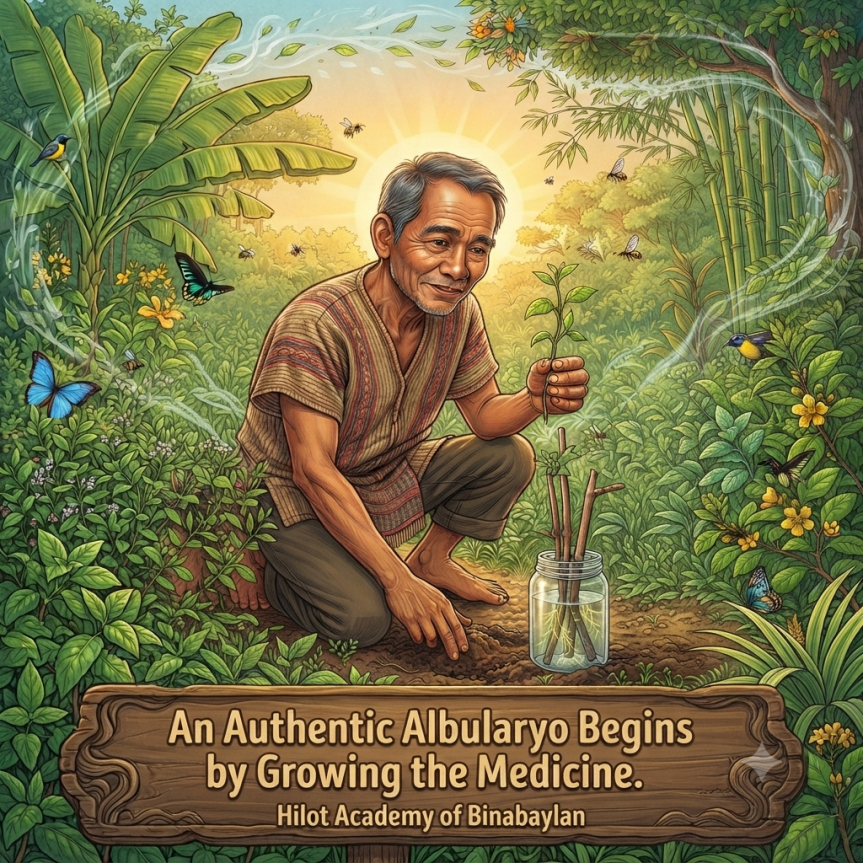
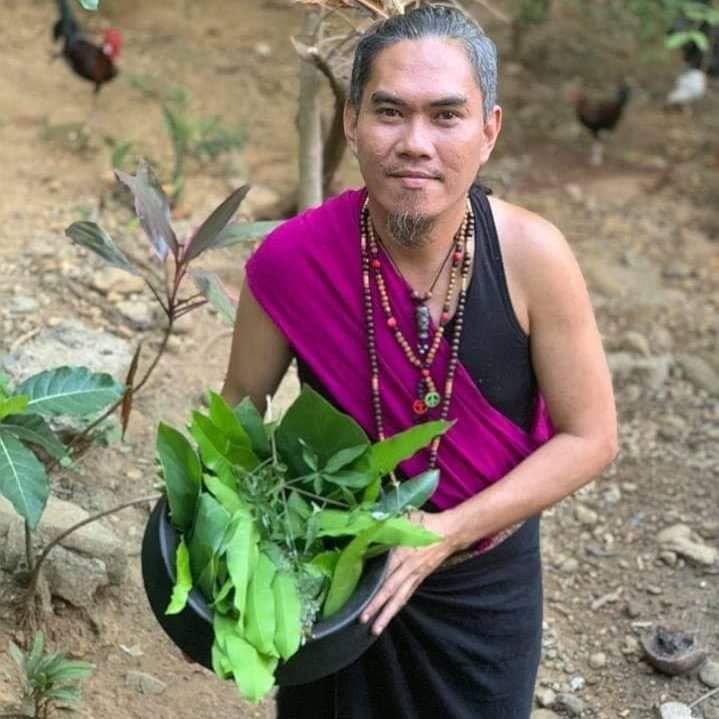
From Soil to Healing: My Journey Back to the Roots of Albularyo

“Before I learned how to touch the body as a Manghihilot, I first learned how to touch the soil.”

Many people assume that the journey of a Manghihilot begins with healing aches and pains, performing therapeutic massage, or learning traditional diagnostic methods. Yet my own story began somewhere far simpler—inside a small patch of soil.

As a child, I was fascinated by growing plants.

I would collect soil from around our home and improve it using what we now call composting. I buried vegetable peels, kitchen scraps, and the dust I gathered while sweeping the floor. At that age, I did not know the scientific terms for decomposition, organic matter, or microbial activity. I only knew that healthy plants required healthy soil.

After patiently caring for the soil, I planted seeds. Tomatoes and chili peppers were among my favorites. Later, I learned how to grow herbs through stem cuttings. What seemed almost magical to me then was how a small cutting from a living plant could become a completely new plant when given enough care and patience.

When I was young, propagating plants felt effortless.

As I grew older, life became busier. Responsibilities expanded. My attention shifted toward ministry, healing, teaching, and community work. Somewhere along the way, I began to feel that I had lost my natural ability to grow plants. Attempts at gardening became less successful than before, and I wondered if the gift had somehow disappeared.

Then something unexpected happened.

The Return of an Old Gift

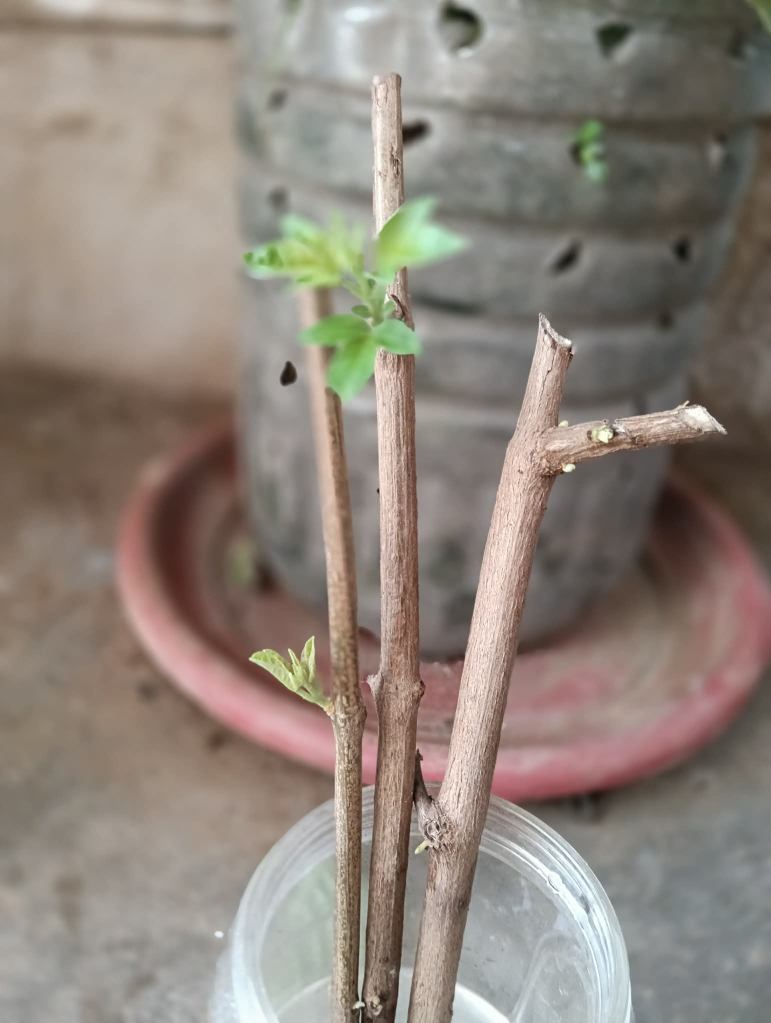
On June 22, 2026, I returned to our ancestral home and shared lunch with my sister. During that visit, I noticed a Lagundi plant. On impulse, I cut several stems and decided to grow them.

The cuttings were placed in water.

Days passed.

Then something remarkable occurred.

Tiny leaves began to emerge.

One stem sprouted. Then another. Then all three.

As I watched those fresh green leaves unfold, I felt a deep sense of gratitude. The ability I thought I had lost had never truly disappeared. It had simply been waiting for the right moment to be remembered.

Today, those Lagundi cuttings are still developing their roots. Soon they will be transferred into healthy soil where they can continue their journey of growth.

For me, these small buds represent more than gardening. They are a reminder that healing traditions must also be planted, nurtured, and passed forward.

Healing Beyond the Human Body

Modern people often associate Hilot exclusively with physical healing. While bodywork is certainly important, traditional Filipino healing has always encompassed much more.

A true Manghihilot understands that healing involves the body, mind, spirit, community, and environment.

This is where the role of the Albularyo, Herbularyo, or traditional plant medicine practitioner becomes important.

The term “Albularyo” became widely used during the colonial period, but throughout the Philippines, traditional healers are known by different names.

In the Visayas, many are known as Mananambal.

In my father’s hometown in Siargao Island, traditional healers are often referred to as Binisaya. While I am not entirely certain about the historical origin of this local term, the healers known by this name are respected for their knowledge of medicinal plants and their ability to communicate with unseen spiritual forces in seeking healing for those who come to them.

Long before the arrival of foreign colonizers, there were no universities, medical colleges, or certification programs teaching plant medicine.

There were no laboratory reports.

No scientific journals.

No botanical databases.

Yet our ancestors developed an intimate understanding of the healing properties of plants.

Their classroom was the forest.

Their library was nature.

Their teacher was direct experience.

Many traditional healers learned through observation, practice, dreams, spiritual experiences, mentorship, and generations of oral transmission.

Ancient Wisdom in the Age of AI

Today we live in a different world.

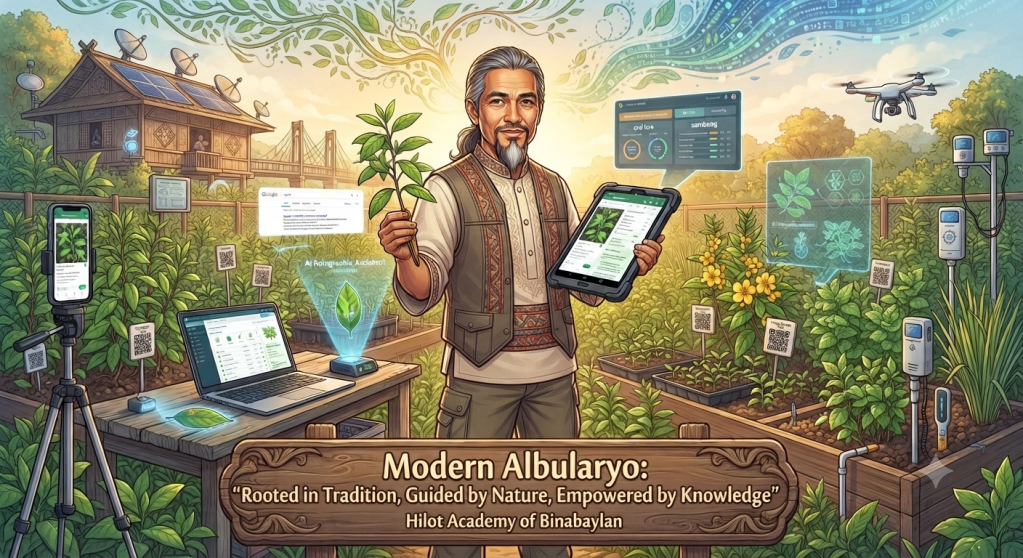
Information that once took years to acquire can now be accessed in seconds through search engines, online libraries, and artificial intelligence platforms such as Microsoft Copilot, ChatGPT, and Gemini.

This is both a blessing and a challenge.

Technology allows us to identify plants, research traditional uses, compare scientific studies, and explore healing traditions from around the world. However, information alone does not create wisdom.

Reading about a plant is different from growing it.

Looking at a photograph is different from caring for it daily.

Memorizing medicinal uses is different from developing a relationship with the living plant itself.

Traditional healing requires participation.

It requires dirt beneath the fingernails.

It requires patience.

It requires observation.

It requires respect.

Introducing the Certificate Program on Albularyo

At Hilot Academy of Binabaylan, we believe that traditional healing must remain connected to lived experience.

This is why we are preparing to offer a Certificate Program on Albularyo, alongside our programs in Hilot Binabaylan Practice, Magtatawas, and Hilot Diagnostics.

The Albularyo Certification Program is not designed to be a spoon-feeding course.

Students should not expect to simply watch videos, memorize information, and receive a certificate.

Instead, they will be challenged to become students of nature itself.

Participants may be required to:

  • Create and nourish their own soil.
  • Learn basic composting practices.
  • Grow medicinal plants from seeds.
  • Propagate plants through roots and stem cuttings.
  • Observe plant growth and development.
  • Identify medicinal herbs in their local environment.
  • Research traditional and modern uses of plants.
  • Learn safe preparation methods for herbal remedies.
  • Maintain a personal herbal garden.
  • Document experiences and observations through practical assignments.

This approach ensures that learning moves beyond theory and enters direct experience.

A student who successfully grows Lagundi understands something that cannot be fully taught in a lecture.

A student who nurtures a medicinal plant from seed learns patience.

A student who observes growth cycles learns timing.

A student who works with soil learns humility.

These are qualities that every healer needs.

A Call to Future Albularyos

The future of traditional Filipino healing depends not only on preserving knowledge but also on preserving our relationship with the living world.

The next generation of Albularyos must be willing to learn from both tradition and modern research.

They must be comfortable using books, scientific references, and digital tools, while also being willing to kneel on the ground, touch the soil, and cultivate medicinal plants with their own hands.

The small Lagundi cuttings growing in my home remind me that healing traditions are much like plants.

If neglected, they wither.

If nurtured, they grow.

If shared, they multiply.

And just as a simple stem cutting can eventually become a strong medicinal shrub, a sincere student can grow into a healer who serves family, community, and future generations.

The journey of an Albularyo begins not with receiving a certificate.

It begins with planting a seed.

Interested in becoming a student of traditional Filipino plant medicine?

Watch for the upcoming launch of the Certificate Program on Albularyo at the Hilot Academy of Binabaylan, where healing begins with the soil, grows through experience, and blossoms into service.

🌿 “To heal the people, we must first learn to heal our relationship with the plants.” – Rev. Rolando Gomez Comon

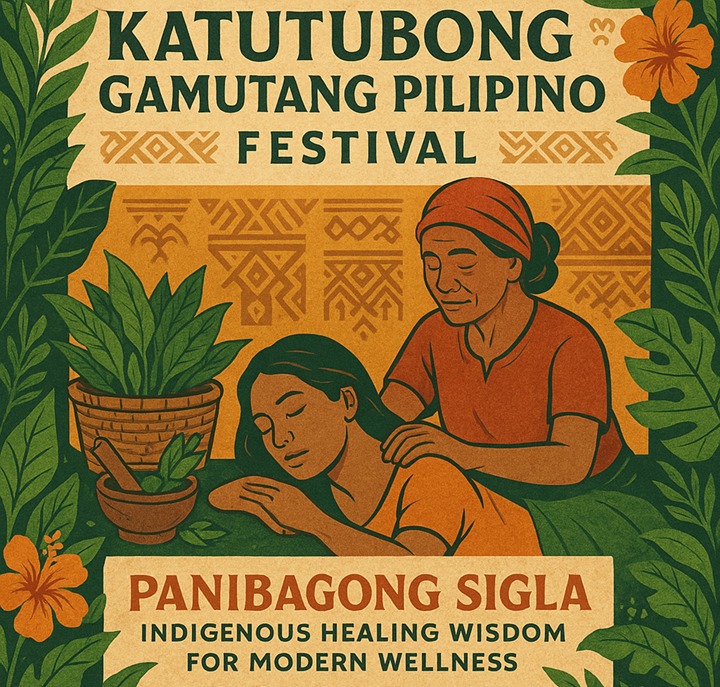
Pista ng Katutubong Gamutang Pilipino 2025: Honoring the Sacred Tradition of Hilot The Indigenous Healing Wisdom of the Filipino People

The Pista ng Katutubong Gamutang Pilipino 2025 presentation is a powerful celebration of Hilot, the indigenous Filipino healing tradition that has endured through thousands of years of cultural evolution. From prehistoric Kalinga to the modern wellness industry, Hilot has remained a vital expression of ancestral wisdom, spiritual resilience, and community-based care.

Tracing the Roots of Hilot

The presentation begins with archaeological evidence of early healing practices dating back 709,000 years ago, when ancient Filipinos used rhinoceros parts for food and medicine. It then highlights the role of Babaylan, Manghihilot, and Albularyo—spiritual healers who used herbal medicine, massage, and rituals to treat physical and emotional ailments.

Hilot Through the Ages

Hilot’s journey spans multiple historical eras:

  • Pre-Srivijaya and Pre-Islamic Periods: Rooted in animistic and shamanic traditions.
  • Islamization Era: Hilot adapted and coexisted with Islamic healing practices.
  • Colonial Periods: Despite marginalization, Hilot remained the primary healthcare system in rural communities.
  • Japanese Occupation and Liberation: Hilot served as a lifeline for guerrilla fighters and civilians.
  • Martial Law Era: Hilot survived underground, preserving indigenous knowledge through oral tradition.

Modern Recognition and Institutional Support

The passage of the Traditional and Alternative Medicine Act of 1997 (RA 8423) and the TESDA NC II certification marked a turning point in Hilot’s formal recognition. These milestones helped integrate Hilot into the national health and vocational systems, opening doors for professional practice in wellness centers, spas, and tourism.


🌀 Addendum: Reclaiming the Full Spectrum of Hilot Binabaylan Practice

While Hilot is now recognized as a wellness modality, key ancestral practices—such as spiritual healing, bone setting, and traditional midwifery—remain excluded from current regulations. This exclusion risks erasing the holistic essence of Hilot as practiced by our ancestors.

⚠️ Current Regulatory Gaps

  • Traditional Birth Attendants (TBAs) are prohibited from conducting home births in many localities due to safety concerns and lack of formal training.
  • Bone setting, a core skill of Manghihilot, is not included in TESDA’s Hilot Wellness Massage NC II curriculum or PITAHC standards.
  • Spiritual healing, though central to Hilot, is often sidelined in favor of clinical approaches. [Pista ng K…ipino 2026 | PowerPoint]

🌿 Why Inclusion Matters

To preserve the authentic form of Hilot Binabaylan, we must reintegrate these ancestral practices into a regulated, culturally respectful framework. This ensures that Hilot remains a complete healing system, not just a massage technique.

🔧 Proposed Integration Strategies

  1. Expanded Curriculum and Certification
    • Develop specialized modules on traditional midwifery, bone setting, and spiritual healing.
    • Partner with institutions like Templong Anituhan and Hilot Academy of Binabaylan to offer culturally grounded training.
  2. Community-Based Health Integration
    • Recognize Hilot Binabaylan as community health workers, especially in underserved areas.
  3. Multi-Agency Collaboration
    • Utilize the mandate of RA 8423 to involve TESDA, CHED, DepEd, and PCHRD in creating short courses and degree programs.
  4. Ethical and Safety Standards
    • Establish guidelines to ensure safe practice while honoring indigenous knowledge.

A Call for Cultural Justice in Healthcare

The exclusion of bone setting and traditional birth practices is not just a technical issue—it is a cultural justice concern. By reclaiming the full spectrum of Hilot Binabaylan, we affirm the value of indigenous wisdom and ensure its rightful place in the modern healthcare delivery system.


🌺 Closing Reflection

Hilot is more than a healing technique—it is a living embodiment of Filipino ancestral wisdom. As we move forward, let us ensure that Hilot remains whole, respected, and empowered. Through education, advocacy, and cultural preservation, we can continue to heal, educate, and uplift our communities with the sacred wisdom of Hilot Binabaylan.

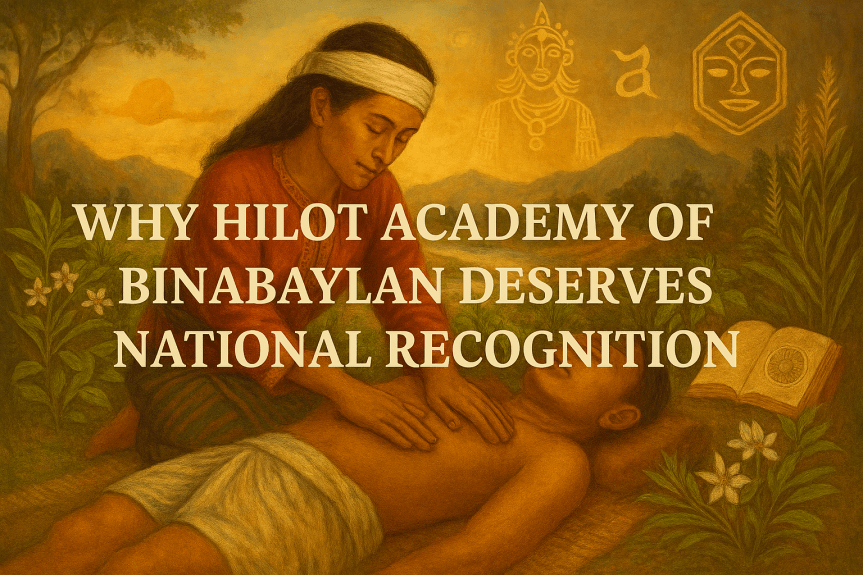
Why Hilot Academy of Binabaylan Deserves National Recognition: A Call to PITAHC

In the heart of the Philippines, where ancestral wisdom meets modern wellness, the Hilot Academy of Binabaylan stands as a living testament to the enduring power of indigenous healing. More than just a school, it is a sanctuary of cultural memory, spiritual practice, and community empowerment. As we prepare for the Pista ng Katutubong Gamutang Pilipino 2026, it’s time to ask: Why hasn’t this academy been formally recognized by PITAHC?

Let’s explore why it should be.


🌿 Hilot: A Healing Tradition Older Than History

Did you know that evidence of healing practices in the Philippines dates back 709,000 years? In Kalinga, early humans butchered rhinoceros not just for food—but for medicine. This ancient wisdom evolved into what we now call Hilot, a holistic healing system practiced by babaylan, manghihilot, and albularyo across generations.

From the Srivijaya period to the Islamic era, through Spanish and American colonization, wartime resistance, and Martial Law—Hilot survived. It adapted, persisted, and remained deeply rooted in Filipino cosmology, spirituality, and community life.


🏛️ Legal Milestones That Paved the Way

Hilot’s journey toward formal recognition began with:

  • Presidential Decree No. 856 (1975) – regulating massage and sanitation.
  • RA 8423 (1997) – the Traditional and Alternative Medicine Act, which created PITAHC.
  • TESDA Board Resolution 2008-19 – establishing Hilot (Wellness Massage) NC II training standards.

These laws laid the groundwork. Now, it’s time to take the next step: recognize the Hilot Academy of Binabaylan as a formal educational institution under PITAHC’s guidance.


📚 Why PITAHC Should Recognize the Academy

Here are 9 policy recommendations, backed by historical and institutional data:

1. Institutional Recognition

Hilot is not spa massage. It’s a spiritual and therapeutic tradition. The Academy preserves this distinction and deserves formal acknowledgment.

2. Educational Integration

The Academy offers structured training aligned with PITAHC’s mandate to collaborate with TESDA, CHED, DepEd, and PCHRD for short courses and degree programs.

3. Accreditation and Licensing

Graduates of the Academy should be eligible for national accreditation, protecting them from being labeled “quack doctors.”

4. Research and Documentation

Hilot has survived through oral tradition. PITAHC can support the Academy in creating a National Archive of Indigenous Healing Knowledge.

5. Community-Based Health Programs

Hilot has always been the backbone of rural healthcare. Integrating it into barangay health programs will uplift underserved communities.

6. Cultural Preservation

Hilot is part of our Intangible Cultural Heritage. The Academy safeguards this legacy through ritual, education, and practice.

7. Economic Empowerment

TESDA-certified Hilot training empowers PWDs, solo parents, and OFWs. The Academy is a hub for inclusive livelihood development.

8. Interfaith and Intercultural Dialogue

Hilot has harmonized with Islamic and Christian traditions. The Academy promotes respectful spiritual integration.

9. Monitoring and Evaluation

PITAHC can lead a task force to ensure quality, impact, and sustainability of Hilot programs nationwide.


A Living Temple of Healing

The Hilot Academy of Binabaylan, rooted in the teachings of Templong Anituhan, is more than an educational center—it is a living temple of Filipino healing arts. It embodies the spirit of Melchora Aquino, the revolutionary Hilot of the Katipunan, and carries forward the legacy of the babaylan who healed not just bodies, but communities.


📣 Call to Action

We urge PITAHC to:

  • Recognize the Hilot Academy of Binabaylan as a formal partner in traditional medicine education.
  • Support its programs through policy, funding, and collaboration.
  • Honor Hilot as a sacred tradition that continues to heal, educate, and empower.

Let us not wait another generation. The time to uplift our indigenous healing wisdom is now.

Advocating for the Recognition of Hilot and Manghihilot

As we celebrate Philippine Traditional and Alternative Medicine Month, I invite you to reflect on a vital question: How well do Filipinos—both here and abroad—truly understand Hilot? For many of us, Hilot is a memory passed down from our lolo, lola, nanay, tatay, tito, and tita. It is a healing tradition rooted in our homes and communities. Yet today, Hilot is often mistaken for mere massage therapy offered in luxury spas, stripped of its deeper wisdom and purpose.

Let me ask: Do we still remember what “Pilay” is? Do we still recognize the Manghihilot as the community’s first line of defense in health care?

Sadly, our Traditional Healing Arts and Sciences are being commercialized and standardized in ways that leave ordinary Filipinos disconnected from their own healing heritage. Once, the Manghihilot was a trusted health care provider in the barangay. Now, even prescribing herbal remedies requires a medical license.

I have been monitoring the Philippine Institute of Traditional and Alternative Health Care (PITAHC) from 2020 to 2023, and I ask: Where is the support for Hilot? As of this year, only 27 Manghihilot practitioners are listed in PITAHC’s registry. Compare this to other modalities:

  • Certified Acupuncture Practitioners: 1,099
  • Certified Chiropractic Practitioners: 87
  • Certified Naturopath Practitioners: 249
  • Certified Hilot Practitioners: 27

This disparity is alarming. PITAHC’s mandate clearly states its goal to promote safe, effective, and culturally consistent health care modalities. But where is the Indigenous Traditional Medicine of the Filipino people in this promotion?

Our elder Manghihilot are aging. If we do not act now, their wisdom will be lost forever.

I respectfully call on PITAHC to:

  1. Recognize Manghihilot in the barrios without charging registration fees.
  2. Make Hilot Congress attendance free, especially for grassroots healers.
  3. Allocate government funds toward Filipino traditional medicine—not just foreign modalities.
  4. Extend PITAHC’s reach to regional, provincial, city, and municipal health centers to identify and support Manghihilot in every barangay.
  5. Issue a memorandum circular to protect Hilot practices, just as one was issued to regulate Hilot Paanak.
  6. Include accredited Hilot Healing Centers in PhilHealth coverage, just like birthing centers.

To all Manghihilot—whether certified by TESDA, PITAHC, or trained through ancestral lineage—you have the right to be recognized.

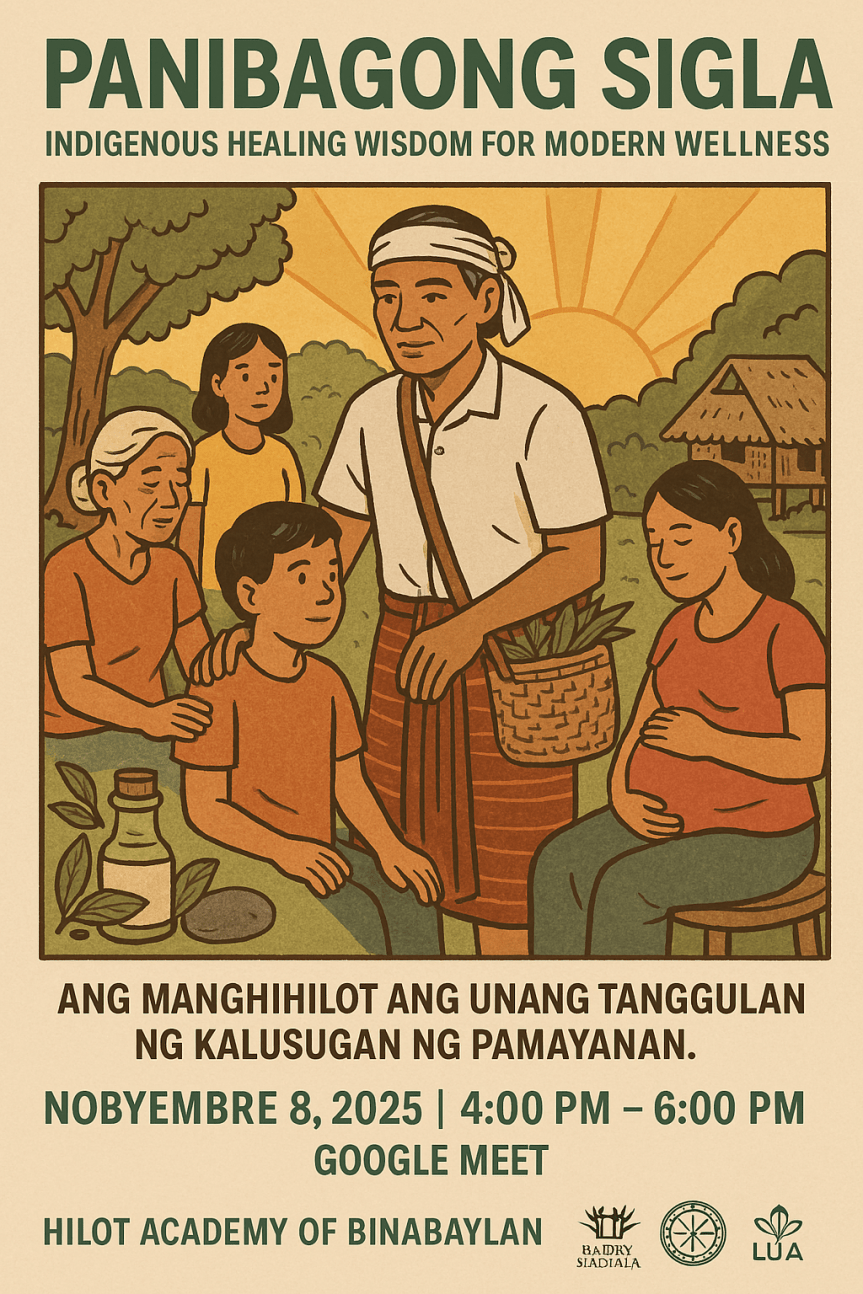
Join me on November 8, 2025, from 4:00 PM to 6:00 PM for a Free Online Webinar via Google Meet. Let us come together to reclaim our healing traditions and advocate for their rightful place in our national health care system.

Register here: https://forms.gle/9dScvdYnDB8gCPcc8

Maraming salamat po, at nawa’y pagpalain tayo ng ating mga ninuno at ng mga Diwata ng Kagalingan!

Preserving the Sacred: Why Hilot Must Remain Rooted in Its Indigenous Form

Hilot, the ancient healing art of the Filipino people, is more than just a massage technique—it is a sacred embodiment of our Indigenous Knowledge Systems and Practices (IKSP). Rooted in the wisdom of our ancestors, Hilot is a holistic approach to healing that integrates the body, mind, and spirit, guided by the rhythms of nature, the presence of the Diwata and Anito, and the elemental balance of Apoy, Tubig, Hangin, and Lupa.

The Essence of Hilot as Indigenous Knowledge

In its original form, Hilot is a spiritual and cosmological practice. It is performed by Binabaylan, spiritual healers who walk between realms, invoking divine guidance and ancestral wisdom. Hilot is not merely about physical relief—it is about restoring harmony within the person and their environment. It includes:

  • Energetic diagnostics through pulse, heat, and intuition
  • Rituals and prayers to the Diwata and Anito
  • Herbal medicine and elemental therapy
  • Soul healing and spiritual alignment

This depth of practice reflects the Indigenous Filipino worldview, where health is not just physical wellness but a state of spiritual balance and ancestral connection.

The Role of TESDA and PITAHC

In recent years, TESDA and PITAHC have taken steps to promote Hilot as part of the national healthcare system. Their efforts have helped:

  • Provide training and certification for practitioners
  • Ensure safety and professionalism
  • Introduce Hilot to a wider audience seeking alternative wellness

These contributions are valuable and necessary. However, the institutional framing of Hilot has narrowed its scope, often reducing it to massage and relaxation therapy, detached from its Indigenous roots.

The Risk of Cultural Dilution

When Hilot is stripped of its spiritual and ancestral dimensions, it loses its identity as Indigenous Knowledge. It becomes a commodified service, disconnected from the cosmology that gives it meaning. This not only misrepresents the practice but also disempowers Indigenous communities who have preserved it for generations.

A Call for Dual Recognition

We advocate for a dual-pathway approach to Hilot:

  1. Institutional Hilot – promoted by TESDA and PITAHC for therapeutic and wellness purposes.
  2. Indigenous Hilot Binabaylan – preserved in its original form by spiritual communities like Templong Anituhan, emphasizing holistic healing of the body, mind, and spirit.

This approach allows Hilot to evolve and reach modern audiences without losing its soul. It respects the sovereignty of Indigenous communities and honors the sacredness of Hilot as a spiritual ministry.

Protecting Hilot as Indigenous Knowledge

We call upon:

  • NCIP to uphold Hilot as IKSP under R.A. 8371
  • IPOPHL to protect its Indigenous Intellectual Property
  • Educational institutions to include Hilot Binabaylan in cultural and spiritual curricula
  • Healthcare systems to recognize the value of spiritual healing in holistic wellness

Call to Action: Join Us in Reclaiming Hilot

To deepen this conversation and celebrate the wisdom of our ancestors, we invite you to join our free online event:

🕓 Date & Time: November 8, 2025, from 4:00 PM to 6:00 PM
📍 Platform: Google Meet
🎉 Event Title: Panibagong Sigla: Indigenous Healing Wisdom for Modern Wellness

This gathering will feature Hilot practitioners, Binabaylan leaders, and cultural advocates sharing insights on how Hilot can be preserved, practiced, and promoted in its full Indigenous form.

Let us walk together in healing, remembering, and reclaiming the sacred path of Hilot.

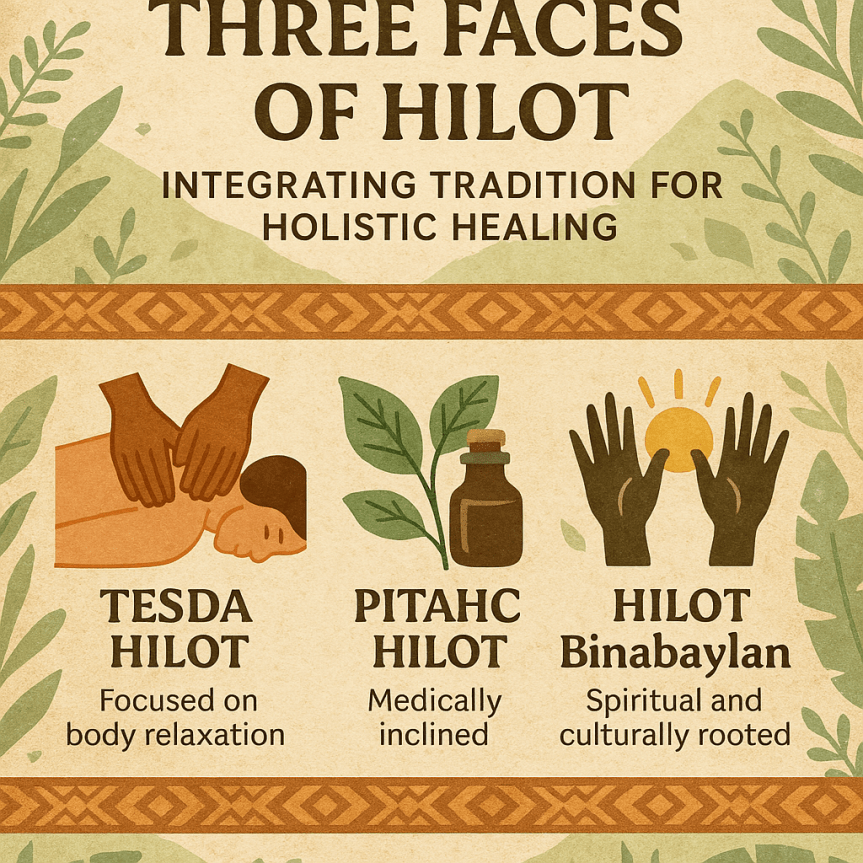
🌿 Understanding the Three Faces of Hilot: A Path to Holistic Filipino Healing 🌿

Hilot, the ancient Filipino art of healing, is steadily gaining global recognition as a powerful modality for wellness and spiritual restoration. As more people seek natural and culturally rooted approaches to health, Hilot stands out as a sacred tradition that bridges body, mind, and spirit.

At the Hilot Academy of Binabaylan, we honor the richness and diversity within this practice. Through years of study and experience, we have identified three distinct expressions of Hilot, each serving a unique purpose in the journey toward holistic well-being:

1️⃣ TESDA Hilot

This form of Hilot is widely taught through the Technical Education and Skills Development Authority (TESDA) and focuses primarily on physical relaxation and massage therapy. It is designed to relieve stress, promote circulation, and support general wellness through touch and bodywork.

2️⃣ PITAHC Hilot

Recognized by the Philippine Institute of Traditional and Alternative Health Care (PITAHC), this approach integrates Hilot into the realm of complementary and alternative medicine. It is medically inclined, emphasizing diagnostic techniques and therapeutic interventions that align with traditional healthcare systems.

3️⃣ Hilot Binabaylan

This is our sacred path—Hilot Binabaylan—a culturally and spiritually rooted practice that draws from indigenous Filipino wisdom. It involves rituals, connection with nature, and ancestral guidance to heal not just the body, but also the soul. It is a spiritual calling that honors the sacred relationship between healer, patient, and the unseen forces of life.


🌺 A Gathering of Healing and Unity

On October 5, 2025, we will host a special gathering to celebrate and acknowledge these three expressions of Hilot. This event is not about division, but integration—recognizing that each form of Hilot contributes to a greater whole. When combined, they offer a comprehensive and deeply transformative healing experience.

Rather than contradicting one another, these approaches can be harmonized to provide optimum benefits for those we serve. Whether through physical touch, medical insight, or spiritual connection, Hilot remains a living tradition that continues to evolve and empower.


✨ Let us unite in honoring our heritage and empowering our future through the sacred art of Hilot. ✨

#HilotBinabaylan #AncestralHealing #FilipinoWisdom #HilotAcademy #IntegrativeHealing #TemplongAnituhan

We are recognized to be a Wellness Nation Builder

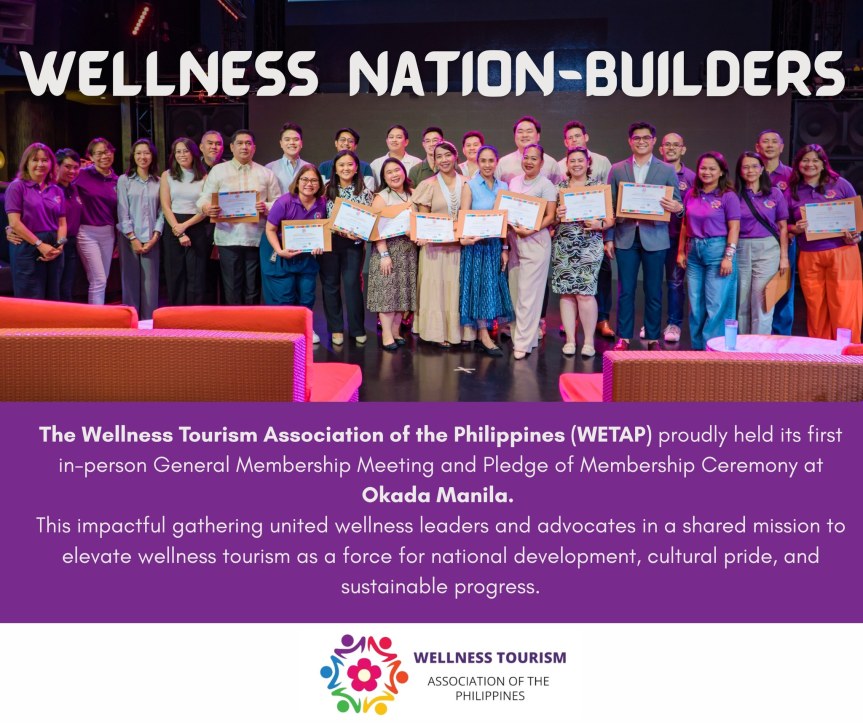
Early this year Luntiang Aghama Natural Divine Arts Shrine of Healing Inc. become an Affiliate member of the Wellness Tourism Association of the Philippines that aims to promote the Philippines unique wellness offerings, skilled professionals and evidence-based wellness experience. As they envisioned that by 2028, Wellness Tourism playing a vital role in nation building, generating significant tourism revenue and providing dignified, gender-equal job opportunities.

Though WeTap is a mundane organization and Luntiang Aghama focuses on Spirituality; As Hilot Academy’s teaching on balancing the Physical Health and Spiritual Health, we joined WeTap to have representation as we promote Authentic Filipino Brand of Wellness.

April 28, 2025 was the very first in person General Membership Meeting which at first I hesitated to attend because it was held at Okada Manila which is a luxurious hotel in the Philippines. Though there are no fee to pay since I am a member, so I come to fulfill my duty as member. For the first time I see other members of the Association and at first, I feel intimidated because all of them are not just a working professional but also a Wellness Property owners which means they are Millionaire or Billionaire. But I reminded myself for my reason in joining the organization which its not my ourpose to look at their pocket but to share with them the Philippine Indigenous Traditional Medicine which is our Authentic Filipino Brand of Wellness.

Onwards to our 9th Year Anniversary

I am always amazed to have people in our class that have the same flow of thoughts running in their mind and the class that they are taking with us serve as an affirmation to the calling that they have and long to manifest in their life.

Hilot Academy was established on April 5, 2016, which is now celebrating our 9th Year Anniversary, which start to aim just to provide skills training that is aligned to the Standards and Regulation of Technical Skills and Development Authority (TESDA). But as time goes by, the need of preserving the knowledge of our Indigenous Traditional Medicine Practices prevails that we cut our self from any Governing and Accrediting Body that forbids some of our Healing practices which only limits the practitioner in providing Massage such as the Hilot Wellness Massage NC2 provided by Tesda accredited Training Center.

On 2020 at the time of Pandemic, the former Tourism Secretary have searched for us and ask us to help her establish Hilot School under the International School of Sustainable Tourism that is located in Silang, Cavite, Philippines. And through the effort that we exert in creating Hilot Philippines Development Center, Hilot Academy, Philippine Institute of Traditional Alternative Health Care (PITAHC), and Technical Education Skills Development Authority (TESDA) were able to have a dialogue about the scope of practices and certification of Hilot Practitioner which unfortunately, the agreed Memorandum Circular promised by former Pitahc Director General was not made due to the shuffling or change of person in authority that manage TESDA and the retirement of PITAHC Director General.

We were ambitious at the start of the new decade hoping that the work of Hilot will be recognized and be preserved by our Government Authority but to my regret, they have a blind eye and deaf hears and are convinced that Hilot is just a massage and Tawas should be excluded. Though many of their invited expert to convey the importance of Hilot in delivering health care do believe in Tawas being part of Hilot Modality, they are still bound to bow down to what the Roman Catholic Church would say specially from the Archdiocese of Manila Office of Exorcism that they gave reminder of not to teach tawas to the public as it invokes the devil in accordance to their teaching.

The Goal of lifting up the Practice of Hilot by professionalizing it has been hindered not only by modern science but also by the modern religion. The hope of calling our Manghihilot as Indigenous Traditional Filipino Medicine Doctor has been halted due to their not willingness to spend time in studying Hilot and find science on our healing modality.

As founder of Hilot Academy of Binabaylan, professionalizing our practice requires an Indepth study. This is why we do our effort to upgrade our curriculum. Our 9 days and 13 days course are just a familiarization course as many people whether Filipino or Foreigner do not know yet what is Hilot all about. But soon as we move forward to the future we can make it into a Bachelor’s degree course that is 4 years with Masteral and Doctorate Degree just like other Traditional Medicine Practices.

Empowering Healers through Skills Training

Last Sunday March 23,2025 by 1:00 PM to 6:00 PM, we have started our Hilot Binabaylan Alignment Training Program for Local Filipino that is living nearby in Luzon. Unlike our Regular Training which we only serve 1 student maximum of 3. Our Weekly learning sessions can accommodate from 4 to 10 individuals. But our current enrollee now is 4 which we have started transferring our Knowledge through Sharing.

The topics we discussed on our first day.

In Class, we have emphasized the importance of understanding the Souls of Human being as it helps us in determining how we can help our Patient to heal them.

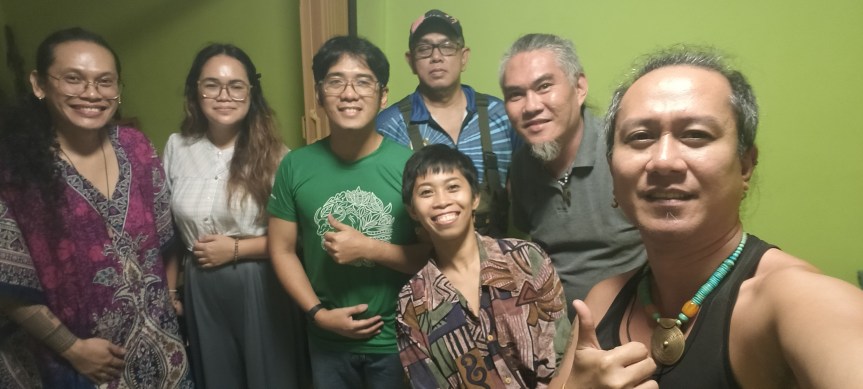
These four individuals have their own background being a healer using different modalities and through our alignment training program we are in High Hope that we will produce local Hilot Binabaylan practitioners to serve our fellow Filipino living in the Philippines.

We are still open to accept Enrollee to be part of this class by filling up the form on this link. Our Sunday Class will start 1:00 PM and End by 6:00 PM. And the topics to be discussed on March 30 are the following: