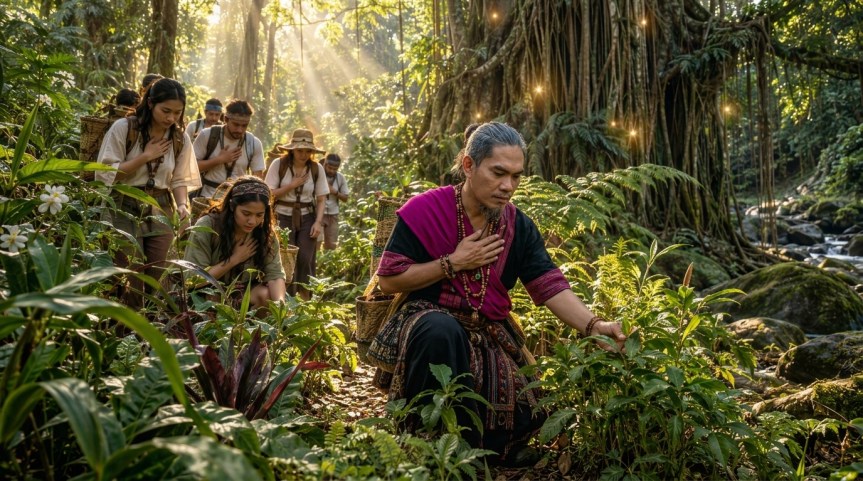
Reclaiming the Soul: Understanding Modern Anxiety and Depression as Indigenous Spiritual Illnesses

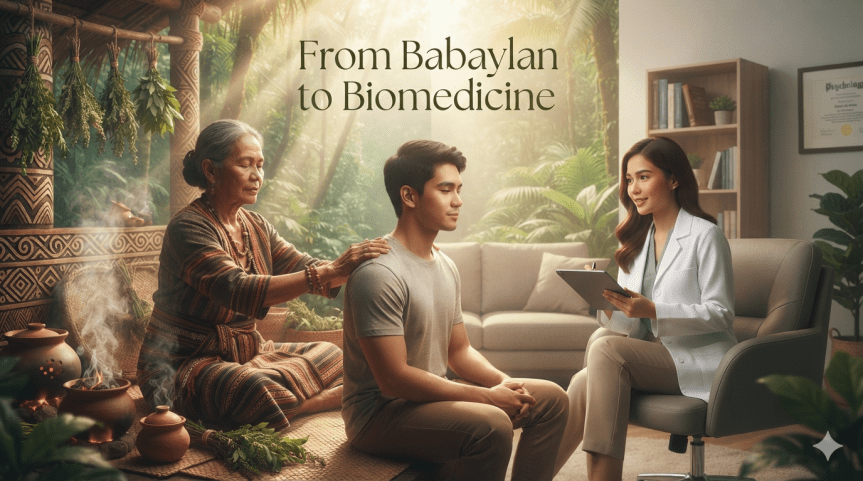
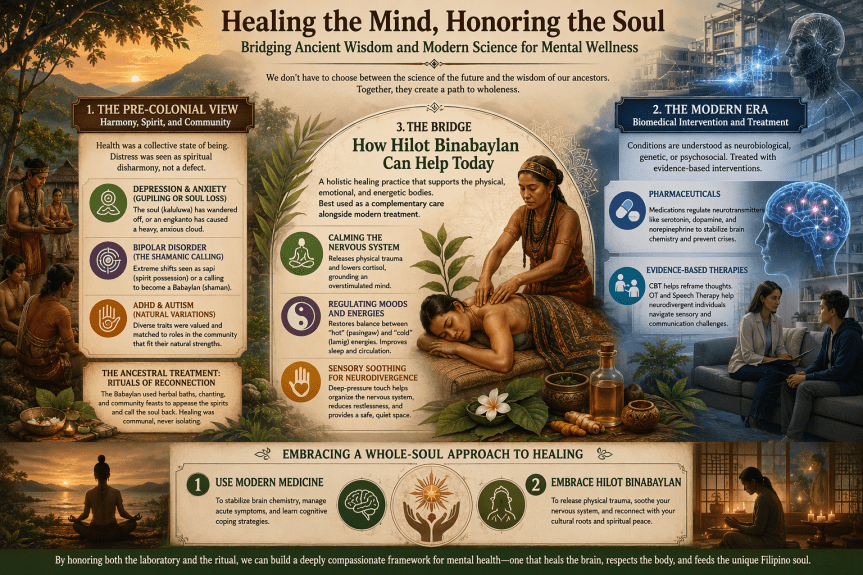
In our fast-paced, hyper-individualized modern world, mental health struggles have reached unprecedented levels. Modern medicine neatly categorizes chronic anxiety and deep depression as chemical imbalances, neurological firing errors, or clinical disorders. While pharmaceutical and psychological interventions have their place, they often treat only the physical symptoms of a much deeper, unseen crisis.

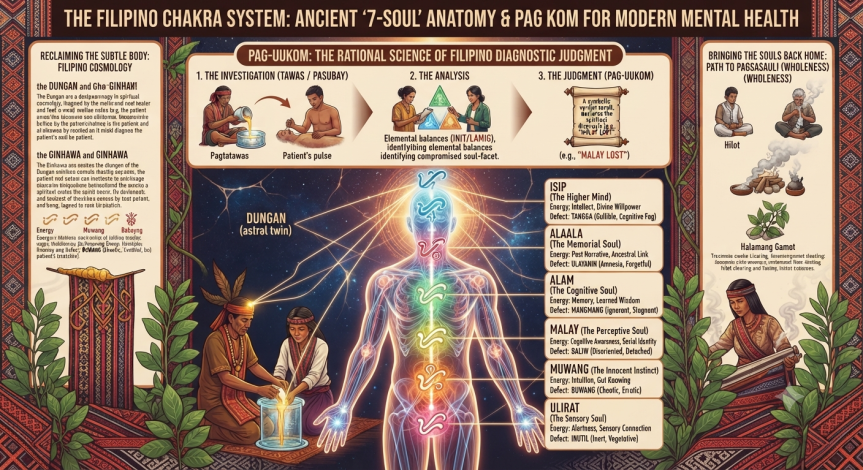
From the perspective of Filipino Indigenous Spiritual Healing (Hilot Binabaylan), anxiety and depression are not merely failures of brain chemistry. They are spiritual illnesses (sakit sa espiritu)—profound disruptions of a person’s life force (ginhawa), a fracturing of the soul (kaluluwa), or an energetic disconnection from nature and community (kapwa).

When the modern world becomes too heavy, the spiritual vessel breaks. Here, we look at these contemporary ailments through the lens of ancient Filipino mysticism and explore the time-tested, multi-layered ritual sequence used by a Binabaylan to restore complete harmony.

The Diagnostics: Translating Modern Pain into Spiritual Imbalance

To heal an illness, we must first understand its true root. Traditional Filipino medicine goes beyond localized concepts like usog, bati, or kulam, utilizing foundational diagnostic frameworks to trace modern emotional trauma:

1. Lawayan (Soul-Wandering & Depression)

  • The Diagnostic Connection: In indigenous cosmology, a human being is whole only when the physical body and the kaluluwa (soul/astral double) are perfectly aligned. When a person experiences prolonged grief, severe burnout, or systemic trauma, the environment becomes too hostile. To survive, the kaluluwa fractures or steps away from the physical vessel.
  • The Symptoms: This manifests as the heavy numbness, chronic fatigue, hopelessness, and inner emptiness characteristic of clinical depression. The person is physically functioning, but their “spark” or spiritual core is missing—the body has become a hollow house.

2. Gulo ng Ginhawa (Disruption of the Vital Force & Anxiety)

  • The Diagnostic Connection: Ginhawa is our vital breath, life force, and seat of emotional well-being, traditionally centered in the chest and abdomen. Modern society traps us in a perpetual survival mode—constant financial stress, sensory overload, and hyper-vigilance.
  • The Symptoms: This continuous pressure constricts the breath and creates an energetic blockage, trapping toxic, volatile heat in the chest. This manifests precisely as panic attacks, short breathing, a racing pulse, irrational dread, and physical chest tightness.

3. Pasma sa Kalooban (Emotional Shock & Stagnation)

  • The Diagnostic Connection: Just as physical pasma occurs when hot muscles are suddenly exposed to freezing water, Pasma sa Kalooban is an energetic shock to the emotional body. It happens when deep trauma, unexpressed anger, or intense shame (hiya) are forcefully suppressed or internalized over time.
  • The Symptoms: This emotional freezing paralyzes the energetic body. The patient becomes completely unable to process joy, feeling “stuck” in a cyclic loop of past traumas, resulting in generalized anxiety or emotional numbness.

The Path to Cure: The Multi-Step Binabaylan Ritual Sequence

True indigenous healing recognizes that a pill cannot patch a fractured soul. To completely relieve and cure these modern spiritual illnesses, the Binabaylan guides the patient through a rigorous, elemental, and highly structured protocol designed to negotiate with the unseen world and seal the patient’s defenses.

 [1. TAWAS] ──► [2. PAG-AATANG] ──► [3. SUOB & PALINA] ──► [4. SEALING & HOME CARE]
(Diagnosis & (Appeasement & (Thermodynamic (Anointing Oil &
Dialogue) Negotiation) Cleansing) Amulet Anchors)

Step 1: Tawas (Spiritual Diagnosis & Higher-Self Dialogue)

The healing journey always begins with Tawas, the spiritual cross-examination. Rather than merely looking at physical symptoms, the Binabaylan utilizes a physical medium (such as candle wax, water, or alum crystal) to read the energetic disruptions.

Crucially, a deep dialogue and negotiation takes place during this stage. The shaman enters a meditative state to communicate directly with the higher self of the patient, as well as their ancestral spirits and spirit guides. The Binabaylan asks: Where did the soul wander? What boundary was crossed? What ancestral trauma is being repeated? Through this divine conversation, the root cause of the anxiety or depression is brought from the shadows into the light.

Step 2: Pag-aatang or Pag-aalay (Appeasement & Sacrifice)

Once the spiritual diagnosis identifies the nature of the energetic debt or boundaries crossed, the Pag-aatang (or Pag-aalay) is executed. If a person’s soul is being held or disturbed by environmental spirits or disgruntled ancestors, a formal peace offering must be made.

The Binabaylan prepares a ritual basket of native foods, root crops, or symbolic offerings to appease the spirits. This act represents a sacred negotiation—a life-for-life or energy-for-energy trade that formally settles the grievance. It ensures that the negative entities willingly release their grip on the patient’s buhay (life force), clearing the path for the spiritual eviction.

Step 3: Elemental Cleansing (Herbal Suob and Palina/Pausok)

With the spiritual negotiations settled, the patient’s physical and subtle bodies must be thoroughly purged of residual spiritual impurities and trapped trauma. This is done through a powerful thermodynamic cycle of elements:

  • Steam Vapor Herbal Suob (The Extraction): The patient sits over a pot of boiling water infused with highly potent, aromatic medicinal leaves. The rising herbal steam opens the physical and spiritual pores of the patient. As the patient sweats, the heat acts as an extractor, pulling the heavy, toxic, and stagnant pasma sa kalooban and negative energies out of the nervous system. This is immediately followed by a cleansing bath using the cooled herbal infusion to wash the impurities completely away.
  • Dry Herbal Fumigation via Palina/Pausok (The Shield): Next, the Binabaylan burns dry medicinal leaves, roots, or sacred resins (like kamangyan). The patient is enveloped in this holy smoke. While suob opens and extracts, palina closes and purifies, neutralizing any lingering spiritual parasites and creating a formidable energetic barrier around the aura.

Step 4: Anointing and Home Care Maintenance (Sealing the Vessel)

The extraction and cleansing are complete, but a freshly cleaned vessel is highly sensitive. The Binabaylan must permanently seal the patient’s energy before they return to the modern world.

The healer performs a sacred anointing, rubbing custom-infused healing oils onto the patient’s pulse points, forehead, and crown to lock in the ginhawa (vitality). Finally, to ensure long-term recovery, the patient is sent home with “home care maintenance” amulets—tangible, active proxies of the shaman’s protection. Whether it is a dedicated bottle of Bote Natura (nature in a bottle) oil for daily topical grounding, or handcrafted habak, necklaces, and bracelets strung with protective seeds and woods, these talismans stand as a continuous shield against unseen harm.

A Return to Wholeness

Anxiety and depression are loud alarms telling us that the soul is starving, fragmented, or displaced by the weight of modern living. By stepping away from hyper-isolated perspectives and returning to the holistic wisdom of Hilot Binabaylan, we remember that we are part of a larger tapestry. Through the structured path of Tawas, Atang, Suob, and Palina, we do not just suppress the symptoms of mental illness—we welcome our wandering souls back home.

The Call of the Motherland: Why a Hilot Binabaylan Initiation Must Happen on Philippine Soil

There is a profound difference between learning the mechanics of a tradition and awakening its soul.

In the global diaspora, the revival of traditional Filipino medicine has sparked a beautiful wave of interest. Across the United States, Europe, and beyond, seekers are gathering in classrooms and studio spaces to reclaim their ancestral roots. They study anatomy, practice stroke sequences, and discuss indigenous cosmology.

But for those walking the path of the Hilot Binabaylan—the traditional healer, seer, and keeper of elemental balance—there comes a crossroad where book-learning and intellectual cohorts are no longer enough. To fully step into this sacred calling, one must eventually answer the call of the motherland.

An initiation integrated into a sacred pilgrimage to the Philippines transforms a practitioner in ways that a diaspora training cohort simply cannot replicate. Here is why crossing the ocean to be initiated on ancestral soil changes everything.

The Anatomy of the Craft: Technical Training vs. Spiritual Transmission

To understand the difference, we must look at how Hilot is fundamentally structured. It is not just an indigenous massage modality; it is a relational, animistic science.

  • Training in the Diaspora focuses primarily on the intellectual and technical dimensions. You learn how to touch, how to scan for energetic imbalances (salat), and the names of traditional concepts. It is safe, structured, and profoundly necessary for building a foundational framework.
  • Initiation in the Philippines is a spiritual and lineage transmission. It shifts the practice from something you do with your hands to a state of being that you embody. You are no longer just practicing a technique; you are being formally introduced to, and accepted by, the unseen world that governs the tradition.

1. Lupa (The Living Land) as the First Teacher

In the Western framework, nature is often viewed as a backdrop or a resource. In the world of the Binabaylan, the land (lupa) is a conscious, sentient entity.

[Diaspora Cohort] -------------> Simulates elements inside a climate-controlled room
[Motherland Pilgrimage] -------> Aligns your heartbeat directly with the island's pulse

When you stand barefoot on the soil of sacred mountains like Mount Banahaw or Mount Makiling, your personal energy field interacts with the literal geomagnetic and spiritual currents (bisa) of the islands. You cannot truly master how to balance the fire, water, air, and earth elements within a human body if you have never communed with those same elements in their native, raw, and untamed habitat. The motherland itself is the primary initiator.

2. Legal Tender in the Spirit Realm: Activating your Gabay

In the Binabaylan tradition, a healer’s efficacy does not come from their own ego or strength; it comes from their gabay (spiritual guides, ancestors, and nature spirits).

An initiation performed at a puwesto (a naturally occurring sacred site, such as a hidden cave or a holy waterfall) acts as a formal contract. You are presenting yourself at the doorstep of the ancestors. When you are initiated on Philippine soil:

  • The local spirits (mga elemento) recognize your face, your lineage, and your intent.
  • The ancestral portal opens wide because you are standing in the exact geography where those ancestors lived, prayed, and poured their medicine into the earth.
  • Your spiritual authority is legitimized in the unseen realm, anchoring your healing work back home with a permanent, unbreakable root system.

3. Pagpupurga: Breaking the Intellectual Ego

Training cohorts in America or Europe are culturally shielded. They fit neatly into weekends, offer comfortable accommodations, and protect the intellectual ego.

A pilgrimage-based initiation in the Philippines is intentionally raw, visceral, and volatile. It demands physical sacrifice:

  • Trekking through dense, humid jungles.
  • Enduring the disorientation of tropical climates.
  • Bathing in freezing mountain springs at dawn.
  • Sitting in the pitch-black womb of holy caves.

This physical intensity triggers pagpupurga (a deep spiritual and emotional purge). It shatters the westernized, intellectual need to “understand” everything logically, forcing the initiate entirely out of their head and into their absolute intuition. You do not just learn Hilot; you survive the very landscape that birthed it.

4. The Power of Panata: The Annual Return of the Masters

For the most powerful and revered healers, a pilgrimage to the homeland is never a “one-and-done” trip. It transforms into an lifelong panata—a sacred, non-negotiable vow and pact made with the divine and the spirits of the land.

[Amulet/Healer] -------------> Daily Practice (Drains Energy) -------------> [Home]
^ |
|__________________ Annual Panata Recharges Birtud <________________________|

The spiritual medicine of a Binabaylan is like a living battery. Every time a healer pulls pain out of a patient, absorbs spiritual density, or manipulates heavy energy, their internal store of bisa (potency) drains. To combat this, master healers return to these exact same Philippine power points year after year.

By fulfilling their annual panata, healers:

  • Renew their sacred vow of service in front of the ancestors, keeping their ego small and their channel pure.
  • Empower and amplify their healing gifts, absorbing the fresh, wild elemental currents that can only be found during highly specific spiritual seasons (like Holy Week/Lenten season).
  • Recharge their talismanic tools. A master healer’s anting-anting or birtud (healing amulets) must be bathed in the waters of the sacred springs annually to keep their protective frequencies alive.

The panata ensures that the healer does not burn out, but instead grows more potent with each passing year.

5. Harvesting the Raw Birtud (Spiritual Potency)

A Hilot Binabaylan relies heavily on the physical materials of the earth to anchor their spiritual work. During a pilgrimage initiation, you are not buying pre-made supplies; you are participating in their creation.

You learn to ask permission from the forest before harvesting fresh, endemic medicinal plants (halamang gamot). You gather coconut oil (langis) brewed over open fires at precise astrological or spiritual times, imbuing it with a high vibrational charge. If you carry amulets or talismans (anting-anting or birtud), initializing them at a high-vibrational Philippine power center permanently anchors their protective frequencies.

Dimension of GrowthThe Diaspora Cohort ExperienceThe Motherland Initiation Pilgrimage
Primary EnvironmentSafe, climate-controlled, familiarRaw, unpredictable, spiritually alive
Learning StyleCognitive, theoretical, structuralExperiential, visceral, ancestral
Lineage ConnectionConceptualized through text and teachersFelt directly through the dirt, water, and spirits
Sacred CommitmentEnds when the training module concludesBecomes an ongoing panata (annual vow)
The ResultA well-trained practitioner of HilotAn initiated vessel for the Binabaylan tradition

The Ultimate Convergence

To choose the motherland is not to diminish the beautiful work being done by diaspora teachers. Diaspora cohorts are vital—they are the welcoming gates, the community builders, and the keepers of safety. They give you the map.

But a pilgrimage to the Philippines is the journey itself.

If you feel a deeper tug in your chest when you practice Hilot, if your hands feel warm but your spirit feels restless, it is because your lineage is calling you back to the source. Go to the diaspora cohorts to learn the alphabet of your ancestors. But come home to the Philippines to write the poetry of your sacred calling—and begin the lifelong panata that will sustain your medicine forever.

Coming Home Through Hilot: Why Learning Hilot in the Philippines is More Than Just a Training Program

Since 2016, Hilot Academy of Binabaylan has welcomed students from different parts of the world, particularly Filipino-Americans, Filipino-Canadians, and Filipinos living in Europe, Australia, and other countries. Many of them travel thousands of miles back to the Philippines to participate in our Hilot Binabaylan Training Program.

When asked why they choose to study Hilot, their answers often reveal a deeper journey than simply learning traditional healing techniques.

Their response is usually the same:

“I want to reconnect with my Filipino roots.”

For many of these students, they are already second, third, or even fourth-generation Filipinos born and raised outside the Philippines. Their grandparents may have been the first generation to migrate, while they themselves grew up in countries where Filipino culture was often left behind in the pursuit of assimilation.

Many share stories of growing up without speaking Tagalog, Kapampangan, Ilocano, Cebuano, or the languages of their ancestors. Some recall being discouraged from bringing Filipino food to school because they feared being teased or bullied. Others remember feeling different because of their family traditions and eventually choosing to hide parts of their Filipino identity in order to fit into the society around them.

As adults, however, a powerful question begins to emerge:

“Who am I, and where do I come from?”

For many, the search for that answer leads them back to the Philippines—and eventually to Hilot.

Hilot as a Journey of Cultural Reconnection

At Hilot Academy of Binabaylan, we understand that our students are not simply enrolling in a training course.

They are embarking on a journey home.

While they come to learn Hilot as a traditional healing art, they also come seeking connection—with their ancestors, their heritage, their identity, and the living culture of the Filipino people.

That is why our training is intentionally designed as more than a classroom experience.

From the moment our students arrive at the airport, they are greeted not as customers, but as family.

We personally welcome them, assist them in settling into their accommodations, and ensure that they feel safe, comfortable, and cared for throughout their stay.

Every morning, students are picked up and brought to the training center where we begin the day together, often sharing breakfast before classes start.

These seemingly simple moments are among the most meaningful.

Because in Filipino culture, meals are never just about food.

They are about relationship.

The Filipino Way of Learning

Around the breakfast table, conversations naturally unfold.

Stories are shared.

Questions are asked.

Experiences are exchanged.

Laughter fills the room.

Without realizing it, students begin participating in one of the oldest educational traditions of the Philippines: oral transmission of knowledge.

Long before modern schools existed, wisdom was passed from generation to generation through storytelling, observation, demonstration, mentorship, and shared experiences.

This remains at the heart of how traditional Manghihilot learned their craft.

At Hilot Academy of Binabaylan, we continue this tradition through a blended learning approach that combines:

  • Oral teachings and storytelling
  • Physical demonstrations of healing techniques
  • Hands-on practical training
  • Field experiences
  • Reading materials and learning resources
  • Reflection and cultural immersion

Students do not merely memorize information.

They experience it.

They live it.

They become part of it.

Experiencing Filipino Hospitality

One of the most memorable aspects of the program is experiencing genuine Filipino hospitality.

Students are welcomed into an atmosphere where they feel at home.

Meals are shared together just as they would be in a Filipino household.

Breakfast may include:

  • Freshly brewed coffee
  • Pandesal
  • Sinangag
  • Eggs
  • Longganisa
  • Tocino
  • Tomatoes and cucumbers
  • Tuyo and other traditional dishes

We also make every effort to accommodate dietary requirements and food sensitivities.

Whether students are vegan, vegetarian, gluten-free, or have specific dietary needs, we prepare meals that support their health and well-being while still allowing them to enjoy the richness of Filipino cuisine.

These meals become opportunities to build friendships, cultural understanding, and lifelong connections.

Many graduates tell us that the relationships they formed during training became just as valuable as the healing techniques they learned.

Learning Hilot in the Place Where It Was Born

One question often arises:

Why travel all the way to the Philippines when Hilot training can be offered overseas?

The answer is simple.

Because authenticity matters.

Hilot is not merely a technique.

It is a living cultural tradition shaped by the environment, history, spirituality, values, and everyday life of the Filipino people.

While Hilot can certainly be taught abroad, there are dimensions of learning that can only be fully experienced in the Philippines.

For nine days, students are immersed in the living reality of Filipino life.

They observe how communities interact.

They experience local customs.

They witness the resilience, warmth, humor, and hospitality that characterize the Filipino spirit.

This cultural immersion becomes an essential part of understanding Hilot itself.

Beyond the Classroom: Discovering Everyday Filipino Life

During their stay, students experience the Philippines not as tourists, but as temporary members of the community.

They ride tricycles.

They walk through bustling public markets.

They visit neighborhood sari-sari stores.

They observe daily life unfolding around them.

Many discover simple joys they had never experienced before:

  • Eating fishballs after class
  • Trying kwek-kwek and tokneneng from a street vendor
  • Enjoying a warm bowl of lugaw or goto
  • Sharing mami and pares with friends
  • Tasting authentic bulalo, sisig, papaitan, and other regional specialties
  • Visiting local communities and interacting with ordinary Filipinos

For many overseas Filipinos, these experiences become deeply emotional.

What may seem ordinary to locals often becomes extraordinary to someone discovering their heritage for the first time.

The Value of the Filipino Siesta

Many international students are surprised when they encounter another uniquely Filipino practice: the siesta.

Rather than viewing rest as wasted time, students begin to appreciate the Filipino understanding of balance, community, and well-being.

Within the context of Hilot, this becomes an important lesson.

Healing is not simply about treating physical discomfort.

Healing is also about living in harmony with one’s body, community, and environment.

Learning to slow down becomes part of the curriculum itself.

Your Tuition Creates a Positive Community Impact

Many people ask whether traveling to the Philippines for training is worth the investment.

Our answer is an emphatic yes.

The value of the experience extends far beyond the training certificate.

The tuition and expenses associated with the program create meaningful economic opportunities for many people.

When students come to the Philippines, they support:

  • Local transportation providers
  • Hotels and guesthouses
  • Small restaurants
  • Food vendors
  • Market vendors
  • Farmers and suppliers
  • Training staff
  • Traditional healers and cultural educators
  • Community-based businesses

Each student contributes directly to the local economy.

Their investment supports Filipino families and helps preserve indigenous knowledge systems that might otherwise disappear.

In this way, studying Hilot becomes an act of cultural preservation and community empowerment.

More Than a Training Program—A Return to Identity

At the end of the nine days, graduates leave with far more than a set of healing techniques.

They leave with memories.

They leave with friendships.

They leave with stories.

Most importantly, they leave with a renewed understanding of who they are.

For many overseas Filipinos, learning Hilot in the Philippines provides something they have been searching for their entire lives:

A sense of belonging.

A connection to ancestry.

A living relationship with Filipino culture.

And a deeper appreciation for the wisdom of their forebears.

An Invitation to Come Home

If you are a Filipino living overseas and have ever felt curious about your heritage, your roots, or the healing traditions of your ancestors, we invite you to join us.

The Hilot Academy of Binabaylan is not simply offering a course.

We are offering an opportunity to come home.

Come learn the healing arts of your ancestors.

Come experience authentic Filipino hospitality.

Come share meals, stories, and laughter with new friends.

Come discover the Philippines not as a tourist, but as family.

Because sometimes, the journey toward healing begins with remembering where you came from.

Hilot Academy of Binabaylan
Preserving Filipino Healing Wisdom. Reconnecting Filipinos to Their Roots. Transforming Tradition into Living Practice.

Bridging Tradition and Science: The Art of Finger Poking Diagnosis (Tudluan) Using Black Coral

In traditional energy medicine, each finger serves as a gateway to the cosmos, representing the five great elements:

  • Thumb: Spirit (Ether)
  • Forefinger: Fire
  • Middle Finger: Air
  • Ring Finger: Water
  • Pinky Finger: Earth

When an imbalance or “blockage” (bara) exists within an element, the Black Coral pendant acts as a conductor, reacting physically by becoming heavy, throbbing, or generating intense heat.

While this practice holds deep spiritual roots, modern science and medicine offer an equally profound explanation for why these intense physical sensations occur at the fingertips during a session. Here is how the worlds of folk healing and anatomy collide.

The Conductor: Why Black Coral?

Before diving into human anatomy, we must look at the tool itself. True Banaog (Black Coral) is a highly dense, organic marine material. Because it is incredibly compact and naturally rich in organic oils, it does not absorb water or decay easily. It possesses an excellent thermal and tactile conductivity. This means any minute change in human skin temperature, sweat, or pressure is immediately amplified by the coral, making it the perfect tool for a sensitive practitioner.

The Psychological & Neurological Reflexes

When a practitioner presses the Black Coral against a client’s finger, the physical reactions felt—such as sudden warmth, a “magnetic” heaviness, or a sudden twitch—can be mapped directly to human psychology and neurology.

1. Galvanic Skin Response (GSR)

The human autonomic nervous system controls our stress, anxiety, and emotional responses through the sympathetic branch. The fingertips contain one of the highest concentrations of eccrine sweat glands and nerve endings in the entire body.

When a client is anxious, in pain, or deeply focused during a diagnosis, their nervous system triggers microscopic amounts of moisture to release from these glands. Even if the skin looks dry, this micro-sweat changes the skin’s electrical conductance. When the dense Black Coral touches this moisture, it alters the friction and thermal trap between the skin and the object. This creates a sudden sensation of heaviness or warmth, indicating emotional or physical stress in the patient.

2. The Ideomotor Phenomenon

Folk healing requires immense mental focus and deep connection between the healer and the patient. This focus can trigger the Ideomotor Phenomenon—a scientifically proven psychological reaction where the brain signals the muscles to make microscopic, involuntary movements (unconscious micro-movements) based on an expectation.

Because an experienced healer subconsciously picks up on the patient’s body language, breathing, and facial tension, the healer’s hand might subtly shift its grip, angle, or pressure on the coral. This micro-adjustment is felt by both the healer and patient as a sudden throb, prick, or pulse from the wood, which traditional arts interpret as the element “speaking.”

The Medical Reality of Energetic “Blockages”

In Hilot, a cold, numb, or painful reaction in a specific finger indicates a blockage (bara). In modern medicine, these exact symptoms in the fingertips are primary indicators of underlying neurological and cardiovascular conditions.

1. Peripheral Neuropathy (Nerve Damage)

Our fingertips are packed with delicate nerve endings. If a patient suffers from underlying issues like high blood sugar (Diabetes), Vitamin B deficiencies, or chronic nerve compression, they may develop Peripheral Neuropathy.

Damaged nerves send erratic, hyper-sensitive electrical signals to the brain. When the hard, dense Black Coral presses against a finger with neuropathy, it can trigger an immediate sharp pain, tingling, or “electric shock” sensation, perfectly aligning with the traditional diagnosis of a severe elemental blockage.

2. Poor Blood Circulation

A “cold” blockage or a lack of energy response in a finger often points to poor blood circulation. Conditions like Raynaud’s Phenomenon or narrowed arteries cause the blood vessels in the fingers to spasm and constrict, drastically reducing blood flow.

When the coral touches these specific fingers, the skin is naturally much colder and less responsive, and it rapidly siphons the warmth away from the healer’s hand. Medicine views this as poor vascular health, while tradition views it as a lack of vital life force (isang nanunuyo o malamig na bara).

3. Somatoform and Stress-Related Disorders

The mind and body are intrinsically linked. When individuals suffer from severe emotional trauma, chronic anxiety, or unexpressed depression, the brain often translates this mental anguish into very real physical symptoms—a condition known as a somatoform disorder.

These patients constantly live in a “fight-or-flight” state, causing rapid heart rates, shallow breathing, and erratic hand temperatures. During a Tudluan session, their highly sensitive nervous system reacts intensely to the touch of the coral, manifesting as a profound energetic imbalance across the elements.

Conclusion: Two Sides of the Same Coin

Understanding the science behind Tudluan does not diminish the magic or historical value of traditional Filipino healing. Instead, it validates it.

Ancient healers did not have access to modern neurological equipment, yet they intuitively understood that the fingertips were the map to a person’s inner health. By using Black Coral as a physical diagnostic amplifier, practitioners were—and still are—successfully detecting real, physical markers of stress, circulatory issues, and nerve sensitivity.

By combining the spiritual comfort of traditional Hilot with the awareness of modern medicine, folk practices can safely continue to provide holistic comfort, stress relief, and early warnings for those seeking balance in a chaotic world.

Hilot: My Journey from Healing Hands to a Global Movement

There are moments in life when a calling begins so quietly that we do not realize how far it will take us.

When I first began practicing Hilot, I never imagined that it would one day bring me across oceans, connect me with Filipinos around the world, and open doors to rediscovering the ancient wisdom of our ancestors. I simply saw people in need of healing and responded with my hands, my heart, and my commitment to service.

What began as a desire to help others gradually became a lifelong quest—one that continues to this day.

The Quest for Legitimacy

One of my earliest goals was to ensure that Hilot would be recognized as a legitimate healing profession. I wanted the people I served to feel confident that they were receiving care from a practitioner who had undergone formal training and government-recognized competency assessment.

This led me to earn my National Certification through TESDA, providing professional recognition for my practice and assuring clients that my skills met established standards.

The journey did not stop there.

TESDA saw my abilities and credentials and eventually accredited me as a Trainer and Assessor in Hilot Wellness Massage. Becoming a TESDA-accredited trainer changed everything for me. It allowed me to move beyond healing people one by one.

I was now able to multiply myself.

Every student I trained became another pair of healing hands. Every practitioner I certified became another person capable of bringing comfort, wellness, and hope to communities in need.

Bringing Hilot Beyond the Philippines

In 2011, I established the Philippine Japan Hilot Association and began training Japanese students in the practice of Hilot.

For the first time, I witnessed our indigenous healing tradition crossing cultural and national boundaries.

What was once considered a local healing art was proving itself to be a universal language of wellness.

Years later, in 2016, I officially established the Hilot Academy of Binabaylan. The academy was created not merely as a school but as a living bridge connecting Filipinos in the diaspora to their ancestral heritage.

I observed that many Filipinos born or raised abroad longed for a deeper connection to their roots. Hilot became the answer.

Hilot as a Bridge

Hilot is more than a healing modality.

It is a bridge.

Through Hilot, Filipinos around the world reconnect with the wisdom, values, and traditions of their ancestors. They rediscover the cultural identity that colonialism, migration, and time have sometimes obscured.

Students come seeking healing techniques but often leave with something much deeper—a renewed understanding of who they are as Filipinos.

They learn that our ancestors possessed sophisticated systems of health and wellness that integrated body, mind, spirit, family, community, and nature.

Hilot reminds us that our heritage is not something buried in the past.

It is alive.

Hilot as a Door

At the same time, Hilot has become a door.

As I continued teaching and researching, the practice led me to rediscover Indigenous Filipino Spirituality—the worldview that shaped our ancestors’ understanding of health and wellbeing.

Our ancestors recognized that human wellness extends beyond the physical body.

True healing occurs when the physical body exists in harmony with the spiritual body.

This understanding led me deeper into the study of the Diwata, Engkanto, and Anito; the indigenous spiritual traditions of our people; our sacred relationship with nature; and the healing wisdom passed down through generations.

The more I learned, the more I realized that Hilot was never merely about manipulating muscles or relieving pain.

It was about restoring harmony.

Carrying Filipino Heritage Across the World

Whenever I travel to teach Hilot outside the Philippines, I do not bring only a healing technique.

I bring an entire cultural heritage.

I share the stories of the Diwata, Engkanto, and Anito.

I teach students to read and write Baybayin, our precolonial writing system.

I introduce the significance of the Malong and the cultural connections that unite the peoples of Southeast Asia.

I share our indigenous understanding of healing, spirituality, and community.

In doing so, students discover that Hilot is not simply a method.

It is a living tradition.

More Than Knowledge—A Living Lineage

People often ask what makes Hilot Binabaylan different.

The answer is simple.

People do not come to us merely to learn techniques.

They come to reconnect with a lineage.

What they receive is not only knowledge but an invitation to participate in the ongoing revival of our ancestral healing arts and sciences.

The value of the training is not found solely in the modality itself.

It is found in the commitment to preserve, practice, and pass on the wisdom of our ancestors for future generations.

Every cohort becomes part of a growing movement dedicated to ensuring that the sacred knowledge of Filipino healing traditions remains alive, relevant, and respected in the modern world.

The Journey Continues

Today, my quest remains unfinished.

I continue to advocate for broader recognition of Hilot—not only in the Philippines but throughout the world. I dream of a future where Hilot is recognized alongside other respected traditional healing systems and where Filipino Indigenous Healing Arts and Sciences receive the honor they deserve.

But more importantly, I dream of a future where our descendants will never again have to search for their roots because those roots have remained alive and strong.

The journey continues.

And I invite you to become part of it.

Experience Hilot at Its Source

The Philippines is more than a destination. It is the homeland of Hilot.

If you desire an authentic experience of Filipino Indigenous Healing Arts and Sciences, we invite you to study directly at the Hilot Academy of Binabaylan.

Come and learn from experienced practitioners.

Come and immerse yourself in the living traditions of our ancestors.

Come and discover Hilot not merely as a technique, but as a complete system of healing, culture, spirituality, and identity.

Learn: ✅ Traditional Hilot Practice
✅ Indigenous Filipino Healing Philosophy
✅ Baybayin Writing System
✅ Filipino Cultural Heritage
✅ Indigenous Spirituality and Wellness
✅ The Living Traditions of the Binabaylan

Whether you are a healthcare practitioner, wellness professional, spiritual seeker, educator, or a Filipino in the diaspora longing to reconnect with your roots, the Hilot Academy of Binabaylan welcomes you.

Answer the call of your ancestors.

Visit the Philippines. Learn from the source. Become part of the revival of the Filipino Healing Arts and Sciences.

Enroll Today

Hilot Academy of Binabaylan
Preserving the Past. Healing the Present. Inspiring the Future.

Come home to your heritage. Come home to Hilot.

Beyond Tuition: Understanding the True Value of Formation at Hilot Academy of Binabaylan

Why our programs are not ordinary training courses, and why we intentionally describe them as formation pathways in Indigenous Filipino Healing Arts and Sciences.

More Than a Course

One of the questions we occasionally receive at Hilot Academy of Binabaylan is:

“Why do some of your certification programs cost more than typical wellness or vocational training courses?”

It is a fair question.

To answer it honestly, we must first explain what Hilot Academy of Binabaylan is—and what it is not.

Hilot Academy of Binabaylan is not a conventional vocational school. It is not merely a massage training center. It is not a weekend workshop provider. Rather, it is an educational ministry dedicated to the preservation, transmission, and advancement of Indigenous Filipino Healing Arts and Sciences through structured formation, mentorship, cultural stewardship, and community service.

The programs offered by the Academy have been carefully developed over many years by Apu Adman (Rev. Rolando Gomez Comon), Lakay Magbaya, and Bahay SiAdtala Binabaylan through research, field experience, curriculum development, community engagement, and actual healing practice.

When students enroll, they are not simply purchasing classroom hours.

They are investing in a living tradition.

What Is a Formation Program?

In many ways, our educational model resembles that of a seminary, traditional apprenticeship, lineage school, or indigenous knowledge institution.

A formation program aims not only to teach information, but also to cultivate:

  • Knowledge
  • Competence
  • Character
  • Ethics
  • Cultural responsibility
  • Spiritual maturity
  • Community leadership

Our students are guided through a progression of learning experiences that prepare them to serve as practitioners, cultural advocates, mentors, and ministers within their communities.

This is why we often describe our programs as formation pathways rather than short courses.

The Value of Lineage-Based Education

One of the most significant aspects of our programs is direct mentorship.

Students receive instruction from teachers who have spent decades studying, preserving, teaching, and practicing Indigenous Filipino Healing Arts.

The Academy’s educational framework is rooted in:

  • Indigenous Filipino healing knowledge
  • Traditional diagnostic systems
  • Hilot practices
  • Herbal traditions
  • Spiritually informed healing methodologies
  • Contemporary educational standards
  • Ministry formation

This form of education cannot be measured solely by the number of hours spent in a classroom.

Students are granted access to accumulated knowledge, experience, methodology, curriculum, and mentorship developed over many years.

In other words, they gain access to intellectual property, living tradition, and practical wisdom that cannot be obtained from books alone.

Understanding the Cost Structure of Year 1 and Year 2

Some prospective students notice that the Certificate in Magtatawas and Certificate in Hilot Manggagamot have higher fees than later levels.

This is intentional and reflects the actual costs of delivering these immersion experiences.

Unlike many online learning programs, the first two certifications require intensive face-to-face instruction and practical training.

Program fees help cover:

  • In-person teaching
  • Direct mentorship
  • Clinical supervision
  • Practical assessments
  • Training materials
  • Hotel accommodation
  • Daily meals
  • Local transportation
  • Airport pickup and airport send-off services
  • Transportation between accommodations and training venues
  • Administrative support services

These certifications function similarly to residential immersion programs rather than ordinary classroom-based courses.

Students are not simply attending lectures; they are participating in a comprehensive learning environment designed to maximize personal guidance, skill development, and practical competency.

Why Year 3 and Year 4 Have Different Pricing

The Certificate in Albularyo and Certificate in Hilot Mandadalumat are delivered through a different educational model.

These programs are primarily conducted through:

  • Google Meet
  • Google Classroom
  • Modular learning
  • Self-paced study
  • Guided assignments
  • Scheduled mentorship sessions

Because students are no longer incurring accommodation, food, transportation, and intensive logistics costs, the overall program fees are lower.

However, students continue to receive access to:

  • Proprietary curriculum
  • Learning resources
  • Mentorship
  • Assessment
  • Academic supervision
  • Ecclesiastical recognition
  • Certification services

The value remains significant, even though the delivery model changes.

What Students Are Really Paying For

A common misconception in education is that tuition should be determined solely by contact hours.

In reality, students invest in much more than classroom time.

At Hilot Academy of Binabaylan, students are investing in:

Intellectual Property

The educational materials, frameworks, methodologies, and curriculum developed by:

  • Apu Adman
  • Lakay Magbaya
  • Bahay SiAdtala Binabaylan

Mentorship

Direct guidance from experienced practitioners and tradition bearers.

Cultural Preservation

Participation in the continuation and preservation of Indigenous Filipino healing traditions.

Professional Formation

Preparation for service as practitioners, educators, ministers, and cultural advocates.

Ecclesiastical Recognition

Programs are integrated within a broader ministerial and educational framework that supports lifelong learning and professional development.

Community Membership

Students become part of a growing network of practitioners in the Philippines and around the world.

A Ladderized Journey of Growth

The Academy’s certification pathway follows a progressive educational structure:

Year 1

Certificate in Magtatawas

Students develop foundational skills in diagnosis, assessment, and indigenous healing sciences.

Year 2

Certificate in Hilot Manggagamot

Students advance into therapeutic interventions, rehabilitative techniques, and traditional treatment methodologies.

Year 3

Certificate in Albularyo

Students explore herbal medicine, indigenous pharmacology, ethnobotany, and community-based healing practices.

Year 4

Certificate in Hilot Mandadalumat

Students study advanced spiritual healing, indigenous metaphysics, ministry formation, and community healing leadership.

Together, these certifications form a comprehensive pathway toward mastery in Indigenous Filipino Healing Arts and Sciences.

Our Commitment to Excellence

Our goal has never been to become the largest training provider.

Our goal is to remain faithful to our mission:

To preserve, transmit, and cultivate Indigenous Filipino Healing Arts and Sciences through quality education, responsible mentorship, ethical practice, and cultural stewardship.

For this reason, we invest heavily in curriculum development, student support, practical training, and meaningful mentorship.

The fees associated with our programs reflect the resources required to sustain this mission while ensuring that students receive an authentic, transformative, and professionally guided educational experience.

A Final Reflection

When evaluating the cost of education, we invite prospective students to ask a different question.

Instead of asking:

“How many hours of instruction am I receiving?”

Consider asking:

“Who am I becoming through this learning journey?”

At Hilot Academy of Binabaylan, we believe the true value of education lies not only in knowledge acquired but in transformation achieved.

Our students do not simply complete courses.

They enter a lineage, embrace a calling, preserve a heritage, and become stewards of Indigenous Filipino Healing Arts for future generations.

From Soil to Healing: My Journey Back to the Roots of Albularyo

“Before I learned how to touch the body as a Manghihilot, I first learned how to touch the soil.”

Many people assume that the journey of a Manghihilot begins with healing aches and pains, performing therapeutic massage, or learning traditional diagnostic methods. Yet my own story began somewhere far simpler—inside a small patch of soil.

As a child, I was fascinated by growing plants.

I would collect soil from around our home and improve it using what we now call composting. I buried vegetable peels, kitchen scraps, and the dust I gathered while sweeping the floor. At that age, I did not know the scientific terms for decomposition, organic matter, or microbial activity. I only knew that healthy plants required healthy soil.

After patiently caring for the soil, I planted seeds. Tomatoes and chili peppers were among my favorites. Later, I learned how to grow herbs through stem cuttings. What seemed almost magical to me then was how a small cutting from a living plant could become a completely new plant when given enough care and patience.

When I was young, propagating plants felt effortless.

As I grew older, life became busier. Responsibilities expanded. My attention shifted toward ministry, healing, teaching, and community work. Somewhere along the way, I began to feel that I had lost my natural ability to grow plants. Attempts at gardening became less successful than before, and I wondered if the gift had somehow disappeared.

Then something unexpected happened.

The Return of an Old Gift

On June 22, 2026, I returned to our ancestral home and shared lunch with my sister. During that visit, I noticed a Lagundi plant. On impulse, I cut several stems and decided to grow them.

The cuttings were placed in water.

Days passed.

Then something remarkable occurred.

Tiny leaves began to emerge.

One stem sprouted. Then another. Then all three.

As I watched those fresh green leaves unfold, I felt a deep sense of gratitude. The ability I thought I had lost had never truly disappeared. It had simply been waiting for the right moment to be remembered.

Today, those Lagundi cuttings are still developing their roots. Soon they will be transferred into healthy soil where they can continue their journey of growth.

For me, these small buds represent more than gardening. They are a reminder that healing traditions must also be planted, nurtured, and passed forward.

Healing Beyond the Human Body

Modern people often associate Hilot exclusively with physical healing. While bodywork is certainly important, traditional Filipino healing has always encompassed much more.

A true Manghihilot understands that healing involves the body, mind, spirit, community, and environment.

This is where the role of the Albularyo, Herbularyo, or traditional plant medicine practitioner becomes important.

The term “Albularyo” became widely used during the colonial period, but throughout the Philippines, traditional healers are known by different names.

In the Visayas, many are known as Mananambal.

In my father’s hometown in Siargao Island, traditional healers are often referred to as Binisaya. While I am not entirely certain about the historical origin of this local term, the healers known by this name are respected for their knowledge of medicinal plants and their ability to communicate with unseen spiritual forces in seeking healing for those who come to them.

Long before the arrival of foreign colonizers, there were no universities, medical colleges, or certification programs teaching plant medicine.

There were no laboratory reports.

No scientific journals.

No botanical databases.

Yet our ancestors developed an intimate understanding of the healing properties of plants.

Their classroom was the forest.

Their library was nature.

Their teacher was direct experience.

Many traditional healers learned through observation, practice, dreams, spiritual experiences, mentorship, and generations of oral transmission.

Ancient Wisdom in the Age of AI

Today we live in a different world.

Information that once took years to acquire can now be accessed in seconds through search engines, online libraries, and artificial intelligence platforms such as Microsoft Copilot, ChatGPT, and Gemini.

This is both a blessing and a challenge.

Technology allows us to identify plants, research traditional uses, compare scientific studies, and explore healing traditions from around the world. However, information alone does not create wisdom.

Reading about a plant is different from growing it.

Looking at a photograph is different from caring for it daily.

Memorizing medicinal uses is different from developing a relationship with the living plant itself.

Traditional healing requires participation.

It requires dirt beneath the fingernails.

It requires patience.

It requires observation.

It requires respect.

Introducing the Certificate Program on Albularyo

At Hilot Academy of Binabaylan, we believe that traditional healing must remain connected to lived experience.

This is why we are preparing to offer a Certificate Program on Albularyo, alongside our programs in Hilot Binabaylan Practice, Magtatawas, and Hilot Diagnostics.

The Albularyo Certification Program is not designed to be a spoon-feeding course.

Students should not expect to simply watch videos, memorize information, and receive a certificate.

Instead, they will be challenged to become students of nature itself.

Participants may be required to:

  • Create and nourish their own soil.
  • Learn basic composting practices.
  • Grow medicinal plants from seeds.
  • Propagate plants through roots and stem cuttings.
  • Observe plant growth and development.
  • Identify medicinal herbs in their local environment.
  • Research traditional and modern uses of plants.
  • Learn safe preparation methods for herbal remedies.
  • Maintain a personal herbal garden.
  • Document experiences and observations through practical assignments.

This approach ensures that learning moves beyond theory and enters direct experience.

A student who successfully grows Lagundi understands something that cannot be fully taught in a lecture.

A student who nurtures a medicinal plant from seed learns patience.

A student who observes growth cycles learns timing.

A student who works with soil learns humility.

These are qualities that every healer needs.

A Call to Future Albularyos

The future of traditional Filipino healing depends not only on preserving knowledge but also on preserving our relationship with the living world.

The next generation of Albularyos must be willing to learn from both tradition and modern research.

They must be comfortable using books, scientific references, and digital tools, while also being willing to kneel on the ground, touch the soil, and cultivate medicinal plants with their own hands.

The small Lagundi cuttings growing in my home remind me that healing traditions are much like plants.

If neglected, they wither.

If nurtured, they grow.

If shared, they multiply.

And just as a simple stem cutting can eventually become a strong medicinal shrub, a sincere student can grow into a healer who serves family, community, and future generations.

The journey of an Albularyo begins not with receiving a certificate.

It begins with planting a seed.

Interested in becoming a student of traditional Filipino plant medicine?

Watch for the upcoming launch of the Certificate Program on Albularyo at the Hilot Academy of Binabaylan, where healing begins with the soil, grows through experience, and blossoms into service.

🌿 “To heal the people, we must first learn to heal our relationship with the plants.” – Rev. Rolando Gomez Comon

When Capitalism Rewrites Culture: The Slow Erosion of Indigenous Lands and Indigenous Healing

There is a silent but deeply damaging pattern that continues to unfold in Indigenous communities across the Philippines—and many of us are only beginning to recognize it.

Indigenous Peoples are often subjected to systematic mental conditioning by capitalist forces. They are persuaded, lured, and sometimes coerced into selling their ancestral domains—lands that are not mere property, but living extensions of their identity, history, and spirituality. Once these lands are lost, many communities are pushed into economic dependency, surviving on government aid programs such as the Pantawid Pamilyang Pilipino Program (4Ps), rather than living with dignity through self-determination.

This tragedy is not limited to land alone.

The same pattern is happening to Hilot, the Indigenous healing system of the Filipino people.

Hilot: From Living Tradition to Marketable “Experience”

Hilot is not simply massage. It is not a spa service. It is not a wellness “add-on.”

Hilot is a holistic Indigenous medical system rooted in Filipino cosmology, spirituality, community wisdom, and intimate knowledge of the body, nature, and the unseen. It is practiced by healers who understand balance—between lamig and init, katawan and diwa, lupa and espiritu.

Yet today, Hilot is being slowly stripped of its soul.

Under the influence of the modern wellness tourism industry, Hilot is increasingly repackaged into something more “palatable” to foreign markets and upper-class consumers. It is marketed as exotic relaxation, luxury therapy, or spa culture—divorced from its cultural roots and spiritual framework.

In this process, the taal—the original, Indigenous essence of Hilot—is erased.

The Colonial Logic of “Modernization”

Capitalism has a familiar script:

  • Indigenous knowledge is labeled primitive
  • Traditional systems are framed as outdated
  • Western or “modern” approaches are positioned as superior

This logic convinces communities to abandon their own wisdom in favor of externally imposed standards. Just as ancestral lands are sold in exchange for short-term economic relief, Indigenous healing traditions are traded for commercial viability and institutional acceptance.

What remains is a hollow version of the original—lucrative, marketable, and disconnected.

Dependency Replaces Sovereignty

When Indigenous Peoples lose their land, they lose autonomy. When healers lose their tradition, they lose authority.

Instead of empowering communities to sustain themselves through ancestral knowledge, capitalist systems create dependency—whether on government subsidies or on tourism-driven income that benefits corporations more than culture bearers.

Hilot practitioners are encouraged to align with certification systems that prioritize profitability over lineage, technique without spirit, and branding without cultural accountability.

This is not progress. This is erasure disguised as development.

Remembering Is an Act of Resistance

To remember Hilot in its Indigenous form is a political, cultural, and spiritual act.

It means honoring:

  • Ancestral transmission over commercial training
  • Healing as service, not spectacle
  • Community wellness over individual luxury
  • Cultural integrity over tourist expectations

The survival of Hilot depends not on how well it performs in spas, but on how firmly it is rooted in its Indigenous worldview.

Just as ancestral domains are sacred, so too is ancestral knowledge.

To protect Hilot is to protect Filipino identity. To practice it fully is to reclaim sovereignty over our body, spirit, and memory.

The question is not whether Hilot can survive in the modern world.

The real question is: Will we remember what Hilot truly is before it disappears beneath the weight of “wellness”?

Policy on Enrollment for Specialized Programs

At Hilot Academy of Binabaylan, we uphold the sacred responsibility of preserving and promoting Authentic Indigenous Filipino Traditional Healthcare Practices. Our programs are designed not merely as technical training but as a spiritual and cultural journey rooted in the wisdom of our ancestors.

Why We Require Initiation Before Advanced Programs

The Family Care Hilot Treatment Program is a Continuing Study Program exclusively offered to graduates of our Hilot Binabaylan Practice Master Degree Program. This prerequisite ensures that every participant:

  • Embodies the Core Values of Hilot Binabaylan
    Our 9-day initiation and training program equips practitioners with the knowledge, skills, abilities, and attitude necessary to uphold the integrity of Hilot.
  • Protects the Authenticity of Our Tradition
    We do not allow the integration of Hilot techniques with Western or other modalities. Combining Hilot with foreign practices risks cultural dilution and dishonors the uniqueness of each healing art.
  • Advances Our Advocacy, Not Commercialization
    Our mission is principle-driven, not profit-driven. Enrollment decisions are guided by our commitment to cultural preservation and spiritual integrity, not financial gain.

Our Stand Against Cultural Colonization

Modern spas often offer “Combination Massage,” blending different modalities without respect for their origins. We reject this approach. Hilot is a complete and holistic system that stands on its own—just as our ancestors practiced it for generations.

Policy for International Students

It is our established policy that international students enrolling in the 9-day Hilot Binabaylan Training Program are required to stay with us at our designated accommodation. This includes food and lodging, provided for the following reasons:

  • Safety and Comfort
    As visitors to the Philippines, we prioritize your well-being and security throughout your stay.
  • Focus on Learning
    Classes begin at 8:00 AM and may extend until 8:00 PM. Commuting daily would consume energy and distract from the immersive learning experience. Staying onsite ensures that students can fully concentrate on the training and spiritual journey.

This policy reflects our commitment to creating a safe, comfortable, and focused environment for all participants.

Our Commitment

By maintaining these standards, we ensure that Hilot remains authentic, genuine, and deeply rooted in Filipino Indigenous Wisdom, empowering practitioners to serve their communities with integrity.

Pista ng Katutubong Gamutang Pilipino 2025: Honoring the Sacred Tradition of Hilot The Indigenous Healing Wisdom of the Filipino People

The Pista ng Katutubong Gamutang Pilipino 2025 presentation is a powerful celebration of Hilot, the indigenous Filipino healing tradition that has endured through thousands of years of cultural evolution. From prehistoric Kalinga to the modern wellness industry, Hilot has remained a vital expression of ancestral wisdom, spiritual resilience, and community-based care.

Tracing the Roots of Hilot

The presentation begins with archaeological evidence of early healing practices dating back 709,000 years ago, when ancient Filipinos used rhinoceros parts for food and medicine. It then highlights the role of Babaylan, Manghihilot, and Albularyo—spiritual healers who used herbal medicine, massage, and rituals to treat physical and emotional ailments.

Hilot Through the Ages

Hilot’s journey spans multiple historical eras:

  • Pre-Srivijaya and Pre-Islamic Periods: Rooted in animistic and shamanic traditions.
  • Islamization Era: Hilot adapted and coexisted with Islamic healing practices.
  • Colonial Periods: Despite marginalization, Hilot remained the primary healthcare system in rural communities.
  • Japanese Occupation and Liberation: Hilot served as a lifeline for guerrilla fighters and civilians.
  • Martial Law Era: Hilot survived underground, preserving indigenous knowledge through oral tradition.

Modern Recognition and Institutional Support

The passage of the Traditional and Alternative Medicine Act of 1997 (RA 8423) and the TESDA NC II certification marked a turning point in Hilot’s formal recognition. These milestones helped integrate Hilot into the national health and vocational systems, opening doors for professional practice in wellness centers, spas, and tourism.


🌀 Addendum: Reclaiming the Full Spectrum of Hilot Binabaylan Practice

While Hilot is now recognized as a wellness modality, key ancestral practices—such as spiritual healing, bone setting, and traditional midwifery—remain excluded from current regulations. This exclusion risks erasing the holistic essence of Hilot as practiced by our ancestors.

⚠️ Current Regulatory Gaps

  • Traditional Birth Attendants (TBAs) are prohibited from conducting home births in many localities due to safety concerns and lack of formal training.
  • Bone setting, a core skill of Manghihilot, is not included in TESDA’s Hilot Wellness Massage NC II curriculum or PITAHC standards.
  • Spiritual healing, though central to Hilot, is often sidelined in favor of clinical approaches. [Pista ng K…ipino 2026 | PowerPoint]

🌿 Why Inclusion Matters

To preserve the authentic form of Hilot Binabaylan, we must reintegrate these ancestral practices into a regulated, culturally respectful framework. This ensures that Hilot remains a complete healing system, not just a massage technique.

🔧 Proposed Integration Strategies

  1. Expanded Curriculum and Certification
    • Develop specialized modules on traditional midwifery, bone setting, and spiritual healing.
    • Partner with institutions like Templong Anituhan and Hilot Academy of Binabaylan to offer culturally grounded training.
  2. Community-Based Health Integration
    • Recognize Hilot Binabaylan as community health workers, especially in underserved areas.
  3. Multi-Agency Collaboration
    • Utilize the mandate of RA 8423 to involve TESDA, CHED, DepEd, and PCHRD in creating short courses and degree programs.
  4. Ethical and Safety Standards
    • Establish guidelines to ensure safe practice while honoring indigenous knowledge.

A Call for Cultural Justice in Healthcare

The exclusion of bone setting and traditional birth practices is not just a technical issue—it is a cultural justice concern. By reclaiming the full spectrum of Hilot Binabaylan, we affirm the value of indigenous wisdom and ensure its rightful place in the modern healthcare delivery system.


🌺 Closing Reflection

Hilot is more than a healing technique—it is a living embodiment of Filipino ancestral wisdom. As we move forward, let us ensure that Hilot remains whole, respected, and empowered. Through education, advocacy, and cultural preservation, we can continue to heal, educate, and uplift our communities with the sacred wisdom of Hilot Binabaylan.