Stripping Off our identity

Hilot is our National Pride.

But how many Filipino still know the Traditional Healing Arts and Science of our mother land?

The Ancient Arts and Sciences of Traditional healing are being stripped off from us by modernization. The advancement of our technology makes Hilot to become an alternative in the absence of Modern Medicine.

Before when an expectant mother is about to give birth, the family member will call a manghihilot to deliver the baby into birth. Now, this duty of Attending Birth has been stripped off from the manghihilot and given to the Registered Midwife.

Before when people need a powerful herb to cure their illness they will consult a manghihilot for prescription but now-a-days people will go to a Physician and Pharmacist for prescription that will only provide relief.

These are few of the many roles of a Manghihilot as a healthcare provider that been stripped off by modernization.

And now-a-days there is an upcoming threat to kill the work of Manghihilot, and we stand for Hilot to be preserved and be on the hands of the Filipino People.

If you are a Manghihilot, an NC2 Holder, Trainer and Assessor, comment down your name to be included on our General Assembly for Manghihilot in the Philippines.

Torn into pieces

There are illness of a person that a medical doctor could not see inspite of a thorough medical check up and procedure conducted to the individual to provide relief.

In this case, Filipino will consult a Traditional Healer which is a Hilot and ask for a cure.

Illness of a person does not always start in the Physical Body. Depending on the situation and present condition, the illness of a person may start either start on emotional, mental or even on a soul level.

The process of life which gives health to the individual starts from the mind which is the psyche; and Tawas works on the realms of Psyche to determine the root cause of illness not just the Physical limitions as a result of illness but also towards the realms of emotion and the mind.

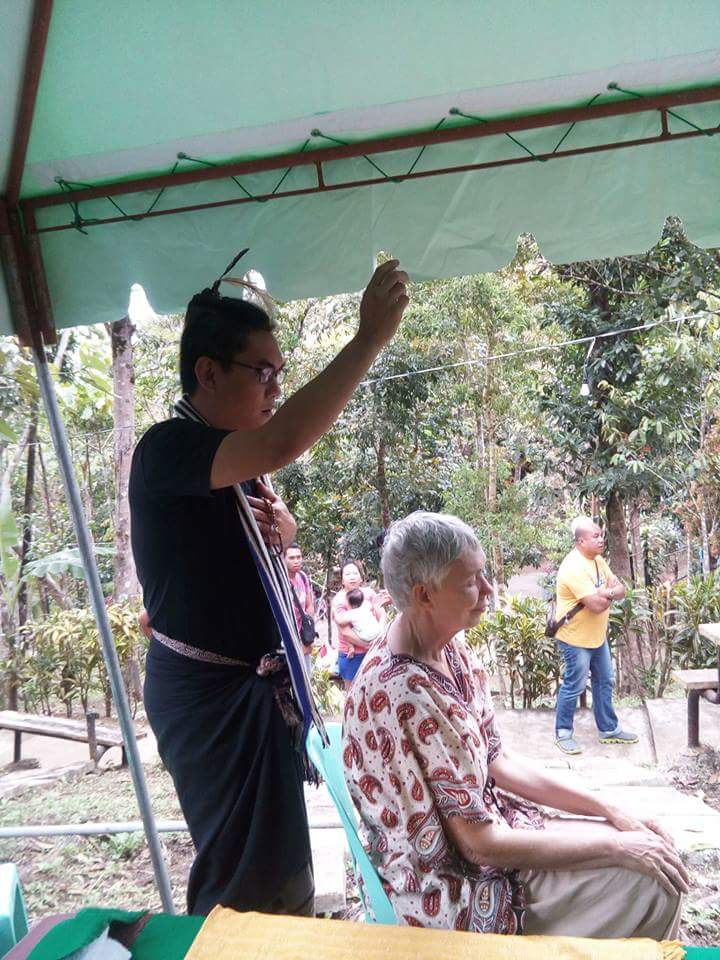
The Manghihilot who perform tawas will journey to check on the Seven Souls which animate the Physical Body and retrieve them to bring back the optimum functioning of the persons life which we know as Health and Wellness.

Millenials and the new generation of people have forgoten this but its effectivity in preventive and promotive health is a valuable practice.

We invite all Healthcare professionals to learn this technique of Traditional Disgnostic measure so that we could provide proper treatment and maintain the optimum health of our client/patient.

For inquiries, appointment and schedule for training or treatment, you may contact Apu Adman Aghama through text or call at +639952467040 or email at hilot.binabaylan@gmail.com

Life as fruit of Love

Hilot is a calling to serve humanity in preserving life by maintaining optimum health and wellness. In preserving life with Hilot, it is impossible to set aside the Spiritual side of this Ancient Filipino Healing Art and Science.

Our life comes from the Spirit of Love. And through Love, life become its fruit.

#HilotBinabaylan
#PhilippineTraditionalMedicine
#BinabaylangTala

Introducing Hilot to Millenials

When people talk about hilot they will automatically think of it as Massage. But people have forgotten that before modern doctors of medicine arrived in our Land, the Manghihilot is the one who is in charge of the healthcare of the Common Filipino People.

Before the time of the ObGyne and Midwife, the Manghihilot is the one who attends in delivering birth to an expectant mother.

Let us not decieve the Millenials by not introducing the Phillippine Traditional and Natural Medicine.

The one you can find in a classy Spa is not hilot but massage.

Massage is just one of the many modalities employed by hilot in affecting cure to an illness of the Patient.

Hilot is a complete traditional healthcare system that has its own method of diagnosis, prevention, promotion, curative and rehabilitative medicine.

Rainy days

img20180811152124-690150942.jpgNon stop pouring of rain from early morning to evening. Most areas in Caloocan and Quezon City are already flooded. So every one are advised to stay dry and keep warm in the comfort of your Home. Since its raining so hard outside, let us talk about the health issues brought by the rain.

Have you noticed that most of the Filipino are afraid to be wet by rain? Because rain fall will make us sick. But how is that true and why it happen when we get wet by the rain we get sick?

We should expect that when it rains outside we must be protected by either wearing raincoat or umbrella. Naturally if we walk outside when it rains without protective covering we will get wet. Now-a-days if we get wet by the rain, we expect that we will get sick if we dont rinse immediately through warm bath. The reason why people get sick when it rains is because of the pollutants that the raindrops contain. So when it flood, the water will also be contaminated with pollutant such as the urine of animals and rats that will give us illness when we are exposed to the flood.

But in the Old times, when our environment is still fresh and clean there is a belief that when you get wet to the rain, you will get sick. So what is their reason why you will get sick when you get wet by the rain?

The Answer is this, when you walk and do your work your body is warm and when you get wet starting from the head it will break the heat that will make the cold enter your body. So you get sick because of the imbalanced energy of Hot and Cold.

I remember when i was assessing in TESDA, i have assessed a 70 Year Old Man who apply for National Certificate in Hilot and during the Assessment we have talked about the natural ways of taking bath.

So my question to him was this, in taking a bath- which part of the body must get wet first? probably most of you will answer hands or head. But naturally, the first part of our body that need to get wet first is our feet. In the olden time there is no shower or pail and dipper. People go to the river or stream to take a bath and in going there the feet is the first one that get wet.

So from that reasoning,  i also observe some old manghihilot in doing their hilot masahe. They start from the feet going upwards. I might disagree on this system but we need to consider their methods and we need to study well about it on why they start from the feet upward.

Mental Disorder and Hilot

I have watched K Brosas which is a Filipina Comedian/Singer/Actress talk about depression on Facebook. I thought i am going to laugh so hard becuase she was a known singer/comedian but instead the laughter that im about to give was replaced by Wow!

I share it here the youtube link that K Brosas Talks about depression. And i agree with her that depressionand anxiety is a mental disorder. She talks about the unreleased childhood anger and fear that she kept inside her for a long time. When she goes to the Hospital all the best doctor can not see any problem when everytime she experience palpitation, tremoring of nerves and emotional down break until she was refered to a Psychiatrist.

There the doctor prescribed her drug to pacify her condition. But what the doctor is treating is just the symptom of the problem and not the main problem it self. As a Traditional Medicine Practitioner, i see that there is no synthetic drug that could bend and heal the mental disorder of a person. The healing must come from the person him/her self and not on drugs. What is in our head is just a physical organ, but our mind comes from outside our physical body.

In Hilot we give importance to the role of Tawas or Spiritual Diagnosis because through this procedure we are touching the persons emotion, mind and spirit that makes the physical body move.

As an individual we react to outside stimulus. And from stimulating our senses i creates bio chemical reaction that affects our being.

In Tawas, we are arranging the persons perception and helping them to have relief and suddenly cure from the situation they have.

Unity in Diversity of Hilot

habi hilotIn Promoting Hilot as the Philippine Traditional and Natural Medicine, we must be reminded that our Country is an Archipelago that is composed of 1,107 islands that been inhabited by almost more than 175 ethnolinguistic tribes. From these Tribes, we will find a diverse culture and tradition; at the same time methods of healing that we now call as Hilot.  Modern Medicine arrived to our country during the Colonisation of Spain by the 1600’s to 1800’s. Prior to their arrival, the pre-colonial Filipino’s have our own medicine and as per record shows from the 17th to 18th centuries, the state-of-the-art medical and pharmaceutical science was developed by the Spanish Friars based on the system of healthcare provided by the Pre colonial practitioners of Medicine and Health Care which is the Babaylan.

Each tribe has their distinct method of healthcare and ways on curing illness that modern researcher and cultural advocate must preserve. Standardising it into one process will not help preserving it. We must be reminded that what our Country makes unique is that we cant be called Philippines without the existence of the Ethnolinguistic Tribes that are present in our country. The same thing will apply to Hilot, it will not become a National Healing Modality without the others.

We can not omit one healing practices in favour of the other. Filipino Scientific Community must take time in studying each modality to prove its effectiveness in providing a cure. As Hilot provide also the four dimension of Healthcare delivery as well having its own diagnostic procedure in determing the cause of ailment of the patient.


New Cover of Habi

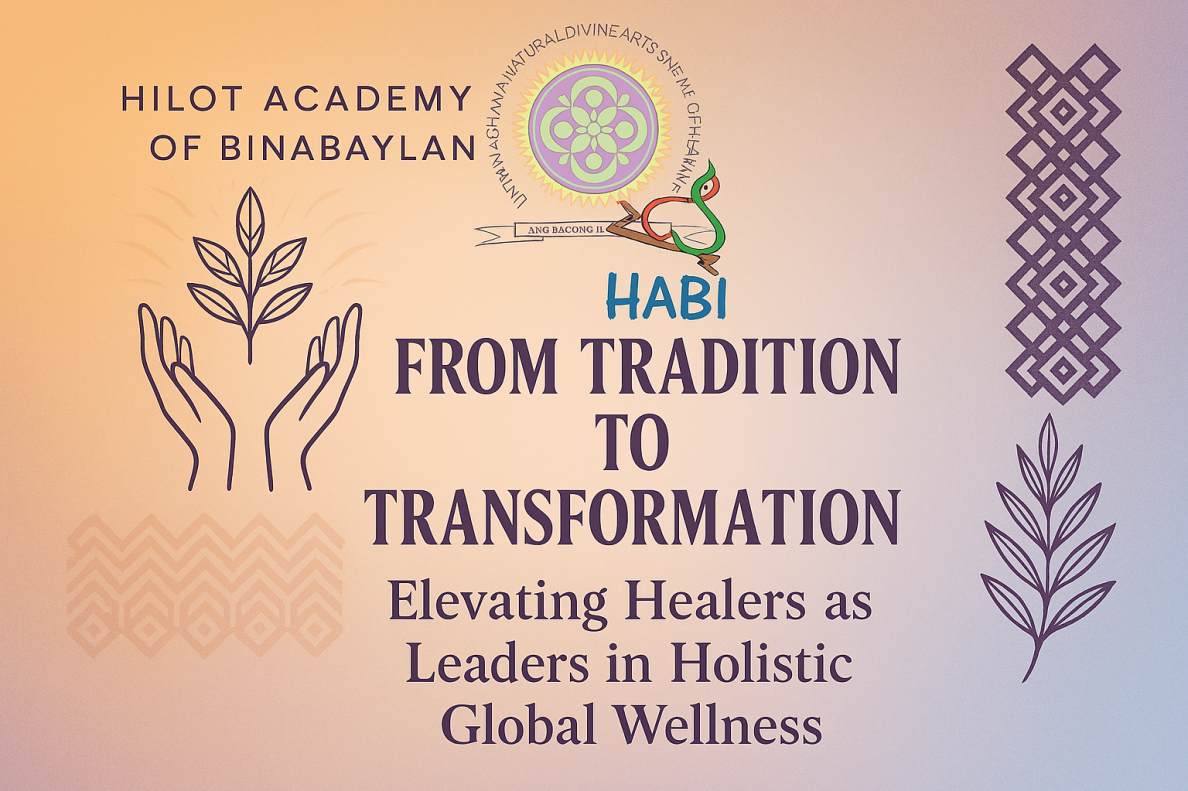
I made a new cover for our Facebook page in Hilot Academy. The cover photo emphasize that Hilot is the Traditional and Natural Medicine of the Philippines.

As i have seen a facebook post with a content of then and now, it is said that Hilot is the former modality and now they are called Massage Therapist. I respectfully object the statement because Hilot is not a Massage.

Still many Filipinos are confused of what really hilot is that is why Hilot Academy is challenged to re introduce Hilot to the Filipino People.

I am making a powerpoint presentation so that we could share the knowledge about hilot with competence.

Health Service Delivery Profile in the Philippines 2012

As i do my research on the value of Traditional and Natural Medicine in the Philippines, i came to the website of Western Pacific Region of the World Health Organization and they got this article on the Health Service Delivery Profile in the Philippines as they compile it on 2012.

Let us take a look on its content as they reported the role of Traditional Medicine in Health Care Delivery Service:

Traditional medicine practice
Traditional medicine and complementary and alternative medicines are widely used in the Philippines. Filipino traditional medicine has been in practice for more than a thousand years. Many forms of complementary and alternative medicine introduced from other countries are also used, such as Chinese traditional medicine, acupuncture, herbal medicines, chiropractic, homeopathy, and Ayurveda. Significantgroups of people depend to varying degrees on different forms of traditional and complementary medicines for their health care. A 2010 WHO WPRO study estimated that 70% of the population uses traditional and complementary medicines. Of those, 89% do so for particular illnesses, symptoms, or cultural needs which biomedicine cannot address, as well for financial reasons. Traditional practitioners’ services are accessible, available and affordable, particularly in remote areas.

The Traditional Medicine unit now the Philippine Institute for Traditional and Alternative Health Care(PITACH), an attached agency of the DOH supports the integration of traditional and complementarymedicine into the national health care system. It is responsible for carrying out the responsibilities stated in the Traditional and Alternative Medicine Act (1997) (currently being updated). There are also three national research institutions covering traditional and complementary medicine: the National Institute for Health, the National Integrated Research Programme on Medicinal Plants, and the Philippine Council for Health Research and Development.

Acupuncture services are covered by PhilHealth, but no other traditional or complementary medicineservices are covered. Acupuncture delivered in hospital is US$0.22-0.44, although private practitioners may charge up to five times more than a physician’s office fee. Traditional birthing attendants charge much lower fees than other birth attendants; PHP755-947 (approx USD15-20), compared to up toPHP3,175 (approx USD60) for a midwife, PHP7,000 (approx USD140) for a nurse, and PHP10,000
(approx USD200) for a physician. Almost uniformly, traditional medicine practitioners do not have setfees, and many accept donations.

Providers of traditional medicine

Traditional and complementary medicine is practiced by private practitioners or healers, and in homesand barangay health stations. They play an important role in primary health care in the Philippines. Traditional birth attendants are used by a significant proportion of birthing women. In 2008 36% of deliveries were assisted by a traditional birth attendant, or Hilot. In 2002 there were 250,000 traditional healers in the Philippines. Compared to medically trained doctors,traditional medicine practitioners are far more accessible. While there is only one doctor for every 80,000 people, there is one traditional healer for every 300 people.

Licensing of practitioners

Traditional medicine and complementary medicine practitioners are recognised in legislation but havedifferent licensing requirements than conventional medicine practitioners/doctors. There are two formal professional self-regulating bodies for traditional and complementary medicine: the National Accreditation Committee for Acupuncture and the Board of Chiropractic both established in 2008. A committee for Homeopathy is in the process of being established. Also in 2008, the Philippine Institute of Traditional and Alternative Health Care issued competency standards for the practice of acupuncture for physicians and non-medical practitioners. In June 2009, a standardized curriculum for acupuncture certification, based on WHO 1999 guidelines, has been delivered to approximately 300 physicians. It is currently under evaluation. There are also plans for the regulation of Chiropractic, Homeopathy and Hilot-Massage. Training and education in traditional and complementary medicine, including at Masters
level, has been supported by several NGOs since 2008.

The Department of Health through the Committee of Examiners for Masseurs conducts bi-annual licensing for massage therapist in the country, consisting of theoretical and practical examinations. Those who pass the exams are given a license to practice massage in the country. The masseur’s license is renewable every 3 years with corresponding medical and continuing education required for it to be renewed.

Traditional Medicines

Herbal medicines can be sold in pharmacies as prescription medicines or as non-prescription medicines,self-medication, or over-the-counter medicines. There are also community produced herbal medicines.
These must stay within the limit of not more than 400 bottles per annum, and are their use is restricted to within the practitioner’s own community.

Quality and safety of traditional medicine

In the Philippines, herbal medicines are regulated in the same way as conventional pharmaceuticals, and can be listed in the Philippine National Drug Formulary. Good Manufacturing Practice requirements for herbal medicines were issued in 1999 and manufacturers of herbal medicines must achieve compliance before they are granted a license to operate. Exclusive safety requirements for herbal medicines were issued in 2004. Reference to safety data in documented scientific research on similar products is
sufficient. A post-market surveillance system for safety of herbal medicines exists.
Of the more than 2,000 herbs identified in the Philippines, only four are currently included in the formulary. Herbal medicines that are sold with any type of health claim will have undergone randomized controlled trials. Such condition does not apply to food supplements which are heavily promoted in the country with little scientific or regulatory control on their claims.

The first edition of the Philippine Pharmacopeia for Herbal Medicine was issued in 2005. Other pharmacopoeia has also been used including those from the United States, Europe, India, China and Japan. The information in these is legally binding.
Guidelines on the Registration of Traditional Herbal Products were issued in 2004, and since then only 50 herbal medicines have been registered. There is a national essential medicines list, and the 2008 version includes five herbal medicines.

To get the full detail of this report, you may click on the link to view it. Health Service Delivery Profile 2012