The Philippine Institute of Traditional and Alternative Health Care (PITAHC) plays a vital role in regulating and promoting traditional Filipino healing practices, including Hilot. For organizations and practitioners involved in Hilot, understanding the accreditation and certification process is essential for legal recognition, professional credibility, and ethical practice.
✅ Benefits of PITAHC Accreditation
1. Legal Authority to Operate
Accredited Hilot organizations are officially recognized by the Department of Health through PITAHC, granting them the legal right to conduct training and healing services.
2. Certification of Practitioners
Organizations can issue:
Certificates of Registration to formally trained Hilot practitioners.
Certificates of Recognition to community-recognized Manghihilot with at least 10 years of practice.
3. Accredited Training and Healing Centers
Accredited institutions may operate:
Hilot Training Centers for formal education.
Hilot Healing Centers in homes, clinics, spas, resorts, and hospitals.
4. Participation in National Health System
Accredited organizations help integrate Hilot into the national healthcare delivery system.
5. Representation and Advocacy
Organizations may nominate representatives to the National Certification Committee for Hilot (NCCH), influencing policy and ethical standards.
6. Protection Against Unregulated Practices
Only PITAHC-accredited entities are authorized to train and certify Hilot practitioners, ensuring safety and credibility.
🧪 Competency Assessment by NCCH
For Formally Trained Practitioners
Completion of training from a PITAHC-accredited center.
Submission of a portfolio with at least 100 patient cases.
Passing a competency assessment that includes practical demonstrations and ethical evaluations.
For Community-Recognized Manghihilot
Minimum of 10 years of practice.
Endorsement by community leaders.
Sponsorship by a PITAHC-recognized organization.
Submission of a portfolio and testimonials.
Committee Composition
The NCCH includes:
Manghihilot and Hilot practitioners.
Medical doctors practicing Hilot.
Trainers from accredited centers.
PITAHC officials.
💰 Fee Guidelines
The official fee for the competency assessment is ₱500.00. This is a one-time application fee mandated by PITAHC Circular No. 01, Series of 2016.
⚠️ Reporting Overcharging Violations
If an organization charges more than ₱500 for the assessment alone:
Request a Fee Breakdown to verify additional charges.
Report to PITAHC with documentation (receipts, advisories).
Contact NCCH for clarification and investigation.
Overcharging may lead to administrative sanctions and, if fraudulent, could result in criminal liability.
📞 Contact Information
To reach the National Certification Committee for Hilot:
For over nine years, Hilot Academy of Binabaylan, the educational ministry arm of Luntiang Aghama Natural Divine Arts Shrine of Healing Inc. (also known as Landas ng Lahi), has been a beacon of ancestral wisdom and healing. Since our founding, we have produced 64 Hilot Binabaylan Practitioners who now serve their communities across the globe—many of whom are part of the Filipino diaspora returning home to reconnect with our sacred healing traditions.
These students had the option to study Hilot through government-accredited institutions such as TESDA or PITAHC, yet they chose us. Why? Because our teachings resonate with their spiritual calling. They sought not just technical skills, but a deeper understanding of Hilot as a sacred art and science—a practice rooted in the soul of our people.
Reclaiming the Sacred in Healing
From the beginning, we made a vow: to share the personal and ancestral knowledge of Hilot, including the practice of Tawas—a spiritual diagnostic method used by traditional Manghihilot. We have demystified Orasyon, reframing it as Therapeutic Communication and Timing, recognizing that words and timing can profoundly affect the mind, emotions, and healing process of the patient.
In our academy, Hilot is soul healing. We believe that the health of the body is inseparable from the health of the spirit. When the soul departs from the body, life ceases. Thus, healing must begin with the soul.
The Struggle for Accreditation
In our early years, we wrestled with the idea of seeking accreditation from government bodies. I personally contributed to the development of Hilot curricula for institutions like the Hilot Philippines Development Center, a legacy school of Dr. Mina Gabor, former Secretary of the Department of Tourism. I also helped establish the Philippine Japan Hilot Association, which gained accreditation from TESDA and the Department of Tourism.
But when it came to Hilot Academy of Binabaylan, we chose a different path.
Why? Because the current accreditation standards forbid the inclusion of Tawas and Orasyon in the curriculum. They limit spiritual practices to Christian and Islamic prayers, excluding indigenous expressions of faith and healing. This reflects a colonial mindset that prioritizes physical health while neglecting the soul.
Standing for Decolonization and Spiritual Integrity
We teach decolonization. We honor the wisdom of our ancestors. We believe that healing is not just clinical—it is spiritual, emotional, and cultural. To conform to accreditation standards would mean compromising our identity and silencing the soul of Hilot.
Unless PITAHC or other bodies are willing to fund research that validates Tawas as a legitimate diagnostic method, we remain in a dilemma: Do we embrace autonomy or submit to colonized standards?
A Vision for the Future
Despite these challenges, we continue to dream. We envision a future where Hilot Binabaylan is not only an ecclesiastical degree in ministry but also recognized as an academic degree. We are committed to ensuring that our graduates are employable, empowered, and respected as Hilot Binabaylan Practitioners—both in the Philippines and around the world.
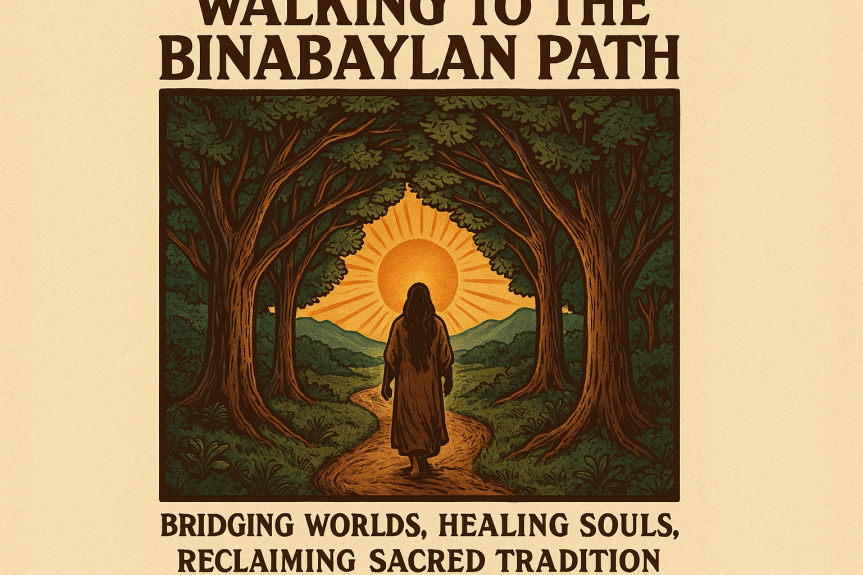
We walk the path of the Binabaylan: bridging worlds, healing souls, and reclaiming our sacred traditions. And we invite you to walk with us.
Issued by: Templong Anituhan ng Luntiang Aghama Hilot Academy of Binabaylan In solidarity with Independent Manghihilot Practitioners
🛑 Warning Against Monopolization of Hilot
We issue this advisory to caution any organization, institution, or individual that attempts to monopolize the practice of Hilot by claiming exclusive authority or ownership over this sacred tradition.
Hilot is a shared cultural and spiritual heritage of the Filipino people. It is not a proprietary system, nor can it be restricted to a single group or entity.
⚖️ Legal Basis
The following laws protect the right of all Filipinos to practice Hilot:
1987 Philippine Constitution
Article XIV, Sections 17–22: Protects indigenous cultural communities and their traditions.
Article III, Section 5: Guarantees freedom of religion and spiritual practice.
Republic Act No. 8371 – Indigenous Peoples’ Rights Act (IPRA)
Recognizes the right of Indigenous Peoples to preserve and develop their traditional healing systems.
Republic Act No. 10066 – National Cultural Heritage Act of 2009
Prohibits the misappropriation or exclusive control of cultural heritage.
Republic Act No. 8423 – Traditional and Alternative Medicine Act (TAMA)
Encourages the development of traditional health care without monopolization.
🏛️ Government Agencies and Cultural Institutions Responsible for Oversight
We call on the following agencies to uphold and protect the inclusive practice of Hilot:
National Commission for Culture and the Arts (NCCA) – Lead agency for cultural heritage protection
National Museum of the Philippines – Preserves and documents Filipino cultural heritage
National Historical Commission of the Philippines (NHCP) – Conserves historical and intangible heritage
Komisyon sa Wikang Filipino (KWF) – Promotes indigenous languages and cultural expressions
Philippine Council for Health Research and Development (PCHRD – DOST) – Maintains the TKDL on traditional health knowledge
Department of Health (DOH) – PITAHC – Regulates traditional medicine within the formal health system
📣 Our Stand
We affirm that:
Hilot is a sacred calling, not a commercial brand.
No organization has the legal or moral right to claim exclusive ownership of Hilot.
Manghihilot practitioners, whether PITAHC-certified or not, have the constitutional and ancestral right to practice Hilot in accordance with their traditions.
🤝 Call to Action
We call on:
Government agencies to uphold the rights of traditional healers.
Cultural institutions to protect Hilot as a living heritage.
Communities and practitioners to stand united against exclusion and monopolization.
✍️ Issued this 4th day of August 2025
Rev. Rolando Gomez Comon Chief Priest, Templong Anituhan ng Luntiang Aghama Founder/Program Director Hilot Academy of Binabaylan
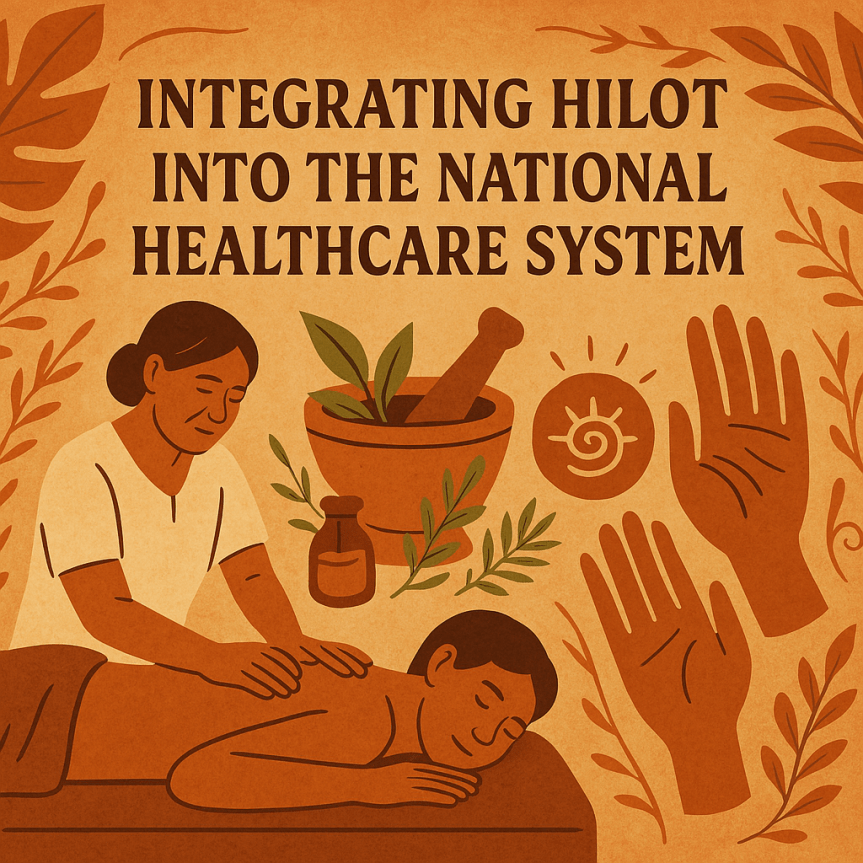
In the heart of Filipino culture lies a healing tradition that predates modern medicine—Hilot. More than just a massage, Hilot is a holistic approach to wellness that addresses the body, mind, and spirit. As the Philippines continues to modernize its healthcare system, there is a growing movement to reclaim and integrate Hilot into the national healthcare delivery system.
🏛️ A Legal Foundation: RA 8423
The integration of Hilot is not just a cultural aspiration—it is supported by law. Republic Act No. 8423, also known as the Traditional and Alternative Medicine Act (TAMA) of 1997, mandates the promotion and integration of traditional and alternative healthcare practices into the national health system. This law led to the creation of the Philippine Institute of Traditional and Alternative Health Care (PITAHC), which now oversees the certification and regulation of traditional healers, including Hilot practitioners.
🔍 Understanding the Types of Hilot
There are three primary streams of Hilot practice in the Philippines:
Hilot Binabaylan: Rooted in indigenous spirituality, this form of Hilot is passed down through oral tradition and spiritual calling. It involves rituals, energy healing, and ancestral wisdom.
TESDA Hilot: Offered as a vocational course under TESDA, this version focuses on massage therapy and wellness, preparing practitioners for work in spas and wellness centers.
PITAHC Hilot: Recognized by the Department of Health, this form integrates traditional diagnostic and healing methods with public health services, emphasizing herbal medicine, community wellness, and preventive care.
🌀 A Framework for Integration
To fully integrate Hilot into the national healthcare system, a structured approach is essential. Here’s a five-phase model:
1. Diagnostic Phase
Recognize Hilot’s traditional diagnostic methods—such as pulse reading and energy assessment—as complementary to biomedical diagnostics, especially in rural health units.
2. Cleansing Phase
Train Hilot practitioners to offer non-invasive cleansing techniques like pahid, tuob, and ventosa in barangay health centers as part of wellness and preventive care.
3. Repair Phase
Allow certified Hilot practitioners to provide therapeutic massage and herbal remedies under DOH supervision, in collaboration with PITAHC-recognized healing centers.
4. Strengthening Phase
Mobilize Hilot practitioners to lead community herbal gardens and ethnobotanical documentation, in partnership with LGUs and the Department of Agriculture.
5. Maintenance Phase
Empower Hilot practitioners to serve as health coaches, teaching traditional wellness practices, nutrition, and stress management in barangay health education programs.
🤝 Policy and Institutional Support
PITAHC’s Circular No. 01, s. 2016 provides a clear pathway for:
Certification of Hilot practitioners
Accreditation of Hilot training and healing centers
Integration into public health services
With the legal and institutional framework in place, what’s needed now is community support, local government action, and national recognition of Hilot’s value in building a healthier, more culturally grounded Philippines.
📣 Final Thoughts
Integrating Hilot into the national healthcare system is more than a policy move—it’s a cultural revival. It honors our ancestors, empowers our communities, and offers a holistic path to wellness that is uniquely Filipino.
In our Code of Ethics, we have mentioned that we are Healthcare providers whose goals consist of prevention of premature death and disability, maintenance or improvement of life, maximization of personal growth and development, and preparation for a good death.
As a manghihilot, our role is not to promise a long life to our patients. Instead, we offer something deeper—we help them embrace life fully, with all its challenges and transitions. We guide them to find comfort, meaning, and joy in every moment, no matter how difficult.
We do not see death as an enemy to be fought. Rather, we recognize it as a gentle guide—one that reminds us to live with purpose, to cherish our relationships, and to find peace in the present. In our healing practice, death is not the end, but a companion that helps us appreciate the beauty of life.
“It has been taught to us as Manghihilot, our role in caring is from the time of conception to the moment of transition from this plane of existence to the next life.”
In our tradition as Manghihilot, healing is not just a profession—it is a sacred calling. We are taught that our responsibility begins at the very start of life, even before birth, and continues until the final breath. Our care spans the entire human journey, from conception to transition, from the womb to the world beyond.
More Than Healing the Body
Our work is not limited to treating physical ailments. We are called to listen deeply—to the body, the spirit, and the emotions. We understand that true healing involves the whole person, and that pain can come not only from the body, but also from the heart and mind.
Honoring Life and Death
As Manghihilot, we do not fear death. We do not see it as something to fight or avoid. Instead, we recognize it as a natural part of life’s sacred cycle. We walk with our patients through every stage of life, including the final one, offering comfort, peace, and dignity.
A Tradition That Evolves
Our practice is rooted in the wisdom of our ancestors, but it is not stuck in the past. We continue to learn, grow, and adapt—bringing Hilot into the modern world while staying true to its spiritual essence. We believe that healing is a lifelong journey, and our presence is a gift of love and service from beginning to end.
Recently, a graduate of the Hilot Academy asked me whether we have any documented cases involving palliative care or end-of-life care within the practice of Hilot. Regretfully, I had to respond that we do not. The graduate pointed out that other traditional healing modalities have such documentation, while Hilot appears to lack it.
This absence is not due to a lack of experience or wisdom among Manghihilot, but rather a reflection of how our tradition has been preserved. Most Manghihilot have not been formally educated in colleges or universities. Their knowledge is deeply rooted in oral tradition and lived experience. They act rather than write. Their learning is carried in the mind and heart, passed down through narration and demonstration, not through modules or modern training materials.
This way of transmission is sacred and powerful, but it also means that much of our healing work remains undocumented. As we move forward, perhaps it is time to begin bridging the gap—honoring our oral traditions while also finding ways to preserve them in written form, so that future generations may continue to learn, grow, and share the wisdom of Hilot.
“In the sacred silence between life and death, the Manghihilot does not surrender—he pleads, he prays, and he offers his soul in service, asking for one more chance to heal.”
For the sake of documentation, I want to share a personal experience on how I, as a Manghihilot, have cared for a dying patient.
First and foremost, it is never our intention for a patient to die under our care. If that were the case, why would we devote time, energy, and spirit to preserving life? Our role is rooted in the belief that life is sacred and worth fighting for—even in its most fragile moments.
When a patient is facing a serious illness, it may seem that death is near. But as Manghihilot, we do not simply accept this. Instead, we plead with death—asking it to grant the patient another chance to live. It is a spiritual negotiation, a bargaining of life with death.
And if death allows the patient to stay, a promise must be made and fulfilled. This promise is not just a ritual—it is a sacred commitment to honor the life that was spared. In this way, our healing practice becomes not only physical but deeply spiritual, rooted in reverence for both life and the mystery of death.
“In the quiet moments before farewell, the Manghihilot becomes not just a healer—but a guide, preparing the soul for its sacred journey home.”
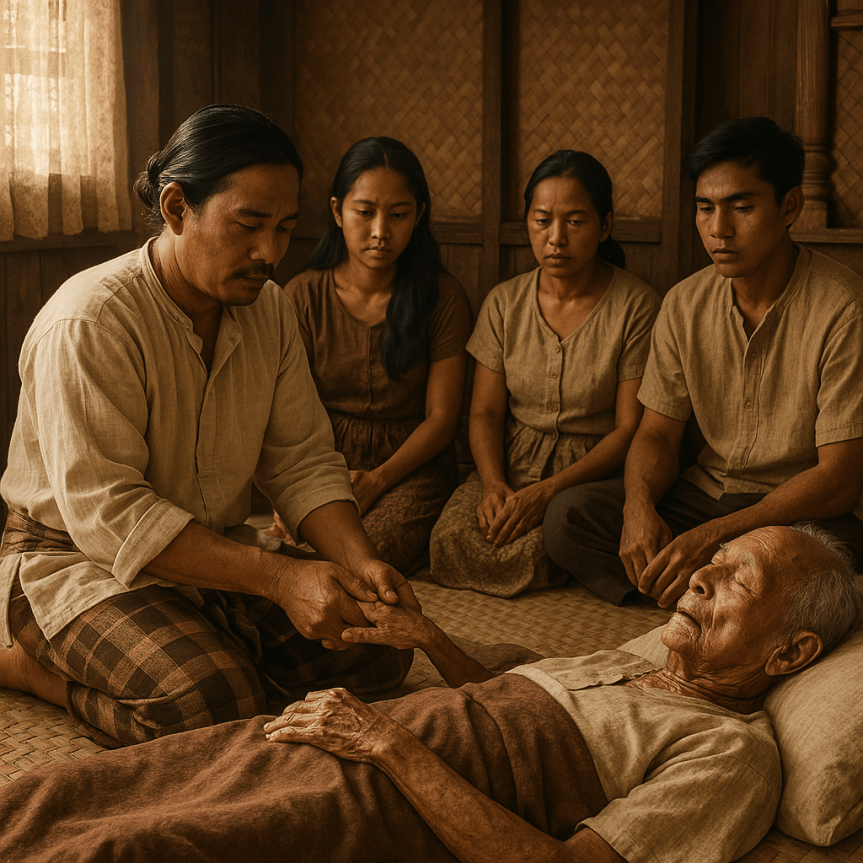
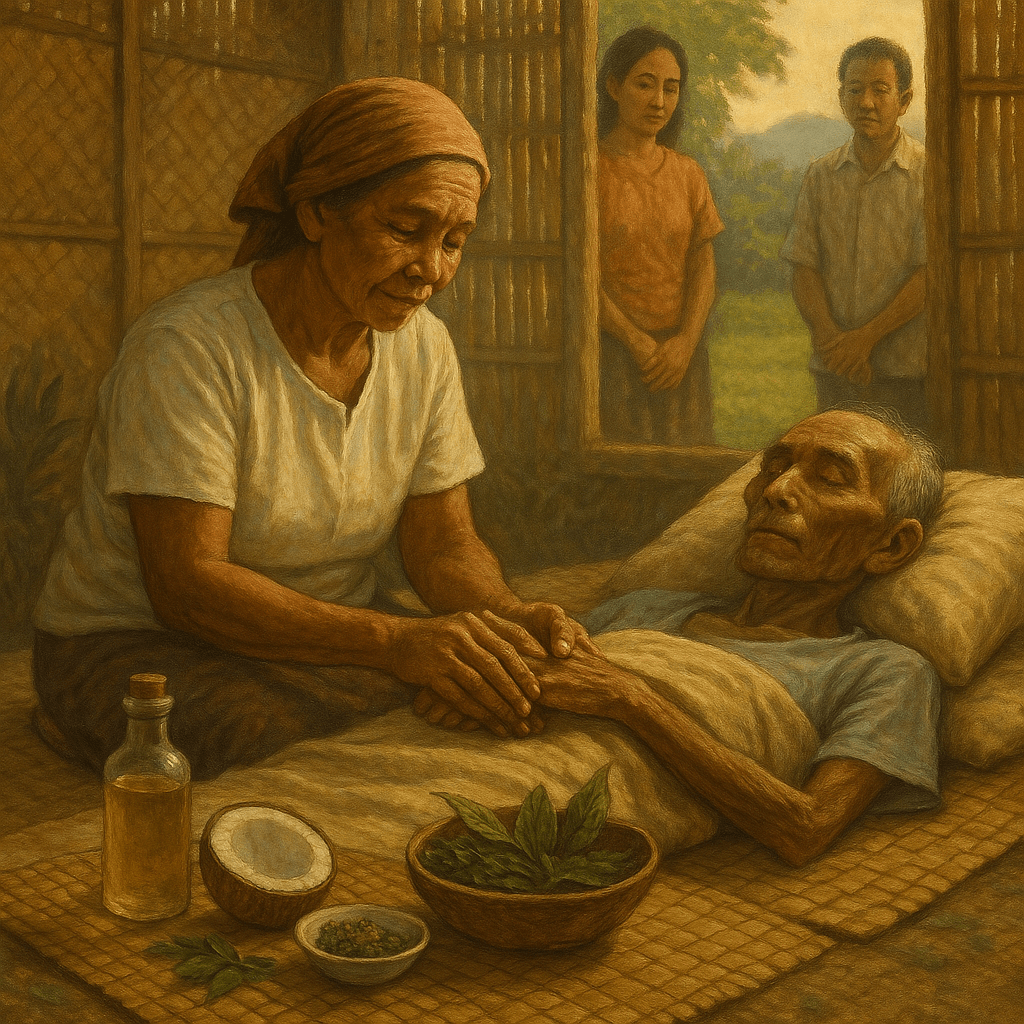
I remember my 80-year-old neighbor, Tata Piyo, who was undergoing dialysis for a kidney condition. His daughter, Ate Belen, came to me one day and asked for help in caring for her father. Despite his age and fragile condition, we chose to fight for life. As a Manghihilot, I did everything I could to ease his suffering—applying hilot pahid to relieve his pain, performing suob and paligo, and even designing a special diet to support his condition.
One day, Tata Piyo was in great pain. Ate Belen rushed to my house, asking me to attend to him. When I entered his bedroom, he looked at me and said in Tagalog, “Ihatid mo na ako.” I responded in a light-hearted way, “Where do you want me to send you? Don’t worry, when you regain your strength, we’ll go to Jollibee.” He laughed, gathering all his remaining strength, and replied, “Hindi, ihatid mo na ako sa ating Ama sa langit.”
I wasn’t prepared for those words. But I kept my composure and gently asked Ate Belen to call the rest of the family. I told them that Tata Piyo was asking to rest, and that the decision must come from them—not from me.
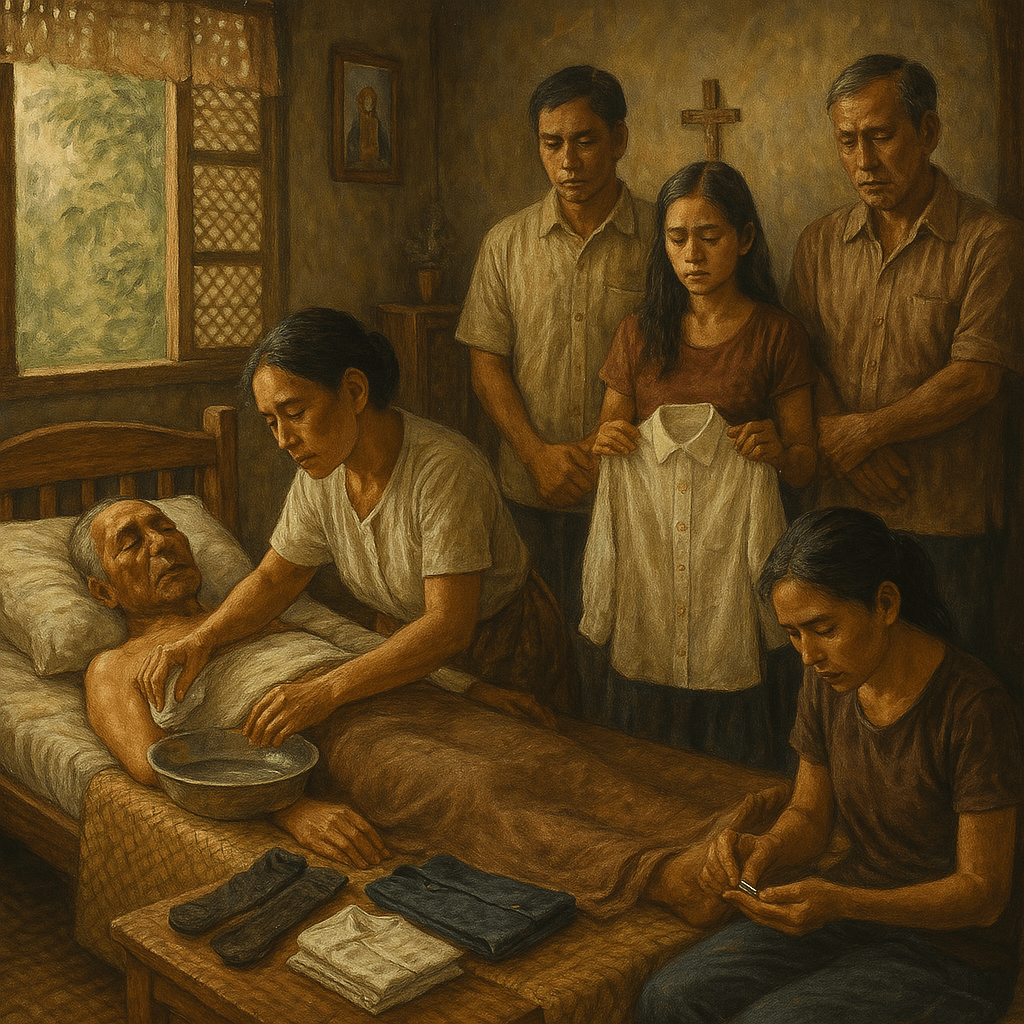
Together, we discussed whether to continue fighting for his life or to let him go peacefully. The family, acknowledging his age, his weakened body, and their readiness to accept his passing, decided to let him go. They remained composed, not wanting Tata Piyo to see them cry.
Everyone began preparing his clothes—underwear, socks, pants, t-shirt, and barong. I clipped his fingernails and toenails and gave him his last bed bath, ensuring he was clean and dignified for his journey.
At exactly 6:00 PM, Tata Piyo took his final breath.
This experience reminded me that as Manghihilot, our care extends beyond healing—it reaches into the sacred space between life and death. We do not just treat the body; we honor the soul. And in moments like these, we become witnesses to the most profound transitions of life.
Health Care requires trust from the people that will receive it. That is why Hilot has been the most trusted Healthcare modality in the Philippines since before the Colonization Period. Modern Medicine is only a recent introduction to the Filipino People especially to those who are living in the rural areas and in a far-flung community where modern Health Care doesn’t reach. And besides, the introduction of modern medicine was only available for the rich people who can afford it. While Hilot can be easily availed by any one as it does not cost much. Traditionally, Hilot can be obtained from Family Members such as mother, aunties or even grandmother. The Principle of Loving Care is applied in Hilot Treatment that does not require monetary payment. Here are my answers to your questions:
What skills and training are necessary for someone to become a trusted manghihilot, and how do you ensure safety in your practice? The Skills of Manghihilot in treatment is based on Traditional Healing Principles.
DIAGNOSTIC. Manghihilot uses different diagnostic methods to determine if the illness is caused by Physical Mean or Spiritual Mean. That is why there is a Finger Alignment Method (pantay daliri) to determine if the illness is caused Spiritually or Physically. Then if the cause of illness is caused by the Spirit, the Manghihilot employs Tawas which can be likened into a Psycho- Emotional Assessment. Hilot Academy redefined Tawas from being Spiritual Diagnosis to Traditional Alternative Wellness Analytic System.And if the illness is caused Physically, the Diagnostic Method employed is called Pasubay which observed the patient using 5 senses to determine the disorder of the patient. And if the person has internal problems which are caused by the imbalance of the organ, the manghihilot employs himulso or pulse reading analysis.
CLEANSING. Whether the illness is caused spiritually or physically, we believe that the person becomes impure that it needs to be cleansed. The water is employed in cleansing whether internally or externally.
REPAIR. After cleansing, the manghihilot will address the problem by repairing it. There are different treatment techniques to be employed on different illnesses. Even if there are 2 persons suffering from similar illness, the treatment is uniquely different from each individual.
STRENGTHENING. After treatment, whether be it simple illness to chronic disease, the Body gets weak that is why the manghihilot will provide herbal tea to drink and prescribe food to eat to recover the patient’s strength; and lastly
MAINTENANCE: The manghihilot will provide to the patient some home care remedies, amulets and charms and even instructions of physical activity that the person may prevent from getting sick from the same ailments.
In terms of Training, the Authentic Manghihilot are not schooled. The Knowledge, Skills, Abilities and Attitude of Manghihilot are being taught through observation and experience either through apprenticeship from a Hilot Master or out of compassion, just like a mother that her child gets sick will find a way to apply cure to her child. Though as Manghihilot, we do not claim that we can cure, but we believe that all individuals have the ability to heal themselves, and we as manghihilot are only the facilitator that helps the individual to achieve their own healing through the medicine we provide that is by employing the powers of the elements such as herbs, heat, light, water and time. As manghihilot, we are translators more than communicators. We listen to the voice of the Spirit and their body and relay to the individual what they do not understand and after that we seek help from nature to have medicine for the sick.
How do you ensure safety in your practice? This is a personal question on how I personally ensure the safeness of my practice. So, I will respond to this in accordance with our Code of Ethics. In the book i write which is titled as Hilot Gamutan: a Fundamental Guide in Hilot Treatment Methodology, i will quote on page 9, that states:
“As manghihilot, we do not treat patients that have conditions that are beyond our understanding. We refer them to proper healthcare professionals as necessary. As manghihilot, we are trained to treat Traditional Filipino Ailments known as Pilay, and our works only revolved in treating this illness. Our limitation as manghihilot is bound only to what we know, so in order to overcome this limitation we should be open for learning and face the modern challenges of life; as time evolves into modernity we will bring hilot all along so that future generations may still benefit from it.”
That is how I observe safety in my practice of Hilot.
2. How do you address criticism that Hilot may cause complications, especially in cases where professional medical intervention is needed?
Just like what it is stated in our Code of Ethics, we limit our practice in Treating Pilay which is our Traditional Illness. But with the advent of modern medicine and colonizing indigenous tribes, the illness of brought by colonizers such as the cry of one dumagat chieftain, when the government enters the forest, new illnesses have been found in their tribe that originally there are only 10 common illnesses that comes to them which they can solve. So, they are asking for help from the Government to send medical doctors in the forest, but unfortunately, there are only few Honorable doctors who will take that challenge to live among the indigenous people and adopt their culture.
3. What role do you see Hilot playing in a modern healthcare setting? Should it complement or stand apart from mainstream medicine?
Hilot plays a primary role in Health Care as we are the grass root of Modern Medicine. Common People who live in rural areas trusted Hilot more than the modern healthcare professionals. We can bridge that gap by educating the people to trust modern medical practitioners, unlike the modern doctors who discriminate against us in our practice. In the lessons about the Generations of Healers the Modern Doctors are 4th Generation healers as ordained by the Supreme Divine Creator who is the First genration healer, next was the Babaylan, third, during the coming of the colonizers the healing abilities of Babaylan are distributed to the Manghihilot and Mananambal, the fourth is the Modern Doctors, the Fifth is the Hilot Binabaylan which we belong and the 6th generation in prophecy are the Integrative Medical Doctors who combined the Modern Science and the Ancestral ways of Filipino Healing.
As Hilot Binabaylan, I am looking forward for this to happen as of this moment, there are no Modern Medical Doctor who practice Hilot in Health Care, even Dr. Jaime Galvez Tan who advocates hilot does not practice it instead do acupuncture nor Dr. Isidro Sia former Director General of Pitahc also practice Acupuncture and Dr. Anabelle Pabiona De Guzman, another Pitahc Director General who established the Naturopathic School in Far Eastern University Manila. Dr. Mina Gabor who is former Department of Tourism Secretary has established Hilot School at International School of Sustainable Tourism can not be considered as Integrative Doctor as she is not a medical doctor by profession nor a manghihilot.
4. What steps do you think should be taken to modernise Hilot while preserving its cultural significance
First is, we have Republic Act 8423 that establishes Philippine Institute of Traditional Alternative Health Care or PITAHC. This law has the objective to promote and advocate the use of traditional, alternative, preventive and curative healthcare modalities that have been proven safe, effective, cost effective and consistent with Government standards of medical practice. But as we can see, PITAHC only put aside the promotion of Hilot and relied much on the Department of Tourism. Hilot is not a Hospitality Service but we must be included in Health Care Services. Hilot is not for Entertainment. You ask every living lola and lolo right now on how they remember Hilot, they will tell you that when they get sick, their mother will send them to a manghihilot.As Manghihilot, we do not rely on Pharmaceutical but instead we create our own medicine by harvesting it to our Garden. This is the reason why we do not charge money, because the medicines we formulate are from our own backyard. Manghihilot Cultivates the land where it produces our medicine. By that you can see we are not just a body worker, but we are also an Earth Steward. But as I go back to the steps in modernizing Hilot and preserve its cultural significance, Hilot should be put out in the Spa Industry but instead be employed in Public Health Care Facilities. Trained Hilot in Schools can work as Field Researcher in documenting Herbs, trees, flowers that grow in their Barangay. And from what they gather, they will send it to a more advanced Facility in Pitahc to conduct more intensive research to find the medicinal value of the plants. Then, upon finding its medicinal value, they can cultivate and propagate. Harvest then manufactures finished products such as tea, tablets, syrups, liniments, oils, etc. that can be distributed to the barangay constituents.
Pitahc should be included in DOH Offices that have Regional, Provincial, Municioal/ City and Baranggay Health Center. Since we are the grass root of health care, Modern Medicine and Traditional Medicine can work together hand-in-hand in caring for the health of the people.
I pray that I answered all of your Questions.
(Please do visit Medical Channel Asia for more Modern Health Care Contents and how it could help to integrate the Traditional Medicine into the modern health care practices in Asia.)
Good News to Everyone! Hilot Academy of Binabaylan which is an Educational Ministry of Luntiang Aghama Natural Divine Arts Shrine of Healing Inc. (which is a Center for Philippine Traditional Spiritual Beliefs and Practices) is opening up it’s doors (specially to it’s graduates) for a Continuing Education Program. This program is ideal for those who have taken up the Non Contact Hilot Mind and Spirit work which usually specialize on Hilot Diagnostics Method. This mean that those who have taken the class may now can complete the remaining classes in order to become a full Hilot Binabaylan Practitioner. As we have designed that a Hilot Binabaylan should be able to perform the following competencies:
Hilot Diagnostics which compose of Tawas Spiritual Diagnostics, Kilubansa Elemental Name Energetic Balance Analysis, Pulse Reading Analysis. In our new Curriculum design, we added in this competency the Hilot Profiling method, Physical Assessment and Evaluation and Vital Sign Taking & monitoring, and Sibulan Adlaw Tala Baybayin Mystic Oracle.
Hilot Cleansing Methods which consist of Punas, Babad, Langgas, Mumog, Buhos, Hilod, Suob.
Hilot Treatment Methods which consist of Hilot Tapal or Herbal Poultice Application, Dagdagay/ Kulis Stick Foot Massage, Tawak/Tandok/ Bentusa Fire Cupping, Kayod or Scraping Therapy and Hilot Touch Manipulation Techniques.
Hilot Home Care Supplementation which consist of Herbal home remedies, Bio Energetics Techniques of Unat, KiGa and Indak Movements.
We also encourage all of our graduates from 2016 up to 2023 to have self-evaluation and retake the course or have an update to a class which they have not taken in the past. As all of the above-mentioned competencies are required so that you may upgrade your status on being a Hilot Binabaylan Practitioner to Hilot Binabaylan Mentor.
Mentorship Certification Program
When you take our class in the past, what you have received from us is just a Certificate as Hilot Binabaylan Practitioner. And your duties and responsibilities are only limited in providing Philippine Traditional and Indigenous Health Care into your Community. But through our Mentorship Certification Program, this will enable you to share your knowledge and expertise on the practice of Hilot Binabaylan that may initiate an Individual or group and be ordained as Hilot Binabaylan.
Requirements
Hilot Mentorship Certification is an upgrade opportunity for all of our Hilot Binabaylan Practitioners to earn extra income by becoming a Mentor & Assessor/ Evaluator. So, it is important requirement before you become a Certified Hilot Binabaylan Mentor & Assessor/ Evaluator is that you are a Hilot Binabaylan Practitioner for about 3 years. That means if you have taken the course on 2019, you are qualified to take this course. And it is important that you practice all the skills competencies prescribed in order to become a Hilot Binabaylan Practitioner or you can be a mentor of a specific skills. Such as in skills in the above-mentioned skills competencies.
How will it work?
Mentors candidate must fill up a self-evaluation form before application. It is necessary for mentors to be expert on the field that you are going to mentor or share. It is ideal for us that you should be expert in all field as Hilot Binabaylan so that you could also work as an Evaluator. In order for you to be a Certified Trainer, you have to share your knowledge of the skills you are to mentor during the regular class of Hilot Binabaylan Training and the Trainer (which is me, lakay and Mam Nora) will supervise you in co-training or mentoring. So, that means you have to attend the regular 9 days class and master each subject we teach from Hilot Diagnostics to Hilot Suplementation. Upon completion of training of the regular class of 9 days, additional days will be allotted to you for the trainer’s feedback as mentor and then the awarding of Certificate as Mentor. Upon awarding of Certificate, you are only allowed to mentor a skill which you are being certified depending on your performance if you qualify to become a trainer. If you are qualified on all skills level, you will become a certified trainer or if you only have few skills, you will just be a mentor.
If you want to be evaluated as mentor or trainer, you may bring a student to enroll on our 9 days and we will give you chance to share your knowledge and experience as Hilot Binabaylan by becoming a mentor, co trainer with supervision.






 Hilot Academy of Binabaylan
You must be logged in to post a comment.