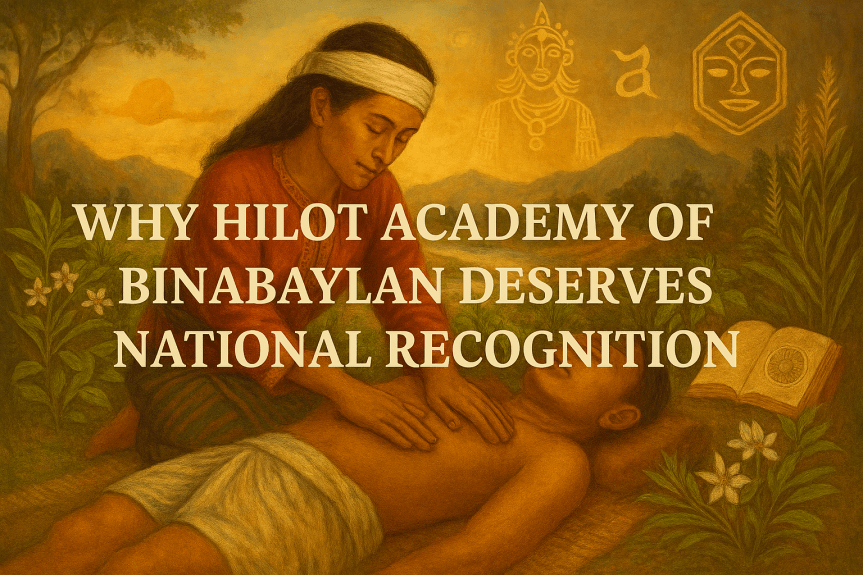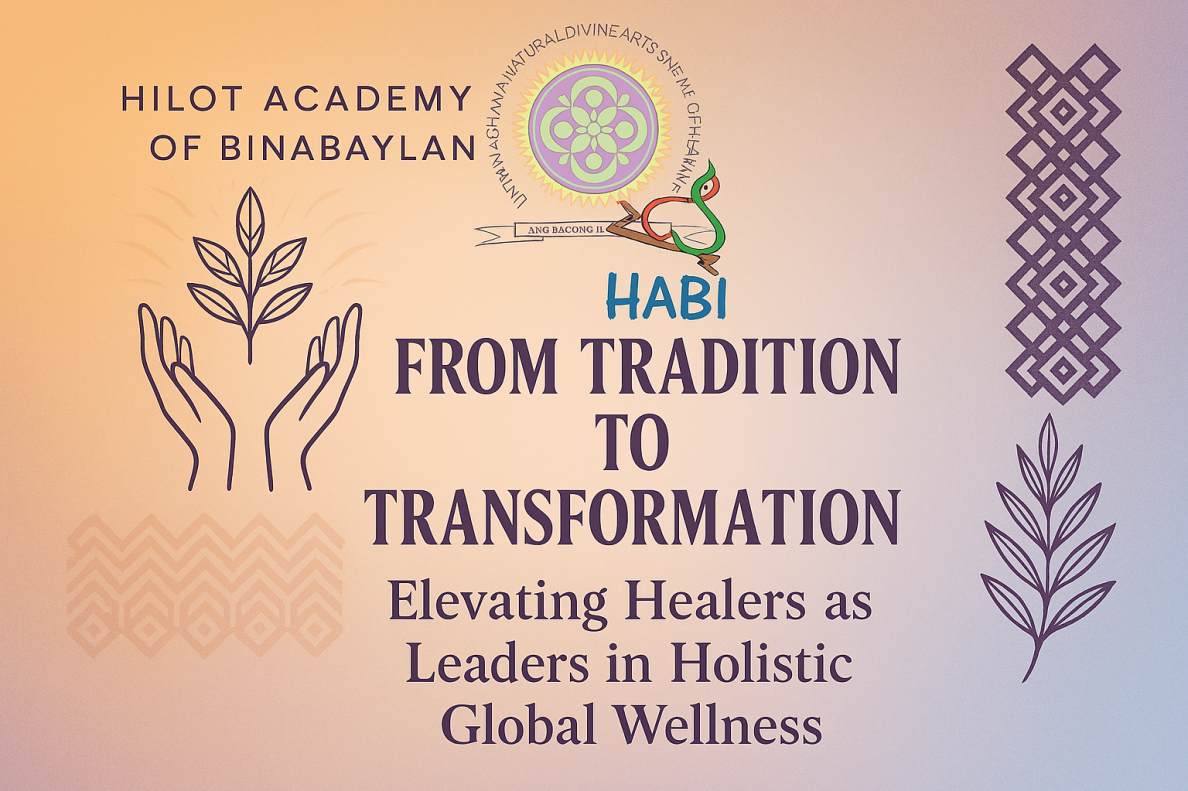
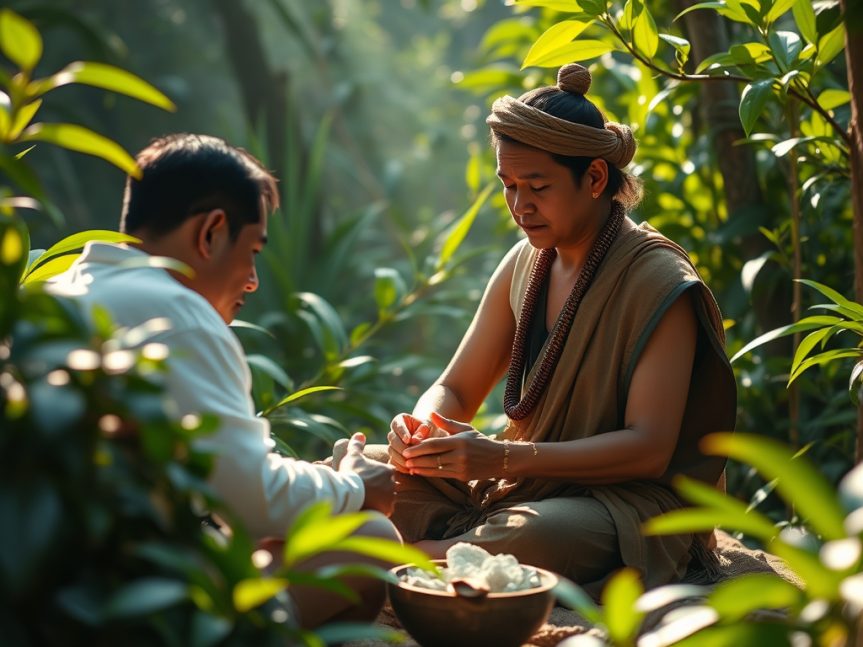
In 2016, the Hilot Academy of Binabaylan was born with a vision to preserve and elevate the ancient healing arts and spirituality of the Filipino people. Though originally envisioned as Hilot Academy of Binabaylan International, the name was refined to HABI—a powerful acronym that not only stands for Hilot, Academy, and Binabaylan, but also evokes the Filipino word habi, meaning “to weave.”
This weaving is not merely symbolic. It reflects the Academy’s mission to interlace the physical, emotional, mental, social, and spiritual fabrics of life into a holistic tapestry of wellness. Through its teachings, HABI has become a loom where ancient wisdom and modern practice converge, creating a healing tradition that transcends borders.
From Local Roots to Global Reach
Despite initial limitations in naming, HABI has organically grown into an international movement. Since its founding, over 80 ordained and certified Hilot Binabaylan Practitioners have emerged across the globe—from the United States, Canada, Chile, Italy, France, London, Austria, Vietnam, Japan, and Australia, to its sacred homeland, the Philippines.
These practitioners began their journey seeking knowledge of Filipino healing arts. Yet, through their studies, they unearthed a deeper connection to precolonial Filipino spirituality—a sacred path that predates the Abrahamic religions of Islam and Christianity. In doing so, they became not just healers, but weavers of ancestral memory, restoring threads of indigenous wisdom long buried under colonial narratives.
Healing Beyond the Physical
At the heart of HABI’s philosophy is the understanding that true healing begins with the soul. The Academy teaches that health, illness, and wellness are not isolated phenomena within the body—they are reflections of our relationships, our environment, and our connection to the divine.
Through the lens of Kapwa, the Filipino concept of shared identity and interconnectedness, HABI practitioners recognize that healing must extend beyond the individual. It must encompass the community, the land, and the unseen energies that flow through all things.
Thus, the practice of Hilot Binabaylan includes:
– Rituals and offerings (atang) to harmonize spiritual energies
– Prayer in motion, where movement becomes medicine
– Sacred foods and drinks that nourish both body and spirit
– Environmental energy weaving, ensuring balance and clarity in the spaces we inhabit
These methodologies are not mere supplements—they are central to the healing process. They restore the flow of life force (hininga), clear disruptions, and prevent illness from taking root.
The Loom of the Future
As HABI continues to grow, it stands as a testament to the resilience and relevance of Filipino indigenous knowledge. It is a loom of transformation, where healers become leaders, and tradition becomes a living force for global wellness.
Through its graduates and teachings, HABI is not just reviving a practice—it is weaving a new world, one where healing is sacred, interconnected, and deeply rooted in the soul of the Filipino people.
Author: Apu Adman Aghama
Parasites and Healing: A Filipino Holistic Approach
What Are Parasites?
Parasites are organisms that live in or on a host, feeding off it and often causing harm. They include intestinal worms, protozoa, and ectoparasites like lice. Infection occurs through contaminated food, water, insect bites, or poor hygiene.
Common Symptoms of Infection
– Abdominal pain or bloating
– Diarrhea or constipation
– Fatigue and weakness
– Skin rashes or itching
– Weight loss
– Persistent fever
– Sleep disturbances or irritability
Filipino Herbal Remedies
Traditional Filipino healing uses herbs to cleanse the body of parasites:
– Niyog-Niyogan (Quisqualis indica) – Chewed seeds expel intestinal worms.
– Bawang (Garlic) – Antiparasitic and immune-boosting.
– Bayabas (Guava) – Antiseptic; used as tea or wash.
– Sambong– Detoxifying; supports kidney and liver function.
These herbs are often used with Hilot rituals for holistic healing.
Prevention Tips
– Wash hands regularly, especially before eating and after using the toilet.
– Drink clean, filtered or boiled water.
– Cook meat and fish thoroughly.
– Avoid walking barefoot in contaminated soil.
– Use insect repellent and protective clothing.
– Maintain clean living spaces and personal hygiene.
– Deworm pets and avoid close contact with infected animals.
Spiritual Parasites and Cleansing
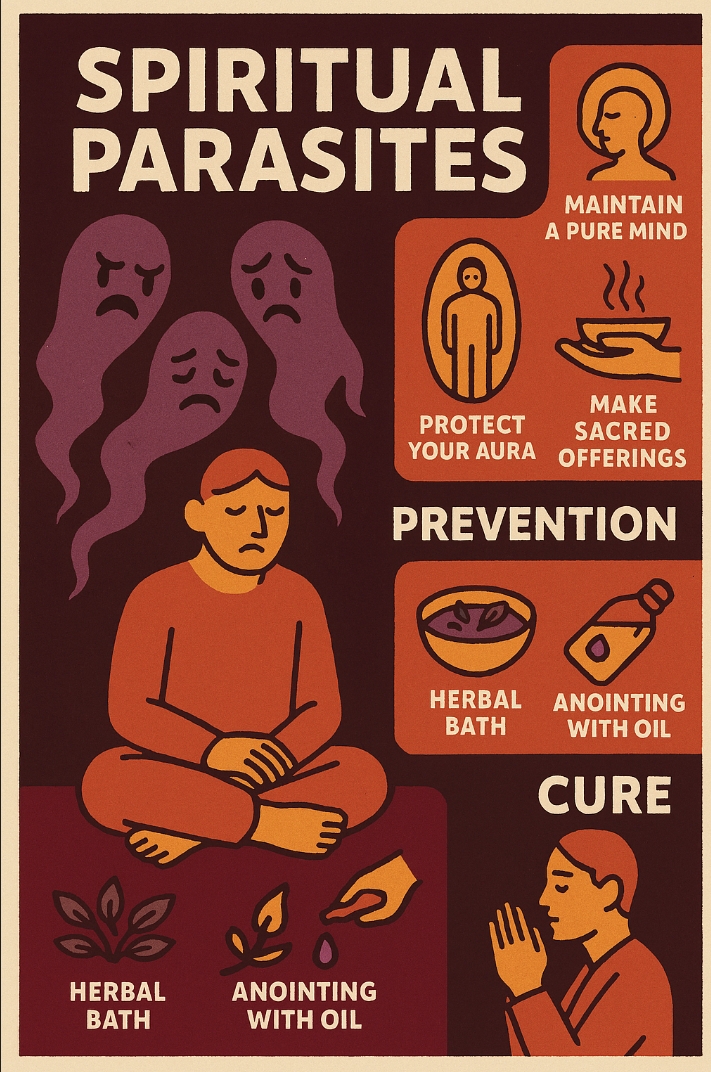
In Templong Anituhan, spiritual parasites are negative energies or entities that attach to a person’s aura, feeding on fear, trauma, or unresolved emotions. They may cause fatigue, emotional instability, or spiritual disconnection.
Spiritual cleansing includes:
– Tuob (herbal steam baths)
– Pagpapahid ng Lana (anointing with sacred oils)
– Pag-aalay (offerings to Diwata and Anito)
– Invocation of Diwatang Kilubansa and Sayum-ay for healing and harmony
Healing the Whole Being
True healing in Hilot Binabaylan practice restores harmony between body, mind, and spirit. Whether physical or spiritual, parasites must be addressed through both natural remedies and spiritual rituals to achieve Ginhawa—complete well-being.
Suggested Spiritual Cleansing Rituals
1. Tuob Ritual (Herbal Steam Bath)
– Purpose: Opens pores, releases toxins, and clears stagnant energies.
– Herbs: Bayabas (guava), Sambong, and Tanglad (lemongrass).
– Method: Boil herbs in water, place in a basin, and cover yourself with a blanket to inhale the steam. Chant invocations to Diwatang Kilubansa for elemental balance.
2. Pagpapahid ng Lana (Anointing with Sacred Oil)
– Purpose: Seals the aura and protects against energetic intrusion.
– Oil Base: Coconut oil infused with garlic, basil, or rosemary.
– Method: Apply to forehead, chest, and navel while invoking Diwatang Sayum-ay for peace and harmony.
3. Pag-aalay at Panalangin (Offering and Prayer)
– Purpose: Appeases spirits and invites divine healing.
– Offerings: Rice, flowers, water, and lighted candles.
– Invocation: Call upon Anito and Diwata, especially Diwatang Meketefu for refinement and Diwatang Tuhan for spiritual strength.
4. Pagpapalayas (Spirit Release Ritual)
– Purpose: Expels spiritual parasites or attachments.
– Tools: Bayabas leaves, salt, and a consecrated staff or ritual dagger.
– Method: Circle the person while chanting release prayers, then sweep the body with leaves and salt to absorb negative energies.
5. Dambana ng Ginhawa (Shrine of Comfort Ritual)
– Purpose: Reconnects the soul to its divine source.
– Setup: Create a sacred space with elemental symbols—earth, water, fire, air.
– Practice : Meditate, chant, and offer gratitude to Umli and the Diwata realms for restoration.
Preserving the Sacred: Why Hilot Must Remain Rooted in Its Indigenous Form
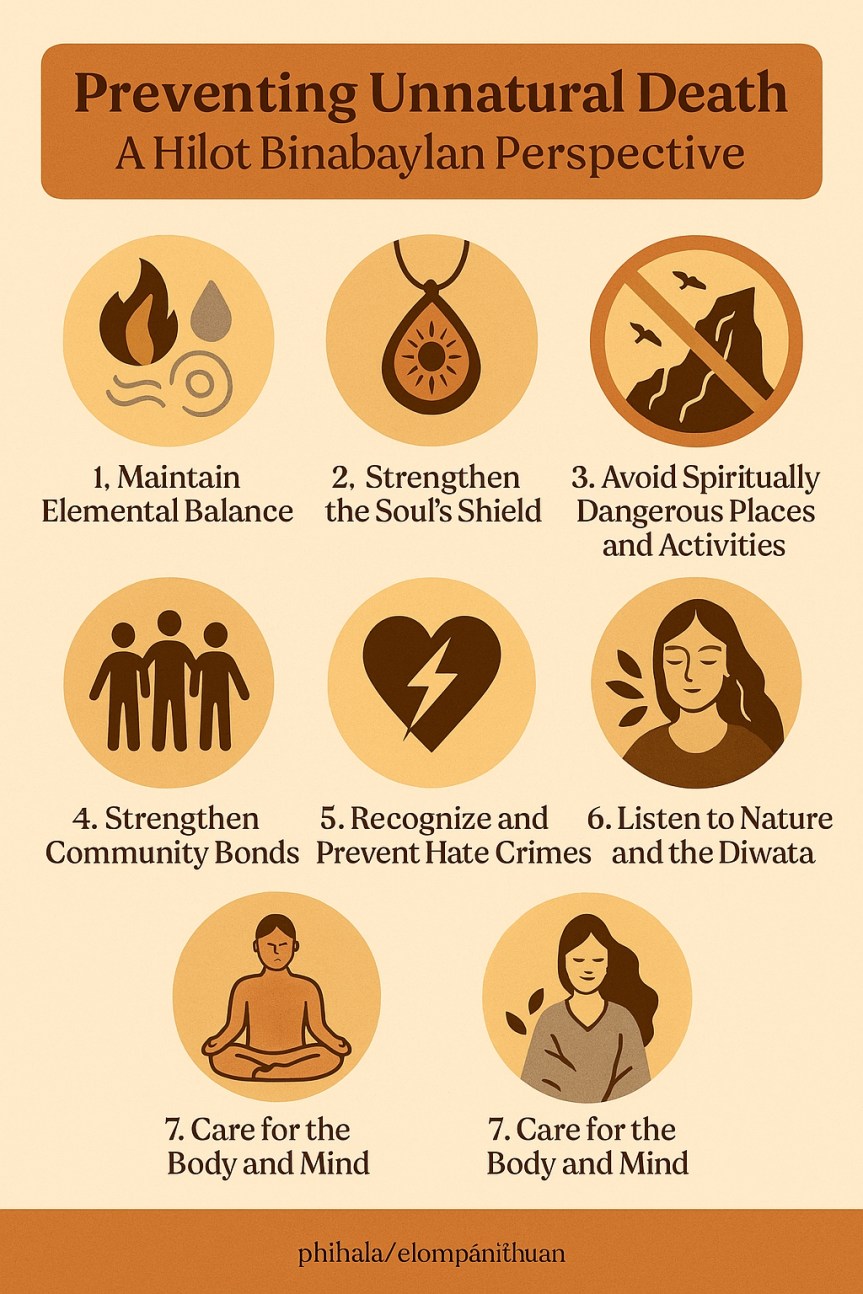
Hilot, the ancient healing art of the Filipino people, is more than just a massage technique—it is a sacred embodiment of our Indigenous Knowledge Systems and Practices (IKSP). Rooted in the wisdom of our ancestors, Hilot is a holistic approach to healing that integrates the body, mind, and spirit, guided by the rhythms of nature, the presence of the Diwata and Anito, and the elemental balance of Apoy, Tubig, Hangin, and Lupa.
The Essence of Hilot as Indigenous Knowledge
In its original form, Hilot is a spiritual and cosmological practice. It is performed by Binabaylan, spiritual healers who walk between realms, invoking divine guidance and ancestral wisdom. Hilot is not merely about physical relief—it is about restoring harmony within the person and their environment. It includes:
- Energetic diagnostics through pulse, heat, and intuition
- Rituals and prayers to the Diwata and Anito
- Herbal medicine and elemental therapy
- Soul healing and spiritual alignment
This depth of practice reflects the Indigenous Filipino worldview, where health is not just physical wellness but a state of spiritual balance and ancestral connection.
The Role of TESDA and PITAHC
In recent years, TESDA and PITAHC have taken steps to promote Hilot as part of the national healthcare system. Their efforts have helped:
- Provide training and certification for practitioners
- Ensure safety and professionalism
- Introduce Hilot to a wider audience seeking alternative wellness
These contributions are valuable and necessary. However, the institutional framing of Hilot has narrowed its scope, often reducing it to massage and relaxation therapy, detached from its Indigenous roots.
The Risk of Cultural Dilution
When Hilot is stripped of its spiritual and ancestral dimensions, it loses its identity as Indigenous Knowledge. It becomes a commodified service, disconnected from the cosmology that gives it meaning. This not only misrepresents the practice but also disempowers Indigenous communities who have preserved it for generations.
A Call for Dual Recognition
We advocate for a dual-pathway approach to Hilot:
- Institutional Hilot – promoted by TESDA and PITAHC for therapeutic and wellness purposes.
- Indigenous Hilot Binabaylan – preserved in its original form by spiritual communities like Templong Anituhan, emphasizing holistic healing of the body, mind, and spirit.
This approach allows Hilot to evolve and reach modern audiences without losing its soul. It respects the sovereignty of Indigenous communities and honors the sacredness of Hilot as a spiritual ministry.
Protecting Hilot as Indigenous Knowledge
We call upon:
- NCIP to uphold Hilot as IKSP under R.A. 8371
- IPOPHL to protect its Indigenous Intellectual Property
- Educational institutions to include Hilot Binabaylan in cultural and spiritual curricula
- Healthcare systems to recognize the value of spiritual healing in holistic wellness
Call to Action: Join Us in Reclaiming Hilot
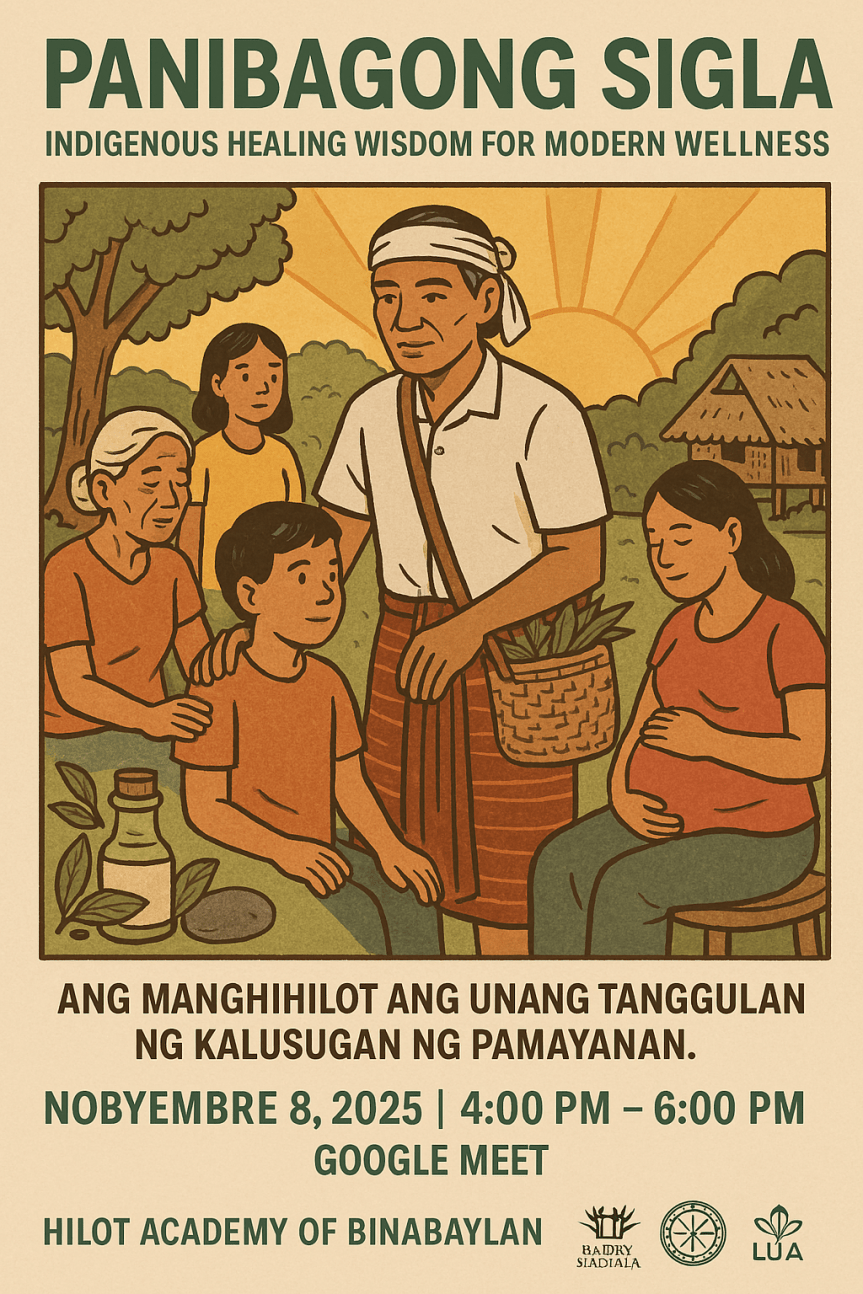
To deepen this conversation and celebrate the wisdom of our ancestors, we invite you to join our free online event:
🕓 Date & Time: November 8, 2025, from 4:00 PM to 6:00 PM
📍 Platform: Google Meet
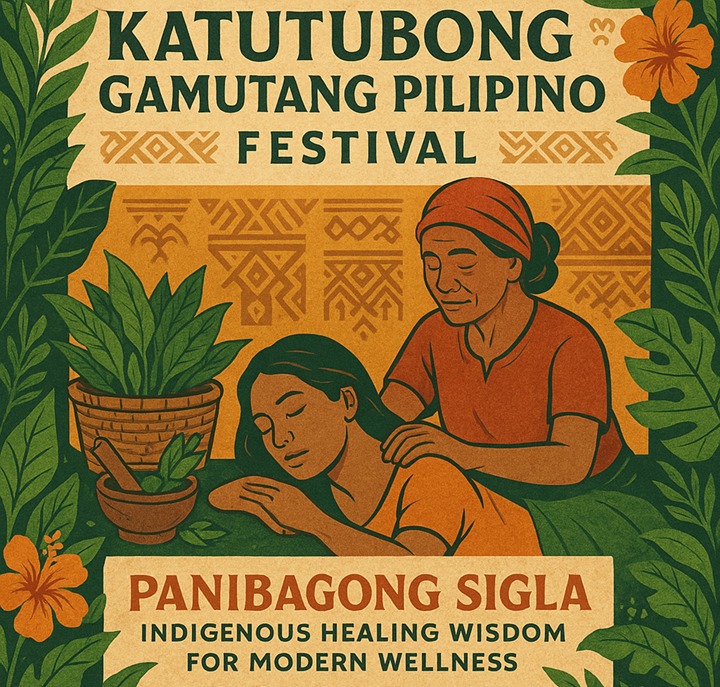
🎉 Event Title: Panibagong Sigla: Indigenous Healing Wisdom for Modern Wellness
This gathering will feature Hilot practitioners, Binabaylan leaders, and cultural advocates sharing insights on how Hilot can be preserved, practiced, and promoted in its full Indigenous form.
Let us walk together in healing, remembering, and reclaiming the sacred path of Hilot.
🌿 Influenza-Like Illness (ILI) and the Role of Hilot Binabaylan in Community Immunity
As the rainy season and colder months arrive, communities across the Philippines experience a rise in Influenza-like Illness (ILI)—a condition marked by fever, cough, sore throat, body aches, and fatigue. Though not always caused by the influenza virus, ILI can be triggered by various respiratory infections, including COVID-19, RSV, and adenoviruses.
While modern medicine offers vaccines and antiviral treatments, Filipino Indigenous Healing—particularly Hilot Binabaylan—offers a holistic and culturally rooted approach to preventing illness and strengthening immunity.
🦠 What is Influenza-Like Illness?
ILI is a clinical diagnosis based on symptoms that resemble the flu. It spreads through:
- Airborne droplets from coughing or sneezing
- Touching contaminated surfaces
- Close contact with infected individuals
ILI is not a single disease but a syndrome, and its prevention requires both physical and energetic care.
🌺 How Hilot Binabaylan Helps
Hilot Binabaylan is more than just massage—it is a sacred healing art that integrates:
- Energetic balancing
- Herbal medicine
- Spiritual rituals
- Community wellness education
Here’s how it supports immunity and prevents ILI:
1. Energetic Realignment
Hilot techniques like Panghihilot and Pagpapainit release stagnant energies and restore elemental harmony (Lupa, Hangin, Apoy, Tubig), which strengthens the body’s natural defenses.
2. Herbal and Natural Remedies
Binabaylan practitioners use indigenous herbs such as:
- Lagundi for cough and fever
- Tanglad and Luya for respiratory relief
- Sambong for detoxification
These are prepared as teas, oils, or poultices to support healing and immunity.
3. Spiritual Protection and Cleansing
Rituals invoking Diwata and Anito help cleanse spiritual imbalances that may manifest as physical illness. Seasonal rites during Full Moon, Ghost Month, and Undas align the community with nature’s healing cycles.
4. Community Education and Advocacy
Hilot Binabaylan promotes preventive care through teachings on hygiene, nutrition, emotional wellness, and ancestral wisdom. The creation of Dambana ng Ginhawa serves as a communal healing space for rest and renewal.
5. Touch Therapy and Soul Activation
Through sacred touch, Hilot awakens the UliRat (life force) and Malay (recognition soul), activating the body’s inner healing intelligence and reducing stress—a key factor in immune suppression.
🌞 A Call to Action
As caretakers of both body and spirit, Binabaylan healers are called to lead the community in resilience and renewal. By integrating ancestral knowledge with modern awareness, Hilot Binabaylan becomes a powerful ally in the fight against seasonal illness.
Let us walk the path of healing together guided by the spirits, grounded in the earth, and united in the rhythm of life.
🌺 The Sacred Flow of Emotions and Feelings: A Path to Holistic Wellness and Spiritual Harmony
In the journey of healing and spiritual awakening, understanding the nature of emotions and feelings is essential. These inner experiences are not just psychological—they are energetic, spiritual, and deeply connected to our soul’s health.
🌿 What Are Emotions and Feelings?
- Emotions are instinctive, automatic responses to stimuli. They arise from the limbic system and include reactions like fear, joy, anger, and sadness.
- Feelings are the conscious interpretation of emotions. They are processed in the thinking brain (neocortex) and include states like peace, resentment, or gratitude.
In Hilot Binabaylan practice, emotions are seen as energetic movements of the soul, while feelings are the reflections of the soul’s condition.
🔥 Can Pain Be an Emotion and a Feeling?
Yes. Pain exists in both realms:
- As a feeling, it is the conscious awareness of discomfort—physical or emotional.
- As an emotion, it is a complex response involving sorrow, grief, or trauma.
In spiritual healing, pain is a signal—a call to restore balance in the soul, body, and spirit.
⚡ Is It Normal to Have Mood Swings?
Mood swings are natural when they reflect life’s changes, hormonal shifts, or spiritual transitions. However, extreme or frequent swings may indicate:
- Emotional imbalance
- Soul fragmentation
- Elemental disharmony
Hilot Binabaylan offers rituals and healing touch to ground emotions and restore inner harmony.
🎶 How Sensory Stimulations Affect Emotions
- Food nourishes both body and soul, influencing mood and elemental balance.
- Music opens portals to memory, emotion, and divine connection.
- Visuals (art, nature, colors) evoke peace, awe, or healing.
- Touch, smell, and movement activate emotional release and spiritual flow.
These are sacred tools in Binabaylan rituals, used to awaken the soul and invite the Diwata.
🌈 Emotions That Support Optimum Health and Spiritual Wellness
To live in holistic wellness, one must cultivate:
- Joy – for vitality and soul expression
- Peace – for grounding and clarity
- Love and Compassion – for healing and connection
- Gratitude – for humility and abundance
- Hope and Faith – for resilience and divine trust
Even emotions like sadness or anger are sacred when processed with awareness and transformed through ritual and reflection.
🌀 Conclusion: Emotions as Sacred Messengers
Emotions and feelings are not weaknesses—they are sacred messengers of the soul. They guide us toward healing, connection, and spiritual growth. In the path of the Binabaylan, we do not suppress emotions—we honor them, listen to them, and transform them into light.
🙌 Call to Action
If you feel emotionally imbalanced, spiritually disconnected, or simply curious about your soul’s journey:
🌟 Join the Hilot Binabaylan Alignment Training Program
🕊️ Learn how to heal through touch, ritual, and soul wisdom
🌿 Reconnect with your seven souls and elemental energies
📍 Held every Sunday at Templong Anituhan ng Luntiang Aghama, San Jose Del Monte, Bulacan
Let your emotions become your guide. Let your feelings become your prayers. Let your soul awaken to its sacred purpose.
Hilot: A Sacred Expression of Love Rooted in Filipino Family Life
Hilot is one of the oldest and most enduring healing traditions of the Philippines. More than a therapeutic technique, Hilot is a cultural expression of love, care, and spiritual connection—woven into the daily lives of Filipinos from childhood to adulthood.
Historical Roots of Hilot
Hilot dates back to precolonial times, practiced by Babaylan and Albularyo—the traditional healers and spiritual leaders of Indigenous Filipino communities. These practitioners were deeply attuned to the rhythms of nature, the elements, and the human body. Hilot was not only used to treat physical ailments but also to restore energetic balance, spiritual harmony, and social well-being.
In early Filipino societies, healing was holistic. Illness was seen as a disruption in the harmony between the body, spirit, and environment. Hilot addressed this through touch, herbal remedies, rituals, and prayers, often invoking the guidance of Anito (ancestral spirits) and Diwata (divine beings).
Despite colonization and modernization, Hilot survived—passed down through generations, especially within families. It evolved from sacred ritual into everyday practice, yet retained its essence as a sacred act of care.
Hilot in the Filipino Home: A Language of Love
In Filipino households, Hilot is a natural gesture of affection and concern. It is not always formal or ritualistic—it is instinctive, intimate, and deeply relational.
- A tired parent may ask their child to massage their head, back, or feet. The child responds with gentle touch, offering not just relief but devotion.
- When a child is sick, the mother performs Hilot—rubbing the back, applying warm oil, whispering prayers. Her hands become instruments of healing, guided by love and intuition.
- Hilot can also be the offering of coffee or tea, sitting beside someone in silence, listening to their stories, and allowing emotional release.
- Sometimes, it is the sharing of food, prepared with care, that shifts the energy of a person who is weary or unwell.
In these acts, Hilot becomes a language of the heart—a way to say “I care for you. I am here.”
Hilot as Energy Work of Compassion
Whether through touch, presence, or nourishment, Hilot works on the energetic level. It restores balance not only in the body but in the soul. It is a form of pakikiramay (empathy), malasakit (compassion), and giliw (affection).
This everyday Hilot, practiced in homes, complements the formal Hilot Binabaylan tradition taught in spiritual schools like the Hilot Academy of Binabaylan. While the academy trains practitioners in elemental fusion, soul alignment, and Diwata invocation, the home-based Hilot remains the foundation—the first touch, the first care, the first healing.
Conclusion: Hilot as a Living Tradition of Love
Hilot is not just a healing art—it is a living tradition that reflects the Filipino soul. It is the heartbeat of family life, the embrace of generations, and the spiritual wisdom of our ancestors expressed through everyday acts of kindness.
As we continue to elevate Hilot through formal training and spiritual practice, let us never forget its roots: in the loving hands of a mother, the gentle massage of a child, the shared coffee between friends, and the quiet presence of someone who listens.
Hilot is love. Hilot is family. Hilot is Filipino.
Healing Begins with Humility: The Spiritual Illness of Arrogance and Pride
In both Oriental medicine and Indigenous Filipino healing traditions, illness is not merely a physical condition—it is a manifestation of imbalance in the body, mind, and spirit. Among the most subtle yet destructive imbalances are arrogance and pride. Though often praised in modern society as confidence or ambition, these traits, when excessive, are seen by traditional healers as spiritual toxins that block the flow of healing.
**Arrogance and Pride as Illness**
In **Traditional Chinese Medicine (TCM)**, emotions are directly linked to organ systems. Excessive pride and arrogance are seen as disturbances of the **Heart**, which houses the **Shen**—the spirit or consciousness. When the Heart is overstimulated by ego-driven emotions, it can lead to restlessness, insomnia, and even mental confusion. The Liver, associated with anger and control, may also be affected, creating internal heat and stagnation.
In Hilot Binabaylan practice, arrogance is viewed as a **pagmamataas**—the inner self that connects us to the divine, to nature, and to our ancestors.
Pride separates the person from the community, from humility, and from the sacred flow of life. It is a spiritual disconnection that can manifest as physical illness, emotional instability, and relational disharmony.
**The Healing Power of Humility and Sincerity**
True healing begins not with medicine, but with attitude. The Binabaylan teaches that humility (pagpapakumbaba) is the gateway to receiving healing. It is the act of surrendering ego, acknowledging one’s limitations, and opening the heart to divine guidance.
Sincerity (katapatan) is the companion of humility. It is the honest desire to be healed—not for power, prestige, or gain, but for restoration, balance, and service to others.
When a person approaches healing with humility and sincerity:
– The spirit becomes receptive to ancestral wisdom.
– The body relaxes, allowing energy to flow freely.
– The mind clears, making space for insight and transformation.
– The community responds, offering support and collective strength.
*Healing Is a Sacred Relationship*
In Indigenous Filipino spirituality, healing is not transactional—it is **relational**. It involves the healer, the patient, the spirits, the ancestors, and the natural elements. Arrogance breaks this relationship. Humility restores it.
To be healed, one must be willing to be seen, to be vulnerable, and to be guided. The Binabaylan does not heal alone; healing is a dance of energies, a ritual of reconnection, and a gift of grace.
🌟 **A Call to the Wounded Healer**
If you are seeking healing—whether physical, emotional, or spiritual—begin with humility. Speak sincerely. Offer yourself not as a master, but as a student of life. Let go of pride, and you will find that healing flows not from force, but from grace.
And if you are called to be a healer, remember: the most powerful healers are those who have first healed themselves through humility. The Binabaylan walks not with arrogance, but with reverence.
Healing Our Roots: Hilot Binabaylan’s Journey Through Filipino American History
As we celebrate Filipino American History Month, we honor the stories of resilience, identity, and cultural revival that define the Filipino diaspora. Among these stories is the growing movement of Hilot Binabaylan, a sacred healing tradition rooted in Indigenous Filipino spirituality, now flourishing across the Pacific.
In August 2024, I had the privilege of conducting the first Hilot Binabaylan Training in California, a transformative experience that reconnected Filipino Americans to their ancestral healing arts. A year later, in August 2025, we continued this journey in Honolulu, Hawaii, through the event “Healing Our Roots: A Return to Hilot Binabaylan” at the Philippine Consulate General, in partnership with the Laʻakea Healing Center.
These two events—held in the heart of Filipino American communities—are more than milestones. They are living contributions to Filipino American History, affirming that our Indigenous wisdom is not lost, but alive and evolving.
🌿 California 2024: Reawakening the Binabaylan Spirit
The California training introduced participants to the sacred touch therapies of Hilot—haplos, hagod, pindot, and hilot sa lamig at init—while grounding them in the cosmology of the Diwata and the spiritual path of the Binabaylan. For many, it was a homecoming to ancestral identity, a healing of intergenerational wounds, and a reclaiming of cultural pride.
This training empowered Filipino Americans to become healers and cultural ambassadors, forming a bridge between ancient wisdom and modern wellness.
🌺 Hawaii 2025: Honoring Ancestry in Sacred Space
In Hawaii, Hilot Binabaylan was honored in a public and diplomatic setting, affirming its place in the broader narrative of Filipino American heritage. The event brought together healers, cultural workers, and spiritual seekers in a shared space of remembrance and renewal.
Through demonstrations, storytelling, and spiritual invocation, we celebrated Hilot not just as a healing art, but as a cultural legacy—one that connects us to our ancestors and guides us toward collective well-being.
📜 A Contribution to Filipino American History
These efforts reflect the mission of the Hilot Academy of Binabaylan: to preserve and propagate Indigenous Filipino healing arts and spirituality. By conducting trainings and rituals in California and Hawaii, we:
- Reaffirmed the value of ancestral knowledge in the diaspora.
- Expanded the Hilot Binabaylan Network internationally.
- Contributed to the cultural and spiritual history of Filipino Americans.
As we observe Filipino American History Month, let us remember that history is not only written in books—it is lived in rituals, passed through healing hands, and carried in the hearts of those who remember.
From the Philippines to the United States, Hilot Binabaylan is a living tradition, healing our roots and guiding our future.
Statement from Hilot Academy of Binabaylan
Hilot Academy of Binabaylan is an autonomous educational institution established under the spiritual authority of Luntiang Aghama Natural Divine Arts Shrine of Healing Inc., now known as Templong Anituhan Inc. As such, we uphold a distinct identity and purpose, separate from government-regulated bodies such as the Technical Education and Skills Development Authority (TESDA) and the Philippine Institute of Traditional and Alternative Health Care (PITAHC).
Our practice of Hilot Binabaylan is not merely clinical—it is ministerial and spiritual. We reclaim the sacredness of healing by restoring the spiritual dimension of healthcare, making our approach truly holistic. While Hilot has been commodified in spas, resorts, and cruise ships as part of the hospitality and tourism industry, we remain rooted in the ancestral wisdom that views Hilot as a sacred duty of service and compassion.
We recognize the belief that Hilot should be accessible to all. While we do not offer our services for free, we strive to make them affordable and equitable, honoring the tradition of community-based healing. Our standards are guided by the sacred ordination and teachings of Templong Anituhan, not by external institutions or organizations.
Recently, questions have been raised regarding our activities in Hawaii, particularly concerning the cost of a 9-day retreat priced at USD 5,000 (₱291,050). We clarify that this event was organized by a legally established business in Hawaii, and we were invited guests, not the organizers. The pricing was determined by the host organization, based on their expertise and local context. We respect their autonomy as much as we expect ours to be respected.
It is disheartening to be judged as “greedy” or “money-faced” by those who were not present during the founding of Luntiang Aghama, the establishment of Hilot Academy of Binabaylan, or the transition into Templong Anituhan Inc. Autonomy means we walk our own path—not dictated by others, even those who claim to be kapwa. True kapwa walks with you, not ahead of you to judge, nor behind you to criticize.
We affirm our right to receive abundance as a reflection of the value we bring. To assume otherwise is to deny the dignity of our work and the sacredness of our calling. We invite those with concerns to engage in dialogue, not in condemnation.
For clarity, the official websites we maintain are:
hilotacademy.com
landasnglahi.com
siadtala.com
anituhan.org
buymeacoffee.com/filipinomagick
Any other site using our name or image without consent does not represent us.
We remain steadfast in our mission. This is but a wave in our journey. We will not be colonized again—not by systems, not by opinions, and not by fear. We walk with the ancestors, guided by the Diwata, and rooted in the sacred land of our people.
Rev. Rolando Gomez Comon
Chief Priest, Templong Anituhan Inc.
Founder, Hilot Academy of Binabaylan
A Sacred Message to Our Community: On the Value of Healers and Sacred Exchange
In our tradition, healing is a sacred act — a gift from the Divine, the Ancestors, and the Spirits. It is a calling that we, as healers, answer with devotion, compassion, and deep spiritual responsibility.
Yet while our work is rooted in the spiritual realm, we live in the mundane world. We are not exempt from the realities of life — we have families to feed, homes to maintain, children to educate, and responsibilities to fulfill. The materials we use in healing — oils, herbs, candles, tools — are not freely given by the market. Water, electricity, and even the space where healing takes place all come with costs.
We understand that some may feel uncomfortable when healers ask for payment or offerings. But let us remember: healing is labor, and labor deserves fair exchange. Just as a farmer is compensated for the food they grow, or a teacher for the wisdom they share, a healer too must be supported in order to continue serving the community.
We do not sell healing. We offer our time, energy, and sacred presence — and in return, we ask for support that sustains our ability to serve. This is not commerce; it is reciprocity. It is the ancient practice of pasasalamat — a heartfelt offering in gratitude for the healing received.
To those who give generously: you are not just supporting a healer — you are nurturing the spirit of healing in our community. You are helping keep the sacred flame alive.
Let us walk together in understanding, compassion, and mutual respect. May our healing work continue to bless all who seek it, and may our community grow in wisdom, wellness, and abundance.
With love and light,
Rev. Rolando Gomez Comon
Chief Priest, Templong Anituhan ng Luntiang Aghama
Founder, Hilot Academy of Binabaylan
You must be logged in to post a comment.