Policy on Enrollment for Specialized Programs

At Hilot Academy of Binabaylan, we uphold the sacred responsibility of preserving and promoting Authentic Indigenous Filipino Traditional Healthcare Practices. Our programs are designed not merely as technical training but as a spiritual and cultural journey rooted in the wisdom of our ancestors.

Why We Require Initiation Before Advanced Programs

The Family Care Hilot Treatment Program is a Continuing Study Program exclusively offered to graduates of our Hilot Binabaylan Practice Master Degree Program. This prerequisite ensures that every participant:

  • Embodies the Core Values of Hilot Binabaylan
    Our 9-day initiation and training program equips practitioners with the knowledge, skills, abilities, and attitude necessary to uphold the integrity of Hilot.
  • Protects the Authenticity of Our Tradition
    We do not allow the integration of Hilot techniques with Western or other modalities. Combining Hilot with foreign practices risks cultural dilution and dishonors the uniqueness of each healing art.
  • Advances Our Advocacy, Not Commercialization
    Our mission is principle-driven, not profit-driven. Enrollment decisions are guided by our commitment to cultural preservation and spiritual integrity, not financial gain.

Our Stand Against Cultural Colonization

Modern spas often offer “Combination Massage,” blending different modalities without respect for their origins. We reject this approach. Hilot is a complete and holistic system that stands on its own—just as our ancestors practiced it for generations.

Policy for International Students

It is our established policy that international students enrolling in the 9-day Hilot Binabaylan Training Program are required to stay with us at our designated accommodation. This includes food and lodging, provided for the following reasons:

  • Safety and Comfort
    As visitors to the Philippines, we prioritize your well-being and security throughout your stay.
  • Focus on Learning
    Classes begin at 8:00 AM and may extend until 8:00 PM. Commuting daily would consume energy and distract from the immersive learning experience. Staying onsite ensures that students can fully concentrate on the training and spiritual journey.

This policy reflects our commitment to creating a safe, comfortable, and focused environment for all participants.

Our Commitment

By maintaining these standards, we ensure that Hilot remains authentic, genuine, and deeply rooted in Filipino Indigenous Wisdom, empowering practitioners to serve their communities with integrity.

Pista ng Katutubong Gamutang Pilipino 2025: Honoring the Sacred Tradition of Hilot The Indigenous Healing Wisdom of the Filipino People

The Pista ng Katutubong Gamutang Pilipino 2025 presentation is a powerful celebration of Hilot, the indigenous Filipino healing tradition that has endured through thousands of years of cultural evolution. From prehistoric Kalinga to the modern wellness industry, Hilot has remained a vital expression of ancestral wisdom, spiritual resilience, and community-based care.

Tracing the Roots of Hilot

The presentation begins with archaeological evidence of early healing practices dating back 709,000 years ago, when ancient Filipinos used rhinoceros parts for food and medicine. It then highlights the role of Babaylan, Manghihilot, and Albularyo—spiritual healers who used herbal medicine, massage, and rituals to treat physical and emotional ailments.

Hilot Through the Ages

Hilot’s journey spans multiple historical eras:

  • Pre-Srivijaya and Pre-Islamic Periods: Rooted in animistic and shamanic traditions.
  • Islamization Era: Hilot adapted and coexisted with Islamic healing practices.
  • Colonial Periods: Despite marginalization, Hilot remained the primary healthcare system in rural communities.
  • Japanese Occupation and Liberation: Hilot served as a lifeline for guerrilla fighters and civilians.
  • Martial Law Era: Hilot survived underground, preserving indigenous knowledge through oral tradition.

Modern Recognition and Institutional Support

The passage of the Traditional and Alternative Medicine Act of 1997 (RA 8423) and the TESDA NC II certification marked a turning point in Hilot’s formal recognition. These milestones helped integrate Hilot into the national health and vocational systems, opening doors for professional practice in wellness centers, spas, and tourism.


🌀 Addendum: Reclaiming the Full Spectrum of Hilot Binabaylan Practice

While Hilot is now recognized as a wellness modality, key ancestral practices—such as spiritual healing, bone setting, and traditional midwifery—remain excluded from current regulations. This exclusion risks erasing the holistic essence of Hilot as practiced by our ancestors.

⚠️ Current Regulatory Gaps

  • Traditional Birth Attendants (TBAs) are prohibited from conducting home births in many localities due to safety concerns and lack of formal training.
  • Bone setting, a core skill of Manghihilot, is not included in TESDA’s Hilot Wellness Massage NC II curriculum or PITAHC standards.
  • Spiritual healing, though central to Hilot, is often sidelined in favor of clinical approaches. [Pista ng K…ipino 2026 | PowerPoint]

🌿 Why Inclusion Matters

To preserve the authentic form of Hilot Binabaylan, we must reintegrate these ancestral practices into a regulated, culturally respectful framework. This ensures that Hilot remains a complete healing system, not just a massage technique.

🔧 Proposed Integration Strategies

  1. Expanded Curriculum and Certification
    • Develop specialized modules on traditional midwifery, bone setting, and spiritual healing.
    • Partner with institutions like Templong Anituhan and Hilot Academy of Binabaylan to offer culturally grounded training.
  2. Community-Based Health Integration
    • Recognize Hilot Binabaylan as community health workers, especially in underserved areas.
  3. Multi-Agency Collaboration
    • Utilize the mandate of RA 8423 to involve TESDA, CHED, DepEd, and PCHRD in creating short courses and degree programs.
  4. Ethical and Safety Standards
    • Establish guidelines to ensure safe practice while honoring indigenous knowledge.

A Call for Cultural Justice in Healthcare

The exclusion of bone setting and traditional birth practices is not just a technical issue—it is a cultural justice concern. By reclaiming the full spectrum of Hilot Binabaylan, we affirm the value of indigenous wisdom and ensure its rightful place in the modern healthcare delivery system.


🌺 Closing Reflection

Hilot is more than a healing technique—it is a living embodiment of Filipino ancestral wisdom. As we move forward, let us ensure that Hilot remains whole, respected, and empowered. Through education, advocacy, and cultural preservation, we can continue to heal, educate, and uplift our communities with the sacred wisdom of Hilot Binabaylan.

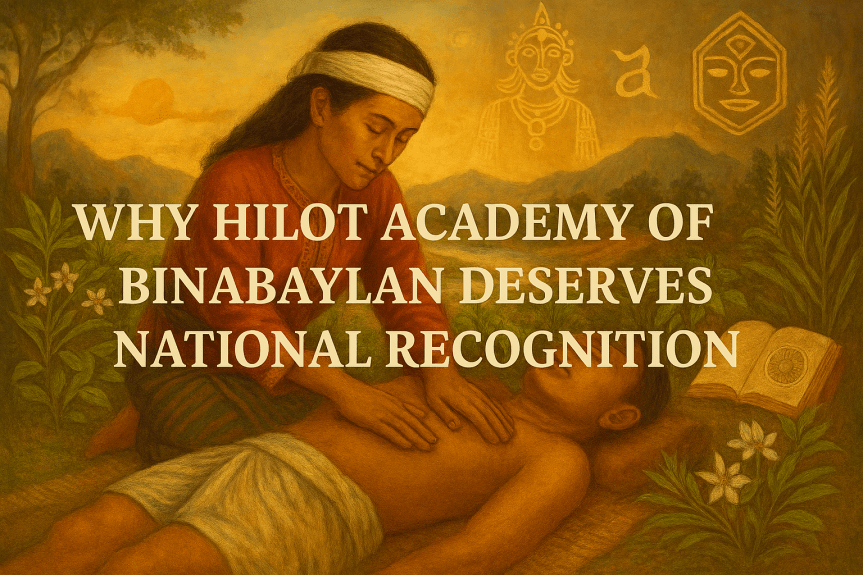
Why Hilot Academy of Binabaylan Deserves National Recognition: A Call to PITAHC

In the heart of the Philippines, where ancestral wisdom meets modern wellness, the Hilot Academy of Binabaylan stands as a living testament to the enduring power of indigenous healing. More than just a school, it is a sanctuary of cultural memory, spiritual practice, and community empowerment. As we prepare for the Pista ng Katutubong Gamutang Pilipino 2026, it’s time to ask: Why hasn’t this academy been formally recognized by PITAHC?

Let’s explore why it should be.


🌿 Hilot: A Healing Tradition Older Than History

Did you know that evidence of healing practices in the Philippines dates back 709,000 years? In Kalinga, early humans butchered rhinoceros not just for food—but for medicine. This ancient wisdom evolved into what we now call Hilot, a holistic healing system practiced by babaylan, manghihilot, and albularyo across generations.

From the Srivijaya period to the Islamic era, through Spanish and American colonization, wartime resistance, and Martial Law—Hilot survived. It adapted, persisted, and remained deeply rooted in Filipino cosmology, spirituality, and community life.


🏛️ Legal Milestones That Paved the Way

Hilot’s journey toward formal recognition began with:

  • Presidential Decree No. 856 (1975) – regulating massage and sanitation.
  • RA 8423 (1997) – the Traditional and Alternative Medicine Act, which created PITAHC.
  • TESDA Board Resolution 2008-19 – establishing Hilot (Wellness Massage) NC II training standards.

These laws laid the groundwork. Now, it’s time to take the next step: recognize the Hilot Academy of Binabaylan as a formal educational institution under PITAHC’s guidance.


📚 Why PITAHC Should Recognize the Academy

Here are 9 policy recommendations, backed by historical and institutional data:

1. Institutional Recognition

Hilot is not spa massage. It’s a spiritual and therapeutic tradition. The Academy preserves this distinction and deserves formal acknowledgment.

2. Educational Integration

The Academy offers structured training aligned with PITAHC’s mandate to collaborate with TESDA, CHED, DepEd, and PCHRD for short courses and degree programs.

3. Accreditation and Licensing

Graduates of the Academy should be eligible for national accreditation, protecting them from being labeled “quack doctors.”

4. Research and Documentation

Hilot has survived through oral tradition. PITAHC can support the Academy in creating a National Archive of Indigenous Healing Knowledge.

5. Community-Based Health Programs

Hilot has always been the backbone of rural healthcare. Integrating it into barangay health programs will uplift underserved communities.

6. Cultural Preservation

Hilot is part of our Intangible Cultural Heritage. The Academy safeguards this legacy through ritual, education, and practice.

7. Economic Empowerment

TESDA-certified Hilot training empowers PWDs, solo parents, and OFWs. The Academy is a hub for inclusive livelihood development.

8. Interfaith and Intercultural Dialogue

Hilot has harmonized with Islamic and Christian traditions. The Academy promotes respectful spiritual integration.

9. Monitoring and Evaluation

PITAHC can lead a task force to ensure quality, impact, and sustainability of Hilot programs nationwide.


A Living Temple of Healing

The Hilot Academy of Binabaylan, rooted in the teachings of Templong Anituhan, is more than an educational center—it is a living temple of Filipino healing arts. It embodies the spirit of Melchora Aquino, the revolutionary Hilot of the Katipunan, and carries forward the legacy of the babaylan who healed not just bodies, but communities.


📣 Call to Action

We urge PITAHC to:

  • Recognize the Hilot Academy of Binabaylan as a formal partner in traditional medicine education.
  • Support its programs through policy, funding, and collaboration.
  • Honor Hilot as a sacred tradition that continues to heal, educate, and empower.

Let us not wait another generation. The time to uplift our indigenous healing wisdom is now.

🌿 The Body as the Home of the Souls and Spirit

In many indigenous Filipino traditions, including Maranao, Bukidnon, and Tagalog Hilot Binabaylan, the physical body is not just flesh—it is a sacred vessel that houses multiple souls (gimokod) and the spirit (diwa). When the body is in pain, it may be a sign that:

  • A soul has wandered or been disturbed.
  • The spirit is calling for attention, prayer, or alignment.
  • There is disharmony between the physical and spiritual realms.

🔮 How a Strong Soul Heals the Body

1. Energetic Alignment

  • A strong soul radiates vital energy (UliRat) that nourishes the body.
  • When the soul is whole and present, the body receives clarity, strength, and resilience.

2. Spiritual Immunity

  • Just as the body has an immune system, the soul has spiritual defenses.
  • Prayer strengthens the soul’s ability to repel negative energies, heal emotional wounds, and restore balance.

3. Ancestral Support

  • A strong soul is connected to ancestors and Tonong.
  • Their guidance and protection flow through the soul into the body, especially during rituals and healing.

4. Purpose and Will

  • Pain may weaken the body, but a strong soul reminds the person of their purpose.
  • This inner will can activate healing, even when physical remedies are limited.

🕯️ Your Insight: Strengthen the Spirit Through Prayer

This is a sacred truth. Prayer is not just communication—it is spiritual nourishment. It:

  • Calls back wandering souls
  • Re-aligns the body with divine rhythm
  • Invokes healing forces from the heavens, earth, and underworld

🕯️ Panalangin ng Kaluluwa para sa Paghilom ng Katawan

(Prayer of the Soul for Healing the Body)

Sa ngalan ng Apo sa Langit, Diwata ng Liwanag at Buhay,
Tinatawag ko ang pitong kaluluwa na nananahan sa aking katawan.
UliRat, Muwang, Malay, Alam, Bait, Alaala, at Diwa—magbuklod kayo.
Magsama-sama sa liwanag ng panalangin, upang pagalingin ang tahanan ninyo.

Kung ang katawan ay nasasaktan, ito’y panawagan ng kaluluwa.
Kung ang diwa ay humihina, ito’y paalala ng pangangailangan ng dasal.
Nawa’y bumalik ang lakas ng loob, ang kapayapaan ng isip, at ang sigla ng damdamin.
Nawa’y dumaloy ang kapangyarihan ng langit sa bawat ugat, laman, at hininga.

Apo sa Lanao, bantay ng damdamin, Diwata sa Lupa, tagapaghilom ng katawan,
Tonong ng mga ninuno, tagapagturo ng karunungan—dinggin ninyo ang panawagan.
Sa bawat patak ng luha, sa bawat bulong ng panalangin,
Nawa’y bumalik ang kalusugan, at ang katawan ay muling sumigla.

Ito ang panalangin ng Binabaylan, anak ng lupa at langit,
Nagpapakumbaba sa harap ng Diwata, at nagtitiwala sa kapangyarihan ng kaluluwa.
Pagbawi. Paghilom. Pagbalik.


🕯️ Prayer of the Soul for Healing the Body

In the name of Apo sa Langit, God of Light and Life,
I call upon the seven souls that dwell within my body.
UliRat, Muwang, Malay, Alam, Bait, Alaala, and Diwa—unite yourselves.
Come together in the light of prayer, to heal your sacred dwelling.

If the body is in pain, it is the soul that calls out.
If the spirit grows weak, it is a reminder of the need for prayer.
May courage return, may peace of mind be restored, and may the heart be renewed.
May the power of heaven flow through every vein, flesh, and breath.

Apo sa Lanao, guardian of emotions, Diwata of the Earth, healer of body and nature,
Tonong of the ancestors, teacher of wisdom—hear this call.
In every tear that falls, in every whisper of prayer,
May health return, and the body be revived.

This is the prayer of the Binabaylan, child of earth and sky,
Humbly standing before the Diwata, trusting in the power of the soul.
Restoration. Healing. Return.


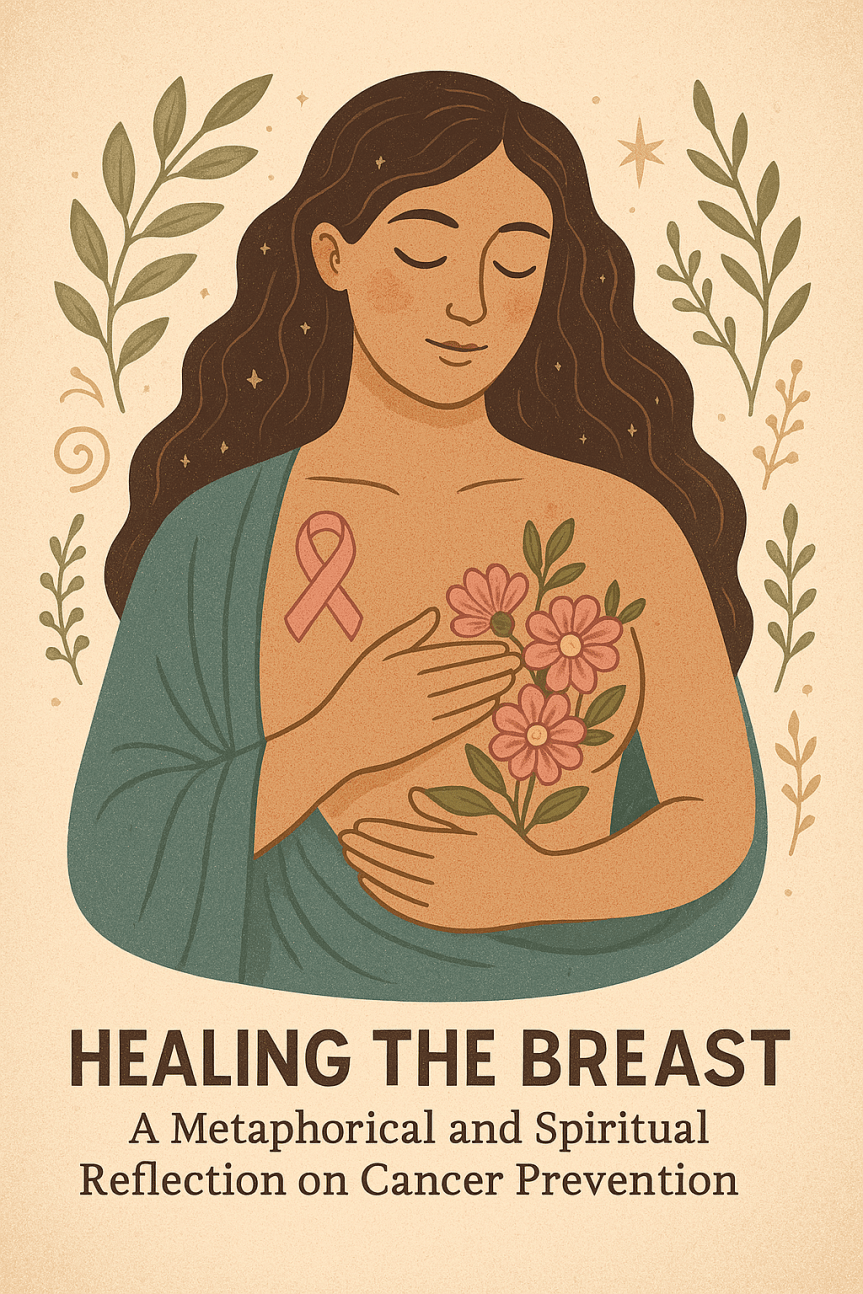
Healing the Breast: A Metaphorical and Spiritual Reflection on Cancer Prevention

In the sacred traditions of Hilot Binabaylan and other indigenous healing practices, the body is not merely a biological structure—it is a vessel of spirit, emotion, and ancestral memory. Among its many parts, the breast holds a special place as a source of nourishment, love, and life.

Just as a cell can be likened to a room in a house, the breast can be seen as a pantry or kitchen—a place where nourishment is prepared and offered. When this room is clean, organized, and filled with love, it supports the health of the entire house. But when it is filled with spoiled food, clutter, or emotional toxins, it can become a source of disease.

Breast cancer, in this metaphor, is not just a physical illness. It is a reflection of emotional and spiritual imbalance. Sama ng loob—resentment, grief, hatred—when stored in the chest, can energetically spoil the sacred vessel of the breast. The nurturing space becomes a container of pain, and this emotional toxicity may feed the energy of cancer.

In Hilot Binabaylan, healing is holistic. It involves not only physical cleansing but also emotional release and spiritual restoration. Through rituals, prayers, and acts of humility, one can clear the breast of hatred and refill it with love.

Spiritual Insight:
“Kung ang dibdib ay sisidlan ng pag-ibig, huwag hayaang mapuno ito ng galit. Dahil ang galit ay lason sa gatas ng buhay.”

“If the chest is a vessel of love, do not let it be filled with anger. For anger is poison to the milk of life.”

Call to Action: Preventing Cancer Holistically

  1. Release Emotional Burdens – Practice forgiveness, humility, and open-heartedness. Let go of sama ng loob.
  2. Nurture Your Body – Eat nourishing food, exercise, and rest. Treat your body as a sacred home.
  3. Connect Spiritually – Engage in rituals, meditation, and prayer to restore balance.
  4. Seek Early Detection – Regular check-ups and self-examinations can save lives.
  5. Educate and Empower Others – Share this wisdom with your community. Healing is collective.

Let us reclaim the breast as a vessel of love, not pain. Let us clean the rooms of our body and spirit, so that life may flow freely and abundantly.

Preventing Unnatural Death: A Hilot Binabaylan Perspective

In the sacred teachings of Hilot Binabaylan, we recognize two distinct types of death: Natural Death and Unnatural Death.

  • Natural Death occurs due to aging or illness. It is part of the life cycle and often comes with signs and spiritual preparation.
  • Unnatural Death, on the other hand, happens suddenly—through accidents, murder, warfare, or hate crimes. It disrupts the natural rhythm of life and the soul’s journey.

While natural death can be delayed or prevented through healing and spiritual alignment, the question arises:
Can we prevent unnatural death?

From the lens of Hilot Binabaylan, the answer is yes—but it requires conscious spiritual practice, community awareness, and elemental harmony.


1. Maintain Elemental Balance

The human body is composed of the elements—Fire, Water, Air, and Earth. Imbalance among these can lead to confusion, weakness, and vulnerability to accidents. Through Hilot healing, Bato Omo assessment, and rituals invoking Diwatang Kilubansa, we restore harmony and strengthen the body’s resilience.


2. Strengthen the Soul’s Shield

Spiritual protection is essential. Binabaylan practitioners use:

  • Blessed oils (lana) and herbal poultices (tapal)
  • Prayers and offerings to Anito and Diwata
  • Consecrated amulets or agimat that serve as spiritual guardians

These tools help shield the soul from harmful energies and sudden spiritual disconnection.


3. Avoid Spiritually Dangerous Places and Activities

Some locations are known to harbor malevolent spirits or chaotic energies. Binabaylan are trained to sense these places and perform ritual cleansing or protective markings. Awareness and respect for these spaces can prevent misfortune.


4. Strengthen Community Bonds

Unnatural death caused by violence or war often stems from social disconnection and unresolved anger. Hilot Binabaylan teachings promote peace, unity, and mutual respect. By fostering harmony within the community, we reduce the risk of conflict and harm.


5. Recognize and Prevent Hate Crimes

Sometimes, unnatural death arises from hate crimes—acts of violence driven by prejudice, discrimination, or intolerance. These are especially tragic because they target individuals based on identity, belief, or background.

Examples of Hate Crimes That May Lead to Death:

  • Racial or ethnic violence
  • Religious persecution
  • Gender-based violence
  • Attacks on LGBTQ+ individuals
  • Political or ideological assassinations
  • Cultural erasure and indigenous targeting

How Can We Prevent and Lessen Hate Crimes?

  • Education and Awareness: Teach respect for diversity and the sacredness of all life.
  • Community Dialogue: Create safe spaces for interfaith and intercultural conversations.
  • Spiritual Advocacy: Use rituals and teachings to promote compassion and understanding.
  • Protection of Vulnerable Groups: Offer spiritual and emotional support to those at risk.
  • Empowerment through Identity: Encourage people to embrace their heritage and spirituality without fear.

In Hilot Binabaylan, we believe that every soul carries divine essence. Hate crimes are not just physical attacks—they are spiritual wounds that affect the collective soul of humanity. Healing these wounds requires both ritual and action.


6. Listen to Nature and the Diwata

The Diwata often send warnings through dreams, visions, or intuitive feelings. Being attuned to these signs allows us to avoid danger before it manifests. Binabaylan are trained to interpret these messages and guide others accordingly.


7. Care for the Body and Mind

Physical weakness and mental confusion can lead to accidents. Hilot Binabaylan emphasizes proper nutrition, movement, and mental clarity. A strong body and focused mind are less likely to fall victim to sudden harm.


A Call to Ritual and Reflection

As spiritual healers and leaders, we are called not only to heal but to protect life. Perhaps it is time to create a Ritual of Protection Against Unnatural Death, invoking the blessings of Diwatang Balantay, Kilubansa, and other guardian spirits. This can be integrated into the ceremonies of Templong Anituhan and offered to the community as a sacred shield.

Would you like to collaborate on crafting this ritual and its invocation? Together, we can empower our people to walk safely and consciously in both the physical and spiritual realms.

Advocating for the Recognition of Hilot and Manghihilot

As we celebrate Philippine Traditional and Alternative Medicine Month, I invite you to reflect on a vital question: How well do Filipinos—both here and abroad—truly understand Hilot? For many of us, Hilot is a memory passed down from our lolo, lola, nanay, tatay, tito, and tita. It is a healing tradition rooted in our homes and communities. Yet today, Hilot is often mistaken for mere massage therapy offered in luxury spas, stripped of its deeper wisdom and purpose.

Let me ask: Do we still remember what “Pilay” is? Do we still recognize the Manghihilot as the community’s first line of defense in health care?

Sadly, our Traditional Healing Arts and Sciences are being commercialized and standardized in ways that leave ordinary Filipinos disconnected from their own healing heritage. Once, the Manghihilot was a trusted health care provider in the barangay. Now, even prescribing herbal remedies requires a medical license.

I have been monitoring the Philippine Institute of Traditional and Alternative Health Care (PITAHC) from 2020 to 2023, and I ask: Where is the support for Hilot? As of this year, only 27 Manghihilot practitioners are listed in PITAHC’s registry. Compare this to other modalities:

  • Certified Acupuncture Practitioners: 1,099
  • Certified Chiropractic Practitioners: 87
  • Certified Naturopath Practitioners: 249
  • Certified Hilot Practitioners: 27

This disparity is alarming. PITAHC’s mandate clearly states its goal to promote safe, effective, and culturally consistent health care modalities. But where is the Indigenous Traditional Medicine of the Filipino people in this promotion?

Our elder Manghihilot are aging. If we do not act now, their wisdom will be lost forever.

I respectfully call on PITAHC to:

  1. Recognize Manghihilot in the barrios without charging registration fees.
  2. Make Hilot Congress attendance free, especially for grassroots healers.
  3. Allocate government funds toward Filipino traditional medicine—not just foreign modalities.
  4. Extend PITAHC’s reach to regional, provincial, city, and municipal health centers to identify and support Manghihilot in every barangay.
  5. Issue a memorandum circular to protect Hilot practices, just as one was issued to regulate Hilot Paanak.
  6. Include accredited Hilot Healing Centers in PhilHealth coverage, just like birthing centers.

To all Manghihilot—whether certified by TESDA, PITAHC, or trained through ancestral lineage—you have the right to be recognized.

Join me on November 8, 2025, from 4:00 PM to 6:00 PM for a Free Online Webinar via Google Meet. Let us come together to reclaim our healing traditions and advocate for their rightful place in our national health care system.

Register here: https://forms.gle/9dScvdYnDB8gCPcc8

Maraming salamat po, at nawa’y pagpalain tayo ng ating mga ninuno at ng mga Diwata ng Kagalingan!

HABI: Weaving the Soul of Filipino Healing into the World

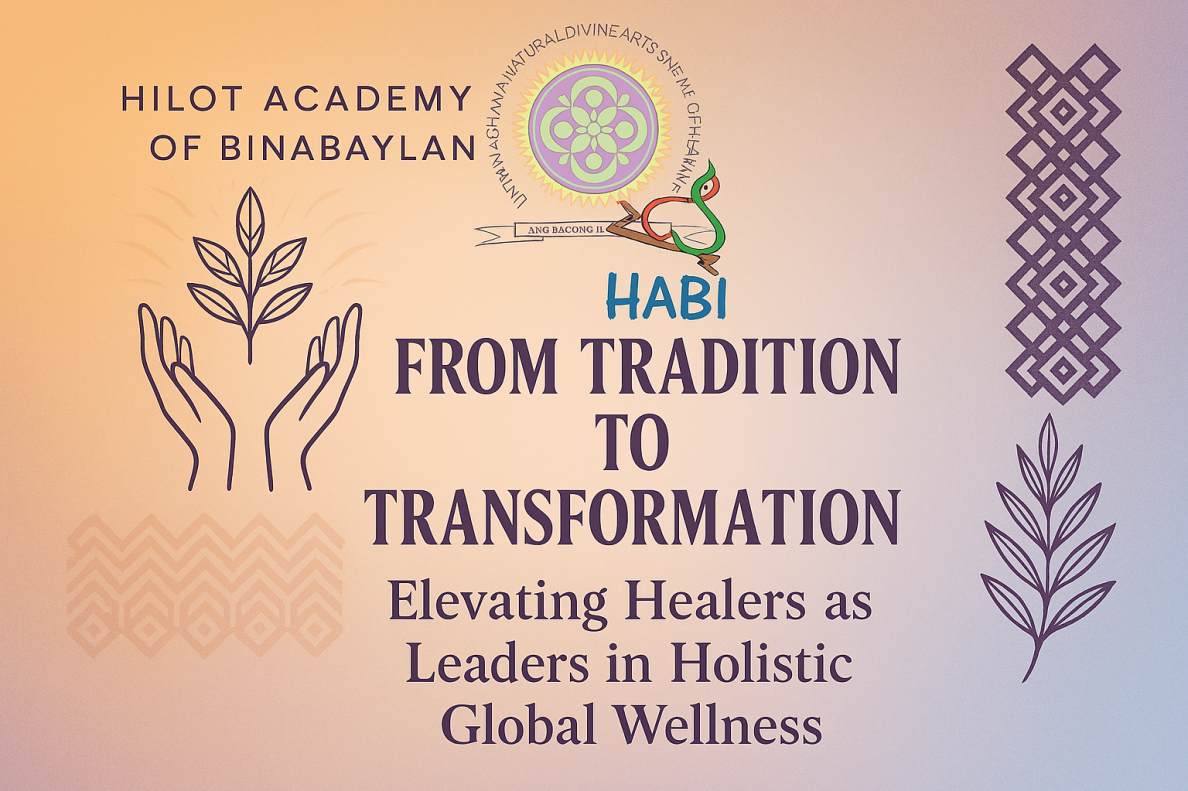
In 2016, the Hilot Academy of Binabaylan was born with a vision to preserve and elevate the ancient healing arts and spirituality of the Filipino people. Though originally envisioned as Hilot Academy of Binabaylan International, the name was refined to HABI—a powerful acronym that not only stands for Hilot, Academy, and Binabaylan, but also evokes the Filipino word habi, meaning “to weave.”

This weaving is not merely symbolic. It reflects the Academy’s mission to interlace the physical, emotional, mental, social, and spiritual fabrics of life into a holistic tapestry of wellness. Through its teachings, HABI has become a loom where ancient wisdom and modern practice converge, creating a healing tradition that transcends borders.

From Local Roots to Global Reach

Despite initial limitations in naming, HABI has organically grown into an international movement. Since its founding, over 80 ordained and certified Hilot Binabaylan Practitioners have emerged across the globe—from the United States, Canada, Chile, Italy, France, London, Austria, Vietnam, Japan, and Australia, to its sacred homeland, the Philippines.

These practitioners began their journey seeking knowledge of Filipino healing arts. Yet, through their studies, they unearthed a deeper connection to precolonial Filipino spirituality—a sacred path that predates the Abrahamic religions of Islam and Christianity. In doing so, they became not just healers, but weavers of ancestral memory, restoring threads of indigenous wisdom long buried under colonial narratives.

Healing Beyond the Physical

At the heart of HABI’s philosophy is the understanding that true healing begins with the soul. The Academy teaches that health, illness, and wellness are not isolated phenomena within the body—they are reflections of our relationships, our environment, and our connection to the divine.

Through the lens of Kapwa, the Filipino concept of shared identity and interconnectedness, HABI practitioners recognize that healing must extend beyond the individual. It must encompass the community, the land, and the unseen energies that flow through all things.

Thus, the practice of Hilot Binabaylan includes:

– Rituals and offerings (atang) to harmonize spiritual energies 
– Prayer in motion, where movement becomes medicine 
– Sacred foods and drinks that nourish both body and spirit 
– Environmental energy weaving, ensuring balance and clarity in the spaces we inhabit 

These methodologies are not mere supplements—they are central to the healing process. They restore the flow of life force (hininga), clear disruptions, and prevent illness from taking root.

The Loom of the Future

As HABI continues to grow, it stands as a testament to the resilience and relevance of Filipino indigenous knowledge. It is a loom of transformation, where healers become leaders, and tradition becomes a living force for global wellness.

Through its graduates and teachings, HABI is not just reviving a practice—it is weaving a new world, one where healing is sacred, interconnected, and deeply rooted in the soul of the Filipino people.

Preserving the Sacred: Why Hilot Must Remain Rooted in Its Indigenous Form

Hilot, the ancient healing art of the Filipino people, is more than just a massage technique—it is a sacred embodiment of our Indigenous Knowledge Systems and Practices (IKSP). Rooted in the wisdom of our ancestors, Hilot is a holistic approach to healing that integrates the body, mind, and spirit, guided by the rhythms of nature, the presence of the Diwata and Anito, and the elemental balance of Apoy, Tubig, Hangin, and Lupa.

The Essence of Hilot as Indigenous Knowledge

In its original form, Hilot is a spiritual and cosmological practice. It is performed by Binabaylan, spiritual healers who walk between realms, invoking divine guidance and ancestral wisdom. Hilot is not merely about physical relief—it is about restoring harmony within the person and their environment. It includes:

  • Energetic diagnostics through pulse, heat, and intuition
  • Rituals and prayers to the Diwata and Anito
  • Herbal medicine and elemental therapy
  • Soul healing and spiritual alignment

This depth of practice reflects the Indigenous Filipino worldview, where health is not just physical wellness but a state of spiritual balance and ancestral connection.

The Role of TESDA and PITAHC

In recent years, TESDA and PITAHC have taken steps to promote Hilot as part of the national healthcare system. Their efforts have helped:

  • Provide training and certification for practitioners
  • Ensure safety and professionalism
  • Introduce Hilot to a wider audience seeking alternative wellness

These contributions are valuable and necessary. However, the institutional framing of Hilot has narrowed its scope, often reducing it to massage and relaxation therapy, detached from its Indigenous roots.

The Risk of Cultural Dilution

When Hilot is stripped of its spiritual and ancestral dimensions, it loses its identity as Indigenous Knowledge. It becomes a commodified service, disconnected from the cosmology that gives it meaning. This not only misrepresents the practice but also disempowers Indigenous communities who have preserved it for generations.

A Call for Dual Recognition

We advocate for a dual-pathway approach to Hilot:

  1. Institutional Hilot – promoted by TESDA and PITAHC for therapeutic and wellness purposes.
  2. Indigenous Hilot Binabaylan – preserved in its original form by spiritual communities like Templong Anituhan, emphasizing holistic healing of the body, mind, and spirit.

This approach allows Hilot to evolve and reach modern audiences without losing its soul. It respects the sovereignty of Indigenous communities and honors the sacredness of Hilot as a spiritual ministry.

Protecting Hilot as Indigenous Knowledge

We call upon:

  • NCIP to uphold Hilot as IKSP under R.A. 8371
  • IPOPHL to protect its Indigenous Intellectual Property
  • Educational institutions to include Hilot Binabaylan in cultural and spiritual curricula
  • Healthcare systems to recognize the value of spiritual healing in holistic wellness

Call to Action: Join Us in Reclaiming Hilot

To deepen this conversation and celebrate the wisdom of our ancestors, we invite you to join our free online event:

🕓 Date & Time: November 8, 2025, from 4:00 PM to 6:00 PM
📍 Platform: Google Meet
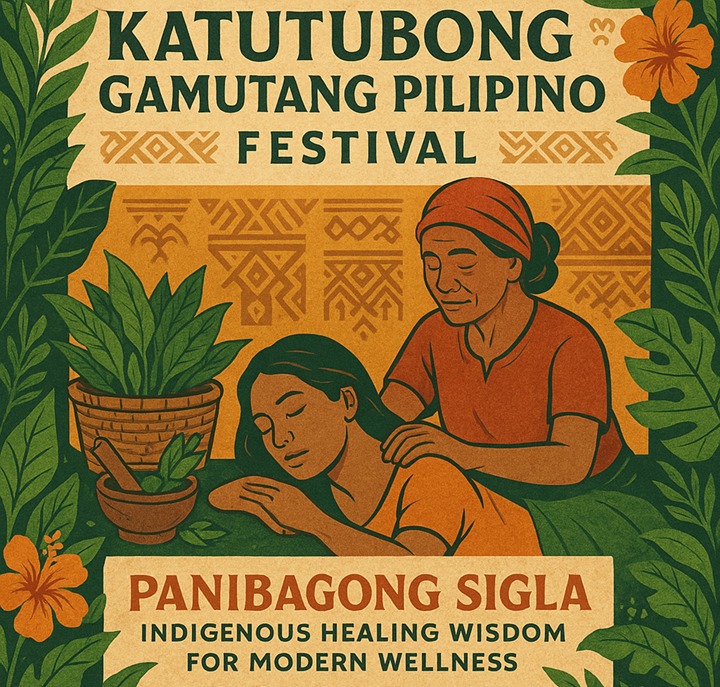
🎉 Event Title: Panibagong Sigla: Indigenous Healing Wisdom for Modern Wellness

This gathering will feature Hilot practitioners, Binabaylan leaders, and cultural advocates sharing insights on how Hilot can be preserved, practiced, and promoted in its full Indigenous form.

Let us walk together in healing, remembering, and reclaiming the sacred path of Hilot.

🌿 Influenza-Like Illness (ILI) and the Role of Hilot Binabaylan in Community Immunity

As the rainy season and colder months arrive, communities across the Philippines experience a rise in Influenza-like Illness (ILI)—a condition marked by fever, cough, sore throat, body aches, and fatigue. Though not always caused by the influenza virus, ILI can be triggered by various respiratory infections, including COVID-19, RSV, and adenoviruses.

While modern medicine offers vaccines and antiviral treatments, Filipino Indigenous Healing—particularly Hilot Binabaylan—offers a holistic and culturally rooted approach to preventing illness and strengthening immunity.

🦠 What is Influenza-Like Illness?

ILI is a clinical diagnosis based on symptoms that resemble the flu. It spreads through:

  • Airborne droplets from coughing or sneezing
  • Touching contaminated surfaces
  • Close contact with infected individuals

ILI is not a single disease but a syndrome, and its prevention requires both physical and energetic care.

🌺 How Hilot Binabaylan Helps

Hilot Binabaylan is more than just massage—it is a sacred healing art that integrates:

  • Energetic balancing
  • Herbal medicine
  • Spiritual rituals
  • Community wellness education

Here’s how it supports immunity and prevents ILI:

1. Energetic Realignment

Hilot techniques like Panghihilot and Pagpapainit release stagnant energies and restore elemental harmony (Lupa, Hangin, Apoy, Tubig), which strengthens the body’s natural defenses.

2. Herbal and Natural Remedies

Binabaylan practitioners use indigenous herbs such as:

  • Lagundi for cough and fever
  • Tanglad and Luya for respiratory relief
  • Sambong for detoxification

These are prepared as teas, oils, or poultices to support healing and immunity.

3. Spiritual Protection and Cleansing

Rituals invoking Diwata and Anito help cleanse spiritual imbalances that may manifest as physical illness. Seasonal rites during Full Moon, Ghost Month, and Undas align the community with nature’s healing cycles.

4. Community Education and Advocacy

Hilot Binabaylan promotes preventive care through teachings on hygiene, nutrition, emotional wellness, and ancestral wisdom. The creation of Dambana ng Ginhawa serves as a communal healing space for rest and renewal.

5. Touch Therapy and Soul Activation

Through sacred touch, Hilot awakens the UliRat (life force) and Malay (recognition soul), activating the body’s inner healing intelligence and reducing stress—a key factor in immune suppression.

🌞 A Call to Action

As caretakers of both body and spirit, Binabaylan healers are called to lead the community in resilience and renewal. By integrating ancestral knowledge with modern awareness, Hilot Binabaylan becomes a powerful ally in the fight against seasonal illness.

Let us walk the path of healing together guided by the spirits, grounded in the earth, and united in the rhythm of life.