Understanding the Seasons and Health Risks During Habagat in the Philippines

The Philippines, a tropical archipelago, experiences only two distinct seasons—the Dry Season and the Wet Season—unlike countries above and below the equator that enjoy four.

  • Dry Season: November to May
  • Wet Season: June to October

These seasons are largely influenced by monsoon winds:

  • Amihan (Northeast Monsoon): Brings cooler air and less rainfall, typically from November to February.
  • Habagat (Southwest Monsoon): Brings warm, moist air and heavy rains, usually from June to October.

You might notice that March to May isn’t covered by either monsoon. This period is known as the Inter-Monsoon Period, which marks the Philippine summer. During this time, another wind system called the Easterlies—part of the global trade wind system—blows from the Pacific Ocean toward the eastern parts of the country, contributing to hot and humid weather.


🌧️ What Happens During the Habagat Season?

As of this writing, we are in the Habagat season, when typhoons are more frequent. The wind blows from the southwest to the northeast, carrying warm, moist air from the Indian Ocean and the South China Sea. This results in:

  • Heavy and frequent rainfall
  • Thunderstorms and typhoons
  • High humidity and cloudy skies
  • Flooding, landslides, and increasingly, storm surges

🩺 Common Health Risks During Habagat

The wet conditions during the Habagat season create an environment that fosters several illnesses. Here are the most common health risks:

🦟 1. Dengue Fever

  • Cause: Mosquito bites (Aedes aegypti)
  • Why it spreads: Stagnant water from floods becomes breeding grounds for mosquitoes
  • Symptoms: High fever, rash, muscle and joint pain, bleeding

💧 2. Waterborne Diseases

Caused by contaminated water due to flooding and poor sanitation:

  • Cholera: Severe diarrhea and dehydration
  • Hepatitis A: Jaundice, fever, abdominal pain
  • Typhoid Fever: High fever, weakness, stomach pain
  • Prevention: Boil drinking water, maintain proper hygiene, and dispose of waste properly

🐀 3. Leptospirosis

  • Cause: Contact with floodwater contaminated by rat urine
  • Symptoms: Fever, muscle pain, vomiting; severe cases may lead to kidney or liver damage
  • Prevention: Avoid wading in floodwaters; wear protective boots if necessary

🤧 4. Influenza-like Illnesses

  • Cause: Viral infections spread in crowded, damp environments
  • Symptoms: Fever, cough, sore throat, body aches
  • Prevention: Practice good hygiene, avoid crowded places, and maintain proper nutrition

Stay safe and informed during the Habagat season. Understanding the weather patterns and health risks can help you prepare and protect yourself and your family.

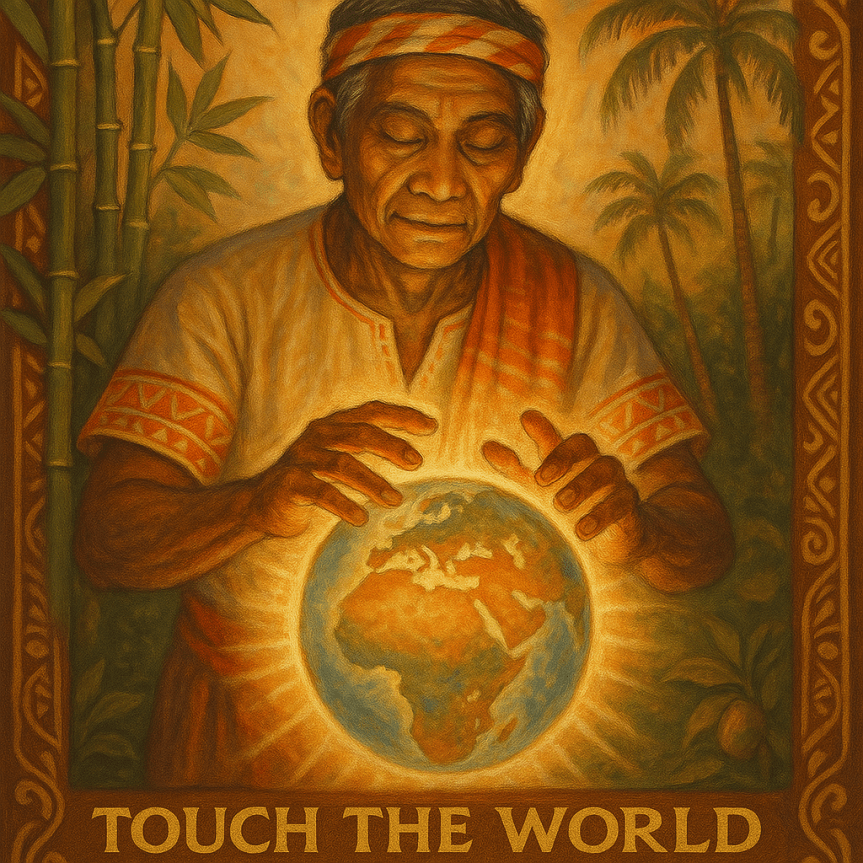
TOUCH THE WORLD WITH HILOT

When we start Hilot Academy of Binabaylan on 2016, I know from that time that our Hilot will be different from what the people know about it and even on how the Philippine Government promote it to the Public. I would say that our Hilot reflects the vision of my Teacher, Dr. Rueben M. Galang Jr., MD who is the founder of the School of Alternative Medicine at St. Francis Divine College in Novaliches, Queson City that he says:

The power of Health to the hands of the People and one manghihilot in every Filipino Home.

In the Philippines, we have approximately 116.79 million as our total population this 2025 and if the average household compose of 4 to 5 persons, then we will have approximately 28.5 million families. And aside from the Philippines Filipino can also be found in the United States of America, which according to the U.S. Census Bureau, there are approximately 4.45 Million Filipinos living in USA especially in:

  • California that has 1,705,090 Filipinos
  • Hawaii that has 369,479 Filipinos
  • Texas that has 231,992 Filipinos
  • Washington that has 194,965 Filipinos
  • Nevada that has 184,225 Filipinos
  • Florida that has 178,012 Filipinos
  • Illinois that has 174,442 Filipinos
  • New York that has 160,566 Filipinos
  • New Jersey that has 152, 507 Filipinos
  • Virginia that has 119,497 Filipinos

Though this map only shows the number of Filipino that can be found in the United States of America, this will also serve as our road map in reaching out to our Kababayan in remembering our Indigenous Healing Arts and Science. Mostly Filipinos in United States of America are immigrants and either 2nd to 3rd Generation Filipino American.

Next to the United States of America, there are also large Filipino Community that can be found in the Kingdom of Saudi Arabia mostly Overseas Filipino Worker that works in Construction Firm, Health Care and House Hold Services. In general, there are 898,014 Filipinos in the entire kingdom that can be distributed on the following provinces:

  • Riyadh there are approximately 250,000-300,000 Filipinos
  • Jeddah there are approximately 150,000 – 200,000 Filipinos
  • Al Kobar and Dammam (Eastern Province) there are approximately 120,000- 150,000 Filipinos
  • Mecca and Medina there are approximately 50,000 – 70,000 Filipinos

Filipino workers in Saudi Arabia are increasingly diversified, with many now employed in private sector jobs, including healthcare, education, retail, and even small business ownership.

Next will be in Canada which many Filipinos have Migrated for permanent residency, work and Education. It is estimated that there are around 1 million Filipino migrated in Canada which is shown below:

  • Ontario: There are 363,655 Filipinos
  • British Columbia: There are 216,710 Filipinos
  • Alberta: There are 174,280 Filipinos
  • Manitoba: There are 94, 320 Filipinos
  • Saskatchewan: There are 43,760 Filipinos
  • Quebec: There are 44,880 Filipinos
  • Nova Scotia: There are 6,615 Filipinos
  • New Brunswick: There are 5,190 Filipinos
  • Newfoundland and Labrador: There are 2,265 Filipinos
  • Yukon: There are 1,945 Filipinos
  • Northwest Territories: There are 1,665 Filipinos
  • Prince Eduard Islands: There are 1,760 Filipinos
  • Nunavut: There are 310 Filipinos

Fourth in our list is the United Arab Emirates where there are significant numbers of Overseas Filipino Workers which approximately in 700,000 making up 6.8% of the country’s population.

  • In Dubai, there are already 450,000 Filipinos which roughly accounts to 21.3% of Dubai’s population. Filipinos here work in hospitality, healthcare, retail, construction, and other service industries.
  • Abu Dhabi: Estimated ~150,000 Many are employed in government services, oil and gas, and education.
  • Sharjah, Ajman, and other emirates: ~100,000 combined These areas host Filipinos working in manufacturing, logistics, and domestic services.

Next is in Japan, where Filipinos work in caregiving, entertainment and technical fields. There are many Filipino Japanese Families. Approximately there are 341,518 Filipinos Living in Japan.

As shown, the largest Filipino communities are in:

  • Tokyo (~72,000)
  • Aichi (~42,000)
  • Kanagawa (~39,000)
  • Osaka (~36,000)
  • Saitama (~31,000)

Nest to Japan is Australia which has a growing population of Filipino, especially in Sydney and Melbourne due to skilled migration and education. Approximately 361,860 Filipino-born people living in Australia, making them the fifth-largest migrant community in the country. This represents about 1.4% of Australia’s total population.

State/TerritoryFilipino-born Population
New South Wales (NSW)98,510
Victoria (VIC)75,480
Queensland (QLD)60,360
Western Australia (WA)35,120
South Australia (SA)18,740
Australian Capital Territory (ACT)4,880
Northern Territory (NT)2,800
Tasmania (TAS)1,700

After Australia we are also in the United Kingdom on which Filipinos work in healthcare, especially as nurses and caregivers. As of 2025, there are approximately 165,000 to 200,000 Filipinos living in the United Kingdom 

1. This includes both:

  • Philippines-born residents: Around 164,962 as of the 2021/22 census 1
  • Ethnic Filipinos (including those born in the UK or with Filipino ancestry): Estimated to be over 200,000

🇬🇧 Filipino Population by Region

Here’s a breakdown based on available data:

RegionFilipino Population
England149,474
Scotland6,245
Wales5,542
Northern Ireland3,701

🏙️ Areas with Significant Filipino Communities

  • London: Home to about 40% of the UK’s Filipino population
  • English Midlands
  • North West England
  • South East England

Filipinos in the UK are active in sectors such as healthcare (especially nursing), hospitality, education, and domestic services.

HONGKONG

As of January 2024, there are approximately 201,104 Filipinos living in Hong Kong, most of whom are employed as foreign domestic helpers (FDHs) 

1. This makes Filipinos the largest ethnic minority in Hong Kong, comprising 55.6% of the total FDH population.

🇭🇰 Filipino Presence in Hong Kong

  • Primary Occupation: Domestic work, caregiving, hospitality, and retail
  • Community Hubs: Central (especially around Statue Square), Victoria Park, and areas in Kowloon and the New Territories
  • Support Services: Numerous Filipino churches, consular services, and community organizations are active in Hong Kong

SINGAPORE

As of 2025, there are an estimated over 220,000 Filipinos living in Singapore, based on growth trends from previous years 

1. This includes:

  • Work permit holders (majority)
  • Permanent residents
  • Singapore citizens of Filipino origin (though not officially counted separately)

🇸🇬 Filipino Presence in Singapore

  • Occupations: Domestic work, healthcare, education, IT, finance, hospitality, and retail
  • Community hubs: Lucky Plaza (Orchard Road), East Coast, and areas near churches and consular services
  • Cultural footprint: Active Filipino churches, community groups, and events like Independence Day celebrations

SOUTH KOREA

As of 2025, there are approximately 70,000 Filipinos living in South Korea 

1. This includes:

  • Permanent residents: Around 6,000
  • Undocumented individuals: Estimated 14,000–15,000
  • Temporary workers and students: The majority of the population

🇰🇷 Filipino Communities in South Korea

Filipinos are primarily concentrated in:

  • Seoul – Especially in areas like Hyehwa-dong and Dongsung-dong in Jongno-gu
  • Busan – A growing community of workers and students
  • Incheon, Daegu, and Daejeon – Smaller but active Filipino populations

Filipinos in South Korea are engaged in:

  • Manufacturing and industrial work
  • Healthcare and caregiving
  • Education and entertainment
  • Religious and community services

ITALY

As of 2025, there are approximately 165,000 Filipinos living in Italy, making them one of the largest non-EU foreign communities in the country 

1.

🇮🇹 Filipino Population by Region

According to the Italian Ministry of Labour and Social Policies:

  • Lombardy: ~34.8% of the Filipino population (~57,420 people)
  • Lazio: ~27.4% (~45,210 people), including Rome
  • Emilia-Romagna: ~8.6% (~14,190 people)
  • Other regions include Tuscany, Veneto, and Piedmont with smaller but active Filipino communities.

Filipinos in Italy are primarily employed in:

  • Domestic work and caregiving
  • Hospitality and services
  • Healthcare and education

SPAIN

As of 2025, there are approximately 200,000 Filipinos living in Spain 

1. This includes:

  • Filipino citizens: Around 40,000 officially registered in municipal records
  • Filipino-born residents: Estimated 57,498
  • Spanish citizens of Filipino ancestry: Making up the rest of the estimated total

🇪🇸 Filipino Population by Region

Here’s a breakdown of Filipino citizens by region:

RegionFilipino Population
Community of Madrid17,471 (43.39%)
Catalonia12,239 (30.40%)
Andalusia3,372 (8.37%)
Balearic Islands2,357 (5.85%)
Canary Islands1,782 (4.43%)
Valencian Community1,011 (2.51%)

Filipinos in Spain are active in sectors such as domestic work, caregiving, hospitality, education, and healthcare, and many are long-term residents or descendants of earlier migrants due to historical ties between the Philippines and Spain.

Through these, we envision to reach out all Filipino in Diaspora and call them back to walk to the Path of our Race on which Hilot can be a doorway in reconnecting them back to their ancestral root by embracing our own heritage and culture.

Embracing Life and Death: A Manghihilot’s Perspective

In our Code of Ethics, we have mentioned that we are Healthcare providers whose goals consist of prevention of premature death and disability, maintenance or improvement of life, maximization of
personal growth and development, and preparation for a good death.

As a manghihilot, our role is not to promise a long life to our patients. Instead, we offer something deeper—we help them embrace life fully, with all its challenges and transitions. We guide them to find comfort, meaning, and joy in every moment, no matter how difficult.

We do not see death as an enemy to be fought. Rather, we recognize it as a gentle guide—one that reminds us to live with purpose, to cherish our relationships, and to find peace in the present. In our healing practice, death is not the end, but a companion that helps us appreciate the beauty of life.

“It has been taught to us as Manghihilot, our role in caring is from the time of conception to the moment of transition from this plane of existence to the next life.”

In our tradition as Manghihilot, healing is not just a profession—it is a sacred calling. We are taught that our responsibility begins at the very start of life, even before birth, and continues until the final breath. Our care spans the entire human journey, from conception to transition, from the womb to the world beyond.

More Than Healing the Body

Our work is not limited to treating physical ailments. We are called to listen deeply—to the body, the spirit, and the emotions. We understand that true healing involves the whole person, and that pain can come not only from the body, but also from the heart and mind.

Honoring Life and Death

As Manghihilot, we do not fear death. We do not see it as something to fight or avoid. Instead, we recognize it as a natural part of life’s sacred cycle. We walk with our patients through every stage of life, including the final one, offering comfort, peace, and dignity.

A Tradition That Evolves

Our practice is rooted in the wisdom of our ancestors, but it is not stuck in the past. We continue to learn, grow, and adapt—bringing Hilot into the modern world while staying true to its spiritual essence. We believe that healing is a lifelong journey, and our presence is a gift of love and service from beginning to end.

Recently, a graduate of the Hilot Academy asked me whether we have any documented cases involving palliative care or end-of-life care within the practice of Hilot. Regretfully, I had to respond that we do not. The graduate pointed out that other traditional healing modalities have such documentation, while Hilot appears to lack it.

This absence is not due to a lack of experience or wisdom among Manghihilot, but rather a reflection of how our tradition has been preserved. Most Manghihilot have not been formally educated in colleges or universities. Their knowledge is deeply rooted in oral tradition and lived experience. They act rather than write. Their learning is carried in the mind and heart, passed down through narration and demonstration, not through modules or modern training materials.

This way of transmission is sacred and powerful, but it also means that much of our healing work remains undocumented. As we move forward, perhaps it is time to begin bridging the gap—honoring our oral traditions while also finding ways to preserve them in written form, so that future generations may continue to learn, grow, and share the wisdom of Hilot.

“In the sacred silence between life and death, the Manghihilot does not surrender—he pleads, he prays, and he offers his soul in service, asking for one more chance to heal.”

For the sake of documentation, I want to share a personal experience on how I, as a Manghihilot, have cared for a dying patient.

First and foremost, it is never our intention for a patient to die under our care. If that were the case, why would we devote time, energy, and spirit to preserving life? Our role is rooted in the belief that life is sacred and worth fighting for—even in its most fragile moments.

When a patient is facing a serious illness, it may seem that death is near. But as Manghihilot, we do not simply accept this. Instead, we plead with death—asking it to grant the patient another chance to live. It is a spiritual negotiation, a bargaining of life with death.

And if death allows the patient to stay, a promise must be made and fulfilled. This promise is not just a ritual—it is a sacred commitment to honor the life that was spared. In this way, our healing practice becomes not only physical but deeply spiritual, rooted in reverence for both life and the mystery of death.

“In the quiet moments before farewell, the Manghihilot becomes not just a healer—but a guide, preparing the soul for its sacred journey home.”

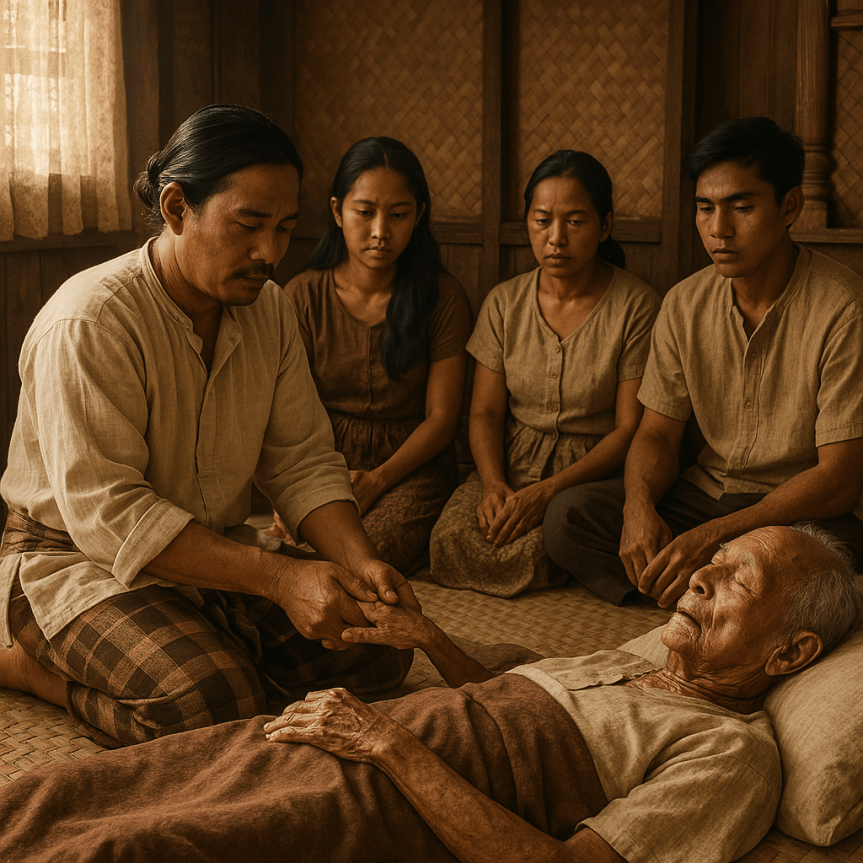
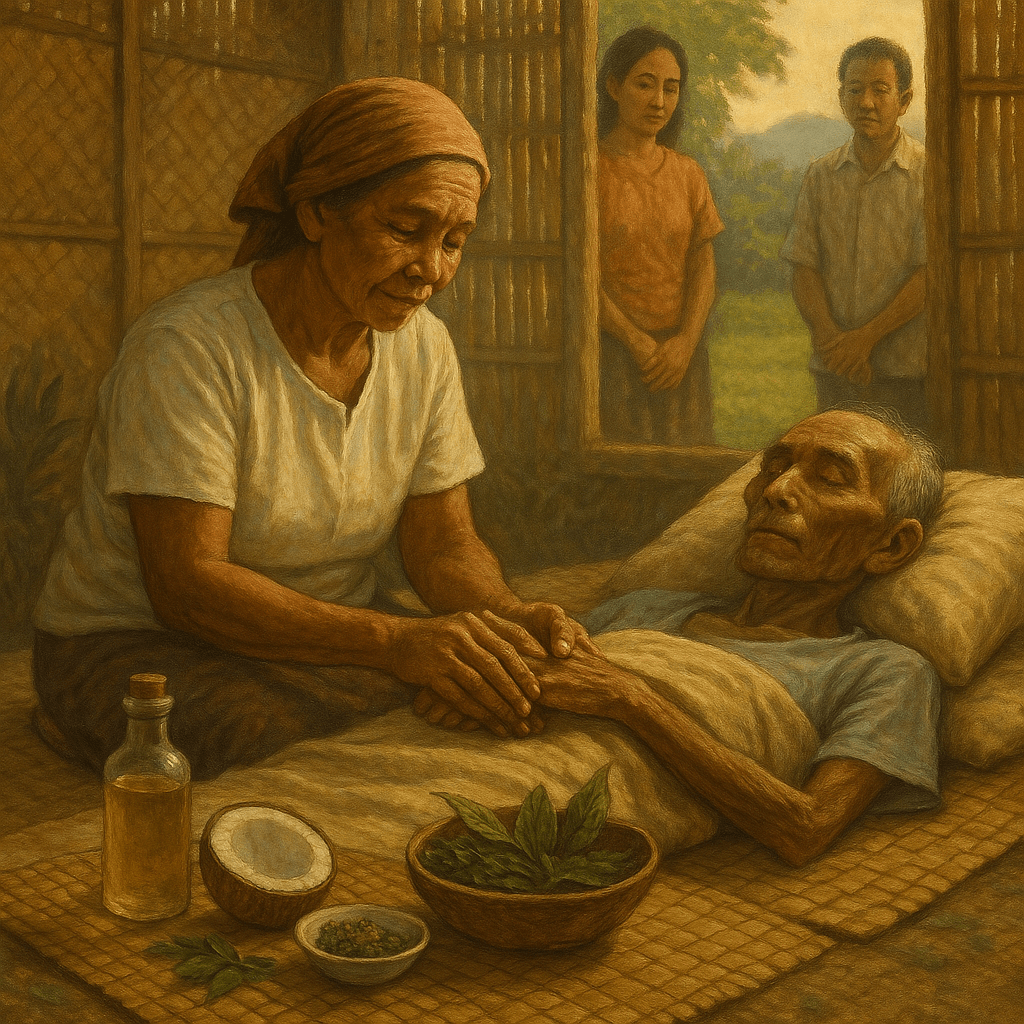
I remember my 80-year-old neighbor, Tata Piyo, who was undergoing dialysis for a kidney condition. His daughter, Ate Belen, came to me one day and asked for help in caring for her father. Despite his age and fragile condition, we chose to fight for life. As a Manghihilot, I did everything I could to ease his suffering—applying hilot pahid to relieve his pain, performing suob and paligo, and even designing a special diet to support his condition.

One day, Tata Piyo was in great pain. Ate Belen rushed to my house, asking me to attend to him. When I entered his bedroom, he looked at me and said in Tagalog, “Ihatid mo na ako.” I responded in a light-hearted way, “Where do you want me to send you? Don’t worry, when you regain your strength, we’ll go to Jollibee.” He laughed, gathering all his remaining strength, and replied, “Hindi, ihatid mo na ako sa ating Ama sa langit.”

I wasn’t prepared for those words. But I kept my composure and gently asked Ate Belen to call the rest of the family. I told them that Tata Piyo was asking to rest, and that the decision must come from them—not from me.

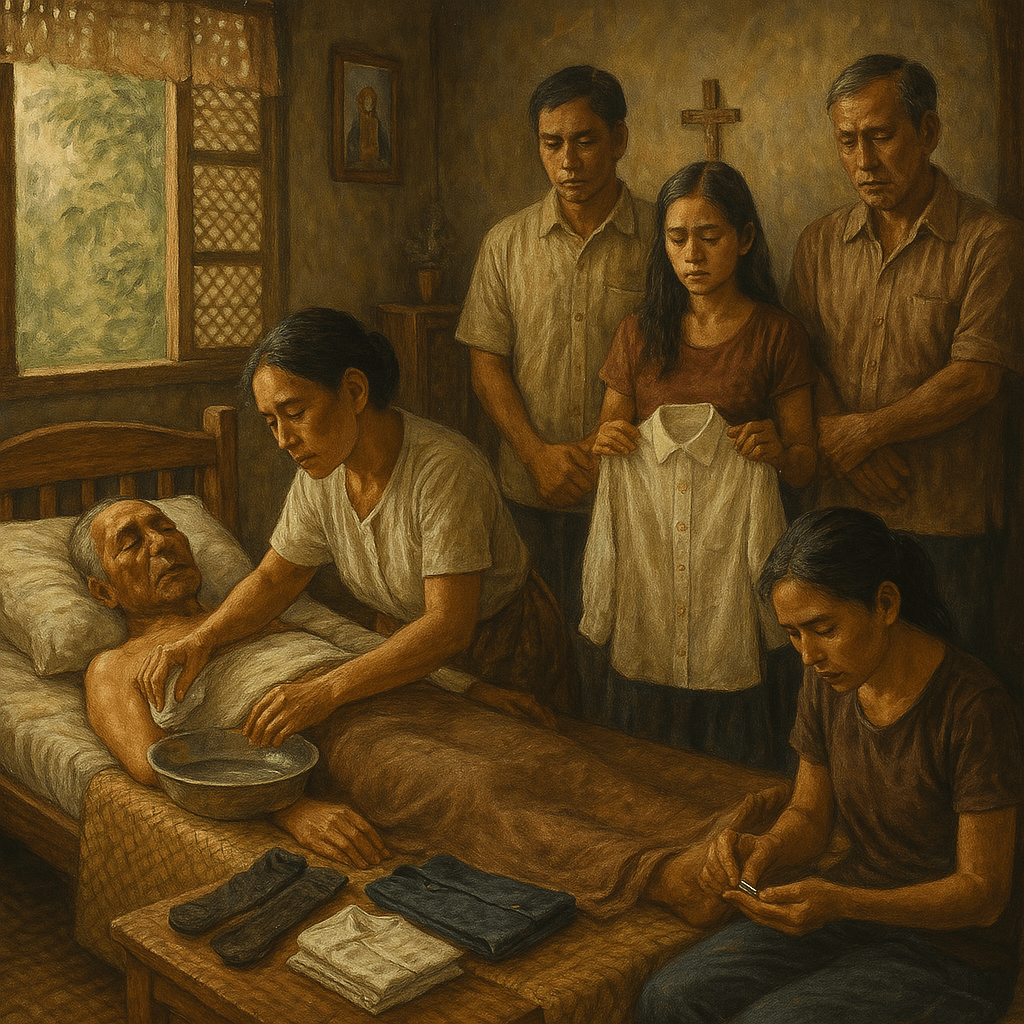
Together, we discussed whether to continue fighting for his life or to let him go peacefully. The family, acknowledging his age, his weakened body, and their readiness to accept his passing, decided to let him go. They remained composed, not wanting Tata Piyo to see them cry.

Everyone began preparing his clothes—underwear, socks, pants, t-shirt, and barong. I clipped his fingernails and toenails and gave him his last bed bath, ensuring he was clean and dignified for his journey.

At exactly 6:00 PM, Tata Piyo took his final breath.


This experience reminded me that as Manghihilot, our care extends beyond healing—it reaches into the sacred space between life and death. We do not just treat the body; we honor the soul. And in moments like these, we become witnesses to the most profound transitions of life.

Working with Hilot out of Love

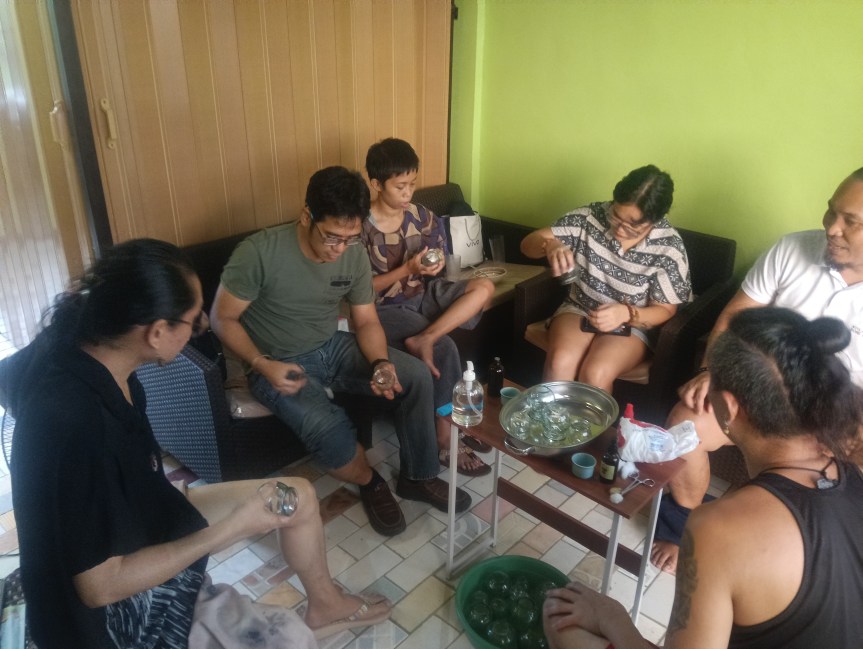
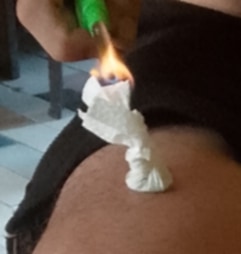
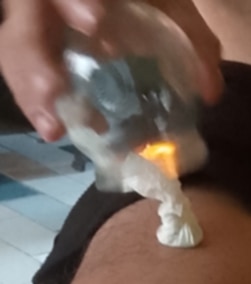
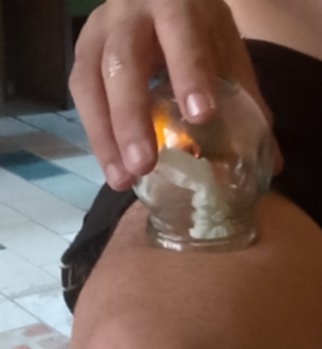
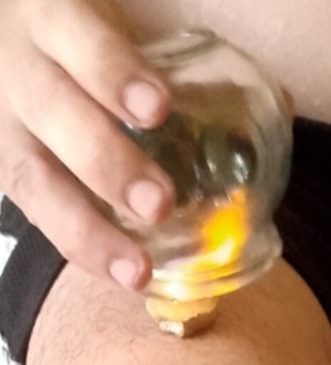
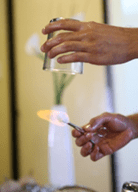
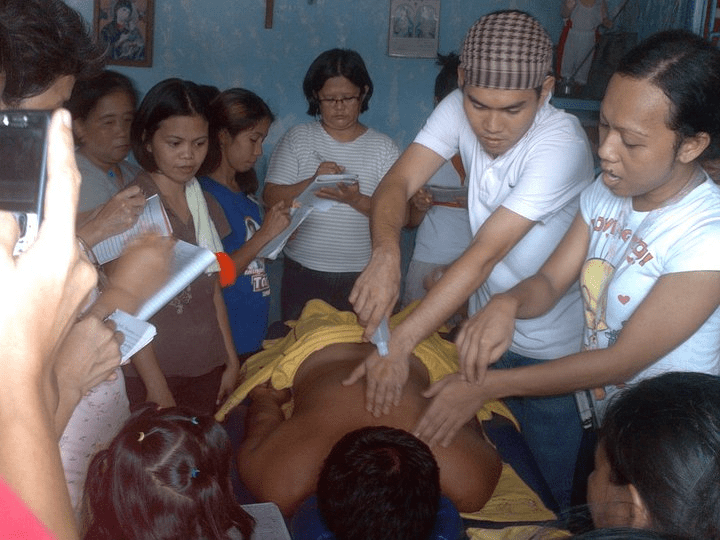
Last May 18, 2025- we have shared to our Hilot Binabaylan Alignment Trainee the Hilot Treatment which everyone knows as Bentusa Fire Cupping. Everyone had the opportunity to place bentusa cup on their own skin by sharing different methods on how to apply it. What I emphasize how to make vacuum using fire.

  1. Coin and Paper Method

In this procedure, the manghihilot prepare an old coin and tissue paper. Then wrap the tissue paper along the old coin. The coin will serve as a stand and place it on the area you are to place the bentusa cup. then burn the paper and as it burn carefully place the bentusa cup in order to create vacuum to suck the skin.

2. Cotton and Ginger Method

In this procedure, you will need to slice a ginger which is wide enough to fit the mouth of our bentusa cup. Then soak a piece of cotton to 70% ethyl alcohol (which I prefer to recommend rather than Isopropyl alcohol). Then place the ginger slice on the area where you are going to place the bentusa cup and the soaked cotton. After that light it on fire and gently place the bentusa cup on the area to be treated.

DISADVANTAGE OF PAPER AND GINGER METHOD

Aside from safety concerns, the burnt paper or cotton placed over the area will produce smoke. That will be trapped inside the bentusa cup when it already created a vacuum or reverse pressure. It is said that burning tissue paper releases several chemicals including carbon dioxide and carbon monoxide which both contribute to air pollution. additionally, burning paper can produce dioxins, which are highly toxic and can have harmful effects on human health and the environment.

While burning soaked cotton on 70% Ethyl Alcohol have a health hazards such as:

  1. Respiratory Issues – Inhaling the fumes can cause irritation to the lungs, leading to coughing, shortness of breath, or dizziness. Prolonged exposure may contribute to respiratory damage.
  2. Skin and Eye Irritation – Ethyl alcohol and its combustion byproducts can cause skin irritation or eye discomfort, especially if direct contact occurs.
  3. Toxic Exposure – Incomplete combustion can release carbon monoxide (CO), which is highly toxic and can lead to headaches, nausea, or even unconsciousness in high concentrations.
  4. Carcinogenic Risk – Burning organic materials may produce aldehydes and volatile organic compounds (VOCs), some of which have been linked to long-term health risks
  5. Neurological Effects – Exposure to high concentrations of ethanol vapors can cause dizziness, confusion, or impaired coordination

Health Hazards of Burning Tissue Paper.

Burning tissue paper can pose several health hazards, including:

  1. Respiratory Issues – The smoke contains fine particles and harmful gases that can irritate the lungs, leading to coughing, shortness of breath, and asthma.
  2. Carbon Monoxide Poisoning – Incomplete combustion releases carbon monoxide (CO), which can cause dizziness, headaches, and even unconsciousness in high concentrations.
  3. Toxic Chemical Exposure – Burning paper can release dioxins, sulfur dioxide, and volatile organic compounds (VOCs), which may contribute to long-term health risks.
  4. Skin and Eye Irritation – The smoke and ash can cause eye discomfort and skin irritation, especially in enclosed spaces.
  5. Carcinogenic Risk – Some chemicals released during burning, such as polycyclic aromatic hydrocarbons (PAHs), have been linked to cancer.

There are other methods which Manghihilot employ in order to place the Bentusa Cups over the body but the one that Hilot Academy recommend is the Torch Method. In this method you will need a forceps, cotton, 70 % Ethyl Alcohol, Kidney Basin, Lighter or lighted candle. Before you place the bentusa cup over the body, be sure to lubricate it with Lana healing oil. Then soak the cotton with 70 % Ethyl Alcohol clipped with a forceps then put it in fire then place it inside the bentusa cup which is positioned near the area to be treated and manually place the cup over the area to be treated.

Since the torch method also involve burning of cotton which has biochemical health hazards, let us explore other form of bentusa cupping.

Though using Plastic Bentusa cups does not burning paper or cotton, it still has health hazard because of the plastic meterials being used. So, here are its health hazards:

  1. Chemical Leaching – Some plastics contain Bisphenol A (BPA) and phthalates, which can leach into the skin when exposed to heat, potentially disrupting hormones.
  2. Microplastic Exposure – Over time, plastic cups may release microplastics, which can be absorbed by the body and may contribute to inflammation and toxicity.
  3. Skin Irritation – Certain plastics may cause skin reactions, especially if they contain chemical additives that interact with heat or oils.
  4. Reduced Effectiveness – Plastic cups may not create a strong vacuum compared to glass or silicone, leading to less effective therapy.
  5. Environmental Impact – Disposable plastic cups contribute to plastic waste, which can harm ecosystems and increase exposure to pollutants.

So, if all of these have health hazards, what other material we can recommend using?

But before we go further, bentusa has primary purpose of stimulating blood flow, relieving muscle tension and promote healing. Other health benefits of having bentusa are the following:

  1. Muscle Pain Relief – Helps alleviate chronic muscle pain, stiffness, and tension.
  2. Improved Blood Circulation – Enhances oxygen and nutrient delivery to muscles, speeding up recovery.
  3. Detoxification – Draws toxins to the skin’s surface, aiding in their removal through the lymphatic system.
  4. Relaxation & Stress Relief – The gentle suction and warmth reduce stress and promote relaxation.
  5. espiratory Benefits – Can help with asthma, colds, and respiratory infections by loosening tight muscles around the chest.
  6. Skin Health – May improve skin conditions like acne and eczema by increasing circulation.
  7. Headache & Migraine Relief – Helps relieve tension headaches and migraines.
  8. Holistic Healing – Addresses emotional and energetic imbalances, promoting overall well-being

Thats how powerful bentusa can be specially paired with Hilot Pahid or Massage.

In the video above, we have seen that the material being used for cupping is Carabao horn. This kind of cupping treatment is known as Tandok,though it seems similar to Bentusa, it has different purpose which is to remove venom, rabies and tetanus from wound using animal horn, such as those from deer, goat or carabao.

It is said that Tandok has the following health benefits for the receiver of the treatment:

  1. Detoxification – Practitioners believe it helps remove toxins from the body.
  2. Pain Relief – Some claim it alleviates muscle pain, arthritis, and joint stiffness.
  3. Improved Circulation – The suction effect may stimulate blood flow Removing blood may stimulate the production of new red blood cells, potentially improving circulation
  4. Traditional Healing – Used in rural areas where modern medicine is less accessible.
  5. Iron Regulation – Bloodletting can help reduce excess iron levels in the blood, which may be beneficial for individuals with hemochromatosis.
  6. Lower Blood Pressure – Some studies suggest that donating blood regularly may help maintain healthy blood pressure levels.
  7. Detoxification – Traditional practitioners believe bloodletting helps remove toxins from the body.
  8. Migraine Relief – Some historical accounts suggest bloodletting was used to alleviate headaches and migraines.

TAWAK

We could say that Tawak is the mother of all these treatment method that requires suction. This treatment involve direct suction by the mouth of a traditional medicine practitioner known as mananawak, to remove venoms, toxins or infections from wounds caused by animal bites. But these technique or treatment method also has been used by poor people who has no money to send their children to proper medical care facility to remove mucus from their infant child by directly sucking the mucus that obstruct the passage of air to provide relief.

Uses and Beliefs

  • Practitioners believe Tawak can help extract poison from snake bites, rabies from dog bites, and toxins from wounds.
  • It is often used as an alternative to modern medical treatments, especially in areas where access to hospitals and vaccines is limited.
  • Some communities still rely on Tawak due to cultural beliefs and the high cost of medical care

Concerns and Risks

  • Medical experts warn that Tawak is not scientifically proven to cure rabies or venomous bites.
  • Direct suction can expose both the healer and the patient to infections and diseases.
  • Delaying proper medical treatment can lead to serious health risks, including untreated rabies, which is fatal

HILOT BINABAYLAN ALIGNMENT TRAINING PROGRAM FOR HILOT WELLNESS NC2

Are you a Hilot Wellness Nationally Certified? Would you like to level up your Career and ranked up to the Level of our International Hilot Binabaylan Practitioner and serve your community in Autonomy? Well, this is your chance to align your practice by enrolling to our alignment Training program on becoming a Hilot Binabaylan practitioner.

Join us every Sunday starting on March 23, 2025 from 1:00 PM t0 6:00 PM for our weekly learning session on becoming a Hilot Binabaylan. Our goal in this Training program is to level up the practice of Nationally Certified Hilot Wellness Massage provider into the International Standard of Hilot Binabaylan Practitioner in providing Philippine Indigenous Traditional Health Care to become Autonomous & Self Reliant Indigenous Traditional Filipino Healer by equipping them with the Skills, Knowledge and ability on the following competencies:

  1. Fundamentals of Hilot Practice
  2. Hilot Diagnostic Procedures
  3. Hilot Treatment Methodologies
  4. Family Care Hilot Treatments ( Hilot for Special Needs)
  5. Hilot Healing Center Management & Administration.

There will be 13 weekly learning session that will only cost you Php 500.00/session. It is almost the same price of availing a Massage Treatment on a Day Spa and much cheaper when you avail a luxurious spa treatment. The advantage of taking these lesson that we provide is that you will acquire the necessary skills, knowledge, abilities and attitude on providing Philippine Indigenous & Traditional Health Care which is now in demand in the Global Market.

Since Hilot Academy of Binabaylan is an Educational Ministry of Luntiang Aghama Natural Divine Arts Shrine of Healing Inc., we are proud to say that we are an Affiliate Member of Wellness Tourism Association of the Philippines Inc. as a Training Provider.

Our Training Session will happen at Luntiang Aghama Natural Divine Arts Shrine of Healing Inc. ground which is now known as Templong Anituhan at Lot 79 Phase A, Brgy. Francisco Homes Narra, City of San Jose Del Monte, Bulacan or you may email us at hilotacademy@luntiangaghama.org for inquiries and question.

Paghimo sang Lana

Lana is a Cebuano word that pertains to the Coconut Oil. It is said that Coconut is endemic to the Indo-Pacific Region which includes the SouthEast Asia, Indian subcontinent and the Pacific Islands. This is why there are noticeable similarity of our Culture and even on Healing practices on the said Region.

But in terms of the use of Coconut Oil, it has been used by our Ancestors thousand years ago even prior to the coming of the Spanish Colonizers. Aside from the medicinal properties of Coconut oil, our Ancestors know that it has a Sacred origins, as the Tagalog people believe that the Coconut is a sacred to our Ancient God named Bathala. In one of my Blog at Why Healing oil is the common medicine for the rural Filipino? – Hilot Academy of Binabaylan I wrote:

Healing Oil has been a Powerful Tool of many Filipino in Healthcare even prior to Colonization and arrival of modern Medicine in the Philippines.

It is prescribed by our Ancestors that has direct lineage to our God which we call us Anito. This belief has been strengthened when the Kingdom of India have reached out our Country during the 3rd to 6th Century.

The belief that the oil derived from the Coconut is a byproduct of the Divine Body of the Gods Ulilang Kaluluwa (lonely soul) and Galang Kaluluwa (wondering soul) in the Katagalugan Pantheon.

While in Mindanao by the Talaandig Tribe it was prescribed by their Holy Propher Apu Agbibilin to use Coconut oil and Lemon grass in Peace Making as a sign of the God Magbabaya through the God of Peace Agta Yabun Magbaya.- End of Qoute

Even up to now, many Filipinos are still using Coconut Oil (Healing Oil) in managing their illnesses, especially those are who are deprived of Financial Stability and hard to access Health Care facilities; they use it by applying it externally and even ingest it Internally especially during the time of Pandemic that it has been used to treat persons with Corona Virus.

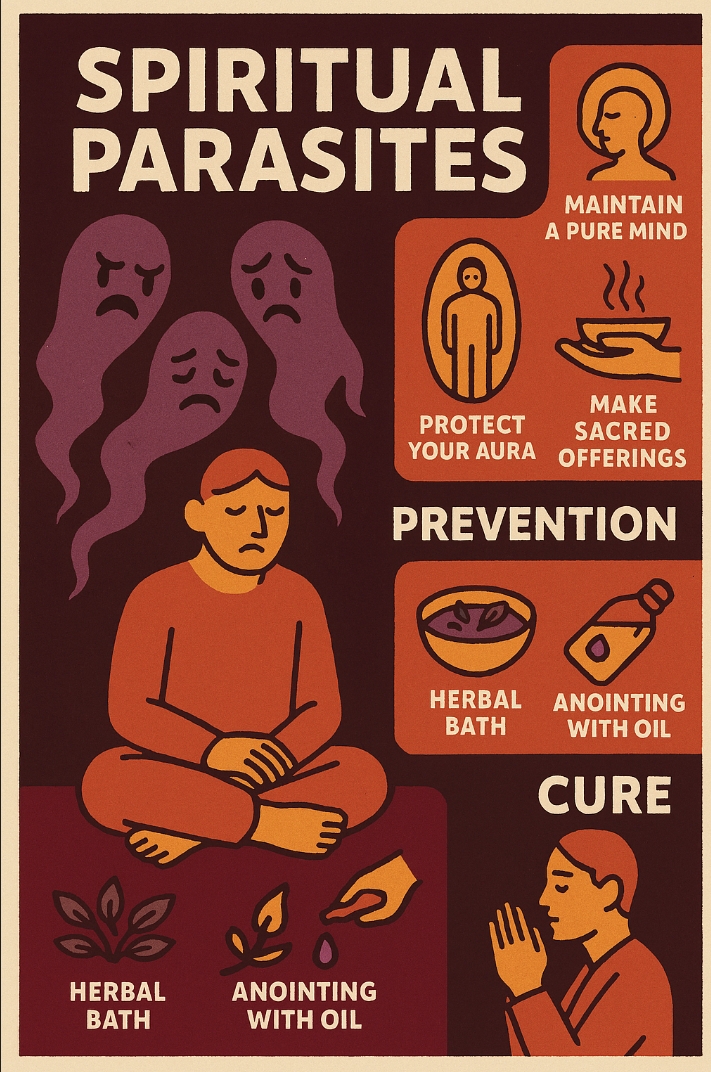
Aside from its medicinal properties, Coconut oil has its Magical/Spiritual properties that has been established by our Ancestors in protection against Evil Spirits such as the Busaw or Po-oy. It also has been used as Spirit Detector when the bottle of coconut oil boils or shown bubbles which means there are presence of evil spirit.

Manufacturing or Making of Coconut oil is being done Ritually. Specially with the Healers of Siquijor which is part of the Central Visayas Region. It starts 6 Friday before Good Friday on the Lenten Season, this will make Good Friday as the 7th Friday. For this year, this ritual will start on March 7, 2025. This Pangalap Ritual Gathering of Herbs invokes the Spirit of Pakikipagkapwa, as this gathering are not limited to local Healers and Witches of Siquijor but also with other Provinces Healers and Witches in honoring the Power of Nature.

Hilot Academy of Binabaylan through Luntiang Aghama Natural Divine Arts of Healing Inc. adopts this practice and teach it through our future Cultural Bearer and Ancestral Wisdom Keeper known as Hilot Binabaylan that we may preserve it for the benefit of our Future Generation.

Paghimo sang Lana is usually made in the Morning which is the preparation of Herbs and cooked by 12 Noon and distribute it among participants before 3 PM specially if made with a large group of Healer.

A question has been asked to me by a student if the Philippines has not been Christianized so there will be no Holy Week, when do our PreColonial Ancestors make their Healing Oil? That was a good question that requires a good answer as well. In analyzing the day of making or cooking oil which are mostly done by Folk Catholics, Christian Mystics and some animist healers, they do it during Good Friday which in accordance to Catholic Faith, it was adjusted near Full Moon which Christ was nailed on the Cross on a Full Moon. Though our precolonial beliefs is not based on Jesus Christ, but Full Moon is sacred and powerful enough that aside from following the movement of the Sun, the Phases of the Moon is also observed. So, Paghimo sang Lana is best done on the day of Full Moon that may invoke the perfect balance of Sun and Moon which are the Children of Bathala being Apolaki-the Sun and Mayari – the Moon.

We are now Part of Wellness Tourism Association of the Philippines

Greetings Mga Kalahi and KaHabi!

Happy New Year to all!

Year 2024 has been a Great and Amazing Year for us here at Luntiang Aghama Natural Divine Arts Shrine of Healing Inc. as well as at Hilot Academy of Binabaylan as we have produced 34 new Ordained Hilot Binabaylan that will administer our Indigenous Traditional Medicine in their country of residence. Along side with that we have also administered Hilot all year through to our Neighboring community in Brgy. Francisco Homes Narra that some came from different barangay and cities.

On 2024 we also have help to create a Curriculum Standards for an Organization Filipino Bone Setter that we pray they could be approved either by TESDA or Philippine Institute of Traditional Alternative Health Care.

And as we move along to our Journey in 2024, we have been an official Member of Wellness Tourism Association of the Philippines or WeTap since November 18, 2024 and just today as of writing this, I also send my message for WeTap as I read:

A Happy New Year to everyone.

I am Apu Adman Aghama or Rev. Rolando Gomez Comon, the Chief Binabaylan of Luntiang Aghama Natural Divine Arts Shrine of Healing Inc. located in the City of San Jose Del Monte, Province of Bulacan and serving the community of Brgy. Francisco Homes Narra and neighboring Barangays.

First of all, I am happy that your humble servant has been given the opportunity to be one with the Purpose of the Wellness Tourism Association of the Philippines Inc. for which I am also very grateful to Ms. Cathy Turvil, Sir Atho Dela Cruz and Sir Ryan Kenneth Escubido.

To be honest, when I was invited to the WeTap Viber group, I was shy and embarrassed because the people in the group were big names in the Wellness Tourism Industry. I thought that I was not suitable to be part of this organization. So I examined myself to see if I was worthy of being part of WeTap. I studied whether the Purpose of WeTap is suitable for my Goals to introduce Hilot to the whole World.

So now, I remain in the Association and want to share with you my deep gratitude for the year 2024 and my visions that I should walk with you for the year 2025.

My work in Filipino Traditional Medicine began at the beginning of the New Century and this was in the year 2000. I had formal studies at St. Francis Divine College and had a Diploma on Alternative Medicine. And in 2008 I became an Accredited Trainer and Assessor of Hilot Wellness and Massage Therapy NC2. During those same times, we established the Philippine Certified Wellness Therapist Association with Ms. Grace Sanico, my former boss, in 2009. Meanwhile, from 2010 to 2012, I was a member of the Philippine Wellness and Spa Association where I first met Ms. Cathy Turvil. I was also the Training Director of the Philippine Japan Hilot Association from 2011 to 2013 until 2016 when I founded the Hilot Academy of Binabaylan as the Educational Ministry of Luntiang Aghama Natural Divine Arts Shrine of Healing Inc.

The Hilot Academy of Binabaylan is a small school without a roof. The students in our school are our compatriots who were born abroad who want to know and learn again the indigenous healing methods of our Ancestors. From 2016 to 2024 we have 81 graduates of training and are serving as Hilot Binabaylan in their respective Countries of Residence and these are the following Countries: United States of America, Canada, Chile, London, Italy, France, Austria, Spain, Japan and Australia.

When we started the Hilot Academy, it seemed that our school served as a bridge and a window of history that our school became a living Museum that they not only saw and knew but also experienced through the implementation of the wisdom of our Ancestors in medicine.

It is true that the Purpose of every treatment we perform is to have Wellness. And this comfort is for everyone, not only for the wealthy but also for the Hikahos and the Poor. This is also the work of Luntiang Aghama, we extend health care to those who cannot afford to receive treatment through modern methods and also serve as a bridge to introduce modern medicine to people who are too poor to go to our Barangay Health Centers.

In the year 2024, in the month of February, I met with Nawa Wellness of Calatagan, Batanggas to consult with your servant on how to align their Wellness Services with Indigenous methods. At first, I rejected his approach and insisted that my services were only for the poor. But after praying about the situation, I realized that comfort is for everyone. This means that it is not only for the poor but it can also be experienced by the rich. Thus, the relationship between Hilot Academy and Nawa Wellness was formed. Although Nawa Wellness has its own method of restoring Ginhawa, we still share the method of Pasubay or Diagnostic methods where they can better identify the needs of their guests who will stay at their resting place.

I also see the efforts of our friend Sir Atho Dela Cruz who has set out to develop Hilot knowledge by creating modern methods of treatment based on the indigenous practices of our ancestors, so I greatly admire him in these matters.

And in response, we will try to build a bridge from indigenous methods to modern treatment through integration. In the year 2025, I will strive as a Hilot educator to create a Curriculum that will integrate Hilot into the National Health Care Delivery System where our manghihilot will be considered Professional and not just as a Blue Collar Job. I envision that our Manghihilot can have a Doctor Title like Acupuncturists, Chiropractors, Homeopaths, and Naturopaths. This will only happen if we level it according to the standards of the Philippine Qualification F ramework of TESDA, DepEd, CHED, PRC and DOLE which is the National Coordinating Council which is according to the Law implementing Rules and Regulation of Republic Act 8423 or Philippine Traditional Alternative Medicine Act of 1997 which states that:

The Institute in close coordination with Technical Education and Skills Development Authority (TESDA), Department of Education, Culture and Sports (DECS), Commission on Higher Education (CHED), Philippine Council for Health Research and Development (PCHRD) and others shall formulate guidelines, rules and regulations for the development of learning/training materials for short courses as well as for graduate and post-graduate courses. It shall develop Human Resource Development (HRD) Programs for medical and nonmedical professionals with appropriate public and private institutions particularly, Academic Centers of Excellence.

Currently, only short courses are given National Certification by TESDA and PITAHC and there is no Graduate and Post Graduate Course yet in the study and practice of Hilot. Although, your servant helped to have a Diploma Course of Filipino Indigenous Medicine or Hilot Therapy in London through ThinkTreeHub; it is still better that the study of Hilot originates in our Country. This is also the thinking of my former students why they traveled from the west back here to our beloved motherland. As is our Prayer to our Ancestors, that they call upon each one they have chosen to promote and continue the wisdom and introduce indigenous Filipino medicine to the country and town where they are and bring honor to our beloved country of the Philippines.- End of my Message for WeTap

And as part of our continues effort in promoting Filipino Indigenous Traditional Medicine which is Hilot, I have dismissed our 2025 Hilot Binabaylan Curriculum that will last for 16 days for non-medical/healthcare practitioners and 9 days for Health Care Professionals. And we have resolved that the Administration of Hilot Academy of Binabaylan will now be under Bahay SiAdTala Binabaylan Inc. which serves our Training Venue Host since 2023.All Changes and updates regarding policy of Hilot Binabaylan Training are now subject to the Administration of Bahay SiAdTala Binabaylan Inc. that includes the Certification of Students. Though in terms of Ordination, instead of Luntiang Aghama Natural Divine Arts Shrine of Healing Inc. it will now go to the Templong Anituhan Inc. which is an upgrade of Luntiang Aghama in the fulfillment of our promise to the Ancestors in Reviving the Philippine Indigenous Spiritual beliefs and practices that includes Hilot Binabaylan.

Regarding our Training Program in Hilot Binabaylan, we are still on process of making a proposal to maintain the 9 days training but will add days for internship which will enable our students to apply in real situation what they have learned during the 9 days. At the same time, this will also provide them experience and compliance to PITAHC Policy, which they will still be supervised by Certified Hilot Binabaylan Mentor or Tanglaw.

Our vision to our Hilot Binabaylan is that their knowledge, skills, abilities and attitude may be integrated into the National Health Care Delivery System that will not only end up working at Spa Centers but also may have an employment opportunities at Government Health Units such as in Barangay Health Centers, Municipal/City Health Units, Provincial and Regional Health Units, Government Hospitals and even Private Hospitals and Clinics.

We are looking forward that we could create a means that our practitioners may claim Liability insurances from any Health Insurance company and that our Manghihilot may also have the benefits that other workers obtain from the Government such as Social Security and personal Health Insurance. Having these benefits that our Manghihilot will receive, our Children and grand children will have a desire to become a Manghihilot in the Future. For this to happen, we need to rise now the Standards in the Practice of Hilot through Training. This is why we are considering including the study of Human Anatomy and Patho- Physiology, Fundamentals of Health Care, Developmental Psychology, Phyto Pharmacology and other related subjects in the study and training of Hilot.

We also envision to widen the Job opportunities of our Hilot Binabaylan graduates that will not only limit them to work in a Spa Industry and by establishing their own Hilot Treatment/ Healing Centers but also to be employed in Government Health Care Facilities.

Our Hilot Binabaylan can also be employed as a Researcher that can be part of Barangay Health Center in knowing the health status of the constituents of the specific barangay. Aside from knowing the Health Care Needs of specific families in the Barangay, our Manghihilot can also make documentation of every plant, herbs and trees that grows endemically in the specific barangay they are serving. Upon documentation, they will coordinate to PITAHC and submit what they have documented so that they could conduct intensive study in determining the medicinal properties of the plant/herbs/trees.

When the medicinal properties are properly determined, the Manghihilot now can cultivate the plants and may manufacture it as tea, oil, ointment and other herbal products which then can be given freely to their constituents or sell it in a lower cost which is affordable and cost effective.

We also envision that our Manghihilot should be the expert in terms of Herbal Medicine and other herb related food supplements.

These visions that we have on the practice of Manghihilot has been declared and keep it our Altar that through the Grace of the Divine and the Ancestors it may manifest in time.

Mission accomplished: Heal the World with Hilot Outreach

July 26 2024 when I went to California, USA to reach out our Kapwa and conducted Hilot Daloy Program which enable our Hilot Online Graduates of Non Contact Hilot Mind and Spirit Work to complete their competency on becoming a Hilot Binabaylan. And we are happy to announce that Olivia Zapanta Mir, Dayang Liwayway Innocentes and Lorenzo Pau have successfully completed the Hilot Daloy Program that Ordained them to become a Hilot Binabaylan. Though our Non Contact Hilot Mind and Spirit Work enables them to practice Tawas, Kilubansa Name Analysis and Pulse Reading as they learn it online during the time of Pandamic of Covid 19 that started from 2020 to 2022. But we terminate the online training as soon as the Pandemic have faded away and open again the world to the in person and face-to-face Training Session. The Continuing Education Program Hilot Daloy takes place at Danville Yoga and Wellness Center on August 2-7,2024.

Then by August 8, 2024, Lorenzo Pau have joined by Liza Bustillo to level up their education by taking the Hilot Tanglaw Continuing Education Program on becoming a Mentor.

Both Lorenzo and Liza have become helpful in conducting our First Hilot Binabaylan Training in United States also with the Guidance of our Bae Akuma Aghama who supervises them in their work and providing them inspirations and advice in watching over the learners in doing our Learning Activities.

Hilot Binabaylan Training in United States was held in 2 venues in California, the first one in Danville the other one is in San Ramon. There are 21 students who attend the Training, and they are Dan Walker, Celine Barrica, Christine Mclean, Elizabeth Perpetua, Susanna Cajiuat, Pae Hawkins, Roel Mangiliman, Marlena Stevenson, Leana Anselmo, Jeremy Agcaoili, Maria Clara Adamos, Joal Bioc, Alyssa Choate, Don Mirales, Janine Penafort, Jennifer Aguilar, Bianca Yanez, Sabina Lundgren, sitting beside them are our Hilot Tanglaw Mentors Liza Bustillo and Lorenzo Pau, then Betsy Lundgren, Earl Paus and Zanny Morales.

Then as soon as I came back home to the Philippines on September 7, 2024 Lakay picked me up at the Airport at Ninoy Aquino International Airport Terminal 1 and have brought me to Kabayan Hotel in Pasay City just to rest for a while then by September 9, 2024 we travel immediately at Nawa Wellness in Brgy. Bagong Silang, Calatagan, Batangas to conduct the Sikat ng Araw Training Program to align the Services of Nawa Wellness to the Philippine Traditional and Indigenous Health Care System. The said program has attended and participated by its Operations Manager Ms. Tanya Deldar, Wellness Manager Levy Romanes, Front Office Jechris Macalalad, Fitness & Wellness Instructor Hans Christian Anderson, Nurse Micah Segunial, Spa Therapists Analyn, Marilou, Rachel, Jobelle, Daniela, Butlers Jaspher, Jefferson, Robelyn, Food and Beverage Staff Danilo Delos Reyes, Lorenzo Hilis and May Ann Maesa.

With these, I will just rest for a while, but we will open now Enrollment for the In person, Face to Face Training of Hilot Binabaylan for the Year 2025. And by January 6, 2025 we will start Special 2 days Class on Dagdagay Filipino Indigenous Bamboo Stick Foot Massage.

To join this program, kindly register through this link. Dagdagay Training 2025

Welcome September and Thank You August 2024

Actually, it was July 26, 2024, when I left the Philippines to go in California for a mission. And as of writing it is already the 1st of September and I am still here in the US to complete my mission. I am just counting days to go back home. But on the 5th of September by 6:00 PM to 8:00 PM, I will complete my mission and will go back home to our Mother Land.

It was a Dream come true that my prayers have brought me to the United States of America specifically in the States of California courtesy of our Soul Sister from Spreadkindness.org and Danville Yoga and Wellness Center.

All I thought it was summer season in the US but when I arrived at San Francisco International Airport it was Freezing Cold and has been picked up by the Haswell Family headed by Mark, Maria and their sonAs Ryan.

Arrival at San Francisco International Airport

As I arrived at the Haswell home, my sponsor in coming the United States, I was welcomed with Warm Arozcaldo specially prepared by my Soul Sister Maria Haswell. On my first day time in California, I acclimatize myself to the environment and spend most of the time at the Garden Altar with Ganesh and Gautama Siddartha “Buddha” and speak my thoughts with them as I connect to the Spirits of the Land. Indeed, the place is beautiful though the land where I stand are the same soil which is part of Mother Earth. The only difference I notice is the temperature of the atmosphere which is quite colder than I used to feel in our motherland which is a Tropical country. I also have experience warm weather temperature just like in the Philippines. But not that too often and most of the time, it’s cold for me. And the other thing that I notice, since its summertime is that the sun still up until 8:00 PM and after that darkness will cover the sky. Whereas, in the Philippines, 5:30 PM will start to get dark in the Sky and by 6:00 PM it will be officially nighttime. Though during my stay here, I always catch up with the Sunrise which is by 6:00 AM, which its light already spread out throughout the land. So, if we are going to follow the movement of the Sun from Sunrise to Sunset, the Sun works providing his light in California for almost 15 hours a day. Not that bad as per natural law or law of Nature, we have 16 hours to be awake and do our work. But time will change when season turns. At least I have experienced Summer Season in California.

Then Sister Maria have shown me our workplace which is at Danville Yoga and Wellness Center that can be found at Town and Country Drive which is just 10 minutes away from San Ramon where I stay and have rest. She also toured me around in San Damiano Retreat Center which is also located at Danville, California then also showed me to her or rather I say our new Location at San Ramon, California for the Kapwa Wellness. Sister Maria have joked me that I am the bringer of Change, because the location of Danville Yoga and Wellness Center is about to close. But amazingly, she has found a new place nearby her house and much better one which can be found in Crow Canyon Court.

Then my first class came by August 2-7, which consisted of 3 students, and they are Olivia Zapanta Mir, Lawrence Pau and Dayang Liwayway Inocentes of Hilot Daloy Class which is a continuing education as they already have completed the Mind and Spirit Working Class that consist of Hilot Diagnostic. The class went well in 6 days, and I feel so much comfortable as all of them speaks fluently in Tagalog that I forget that Lawrence from Hawaii does not understand that much Tagalog and speak only little of Ilonggo or Hiligaynon. Nevertheless, It was a great class with them that they have successfully completed the required skills, knowledge, attitudes and abilities of being a Hilot Binabaylan.

On their training, we conduct brief review on Tawas Diagnostic then a comprehensive training on Pulse Reading Analysis, Physical Assessment & Evaluation, Hilot Cleansing Rituals and Hilot Treatment Methodologies such as Pagsasala, Dagdagay, Bentusa and Hilot Pahid or the massage aspect of Hilot. We also have shared to them Fertility Hilot so as our Bae Akuma which is our Sister Maria Haswell have provided them individual healing sessions started with Olivia Zapanta Mir then Lawrence Pau and lastly Dayang Liwayway. Even though they are just a small group of people, it seems that the work we provide are great, that their response to us is also Amazing! Through their training with us, it is affirmed that they are now official Hilot Binabaylan and have received their rank of Dayang and Lakan and as Member of Luntiang Aghama Natural Divine Arts Shrine of Healing Inc.

Then right after their Graduation, we start the orientation for the Hilot Tanglaw Mentors certification with Lawrence Pau and Liza Bustillo, which have assisted me in conducting training for 21 individuals who are fresh learner on the ways of Hilot Binabaylan which started on the 9th of August and ended up by 17th of August 2024.

This Hilot Binabaylan Training was the first training that I conduct in Hilot Academy of Binabaylan that gain massive participation coming from different states in America such as in Georgia, Maryland, Washington, Hawaii, New York and California. Many of them are second to third Generation of Filipino American. Through this group, I encounter different challenges that I adjust my teaching styles just to meet their expectations. One of the admirable challenges that I share with them on becoming a Manghihilot in the United States of America is regarding the law of the Land in terms of practicing Hilot. I am grateful to the Assistance of Celine Barrica who is a licensed Acupuncturist in California, USA for sharing her insights on the legalities on the practice of Fire Cupping. Indeed, that this class is not just an ordinary training session but a passionate sharing of experiences from one another. It is not only them that learn from me, but all of them shares their knowledges that comes from their collective memories not because they have read it somewhere but they firsthand experience it from their families and loved ones.

I love to see each one of them as they receive their first jar of lana oil. I see in their eyes their joy and purity of their heart in receiving the gifts coming from our ancestor’s wisdom on healing arts.

Seeing them happy to what I am sharing to them is very rewarding that makes my heart happy.

It is almost time.

My journey to United States this year is almost about to begin. It will be 22 days to go before I fly from the Philippines going to California and we only have 29 days before our Class start at Danville Yoga and Wellness Center. As of writing this, we are packing all up my Pasalubong to everyone and send it off to Bahay Siadtala in Taguig City so that it will be easy for me to carry it to the airport. Our patients here in the Shrine will miss me a lot as i conduct my final donation based healing yesterday July 2nd.

But I assured them that I will come back and resume our donation based healing when I return home by September. Tomorrow, we will pick up our last student for this year in the airport that will come from Canada. She will train with us for 9 days from July 5-13, 2024.

And by July 18, 2024- I will conduct my predeparture webinar which i will talk about Hilot Binabaylan (Shamanic Healer) as a bridge to the Spiritual realms. This will happen through zoom 6:30pm on Pacific Standard Time. And if you are interested to participate or attend, kindly email mariahaswell@comcast.net

By the way, if you haven’t make payment of the 50% reservation fee you still have until July 15, 2024. 

I am very excited now to meet everyone. See you soon!