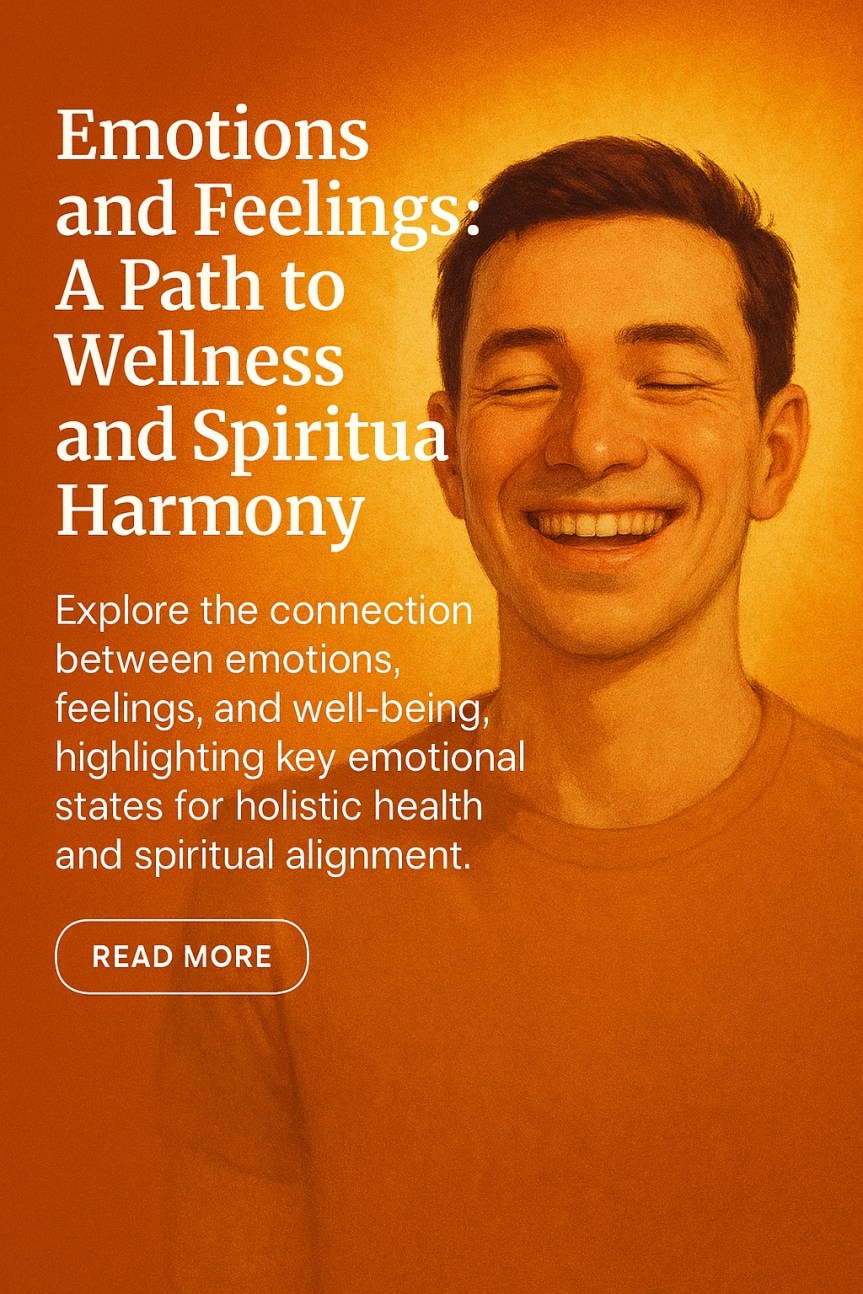
🌺 The Sacred Flow of Emotions and Feelings: A Path to Holistic Wellness and Spiritual Harmony

In the journey of healing and spiritual awakening, understanding the nature of emotions and feelings is essential. These inner experiences are not just psychological—they are energetic, spiritual, and deeply connected to our soul’s health.

🌿 What Are Emotions and Feelings?

  • Emotions are instinctive, automatic responses to stimuli. They arise from the limbic system and include reactions like fear, joy, anger, and sadness.
  • Feelings are the conscious interpretation of emotions. They are processed in the thinking brain (neocortex) and include states like peace, resentment, or gratitude.

In Hilot Binabaylan practice, emotions are seen as energetic movements of the soul, while feelings are the reflections of the soul’s condition.


🔥 Can Pain Be an Emotion and a Feeling?

Yes. Pain exists in both realms:

  • As a feeling, it is the conscious awareness of discomfort—physical or emotional.
  • As an emotion, it is a complex response involving sorrow, grief, or trauma.

In spiritual healing, pain is a signal—a call to restore balance in the soul, body, and spirit.


⚡ Is It Normal to Have Mood Swings?

Mood swings are natural when they reflect life’s changes, hormonal shifts, or spiritual transitions. However, extreme or frequent swings may indicate:

  • Emotional imbalance
  • Soul fragmentation
  • Elemental disharmony

Hilot Binabaylan offers rituals and healing touch to ground emotions and restore inner harmony.


🎶 How Sensory Stimulations Affect Emotions

  • Food nourishes both body and soul, influencing mood and elemental balance.
  • Music opens portals to memory, emotion, and divine connection.
  • Visuals (art, nature, colors) evoke peace, awe, or healing.
  • Touch, smell, and movement activate emotional release and spiritual flow.

These are sacred tools in Binabaylan rituals, used to awaken the soul and invite the Diwata.


🌈 Emotions That Support Optimum Health and Spiritual Wellness

To live in holistic wellness, one must cultivate:

  • Joy – for vitality and soul expression
  • Peace – for grounding and clarity
  • Love and Compassion – for healing and connection
  • Gratitude – for humility and abundance
  • Hope and Faith – for resilience and divine trust

Even emotions like sadness or anger are sacred when processed with awareness and transformed through ritual and reflection.


🌀 Conclusion: Emotions as Sacred Messengers

Emotions and feelings are not weaknesses—they are sacred messengers of the soul. They guide us toward healing, connection, and spiritual growth. In the path of the Binabaylan, we do not suppress emotions—we honor them, listen to them, and transform them into light.


🙌 Call to Action

If you feel emotionally imbalanced, spiritually disconnected, or simply curious about your soul’s journey:

🌟 Join the Hilot Binabaylan Alignment Training Program
🕊️ Learn how to heal through touch, ritual, and soul wisdom
🌿 Reconnect with your seven souls and elemental energies
📍 Held every Sunday at Templong Anituhan ng Luntiang Aghama, San Jose Del Monte, Bulacan

Let your emotions become your guide. Let your feelings become your prayers. Let your soul awaken to its sacred purpose.

Hilot: A Sacred Expression of Love Rooted in Filipino Family Life

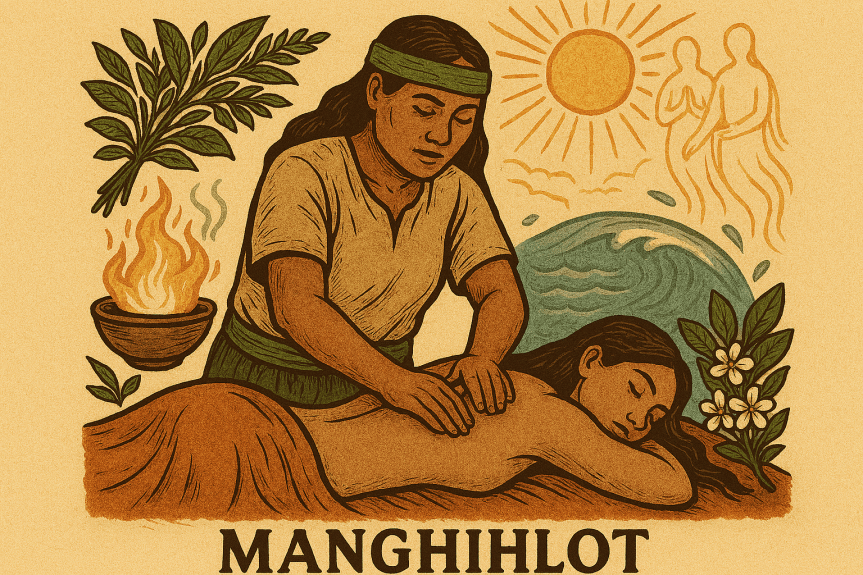
Hilot is one of the oldest and most enduring healing traditions of the Philippines. More than a therapeutic technique, Hilot is a cultural expression of love, care, and spiritual connection—woven into the daily lives of Filipinos from childhood to adulthood.

Historical Roots of Hilot

Hilot dates back to precolonial times, practiced by Babaylan and Albularyo—the traditional healers and spiritual leaders of Indigenous Filipino communities. These practitioners were deeply attuned to the rhythms of nature, the elements, and the human body. Hilot was not only used to treat physical ailments but also to restore energetic balance, spiritual harmony, and social well-being.

In early Filipino societies, healing was holistic. Illness was seen as a disruption in the harmony between the body, spirit, and environment. Hilot addressed this through touch, herbal remedies, rituals, and prayers, often invoking the guidance of Anito (ancestral spirits) and Diwata (divine beings).

Despite colonization and modernization, Hilot survived—passed down through generations, especially within families. It evolved from sacred ritual into everyday practice, yet retained its essence as a sacred act of care.


Hilot in the Filipino Home: A Language of Love

In Filipino households, Hilot is a natural gesture of affection and concern. It is not always formal or ritualistic—it is instinctive, intimate, and deeply relational.

  • A tired parent may ask their child to massage their head, back, or feet. The child responds with gentle touch, offering not just relief but devotion.
  • When a child is sick, the mother performs Hilot—rubbing the back, applying warm oil, whispering prayers. Her hands become instruments of healing, guided by love and intuition.
  • Hilot can also be the offering of coffee or tea, sitting beside someone in silence, listening to their stories, and allowing emotional release.
  • Sometimes, it is the sharing of food, prepared with care, that shifts the energy of a person who is weary or unwell.

In these acts, Hilot becomes a language of the heart—a way to say “I care for you. I am here.”


Hilot as Energy Work of Compassion

Whether through touch, presence, or nourishment, Hilot works on the energetic level. It restores balance not only in the body but in the soul. It is a form of pakikiramay (empathy), malasakit (compassion), and giliw (affection).

This everyday Hilot, practiced in homes, complements the formal Hilot Binabaylan tradition taught in spiritual schools like the Hilot Academy of Binabaylan. While the academy trains practitioners in elemental fusion, soul alignment, and Diwata invocation, the home-based Hilot remains the foundation—the first touch, the first care, the first healing.


Conclusion: Hilot as a Living Tradition of Love

Hilot is not just a healing art—it is a living tradition that reflects the Filipino soul. It is the heartbeat of family life, the embrace of generations, and the spiritual wisdom of our ancestors expressed through everyday acts of kindness.

As we continue to elevate Hilot through formal training and spiritual practice, let us never forget its roots: in the loving hands of a mother, the gentle massage of a child, the shared coffee between friends, and the quiet presence of someone who listens.

Hilot is love. Hilot is family. Hilot is Filipino.

Healing Begins with Humility: The Spiritual Illness of Arrogance and Pride

In both Oriental medicine and Indigenous Filipino healing traditions, illness is not merely a physical condition—it is a manifestation of imbalance in the body, mind, and spirit. Among the most subtle yet destructive imbalances are arrogance and pride. Though often praised in modern society as confidence or ambition, these traits, when excessive, are seen by traditional healers as spiritual toxins that block the flow of healing.

**Arrogance and Pride as Illness**

In **Traditional Chinese Medicine (TCM)**, emotions are directly linked to organ systems. Excessive pride and arrogance are seen as disturbances of the **Heart**, which houses the **Shen**—the spirit or consciousness. When the Heart is overstimulated by ego-driven emotions, it can lead to restlessness, insomnia, and even mental confusion. The Liver, associated with anger and control, may also be affected, creating internal heat and stagnation.

In Hilot Binabaylan practice, arrogance is viewed as a **pagmamataas**—the inner self that connects us to the divine, to nature, and to our ancestors.

Pride separates the person from the community, from humility, and from the sacred flow of life. It is a spiritual disconnection that can manifest as physical illness, emotional instability, and relational disharmony.

**The Healing Power of Humility and Sincerity**

True healing begins not with medicine, but with attitude. The Binabaylan teaches that humility (pagpapakumbaba) is the gateway to receiving healing. It is the act of surrendering ego, acknowledging one’s limitations, and opening the heart to divine guidance.

Sincerity (katapatan) is the companion of humility. It is the honest desire to be healed—not for power, prestige, or gain, but for restoration, balance, and service to others.

When a person approaches healing with humility and sincerity:


– The spirit becomes receptive to ancestral wisdom.
– The body relaxes, allowing energy to flow freely.
– The mind clears, making space for insight and transformation.
– The community responds, offering support and collective strength.

*Healing Is a Sacred Relationship*

In Indigenous Filipino spirituality, healing is not transactional—it is **relational**. It involves the healer, the patient, the spirits, the ancestors, and the natural elements. Arrogance breaks this relationship. Humility restores it.

To be healed, one must be willing to be seen, to be vulnerable, and to be guided. The Binabaylan does not heal alone; healing is a dance of energies, a ritual of reconnection, and a gift of grace.

🌟 **A Call to the Wounded Healer**

If you are seeking healing—whether physical, emotional, or spiritual—begin with humility. Speak sincerely. Offer yourself not as a master, but as a student of life. Let go of pride, and you will find that healing flows not from force, but from grace.

And if you are called to be a healer, remember: the most powerful healers are those who have first healed themselves through humility. The Binabaylan walks not with arrogance, but with reverence.

A Sacred Message to Our Community: On the Value of Healers and Sacred Exchange

In our tradition, healing is a sacred act — a gift from the Divine, the Ancestors, and the Spirits. It is a calling that we, as healers, answer with devotion, compassion, and deep spiritual responsibility.

Yet while our work is rooted in the spiritual realm, we live in the mundane world. We are not exempt from the realities of life — we have families to feed, homes to maintain, children to educate, and responsibilities to fulfill. The materials we use in healing — oils, herbs, candles, tools — are not freely given by the market. Water, electricity, and even the space where healing takes place all come with costs.

We understand that some may feel uncomfortable when healers ask for payment or offerings. But let us remember: healing is labor, and labor deserves fair exchange. Just as a farmer is compensated for the food they grow, or a teacher for the wisdom they share, a healer too must be supported in order to continue serving the community.

We do not sell healing. We offer our time, energy, and sacred presence — and in return, we ask for support that sustains our ability to serve. This is not commerce; it is reciprocity. It is the ancient practice of pasasalamat — a heartfelt offering in gratitude for the healing received.

To those who give generously: you are not just supporting a healer — you are nurturing the spirit of healing in our community. You are helping keep the sacred flame alive.

Let us walk together in understanding, compassion, and mutual respect. May our healing work continue to bless all who seek it, and may our community grow in wisdom, wellness, and abundance.

With love and light,
Rev. Rolando Gomez Comon
Chief Priest, Templong Anituhan ng Luntiang Aghama
Founder, Hilot Academy of Binabaylan

Hilot Binabaylan Practice: Protected by Faith, Guided by Ancestral Wisdom

n the evolving landscape of traditional Filipino healing arts, Hilot Binabaylan Practice stands as a sacred spiritual ministry—distinct from institutionalized wellness modalities. While agencies like PITAHC and TESDA have developed frameworks to regulate Hilot as a health and wellness service, Hilot Binabaylan remains autonomous, rooted in indigenous spirituality and protected under the 1987 Philippine Constitution.

 Constitutional Protection of Spiritual Healing

The Philippine Constitution guarantees the freedom of religion and spiritual expression:

Article III, Section 5
“No law shall be made respecting an establishment of religion or prohibiting the free exercise thereof. The free exercise and enjoyment of religious profession and worship, without discrimination or preference, shall forever be allowed.”

This means that spiritual healing practices, such as Hilot Binabaylan, cannot be regulated or restricted by the Stateunless they pose a threat to public safety or order.

When Can the State Intervene?

While Hilot Binabaylan is protected as a religious and ministerial practice, it must be exercised responsibly. The State may intervene only if the practice:

  • Endangers health or life (e.g., use of toxic substances, denial of medical care)
  • Violates consent or privacy (e.g., performing rituals without permission)
  • Disrupts public order (e.g., unauthorized public gatherings causing disturbance)
  • Engages in fraud or exploitation (e.g., false healing claims for financial gain)

These boundaries are not meant to suppress spiritual traditions, but to ensure ethical and safe practice for both practitioners and the community.

Hilot Binabaylan: A Sacred Vocation

Unlike vocational Hilot courses regulated by TESDA or PITAHC, Hilot Binabaylan is a spiritual calling. It involves:

  • Rituals, orasyon, anito communication, and diwata invocation
  • Ordination as Dayang, Lakan, Hilot Tanglaw, or Doctor of Ministry in Hilot Binabaylan Practice (D.Min.HBp)
  • Training under spiritual authorities, such as the Hilot Academy of Binabaylan, Bahay Siadtala Binabaylan Inc., and Templong Anituhan Inc.

This ministerial path is not subject to government certification, but is governed by ancestral wisdom, cosmology, and spiritual ethics.

Why This Distinction Matters

Understanding the difference between regulated Hilot and Hilot Binabaylan is essential for:

  • Practitioners: To align with their true calling—whether vocational or spiritual.
  • Clients: To understand the nature of the healing they receive.
  • Institutions: To respect the autonomy of Indigenous Spiritual Practices and avoid overreach.

Preserving the Sacred

As we continue to honor and practice Hilot Binabaylan, let us remain vigilant in upholding its sacredness, ethical standards, and constitutional protection. This is not just a healing technique—it is a ministerial act of devotion, a living tradition of our ancestors, and a spiritual gift to the Filipino people.

A Journey of Healing and Light: My Pilgrimage to Hawai‘i

By Rev. Rolando Gomez Comon, D.D.Min. IFS IFM

On August 19, 2025, I embarked on a sacred journey that would take me across the Pacific Ocean to the islands of Hawai‘i. It began with a 10.5-hour non-stop flight via Philippine Airlines, and as the plane descended, I was greeted by a breathtaking view—mountains embracing the sea under the radiant sun. In that moment, I felt the presence of our Diwata: Lumaweg, Amagaoley, and Kadaw La Sambad. It was as if they traveled with me, guiding my spirit toward a new mission.

Upon arrival at noon, I was warmly welcomed by Darcie and Zanny, who drove me to St. Anthony Retreat Center in Kalihi, Honolulu. This peaceful sanctuary became my home for the duration of my stay, a place where healing and transformation would unfold.

Even before the formal training began, I sensed the deep need for relief among the people of Hawai‘i. Whether walking through the streets or meeting strangers, I found myself offering spontaneous healing—quick Hilot sessions to those I encountered. It was a calling I could not ignore.

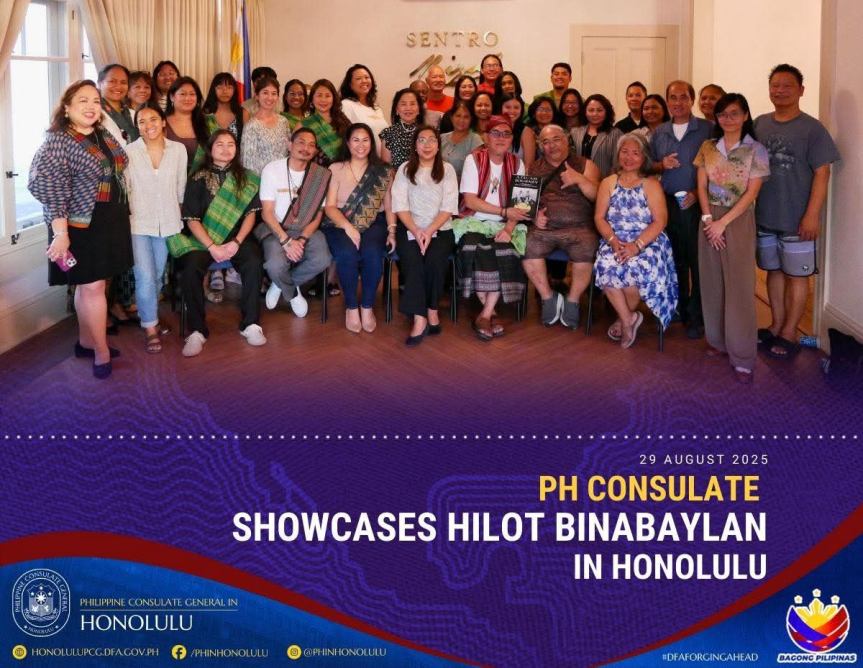
Darcie and Zanny also brought me to the Philippine Consulate of Honolulu, where I met with our government officials and demonstrated Pantay Daliri and Tudluan, two powerful Hilot diagnostic techniques. Later, the Morales couple graciously toured me around Honolulu, giving me a glimpse of the island’s vibrant culture and spirit.

The Hilot Binabaylan Training Begins

When the first day of class arrived, I was filled with joy to meet my students—some of whom flew in from other islands just to attend. Among them were Aziel, Tina, Owen, Maca, Paloma, Chase, Patti, Mhyrra, Donna, Jeanie, Glenda, Lorilyn, Senaya, Edwina, and of course, Darcie and Zanny. Their dedication was inspiring.

Some participants brought their children, and Darcie’s eldest daughter stepped in as a babysitter. This revealed a new need in our community, prompting the idea of creating a Hilot Training Program for Day Care—a beautiful fusion of healing and nurturing.

Over the course of 9 days, the Hilot Binabaylan Training unfolded like a sacred retreat. As Darcie and others shared, it was truly life-changing. We initiated and ordained new Hilot Binabaylan practitioners, and while words fail to fully describe the transformation, I invite you to join our next wave of training to experience it for yourself.

A Call to Serve and Grow

Now that our students have become Masters of Ministry in Hilot Binabaylan Practice, they are called to apply their knowledge in service—whether to family, friends, or their communities. I encourage all HBp graduates to organize monthly Community Hilot Services, offering healing to those in need.

For those who wish to level up, you may apply to become Hilot Tanglaw Mentors. This role involves sharing your Hilot Binabaylan experience with non-initiates, either one-on-one or in group settings. Outside the classroom, Hilot Tanglaw may serve as Supervisors or Clinical Instructors in our Hilot Healing Centers.

To qualify, you must have at least 1–2 years of practice and submit 10–25 case studies detailing the client’s chief complaint, your analysis, treatment plan, and feedback/results.

I also announced the upcoming launch of our Doctorate Degree Program, which will be finalized after consultation with the Hilot Binabaylan Council. Stay tuned for more details.

Final Words of Wisdom

To all Hilot Binabaylan practitioners: when treating patients, see them as whole persons, not just as symptoms in a book. Two people may share similar signs, but their pain and discomfort are unique. Let your heart and spirit guide your healing.

A RESOLUTION AMENDING THE ENROLLMENT PROCEDURE FOR THE MASTER’S IN MINISTRY DEGREE PROGRAM ON HILOT BINABAYLAN PRACTICE AND INTRODUCING THE HILOT TANGLAW MENTORSHIP PROGRAM UNDER BAHAY SIADTALA BINABAYLAN INC.

BOARD RESOLUTION NO. 08-1, SERIES OF 2025

WHEREAS, the Hilot Binabaylan Training Program has been elevated to a Master’s in Ministry Degree Program on Hilot Binabaylan Practice, reflecting its comprehensive curriculum on Indigenous Filipino Health Care Practices;

WHEREAS, Bahay Siadtala Binabaylan Inc., a Ministerial Center of Templong Anituhan Inc., has assumed full jurisdiction over the said training program;

WHEREAS, the Hilot Academy of Binabaylan recognizes the need for continuing professional development and mentorship to sustain and elevate the practice of Hilot Binabaylan;

NOW THEREFORE, BE IT RESOLVED, AS IT IS HEREBY RESOLVED, that the Board of Bahay Siadtala Binabaylan Inc. adopts the following amendments and additions:


I. Master’s in Ministry Degree Program on Hilot Binabaylan Practice

  1. Program Title and Jurisdiction
    The training shall be officially known as the Master’s in Ministry Degree Program on Hilot Binabaylan Practice, administered by Bahay Siadtala Binabaylan Inc., located at No. 88 Pres. Quirino St., Brgy. South Signal Village, Zone 6, Taguig City, Metro Manila, Philippines.
  2. Eligibility for Enrollment
    • Open to individuals of any nationality with the capacity for independent decision-making.
    • Must possess basic healthcare knowledge, including Human Anatomy and Physiology and Vital Signs Taking.
  3. Mode of Delivery
    • Conducted in-person and face-to-face, requiring physical attendance.
  4. Enrollment Fee and Inclusions
    • Standard fee: USD 1,250.00 or local equivalent.
    • Includes:
      • Hotel accommodation
      • Five meals per training day
      • Learning materials
      • Certificates of completion and ordination
  5. Curriculum Requirements
    Completion of the following modules is required:
    • Hilot Diagnostics: Finger Alignment, Tudluan, Himulsuhan, Pasubay, Hilot Profiling
    • Hilot Cleansing Rituals: Internal and External
    • Hilot Repair Treatments
    • Hilot Strengthening Methods
    • Hilot Maintenance
  6. Credentialing and Recognition
    Graduates shall receive:
    • Certificate of Completion
    • Ordination Credentials
    • Title designation of Lakan or Dayang, signifying membership in Templong Anituhan Inc.

II. Hilot Tanglaw Mentorship Program

  1. Program Overview
    The Hilot Tanglaw Program is a continuing professional development initiative of the Hilot Academy of Binabaylan, designed to elevate qualified Hilot Binabaylan Practitioners into Hilot Binabaylan Mentors.
  2. Mentor Responsibilities
    As Hilot Tanglaw, mentors shall:
    • Provide Guidance and Advice
    • Offer Support and Encouragement
    • Facilitate Skill Development
    • Assist in Goal Setting and Accountability
    • Enable Networking and Opportunities
    • Serve as Role Models of integrity and professionalism
  3. Enrollment and Application
    • Applicants must fill out a Mentorship Application Form, declaring:
      • Subjects they wish to mentor (may select all)
      • Number of students to be mentored
      • Scheduled training dates
  4. Fee Structure and Remittance
    • Each student pays USD 1,250.00 for a 9-day mentorship program
    • Mentor receives USD 875.00 as stipend
    • USD 375.00 (30%) is remitted to the Hilot Academy of Binabaylan
  5. Validation and Graduation
    • Upon completion, mentors shall schedule their protégés for online validation
    • Validation fee: USD 100.00, paid to the Hilot Binabaylan Council
    • The Council shall:
      • Conduct validation
      • Schedule graduation and ordination
      • Issue signed certificates and official seals

RESOLVED FURTHER, that this resolution shall take effect immediately and be disseminated to all concerned parties for implementation and compliance.

APPROVED this 16 day of August, 2025 at Bahay Siadtala Binabaylan Inc., Taguig City, Metro Manila, Philippines.


Certified True and Correct:


Rev. Alvin L. Sentin D.D.Min. IFS IFM Co-Founder/Director on Local Community Affairs Relations/ Hilot Binabaylan Council
Rev. Rolando G. Comon D.D.Min. IFS IFM Co-Founder/ Program Director/ Hilot Binabaylan Council
Rev. Maria M. Haswell D.D.Min. IFS IFM Co-Founder/Director on International Affairs Relations/ Hilot Binabaylan Council

Understanding PITAHC Accreditation and Competency Assessment for Hilot Practitioners

The Philippine Institute of Traditional and Alternative Health Care (PITAHC) plays a vital role in regulating and promoting traditional Filipino healing practices, including Hilot. For organizations and practitioners involved in Hilot, understanding the accreditation and certification process is essential for legal recognition, professional credibility, and ethical practice.


✅ Benefits of PITAHC Accreditation

1. Legal Authority to Operate

Accredited Hilot organizations are officially recognized by the Department of Health through PITAHC, granting them the legal right to conduct training and healing services.

2. Certification of Practitioners

Organizations can issue:

  • Certificates of Registration to formally trained Hilot practitioners.
  • Certificates of Recognition to community-recognized Manghihilot with at least 10 years of practice.

3. Accredited Training and Healing Centers

Accredited institutions may operate:

  • Hilot Training Centers for formal education.
  • Hilot Healing Centers in homes, clinics, spas, resorts, and hospitals.

4. Participation in National Health System

Accredited organizations help integrate Hilot into the national healthcare delivery system.

5. Representation and Advocacy

Organizations may nominate representatives to the National Certification Committee for Hilot (NCCH), influencing policy and ethical standards.

6. Protection Against Unregulated Practices

Only PITAHC-accredited entities are authorized to train and certify Hilot practitioners, ensuring safety and credibility.


🧪 Competency Assessment by NCCH

For Formally Trained Practitioners

  • Completion of training from a PITAHC-accredited center.
  • Submission of a portfolio with at least 100 patient cases.
  • Passing a competency assessment that includes practical demonstrations and ethical evaluations.

For Community-Recognized Manghihilot

  • Minimum of 10 years of practice.
  • Endorsement by community leaders.
  • Sponsorship by a PITAHC-recognized organization.
  • Submission of a portfolio and testimonials.

Committee Composition

The NCCH includes:

  • Manghihilot and Hilot practitioners.
  • Medical doctors practicing Hilot.
  • Trainers from accredited centers.
  • PITAHC officials.

💰 Fee Guidelines

The official fee for the competency assessment is ₱500.00. This is a one-time application fee mandated by PITAHC Circular No. 01, Series of 2016.


⚠️ Reporting Overcharging Violations

If an organization charges more than ₱500 for the assessment alone:

  1. Request a Fee Breakdown to verify additional charges.
  2. Report to PITAHC with documentation (receipts, advisories).
  3. Contact NCCH for clarification and investigation.

Overcharging may lead to administrative sanctions and, if fraudulent, could result in criminal liability.


📞 Contact Information

To reach the National Certification Committee for Hilot:


For more updates and resources, visit hilotacademy.com or contact us for assistance with certification, training, and compliance.

The Life and Challenges of a Manghihilot in Modern Times

As a Manghihilot, my work goes beyond simple massage. I practice bodywork manipulation by applying herbal healing oils to areas where my patient feels discomfort. But my role does not end there. When a patient suspects that their illness is caused by unseen forces or spiritual harm, I perform Tawas—a traditional spiritual diagnostic method.

For us Filipinos, this has always been the way of the Manghihilot in rural communities. We believe that sickness can come from two sources: physical illness and spiritual imbalance. Our mission is to restore harmony and well-being. If physical manipulation does not bring relief, we call upon the forces of nature—herbs, heat, light, prayer, and water—to aid in healing.

Traditionally, these services are offered on a donation basis. There is no fixed income for a Manghihilot. This is why many of us in rural areas take on other jobs—farming, fishing, laundry work—to sustain our families. Hilot is often a calling, not a primary source of livelihood.


The Modern Challenge: Regulation and Certification

Today, the practice of Hilot is regulated and standardized by PITAHC and TESDA. To legally practice, one must obtain national certification and register as a Manghihilot. This requires schooling, which costs around ₱5,000, plus ₱1,500 for certification and another ₱1,500 for registration.

Despite these expenses, most certified Manghihilot end up working in spas on a commission basis, earning just enough to get by—often not enough to cover daily living costs. Many fall into financial debt, even after investing in their training.


The Need for Higher Education

To improve the livelihood of Manghihilot, we may need to introduce a formal four-year degree program. This would allow practitioners to climb the salary grade ladder and qualify for employment in community health centers, public hospitals, or private health facilities.

Graduates should be equipped with knowledge, skills, and abilities in Traditional Health Care, making them fit for roles such as Traditional Public Health Specialists. This is the future we envision for Hilot.


Our Legal Foundation

The practice of Hilot is protected by our laws:

  • 1987 Philippine Constitution, Article XIV, Sections 17–22
  • Republic Act 8371 (Indigenous Peoples’ Rights Act)
  • Republic Act 8423 (Traditional and Alternative Medicine Act)
  • Republic Act 100 (related provisions on health and indigenous practices)

These laws affirm that our work as Hilot Binabaylan practitioners is recognized and safeguarded. We should not fear performing our duties. Instead, we should embrace the bright future that lies ahead for Hilot.


Final Thoughts

Hilot is more than a profession—it is a heritage and a calling. As we move forward, let us continue to honor our traditions while adapting to modern standards. Together, we can ensure that Hilot remains a vital part of Filipino health and wellness.

Why We Chose the Path of Autonomy: 9 Years of Hilot Academy of Binabaylan

For over nine years, Hilot Academy of Binabaylan, the educational ministry arm of Luntiang Aghama Natural Divine Arts Shrine of Healing Inc. (also known as Landas ng Lahi), has been a beacon of ancestral wisdom and healing. Since our founding, we have produced 64 Hilot Binabaylan Practitioners who now serve their communities across the globe—many of whom are part of the Filipino diaspora returning home to reconnect with our sacred healing traditions.

These students had the option to study Hilot through government-accredited institutions such as TESDA or PITAHC, yet they chose us. Why? Because our teachings resonate with their spiritual calling. They sought not just technical skills, but a deeper understanding of Hilot as a sacred art and science—a practice rooted in the soul of our people.

Reclaiming the Sacred in Healing

From the beginning, we made a vow: to share the personal and ancestral knowledge of Hilot, including the practice of Tawas—a spiritual diagnostic method used by traditional Manghihilot. We have demystified Orasyon, reframing it as Therapeutic Communication and Timing, recognizing that words and timing can profoundly affect the mind, emotions, and healing process of the patient.

In our academy, Hilot is soul healing. We believe that the health of the body is inseparable from the health of the spirit. When the soul departs from the body, life ceases. Thus, healing must begin with the soul.

The Struggle for Accreditation

In our early years, we wrestled with the idea of seeking accreditation from government bodies. I personally contributed to the development of Hilot curricula for institutions like the Hilot Philippines Development Center, a legacy school of Dr. Mina Gabor, former Secretary of the Department of Tourism. I also helped establish the Philippine Japan Hilot Association, which gained accreditation from TESDA and the Department of Tourism.

But when it came to Hilot Academy of Binabaylan, we chose a different path.

Why? Because the current accreditation standards forbid the inclusion of Tawas and Orasyon in the curriculum. They limit spiritual practices to Christian and Islamic prayers, excluding indigenous expressions of faith and healing. This reflects a colonial mindset that prioritizes physical health while neglecting the soul.

Standing for Decolonization and Spiritual Integrity

We teach decolonization. We honor the wisdom of our ancestors. We believe that healing is not just clinical—it is spiritual, emotional, and cultural. To conform to accreditation standards would mean compromising our identity and silencing the soul of Hilot.

Unless PITAHC or other bodies are willing to fund research that validates Tawas as a legitimate diagnostic method, we remain in a dilemma: Do we embrace autonomy or submit to colonized standards?

A Vision for the Future

Despite these challenges, we continue to dream. We envision a future where Hilot Binabaylan is not only an ecclesiastical degree in ministry but also recognized as an academic degree. We are committed to ensuring that our graduates are employable, empowered, and respected as Hilot Binabaylan Practitioners—both in the Philippines and around the world.

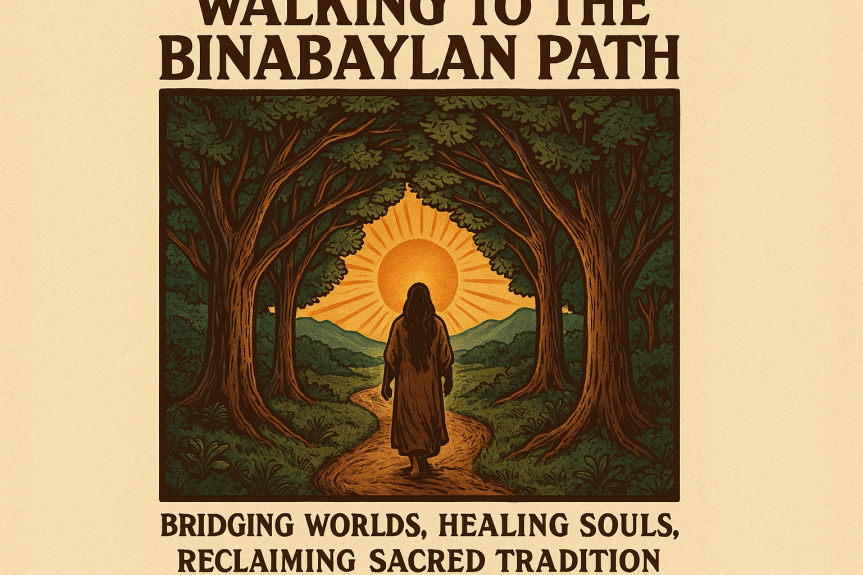
We walk the path of the Binabaylan: bridging worlds, healing souls, and reclaiming our sacred traditions. And we invite you to walk with us.