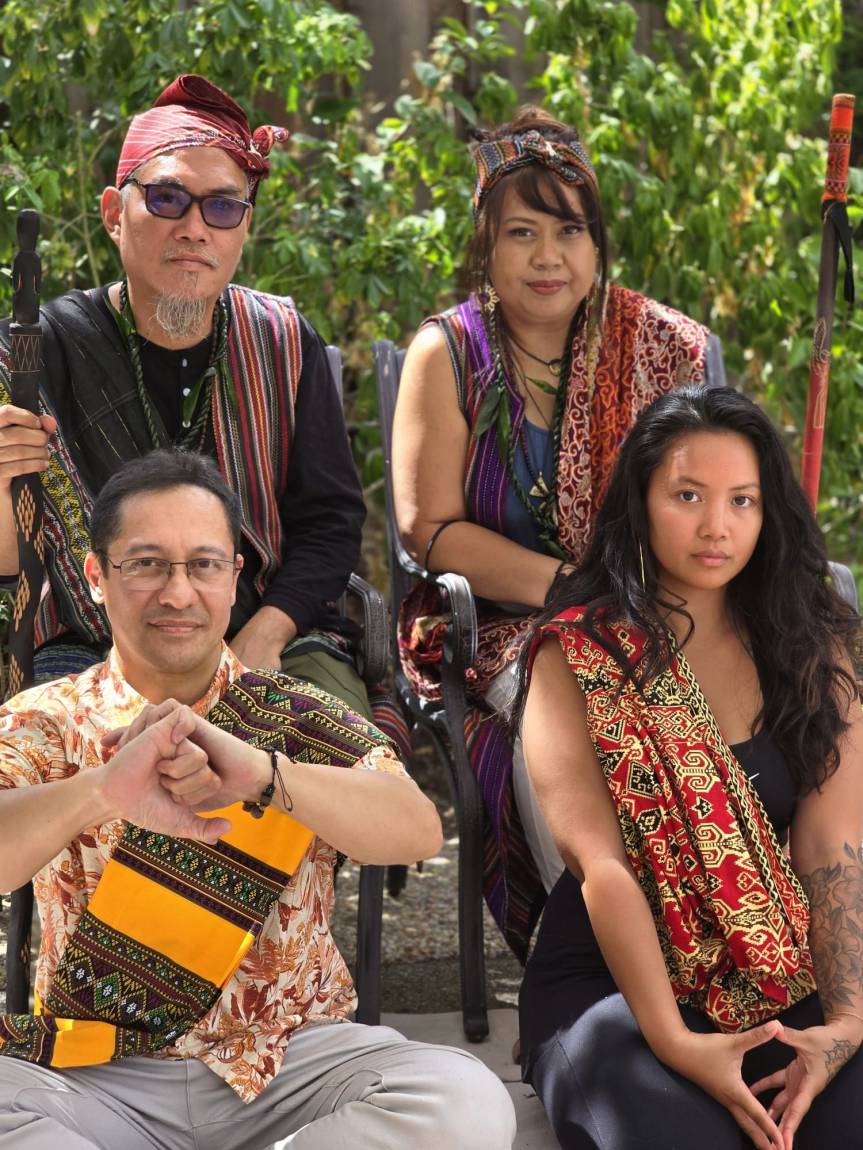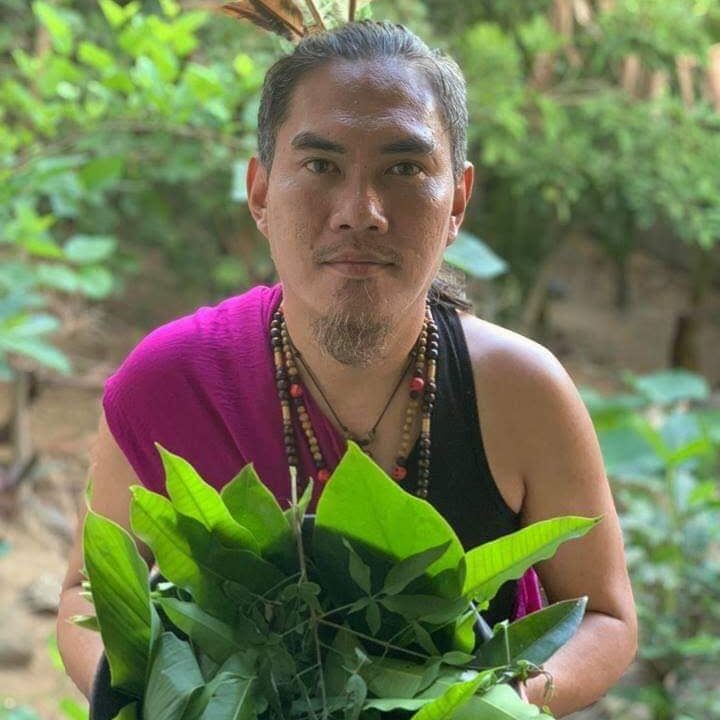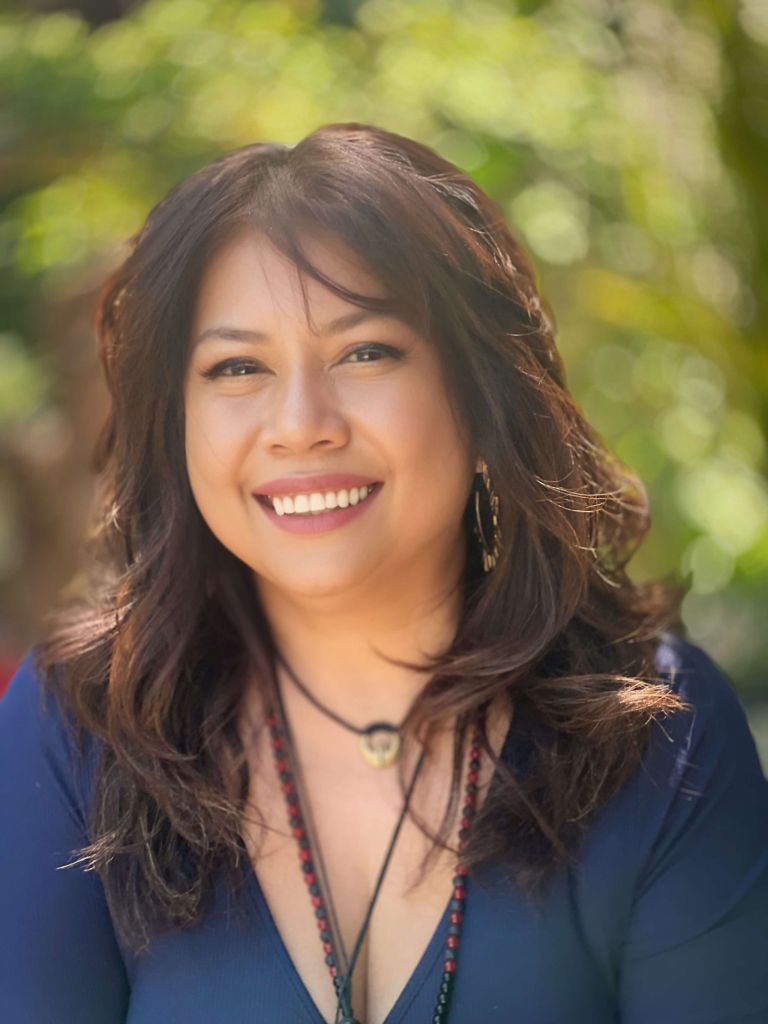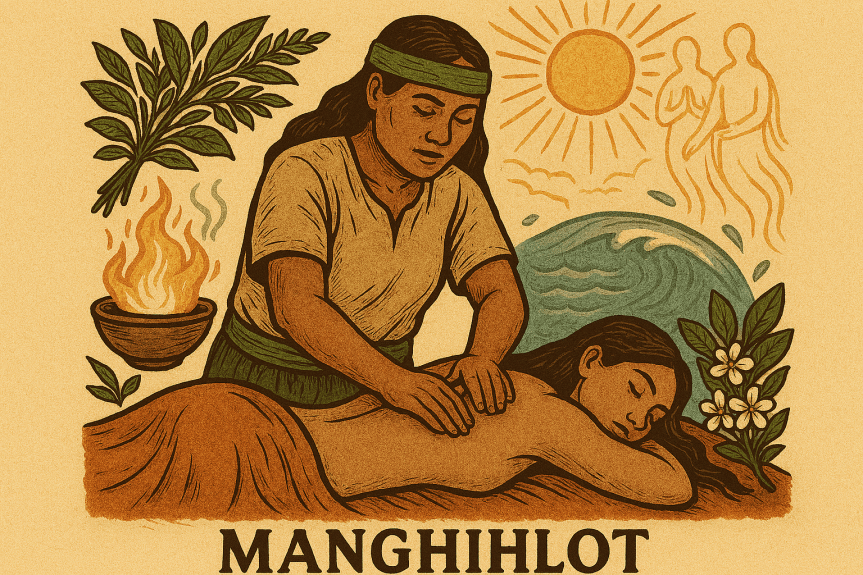
On August 19, 2025, I embarked on a sacred journey that would take me across the Pacific Ocean to the islands of Hawai‘i. It began with a 10.5-hour non-stop flight via Philippine Airlines, and as the plane descended, I was greeted by a breathtaking view—mountains embracing the sea under the radiant sun. In that moment, I felt the presence of our Diwata: Lumaweg, Amagaoley, and Kadaw La Sambad. It was as if they traveled with me, guiding my spirit toward a new mission.
Upon arrival at noon, I was warmly welcomed by Darcie and Zanny, who drove me to St. Anthony Retreat Center in Kalihi, Honolulu. This peaceful sanctuary became my home for the duration of my stay, a place where healing and transformation would unfold.
Even before the formal training began, I sensed the deep need for relief among the people of Hawai‘i. Whether walking through the streets or meeting strangers, I found myself offering spontaneous healing—quick Hilot sessions to those I encountered. It was a calling I could not ignore.
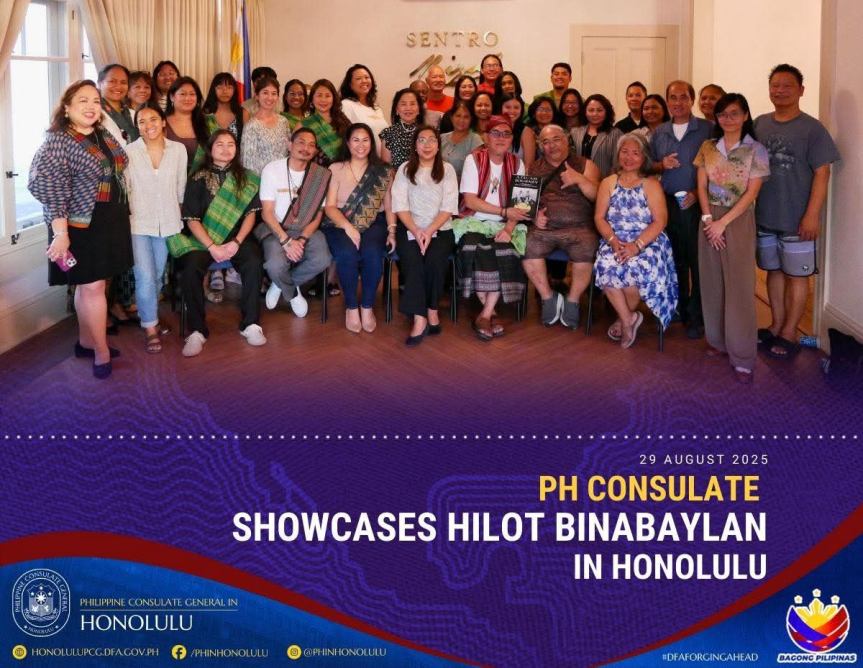
Darcie and Zanny also brought me to the Philippine Consulate of Honolulu, where I met with our government officials and demonstrated Pantay Daliri and Tudluan, two powerful Hilot diagnostic techniques. Later, the Morales couple graciously toured me around Honolulu, giving me a glimpse of the island’s vibrant culture and spirit.
The Hilot Binabaylan Training Begins
When the first day of class arrived, I was filled with joy to meet my students—some of whom flew in from other islands just to attend. Among them were Aziel, Tina, Owen, Maca, Paloma, Chase, Patti, Mhyrra, Donna, Jeanie, Glenda, Lorilyn, Senaya, Edwina, and of course, Darcie and Zanny. Their dedication was inspiring.
Some participants brought their children, and Darcie’s eldest daughter stepped in as a babysitter. This revealed a new need in our community, prompting the idea of creating a Hilot Training Program for Day Care—a beautiful fusion of healing and nurturing.
Over the course of 9 days, the Hilot Binabaylan Training unfolded like a sacred retreat. As Darcie and others shared, it was truly life-changing. We initiated and ordained new Hilot Binabaylan practitioners, and while words fail to fully describe the transformation, I invite you to join our next wave of training to experience it for yourself.
A Call to Serve and Grow
Now that our students have become Masters of Ministry in Hilot Binabaylan Practice, they are called to apply their knowledge in service—whether to family, friends, or their communities. I encourage all HBp graduates to organize monthly Community Hilot Services, offering healing to those in need.
For those who wish to level up, you may apply to become Hilot Tanglaw Mentors. This role involves sharing your Hilot Binabaylan experience with non-initiates, either one-on-one or in group settings. Outside the classroom, Hilot Tanglaw may serve as Supervisors or Clinical Instructors in our Hilot Healing Centers.
To qualify, you must have at least 1–2 years of practice and submit 10–25 case studies detailing the client’s chief complaint, your analysis, treatment plan, and feedback/results.
I also announced the upcoming launch of our Doctorate Degree Program, which will be finalized after consultation with the Hilot Binabaylan Council. Stay tuned for more details.
Final Words of Wisdom
To all Hilot Binabaylan practitioners: when treating patients, see them as whole persons, not just as symptoms in a book. Two people may share similar signs, but their pain and discomfort are unique. Let your heart and spirit guide your healing.
WHEREAS, the Hilot Binabaylan Training Program has been elevated to a Master’s in Ministry Degree Program on Hilot Binabaylan Practice, reflecting its comprehensive curriculum on Indigenous Filipino Health Care Practices;
WHEREAS, Bahay Siadtala Binabaylan Inc., a Ministerial Center of Templong Anituhan Inc., has assumed full jurisdiction over the said training program;
WHEREAS, the Hilot Academy of Binabaylan recognizes the need for continuing professional development and mentorship to sustain and elevate the practice of Hilot Binabaylan;
NOW THEREFORE, BE IT RESOLVED, AS IT IS HEREBY RESOLVED, that the Board of Bahay Siadtala Binabaylan Inc. adopts the following amendments and additions:
I. Master’s in Ministry Degree Program on Hilot Binabaylan Practice
Program Title and Jurisdiction The training shall be officially known as the Master’s in Ministry Degree Program on Hilot Binabaylan Practice, administered by Bahay Siadtala Binabaylan Inc., located at No. 88 Pres. Quirino St., Brgy. South Signal Village, Zone 6, Taguig City, Metro Manila, Philippines.
Eligibility for Enrollment
Open to individuals of any nationality with the capacity for independent decision-making.
Must possess basic healthcare knowledge, including Human Anatomy and Physiology and Vital Signs Taking.
Mode of Delivery
Conducted in-person and face-to-face, requiring physical attendance.
Enrollment Fee and Inclusions
Standard fee: USD 1,250.00 or local equivalent.
Includes:
Hotel accommodation
Five meals per training day
Learning materials
Certificates of completion and ordination
Curriculum Requirements Completion of the following modules is required:
Credentialing and Recognition Graduates shall receive:
Certificate of Completion
Ordination Credentials
Title designation of Lakan or Dayang, signifying membership in Templong Anituhan Inc.
II. Hilot Tanglaw Mentorship Program
Program Overview The Hilot Tanglaw Program is a continuing professional development initiative of the Hilot Academy of Binabaylan, designed to elevate qualified Hilot Binabaylan Practitioners into Hilot Binabaylan Mentors.
Mentor Responsibilities As Hilot Tanglaw, mentors shall:
Provide Guidance and Advice
Offer Support and Encouragement
Facilitate Skill Development
Assist in Goal Setting and Accountability
Enable Networking and Opportunities
Serve as Role Models of integrity and professionalism
Enrollment and Application
Applicants must fill out a Mentorship Application Form, declaring:
Subjects they wish to mentor (may select all)
Number of students to be mentored
Scheduled training dates
Fee Structure and Remittance
Each student pays USD 1,250.00 for a 9-day mentorship program
Mentor receives USD 875.00 as stipend
USD 375.00 (30%) is remitted to the Hilot Academy of Binabaylan
Validation and Graduation
Upon completion, mentors shall schedule their protégés for online validation
Validation fee: USD 100.00, paid to the Hilot Binabaylan Council
The Council shall:
Conduct validation
Schedule graduation and ordination
Issue signed certificates and official seals
RESOLVED FURTHER, that this resolution shall take effect immediately and be disseminated to all concerned parties for implementation and compliance.
APPROVED this 16 day of August, 2025 at Bahay Siadtala Binabaylan Inc., Taguig City, Metro Manila, Philippines.
Certified True and Correct:
Rev. Alvin L. Sentin D.D.Min. IFS IFM Co-Founder/Director on Local Community Affairs Relations/ Hilot Binabaylan Council
Rev. Rolando G. Comon D.D.Min. IFS IFM Co-Founder/ Program Director/ Hilot Binabaylan Council
Rev. Maria M. Haswell D.D.Min. IFS IFM Co-Founder/Director on International Affairs Relations/ Hilot Binabaylan Council
The Philippine Institute of Traditional and Alternative Health Care (PITAHC) plays a vital role in regulating and promoting traditional Filipino healing practices, including Hilot. For organizations and practitioners involved in Hilot, understanding the accreditation and certification process is essential for legal recognition, professional credibility, and ethical practice.
✅ Benefits of PITAHC Accreditation
1. Legal Authority to Operate
Accredited Hilot organizations are officially recognized by the Department of Health through PITAHC, granting them the legal right to conduct training and healing services.
2. Certification of Practitioners
Organizations can issue:
Certificates of Registration to formally trained Hilot practitioners.
Certificates of Recognition to community-recognized Manghihilot with at least 10 years of practice.
3. Accredited Training and Healing Centers
Accredited institutions may operate:
Hilot Training Centers for formal education.
Hilot Healing Centers in homes, clinics, spas, resorts, and hospitals.
4. Participation in National Health System
Accredited organizations help integrate Hilot into the national healthcare delivery system.
5. Representation and Advocacy
Organizations may nominate representatives to the National Certification Committee for Hilot (NCCH), influencing policy and ethical standards.
6. Protection Against Unregulated Practices
Only PITAHC-accredited entities are authorized to train and certify Hilot practitioners, ensuring safety and credibility.
🧪 Competency Assessment by NCCH
For Formally Trained Practitioners
Completion of training from a PITAHC-accredited center.
Submission of a portfolio with at least 100 patient cases.
Passing a competency assessment that includes practical demonstrations and ethical evaluations.
For Community-Recognized Manghihilot
Minimum of 10 years of practice.
Endorsement by community leaders.
Sponsorship by a PITAHC-recognized organization.
Submission of a portfolio and testimonials.
Committee Composition
The NCCH includes:
Manghihilot and Hilot practitioners.
Medical doctors practicing Hilot.
Trainers from accredited centers.
PITAHC officials.
💰 Fee Guidelines
The official fee for the competency assessment is ₱500.00. This is a one-time application fee mandated by PITAHC Circular No. 01, Series of 2016.
⚠️ Reporting Overcharging Violations
If an organization charges more than ₱500 for the assessment alone:
Request a Fee Breakdown to verify additional charges.
Report to PITAHC with documentation (receipts, advisories).
Contact NCCH for clarification and investigation.
Overcharging may lead to administrative sanctions and, if fraudulent, could result in criminal liability.
📞 Contact Information
To reach the National Certification Committee for Hilot:
As a Manghihilot, my work goes beyond simple massage. I practice bodywork manipulation by applying herbal healing oils to areas where my patient feels discomfort. But my role does not end there. When a patient suspects that their illness is caused by unseen forces or spiritual harm, I perform Tawas—a traditional spiritual diagnostic method.
For us Filipinos, this has always been the way of the Manghihilot in rural communities. We believe that sickness can come from two sources: physical illness and spiritual imbalance. Our mission is to restore harmony and well-being. If physical manipulation does not bring relief, we call upon the forces of nature—herbs, heat, light, prayer, and water—to aid in healing.
Traditionally, these services are offered on a donation basis. There is no fixed income for a Manghihilot. This is why many of us in rural areas take on other jobs—farming, fishing, laundry work—to sustain our families. Hilot is often a calling, not a primary source of livelihood.
The Modern Challenge: Regulation and Certification
Today, the practice of Hilot is regulated and standardized by PITAHC and TESDA. To legally practice, one must obtain national certification and register as a Manghihilot. This requires schooling, which costs around ₱5,000, plus ₱1,500 for certification and another ₱1,500 for registration.
Despite these expenses, most certified Manghihilot end up working in spas on a commission basis, earning just enough to get by—often not enough to cover daily living costs. Many fall into financial debt, even after investing in their training.
The Need for Higher Education
To improve the livelihood of Manghihilot, we may need to introduce a formal four-year degree program. This would allow practitioners to climb the salary grade ladder and qualify for employment in community health centers, public hospitals, or private health facilities.
Graduates should be equipped with knowledge, skills, and abilities in Traditional Health Care, making them fit for roles such as Traditional Public Health Specialists. This is the future we envision for Hilot.
Republic Act 8371 (Indigenous Peoples’ Rights Act)
Republic Act 8423 (Traditional and Alternative Medicine Act)
Republic Act 100 (related provisions on health and indigenous practices)
These laws affirm that our work as Hilot Binabaylan practitioners is recognized and safeguarded. We should not fear performing our duties. Instead, we should embrace the bright future that lies ahead for Hilot.
Final Thoughts
Hilot is more than a profession—it is a heritage and a calling. As we move forward, let us continue to honor our traditions while adapting to modern standards. Together, we can ensure that Hilot remains a vital part of Filipino health and wellness.
For over nine years, Hilot Academy of Binabaylan, the educational ministry arm of Luntiang Aghama Natural Divine Arts Shrine of Healing Inc. (also known as Landas ng Lahi), has been a beacon of ancestral wisdom and healing. Since our founding, we have produced 64 Hilot Binabaylan Practitioners who now serve their communities across the globe—many of whom are part of the Filipino diaspora returning home to reconnect with our sacred healing traditions.
These students had the option to study Hilot through government-accredited institutions such as TESDA or PITAHC, yet they chose us. Why? Because our teachings resonate with their spiritual calling. They sought not just technical skills, but a deeper understanding of Hilot as a sacred art and science—a practice rooted in the soul of our people.
Reclaiming the Sacred in Healing
From the beginning, we made a vow: to share the personal and ancestral knowledge of Hilot, including the practice of Tawas—a spiritual diagnostic method used by traditional Manghihilot. We have demystified Orasyon, reframing it as Therapeutic Communication and Timing, recognizing that words and timing can profoundly affect the mind, emotions, and healing process of the patient.
In our academy, Hilot is soul healing. We believe that the health of the body is inseparable from the health of the spirit. When the soul departs from the body, life ceases. Thus, healing must begin with the soul.
The Struggle for Accreditation
In our early years, we wrestled with the idea of seeking accreditation from government bodies. I personally contributed to the development of Hilot curricula for institutions like the Hilot Philippines Development Center, a legacy school of Dr. Mina Gabor, former Secretary of the Department of Tourism. I also helped establish the Philippine Japan Hilot Association, which gained accreditation from TESDA and the Department of Tourism.
But when it came to Hilot Academy of Binabaylan, we chose a different path.
Why? Because the current accreditation standards forbid the inclusion of Tawas and Orasyon in the curriculum. They limit spiritual practices to Christian and Islamic prayers, excluding indigenous expressions of faith and healing. This reflects a colonial mindset that prioritizes physical health while neglecting the soul.
Standing for Decolonization and Spiritual Integrity
We teach decolonization. We honor the wisdom of our ancestors. We believe that healing is not just clinical—it is spiritual, emotional, and cultural. To conform to accreditation standards would mean compromising our identity and silencing the soul of Hilot.
Unless PITAHC or other bodies are willing to fund research that validates Tawas as a legitimate diagnostic method, we remain in a dilemma: Do we embrace autonomy or submit to colonized standards?
A Vision for the Future
Despite these challenges, we continue to dream. We envision a future where Hilot Binabaylan is not only an ecclesiastical degree in ministry but also recognized as an academic degree. We are committed to ensuring that our graduates are employable, empowered, and respected as Hilot Binabaylan Practitioners—both in the Philippines and around the world.
We walk the path of the Binabaylan: bridging worlds, healing souls, and reclaiming our sacred traditions. And we invite you to walk with us.
A call for alignment training program on becoming a Hilot Binabaylan has completed from March 23, 2025 to August 10, 2025. It’s 13 lessons for more than 13 Sundays that we have spent in order to form the necessary competency that an individual must have in order to become a Hilot Binabaylan. From our forms record there are 10 people who signed up but in actual formation only 6 people have complied.
Dante Nolido, Ge Ygay, Sasa Cabalquinto, Darlene Honrubia, Emman Castillo and Jerson Casol
These individuals coming from North NCR to South NCR who sacrificed their Sunday afternoon just to come to our Temple in order to received the Wisdom of Hilot Binabaylan. And through their hardwork and dedication in relearning the skills, they have successfully achieved the status on becoming a M.Min.Hbp or Master’s in Ministry on Hilot Binabaylan Practice.
And through their ordination we have established the Hilot Binabaylan Network which is a community of graduates and practitioners dedicated to the continued growth, support, and collaboration within the sacred practice of Hilot Binabaylan. This network serves as a platform for members to:
Share experiences and insights from their healing practices, fostering collective wisdom and deeper understanding.
Connect and collaborate with fellow practitioners across regions, enabling referrals and support for cases that require local or specialized attention.
Provide mutual support through dialogue, case discussions, and spiritual companionship, strengthening the bond among healers and enhancing their capacity to serve.
Uphold and promote the values of Hilot Binabaylan, ensuring the integrity and authenticity of the practice in every community it touches.
Through this network, we honor the ancestral wisdom of Hilot Binabaylan and empower each practitioner to walk their healing path with confidence, connection, and compassion. Our Goal in establishing Hilot Binabaylan Network is to:
Foster Community and Connection
Create a strong network of Hilot Binabaylan practitioners across regions.
Encourage regular communication and collaboration among members.
Facilitate Knowledge Sharing
Provide a platform for practitioners to share case studies, healing experiences, and traditional wisdom.
Organize forums, webinars, and discussion groups to deepen understanding of Hilot Binabaylan practices.
Support Professional Development
Offer continuing education opportunities, mentorship, and skill enhancement programs.
Recognize and celebrate achievements and contributions of members.
Enable Regional Referrals and Collaboration
Maintain a directory of practitioners to facilitate referrals and support in nearby areas.
Encourage cooperative healing efforts for complex or unique cases.
Provide Emotional and Spiritual Support
Serve as a support group for practitioners, offering a safe space for reflection, encouragement, and healing.
Promote wellness and balance among members through shared rituals and practices.
Preserve and Promote Indigenous Healing Traditions
Advocate for the recognition and respect of Hilot Binabaylan as a vital cultural and spiritual heritage.
Engage in outreach and education to raise awareness about the practice in broader communities.
Ensure Ethical and Authentic Practice
Uphold standards of integrity, respect, and responsibility in all healing work.
Encourage accountability and ethical conduct among members.
Guiding Principle of the Hilot Binabaylan Network
“Healing in Harmony with Nature, Spirit, and Community.”
This principle embodies the sacred foundation of Hilot Binabaylan practice, which is rooted in:
Ancestral Wisdom – Honoring the teachings and traditions passed down through generations of healers.
Spiritual Integrity – Practicing with reverence, humility, and alignment with the spiritual forces that guide healing.
Compassionate Service – Offering healing with love, empathy, and respect for the dignity of every person.
Community Collaboration – Supporting one another through shared knowledge, mutual aid, and collective growth.
Holistic Balance – Promoting harmony between body, mind, spirit, and environment in every healing encounter.
The Officers of Hilot Binabaylan Network
Emmanuel Castillo President
Darla Honrubia– Vice President for Internal Affairs
Sasa Cabalquinto-Vice President for External Affairs
Ge Ygay– Secretary
Dante Nolido– Treasurer
Jerson Casol Jr.- Auditor
Hilot Binabaylan Network – Officers and Their Roles
President – Emman Castillo
Job Description: The President serves as the chief executive officer of the network, providing overall leadership, direction, and representation.
Duties and Responsibilities:
Lead and oversee all activities and initiatives of the network.
Represent the network in official functions, partnerships, and public engagements.
Convene and preside over meetings of officers and members.
Ensure alignment of programs with the network’s purpose and guiding principles.
Provide strategic vision and decision-making for the growth of the organization.
Vice President for Internal Affairs – Darla Honrubia
Vice President for External Affairs – Sasa Cabalquinto
Job Description: The Vice Presidents support the President in managing the network’s operations, with Darla focusing on internal coordination and Sasa on external relations.
Duties and Responsibilities:
VP for Internal Affairs – Darla Honrubia
Coordinate internal programs, member engagement, and organizational development.
Facilitate communication among members and officers.
Organize internal events, trainings, and support activities.
Assist in resolving internal concerns and maintaining harmony within the network.
VP for External Affairs – Sasa Cabalquinto
Build relationships with external partners, communities, and institutions.
Promote the network’s visibility and advocacy efforts.
Represent the network in outreach activities and collaborations.
Seek opportunities for partnerships and resource mobilization.
Secretary – Ge Ygay
Job Description: The Secretary manages documentation, communication, and record-keeping for the network.
Duties and Responsibilities:
Prepare and maintain minutes of meetings, reports, and official documents.
Handle correspondence and announcements to members.
Maintain an updated directory of members and officers.
Assist in organizing meetings and ensuring proper documentation.
Treasurer – Dante Nolido
Job Description: The Treasurer oversees the financial affairs of the network, ensuring transparency and accountability.
Duties and Responsibilities:
Manage the network’s funds, budget, and financial records.
Prepare financial reports and statements for meetings.
Ensure proper collection and disbursement of funds.
Coordinate fundraising activities and financial planning.
Auditor – Jerson Casol Jr.
Job Description: The Auditor ensures the integrity of the network’s financial operations through regular review and evaluation.
Duties and Responsibilities:
Conduct audits of financial records and transactions.
Provide independent assessment of financial practices.
Recommend improvements for financial transparency and efficiency.
Submit audit reports to the officers and members.
and through their election, we have also official declare the creation of Hilot Binabaylan Council which serves as the spiritual and strategic advisory body of the Hilot Binabaylan Network. It is composed of esteemed elders and leaders who guide the organization in preserving the sacred traditions of Hilot Binabaylan, ensuring its ethical practice, and fostering unity among practitioners both locally and globally.
The Council provides wisdom, oversight, and direction in matters of cultural integrity, community engagement, and international relations, upholding the values and guiding principles of the network.
Rev. Alvin L. Sentin D.D.Min. IFS IFM-co founder/ Adviser on Local Community Affairs Relations
This day od 8th of August 2025- We joyfully proclaim that all graduates of the Hilot Binabaylan Training Program from 2016 up to June 18, 2025 are hereby recognized and conferred the title of Master of Ministry in Hilot Binabaylan Practice.
As a mark of this sacred recognition, graduates may now use the honorific suffix “M.Min.HBp”, signifying their credential as Master of Ministry in Hilot Binabaylan Practice.
This recognition is a testament to their dedication, spiritual growth, and mastery of Indigenous Filipino Healing Wisdom as taught through the sacred traditions of Luntiang Aghama and the ministerial guidance of Templong Anituhan.
Furthermore, we are honored to announce that the Hilot Binabaylan Training Program is now officially elevated to an Ecclesiastical Degree in Ministry, forming a foundational path that may lead to the Doctorate Degree in Indigenous Filipino Medicine.
This milestone affirms our commitment to preserving, honoring, and advancing the sacred healing arts of our ancestors, and to empowering future generations of Binabaylan Ministers to serve with wisdom, compassion, and divine purpose.
May this recognition inspire deeper service, healing, and spiritual leadership in our communities.
In the Spirit the Diwata, Engkanto Anito together with our Holy Ancestors, we celebrate this sacred elevation.
🌀 Templong Anituhan Inc. 🌀 Bahay SiAdtala Binabaylan Inc. 🌀 Hilot Academy of Binabaylan
🌀 Joint Ecclesiastical Resolution No. 08-08-2025
Templong Anituhan Inc. & Bahay SiAdtala Binabaylan Inc.
Subject:Recognition of Hilot Binabaylan Graduates (2016–2025) as Masters in Ministry and Elevation of Training Program to Ecclesiastical Degree Status
WHEREAS, the sacred teachings and practices of Hilot Binabaylan have been faithfully transmitted through the ministerial efforts of Bahay SiAdtala Binabaylan Inc. under the spiritual guidance of Templong Anituhan Inc.;
WHEREAS, the graduates of the Hilot Binabaylan Training Program from the year 2016 up to June 18, 2025 have demonstrated mastery in Indigenous Filipino Healing Wisdom and Spiritual Ministry;
WHEREAS, it is the divine will of the Diwata and the ancestral spirits that those who walk the path of healing and service be duly recognized and empowered;
NOW THEREFORE, be it resolved jointly by Templong Anituhan Inc. and Bahay SiAdtala Binabaylan Inc., that:
All graduates of the Hilot Binabaylan Training Program from 2016 to June 18, 2025 are hereby recognized and conferred the ecclesiastical title of Master of Ministry in Hilot Binabaylan Practice.
Said graduates may now officially use the suffix “M.Min.HBp” to signify their credential and spiritual authority in the practice of Hilot Binabaylan Ministry.
Effective January 2026, all individuals seeking enrollment in the Hilot Binabaylan Training Program must submit verifiable credentials proving:
A healthcare-related educational background, and/or
Completion of the Ecclesiastical Bachelor’s Degree in Aghamic Divinity and Ministry.
This resolution affirms the elevation of the Hilot Binabaylan Training Program to an Ecclesiastical Degree in Ministry, forming a pathway toward the Doctorate Degree in Indigenous Filipino Medicine.
RESOLVED FURTHER, that this resolution be made known to all affiliated ministers, clergy, and educational institutions under the spiritual jurisdiction of Templong Anituhan Inc. and Bahay SiAdtala Binabaylan Inc.
Signed this 8th day of August, 2025 In the Spirit of the Diwata, Engkanto and Anito
Signed:
Rev. Alvin L. Sentin D.D.Min IFS IFM aka Lakay Magbaya
Director on Local Community Affairs Relations
Rev. Rolando G. Comon D.D.Min. IFS IFM aka APU ADMAN
Founder/Program Director
Rev. Maria M. Haswell D.D.Min IFS IFM aka BAE AKUMA
In the heart of Filipino ancestral wisdom lies a sacred tradition that continues to transform lives—Hilot. More than just a healing technique, Hilot is a spiritual calling, a way of life, and a commitment to serve others with compassion, integrity, and respect.
As the world seeks deeper, more holistic approaches to wellness, Hilot stands as a beacon of hope—reminding us that healing begins from within and is nurtured by the wisdom of our ancestors.
Why Hilot Matters Today
Modern healthcare often focuses on symptoms, but Hilot looks deeper. It recognizes that illness can stem from emotional, spiritual, and environmental imbalances. Through intuitive diagnostics like Tawas, sacred rituals, and personalized care, Hilot practitioners help individuals restore harmony in body, mind, and spirit.
But with this sacred power comes great responsibility. That’s why every Manghihilot must uphold the Hilot Code of Ethics and Healing Principles—a living covenant that guides our practice and protects those we serve.
🌿 The Hilot Code of Ethics: A Sacred Commitment
As a Manghihilot, you are not just a healer—you are a steward of life. The Code of Ethics ensures that your practice is rooted in:
Compassionate Care: Facilitating healing, not controlling it.
Respect for Individuality: Every soul is unique; every treatment is personalized.
Professional Integrity: Referring patients when conditions are beyond your scope.
Cultural Wisdom: Honoring ancestral knowledge while embracing modern insights.
Non-Discrimination: Serving all people regardless of background, identity, or status.
This code is not just a guideline—it is a spiritual vow to uphold the dignity and well-being of every person who seeks your help.
✨ Healing Principles That Guide the Manghihilot
Hilot is more than technique—it is philosophy. As a practitioner, you will learn to:
Recognize that healing begins within.
Understand that illness may be spiritual, emotional, or physical—and often all three.
Use cleansing rituals to remove the source of illness and replace it with positive energy.
Respect the natural environment as a vital part of healing.
Accept death as a transition, not an enemy, and help others live meaningfully.
These principles empower you to become a healer who not only treats symptoms but transforms lives.
🎓 Why You Should Enroll in Hilot Training
Whether you are a healthcare professional, spiritual seeker, or someone looking for a meaningful path, Hilot offers a journey of healing, purpose, and connection.
By enrolling in our Hilot training program, you will:
✅ Learn authentic Hilot techniques from certified practitioners ✅ Receive spiritual and cultural education rooted in Filipino traditions ✅ Be part of a movement to preserve and elevate Indigenous healing arts ✅ Earn credentials that recognize your role as a traditional healthcare provider ✅ Transform your life—and the lives of those you serve
🌕 Enrollment for 2026 class is Now Open!
Join the Hilot Academy of Binabaylan and become a certified Manghihilot. Let your hands be instruments of healing. Let your heart be a vessel of compassion. Let your spirit carry the wisdom of our ancestors into the future.
📩 Message us today to reserve your spot. 🌿 Limited slots available. Begin your journey now.
Issued by: Templong Anituhan ng Luntiang Aghama Hilot Academy of Binabaylan In solidarity with Independent Manghihilot Practitioners
🛑 Warning Against Monopolization of Hilot
We issue this advisory to caution any organization, institution, or individual that attempts to monopolize the practice of Hilot by claiming exclusive authority or ownership over this sacred tradition.
Hilot is a shared cultural and spiritual heritage of the Filipino people. It is not a proprietary system, nor can it be restricted to a single group or entity.
⚖️ Legal Basis
The following laws protect the right of all Filipinos to practice Hilot:
1987 Philippine Constitution
Article XIV, Sections 17–22: Protects indigenous cultural communities and their traditions.
Article III, Section 5: Guarantees freedom of religion and spiritual practice.
Republic Act No. 8371 – Indigenous Peoples’ Rights Act (IPRA)
Recognizes the right of Indigenous Peoples to preserve and develop their traditional healing systems.
Republic Act No. 10066 – National Cultural Heritage Act of 2009
Prohibits the misappropriation or exclusive control of cultural heritage.
Republic Act No. 8423 – Traditional and Alternative Medicine Act (TAMA)
Encourages the development of traditional health care without monopolization.
🏛️ Government Agencies and Cultural Institutions Responsible for Oversight
We call on the following agencies to uphold and protect the inclusive practice of Hilot:
National Commission for Culture and the Arts (NCCA) – Lead agency for cultural heritage protection
National Museum of the Philippines – Preserves and documents Filipino cultural heritage
National Historical Commission of the Philippines (NHCP) – Conserves historical and intangible heritage
Komisyon sa Wikang Filipino (KWF) – Promotes indigenous languages and cultural expressions
Philippine Council for Health Research and Development (PCHRD – DOST) – Maintains the TKDL on traditional health knowledge
Department of Health (DOH) – PITAHC – Regulates traditional medicine within the formal health system
📣 Our Stand
We affirm that:
Hilot is a sacred calling, not a commercial brand.
No organization has the legal or moral right to claim exclusive ownership of Hilot.
Manghihilot practitioners, whether PITAHC-certified or not, have the constitutional and ancestral right to practice Hilot in accordance with their traditions.
🤝 Call to Action
We call on:
Government agencies to uphold the rights of traditional healers.
Cultural institutions to protect Hilot as a living heritage.
Communities and practitioners to stand united against exclusion and monopolization.
✍️ Issued this 4th day of August 2025
Rev. Rolando Gomez Comon Chief Priest, Templong Anituhan ng Luntiang Aghama Founder/Program Director Hilot Academy of Binabaylan
Recently, the Traditional Hilot Society, Inc. (THSI) issued a public advisory warning against the practice of Hilot by individuals and groups not accredited by PITAHC (Philippine Institute of Traditional and Alternative Health Care). While we respect their efforts to professionalize Hilot within the health care system, we must raise a critical concern: Can Hilot be monopolized?
The answer is a resounding no.
🧓 Hilot: A Sacred Tradition, Not a Trademark
Hilot is not a brand. It is a living tradition, a spiritual calling, and a cultural heritage passed down through generations of Filipino healers, midwives, and spiritual leaders. It belongs to the people, not to any single organization.
To claim exclusive authority over Hilot is to erase the ancestral wisdom of countless Manghihilot who have served their communities long before PITAHC or THSI existed.
⚖️ Our Legal and Constitutional Rights
We assert our right to practice Hilot based on the following:
1987 Philippine Constitution
Article XIV, Section 17–22: Protects indigenous cultural communities and their traditions.
Article III, Section 5: Guarantees freedom of religion and spiritual practice.
Article XIII, Section 6: Upholds the right to livelihood and self-determination.
Republic Act No. 8371 – Indigenous Peoples’ Rights Act (IPRA)
Recognizes the right of Indigenous Peoples to preserve and develop their traditional healing systems.
Republic Act No. 8423 – Traditional and Alternative Medicine Act (TAMA)
Encourages the development of traditional health care without monopolizing it.
Affirms the protection of indigenous knowledge and practices.
🛡️ Our Position
We, the Hilot Academy of Binabaylan, Templong Anituhan, and independent Manghihilot practitioners, affirm that:
Hilot is a cultural and spiritual practice, not merely a health service.
Manghihilot practitioners, whether PITAHC-certified or not, have the right to practice in accordance with their traditions.
Spiritual and cultural institutions have the right to train and ordain Hilot practitioners under their own customary laws and beliefs.
🤝 A Call for Unity, Not Division
We invite THSI and PITAHC to recognize the plurality of Hilot traditions in the Philippines. Let us work together to honor our ancestors, protect our heritage, and serve our communities—not through exclusion, but through collaboration.
✍️ Final Words
Hilot is not owned. It is lived. It is not regulated by paper alone—it is guided by spirit, breath, and touch. Let us keep it sacred, inclusive, and true to its roots.
You must be logged in to post a comment.