Is Hilot Filipino, or Is Hilot Human?  A Manifesto and Practical Guide for Ethical Practice

Hilot is often asked to define itself.
Is it Filipino, or is it human?

This question does not seek to divide—it seeks clarity: Who may carry the wisdom of Hilot? How is it practiced with integrity today? And how do we safeguard it from appropriation while allowing it to heal beyond borders?

The answer is both simple and sacred:

Hilot is Filipino in ancestry, human in service, and Divine in origin.

Hilot: Filipino in Origin, Human in Purpose

Hilot is undeniably Filipino in origin, born from the land, the ancestors, and the cosmology of the Philippine archipelago. Its rituals, medicines, and ethics were shaped by our relationship with nature and the unseen world.

Yet Hilot is also human in purpose. 
Healing does not discriminate. When someone comes before a healer, we do not ask if they are Filipino or foreigner, wealthy or poor, male, female, lesbian, gay, transgender, or cisgender, religious or non‑religious, left or right in politics.

We see first a soul in need of care.

And Hilot reminds us of a profound truth: the medicine we need is where we live. The healer’s task is to restore right relationship with place—learning from the plants in the yard, the trees in the neighborhood, the waters, winds, and soils that hold the wisdom of our locality. In this way, Hilot is rooted, not replicated; contextual, not colonial.

Who Is a Cultural Bearer Today?

In our time, being a bearer of indigenous wisdom is not only a matter of birth—it is a matter of devotion, discipline, and continuity.

History shows that some who were not indigenous by birth nonetheless served as careful documentarians and allies of Filipino lifeways. But their contributions never replace indigenous voices; they demonstrate that calling and responsibility sometimes transcend ancestry—provided that practice remains accountable to community custodians, elders, and ethical boards.

We also face a poignant reality: many are disconnected from indigenous lifeways due to colonization, modernization, and survival pressures. Meanwhile, some sacred roles—Babaylan, Mumbaki—are sometimes reduced to performance rather than vocation. Authenticity demands daily discipline, ethical responsibility, and living relationship with the ancestors, the Diwata, the land, and community.

The invitation is not to gatekeep healing, but to guard its integrity.

Foundational Manifesto of the Hilot Path


*For Hilot Academy of Binabaylan • Templong Anituhan • Bahay SiAdtala Binabaylan*

Preamble


Hilot is Filipino in ancestry, human in service, and Divine in origin.*
We affirm Hilot as a sacred healing tradition entrusted to humanity through ancestral wisdom and relationship with place. We commit to carrying it as a living vocation—never as spectacle—so its compassion endures and its integrity is preserved.

Vision


A world where ancestral healing is practiced with dignity, ecological reciprocity, and spiritual integrity—bringing balance to individuals, families, and communities across cultures, while honoring Hilot’s Filipino roots.

Core Premises


1. Ancestry & Universality: Hilot’s origin is Filipino; its service is human; its source is Divine. 
2. Place‑Based Medicine: Healing begins with the medicine of one’s own land—plants, elements, and local ecology. 
3. Relational Ethics: Hilot is sustained by right relationship with elders, community, land, spirit, and the person seeking care. 
4. Consent & Sovereignty: Knowledge custodians and communities hold the right to decide how, when, and by whom sacred teachings are shared. 
5. Guardianship of Knowledge: Rites, names, language, symbols, and cosmology are protected against exploitation and misuse. 
6. Economic Justice: We reject profiteering and extractive commerce; we practice fair exchange and prioritize community benefit. 
7. Ecological Reciprocity: We take only what is needed, replant and restore, and leave no harm in our healing. 
8. Accountability: We welcome feedback, submit to ethical review, and repair trust when harm occurs.

Commitments (Practitioner Oath)


As a bearer of the Hilot Path, I pledge to:
– Serve all who seek healing, without discrimination or gatekeeping. 
– Honor elders and cite teachers, sources, and lineages. 
– Practice with place—prioritize local plants, elements, and ecology. 
– Seek consent from community custodians before sharing sensitive rites. 
– Name Hilot as Filipino ancestral medicine; never erase its origin. 
– Avoid appropriation: no rebranding, repackaging, or commercialization of sacred rites. 
– Maintain fair pricing and community care provisions (scholarships, clinics). 
– Keep ritual discipline—study, supervision, reflection, and service. 
– Uphold safety and competence, referring out when needed. 
– Respect interfaith diversity and spiritual autonomy. 
– Build global solidarity without diluting the tradition.

Operational Standards


– Training Pathways: Study via Hilot Academy of Binabaylan programs—Hilot Binabaylan Training, Aghamic Divinity & Ministry, and the Master’s in Ministry on Hilot Binabaylan Practice. 
– Supervision: Maintain mentorship under recognized practitioners and engage in peer review. 
– Practice Protocols: Use thorough assessment, place‑based pharmacognosy, ethical bodywork, and culturally rooted ritual. 
– Community Protocols: Offer free/low‑cost clinics; respond to disaster recovery with trauma‑informed care; contribute to local public health. 
– Safeguarding: Establish ethics boards to protect sacred rites, names, and symbols; require consent for publication or teaching.

Public Pledge (Publishable)


I recognize Hilot as Filipino ancestral medicine gifted by the Divine. I vow to study with integrity, practice with humility, honor the elders, protect sacred knowledge, and serve all who seek healing. I will not exploit, rebrand, or commercialize rites. I will learn from the land where I stand, give credit where due, share benefits fairly, and remain accountable to community and spirit. So I pledge, as a guardian of the Hilot Path.

How to Walk the Hilot Path—Without Appropriation


*A Practical Guide for Seekers, Practitioners, and Allies*

Why This Matters


When Hilot is shared without context or consent, its integrity is eroded and communities are harmed. When it is learned responsibly—through relationship, study, and reciprocity—Hilot lives and heals across generations.

What Is Cultural Appropriation?


– Appropriation is taking elements of a tradition without permission, context, or benefit to its source community—often for profit or prestige. 
-Respectful participation means practicing with consent, mentorship, proper attribution, cultural context, and fair benefit‑sharing.

12 Practical Steps to Walk the Path Responsibly


1. Self‑Location: Name who you are (ancestry, location, privilege, purpose). Know your motivations and limits. 
2. Relationship First: Seek elders, recognized practitioners, or community leaders. Prioritize listening and service over performing. 
3. Formal Study & Supervision: Enroll in Hilot Academy of Binabaylan programs; commit to ongoing mentorship and peer review. 
4. Place‑Based Practice: Use local plants and ecology; avoid importing materials to claim authenticity. 
5. Learn the Language & Cosmology: Study terms (Diwata, Anito), prayers, ethics, and context. 
6. Consent & Boundaries: Ask before teaching or sharing rites; honor restrictions and lineage‑specific practices. 
7. Transparent Attribution: Always credit teachers, elders, communities, and sources. Never rename Hilot into your brand. 
8. Fair Exchange & Community Benefit: Price ethically, offer scholarships, and reinvest in community health initiatives. 
9. Safeguard Sacred Rites: Distinguish public vs. restricted ceremonies; avoid filming or publishing sacred moments without consent. 
10. Accountability Mechanisms: Join an ethics circle, invite feedback, and repair harm with humility and tangible action. 
11. Responsible Storytelling: Avoid sensationalizing “exotic” elements; share narratives that uplift dignity and context. 
12. Sustainable Ecology: Harvest respectfully, replant, and favor non‑extractive methods; the land is a teacher, not a resource.

Before You Offer a Hilot Service (Checklist)


– Have you completed recognized study and secured mentorship? 
– Do you understand assessment, contraindications, and safe practice? 
– Have you obtained consent for any ritual or cultural element you’ll use? 
– Is your pricing aligned with fair exchange and community benefit? 
– Are your materials sourced ecologically and locally when possible? 
– Do you have a plan for referrals and ongoing supervision?

Red Flags vs. Green Flags


– 🚩 Red Flags: Rebranding Hilot; selling sacred rites as workshops; using imported herbs to claim authenticity; no elders credited; filming rituals without consent; “instant certification.” 
– ✅ Green Flags: Clear lineage and teachers; consent protocols; place‑based medicine; ethics policy; mentorship; fair pricing; community clinics.

Scenarios & Guidance
– Diaspora Filipino: Reconnect through study, language, and local ecology; serve your local Filipino community with consent and accountability. 
– Non‑Filipino Practitioner: Name Hilot’s Filipino ancestry; commit to mentorship and benefit‑sharing; avoid rebranding; listen more than you speak. 
– Wellness Entrepreneur: Build models that prioritize community benefit over profit; never commodify sacred rites; maintain transparent attribution. 
– Content Creator: Obtain permission; avoid filming sacred rites; credit sources; educate without sensationalism. 
– Academic Researcher: Practice ethical review; co‑author with community where applicable; share results and benefits transparently.

How to Start—Today


1. Enroll in Hilot Academy’s orientation and foundational training. 
2. Join a mentorship circle with recognized Hilot Binabaylan practitioners. 
3. Map local plants and ecological allies where you live. 
4. Draft your personal ethics statement aligned with the Foundational Manifesto. 
5. Offer one community service per month (clinic, class, or garden day). 
6. Set a learning plan: cosmology, language, ritual, clinical safety.

From Curiosity to Commitment: A Convincing Call to Action

Do not merely learn Hilot. 
Live it.

Do not consume indigenous wisdom. 
Serve it.

Do not ask what Hilot can give you. 
Ask what you are willing to give—time, humility, discipline, and respect—to ensure its survival for generations to come.

If you feel called to:


– study Hilot beyond technique, 
– honor Filipino indigenous spirituality with integrity, 
– and practice healing rooted in responsibility, not entitlement—

then the door is open.

Answer the Call


– Sign the Manifesto: Publicly pledge to ethical practice and guardianship. 
– Join Mentorship: Enroll in Hilot Academy of Binabaylan programs and secure supervision with recognized Hilot Binabaylan mentors. 
– Build Local Practice: Create community clinics, plant medicine gardens, and ethical service models where you live. 
– Protect the Sacred: Form or join a local ethics circle to safeguard rites, names, and symbols.

📩 Ready to begin?
Reply with “Hilot Orientation” to receive your introductory session, the Foundational Manifesto signatory form, and the mentorship pathway through Hilot Academy of Binabaylan and Templong Anituhan.

🌱 The ancestors are calling. The Diwata are watching. 
Will you carry this medicine with integrity?
🌸 New Year Message from Templong Anituhan & Hilot Academy 🌸

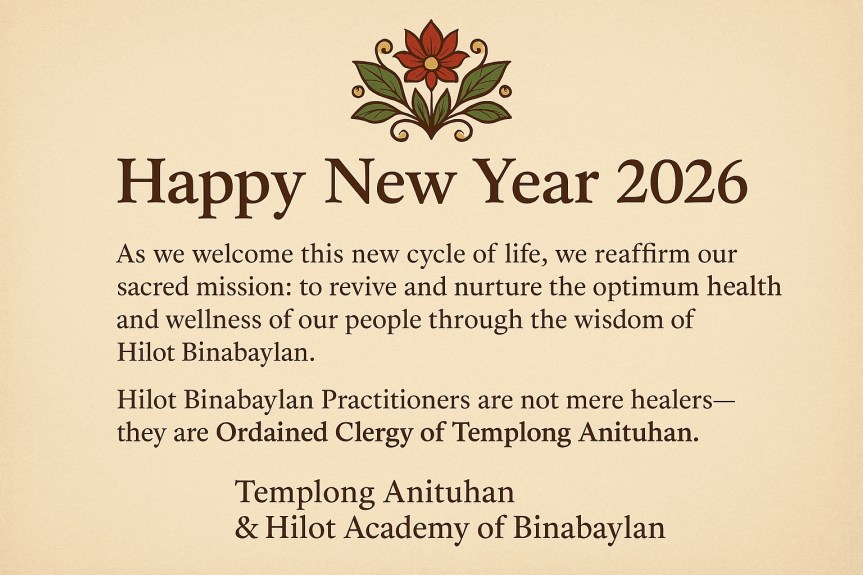
Happy New Year 2026!


As we welcome this new cycle of life, we reaffirm our sacred mission: to revive and nurture the optimum health and wellness of our people through the wisdom of Hilot Binabaylan.

Today, we share an important truth: 

Hilot Binabaylan Practitioners are not mere healers—they are Ordained Clergy of Templong Anituhan.Our ministry is rooted in the divine covenant of life. We do not serve “patients” in a commercial sense; we serve devotees of life itself—those who honor the sacred gift of existence bestowed by the Divine.

This distinction matters: 


– Devotees are not required to be temple members. Anyone who seeks harmony and wellness is welcome. 
– Health care is not a commodity. It is an essential aspect of life, a sacred responsibility, and a spiritual act of service. 
– Our work is not commercialized; it is a ministry of love, care, and balance, guided by ancestral wisdom and divine purpose.

In a world where health is often treated as a business, we stand firm in our belief:

Wellness is a birthright, not a product. Through Hilot, we restore not only the body but the spirit, reconnecting each devotee to the rhythms of nature and the divine source of life.

As we step into 2026, let us embrace this calling with humility and strength. May this year bring you healing, harmony, and holistic well-being.


Mabuhay ang buhay! Mabuhay ang Hilot!

🌿 Templong Anituhan & Hilot Academy of Binabaylan

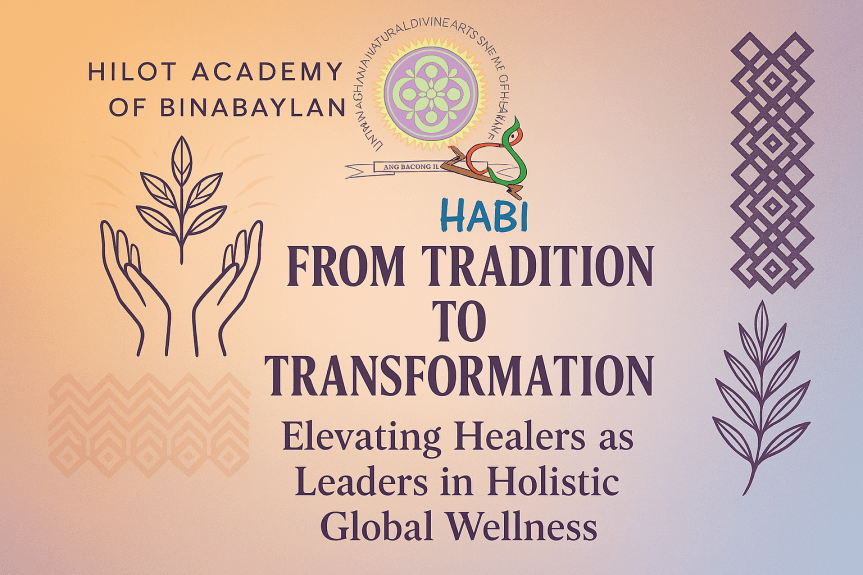
From Tradition to Transformation: Elevating Healers as Leaders in Holistic Global Wellness

San Jose Del Monte, Bulacan – January 1, 2026
As we welcome the new year, Hilot Academy of Binabaylan proudly announces its theme for 2026:
“From Tradition to Transformation: Elevating Healers as Leaders in Holistic Global Wellness.”

Why This Theme Matters

Hilot is more than a healing art—it is a living tradition deeply rooted in Filipino culture and spirituality. For centuries, Hilot has nurtured communities through its holistic approach to health and well-being. Today, the world is seeking authentic, natural, and integrative healing systems. This is where Hilot steps forward—not just as a practice, but as a global movement.

From Tradition to Transformation

This theme reflects our commitment to preserve the wisdom of our ancestors while embracing innovation. Hilot Academy continues to teach the sacred knowledge of Hilot Binabaylan, integrating it with modern wellness principles to meet the needs of a changing world.

Elevating Healers as Leaders

Our graduates are more than practitioners—they are leaders and advocates for holistic health. Through ministerial education, ethical standards, and continuous learning, Hilot Academy empowers healers to take leadership roles in global wellness communities. Professionalization in holistic health does not depend solely on secular academic degrees; it thrives on competence, ethics, and cultural authenticity—values that Hilot Academy upholds.

Major Initiatives for 2026

This year marks a significant milestone for Hilot Academy as we launch programs and partnerships that embody our theme:

Hilot Tanglaw Mentorship Program
We are introducing Hilot Tanglaw, a continuing professional development initiative designed to elevate Hilot Binabaylan practitioners into mentors and leaders. This program strengthens our network and ensures that the wisdom of Hilot is passed on with integrity and excellence.

Global Expansion: Bahay International Hilot Centre
In line with our vision of global wellness leadership, we have passed a resolution to establish the Bahay International Hilot Centre in Toronto, Canada. This center will serve as a hub for Hilot education and practice for Filipinos and international students seeking authentic indigenous healing.

Negotiations for London Training Center
We are also in active conversations to open a Hilot Training Center in London, bringing Hilot Binabaylan practice to Europe and expanding our reach to a global audience.

Holistic Global Wellness

The future of healthcare is holistic. By elevating Hilot into the global wellness conversation, we offer a unique contribution: a healing system that honors body, mind, spirit, and culture. Our mission is clear—to transform healers into leaders who inspire wellness worldwide.


Join us in this journey of transformation.
For enrollment and partnership inquiries, visit www.hilotacademy.com or email us at hilotacademy@luntiangaghama.org

The True Essence of a Healer: A Creed for Hilot Binabaylan Practitioners

In a world where healing is often measured by degrees, diplomas, and monetary value, I stand firm in the belief that the gift of knowledge entrusted to me through Hilot is overflowing—not because of wealth or status, but because of the love and compassion that move me to serve.

I do not claim that I can heal every illness a person may suffer. My heart and mind simply tell me to help and share my energy with every individual who genuinely seeks healing. Like all traditional folk healers, I acknowledge this truth: we are not the ones who heal. We are instruments of the Divine, channels through which healing flows.

Traditional medicine teaches that every individual has the innate ability to heal themselves. We, as healers, are catalysts—facilitators of that process. This wisdom was echoed by Doctor Ruben M. Galang Jr., who taught us that healing is a partnership. Even if I were the greatest healer in the land, if the person does not participate in their own healing, no true healing can occur.

As a Hilot Binabaylan, I am deeply grateful to every patient who knocks on my door. Their trust is a sacred gift. I am equally grateful to the Anito and the Diwata for entrusting me with this ability to care—not only with compassion but also with the little knowledge of human science that complements our ancestral wisdom.

Today, I realize that being a healer is not about academic degrees, certificates, or diplomas. It is about the degree of love and care that moves you to heal an individual. Healing is priceless because it springs from the heart.


Why I Heal on a Donation Basis
This afternoon, I spoke with Cris, our custodian who tends to our chickens. I asked him why he thinks I offer Hilot on a donation basis or sometimes for free. He guessed that I do so because I earn through teaching Hilot. While that is partly true, it is not the whole story. Teaching does not always guarantee income—this year, I only had one class in Hawaii last August and one enrollee this December. What they pay is a small amount, enough to sustain our work at the Hilot Academy of Binabaylan.

The real reason is this: if I charged the same rates I once did in Makati—₱1,800 to ₱2,500 per hourly session—many in my community could not afford it. And what I give is priceless. Healing is not a commodity; it is a sacred act of service.


The Creed of Hilot Binabaylan
From this reflection, I offer these guiding principles for all who walk the path of Hilot Binabaylan:

1. We are instruments of the Divine. Healing flows through us, not from us.
2. Healing is a partnership. The patient must actively participate for true healing to occur.
3. Love and compassion are our greatest credentials. Degrees and certificates do not define a healer—the heart does.
4. Gratitude is our foundation. We honor those who seek our help and the spiritual forces that guide us.
5. Healing is priceless. It cannot be measured by money but by the transformation it brings.
6. We serve with humility. Our work is not for fame or fortune but for the well-being of all.


Final Thoughts
To be a healer is to embody love, care, and service. It is to walk with humility, guided by the wisdom of our ancestors and the grace of the Divine. May this creed inspire every Hilot Binabaylan to uphold the sacred calling of healing—not as a profession, but as a lifelong mission of compassion.

Policy on Enrollment for Specialized Programs

At Hilot Academy of Binabaylan, we uphold the sacred responsibility of preserving and promoting Authentic Indigenous Filipino Traditional Healthcare Practices. Our programs are designed not merely as technical training but as a spiritual and cultural journey rooted in the wisdom of our ancestors.

Why We Require Initiation Before Advanced Programs

The Family Care Hilot Treatment Program is a Continuing Study Program exclusively offered to graduates of our Hilot Binabaylan Practice Master Degree Program. This prerequisite ensures that every participant:

  • Embodies the Core Values of Hilot Binabaylan
    Our 9-day initiation and training program equips practitioners with the knowledge, skills, abilities, and attitude necessary to uphold the integrity of Hilot.
  • Protects the Authenticity of Our Tradition
    We do not allow the integration of Hilot techniques with Western or other modalities. Combining Hilot with foreign practices risks cultural dilution and dishonors the uniqueness of each healing art.
  • Advances Our Advocacy, Not Commercialization
    Our mission is principle-driven, not profit-driven. Enrollment decisions are guided by our commitment to cultural preservation and spiritual integrity, not financial gain.

Our Stand Against Cultural Colonization

Modern spas often offer “Combination Massage,” blending different modalities without respect for their origins. We reject this approach. Hilot is a complete and holistic system that stands on its own—just as our ancestors practiced it for generations.

Policy for International Students

It is our established policy that international students enrolling in the 9-day Hilot Binabaylan Training Program are required to stay with us at our designated accommodation. This includes food and lodging, provided for the following reasons:

  • Safety and Comfort
    As visitors to the Philippines, we prioritize your well-being and security throughout your stay.
  • Focus on Learning
    Classes begin at 8:00 AM and may extend until 8:00 PM. Commuting daily would consume energy and distract from the immersive learning experience. Staying onsite ensures that students can fully concentrate on the training and spiritual journey.

This policy reflects our commitment to creating a safe, comfortable, and focused environment for all participants.

Our Commitment

By maintaining these standards, we ensure that Hilot remains authentic, genuine, and deeply rooted in Filipino Indigenous Wisdom, empowering practitioners to serve their communities with integrity.

🌿 The Body as the Home of the Souls and Spirit

In many indigenous Filipino traditions, including Maranao, Bukidnon, and Tagalog Hilot Binabaylan, the physical body is not just flesh—it is a sacred vessel that houses multiple souls (gimokod) and the spirit (diwa). When the body is in pain, it may be a sign that:

  • A soul has wandered or been disturbed.
  • The spirit is calling for attention, prayer, or alignment.
  • There is disharmony between the physical and spiritual realms.

🔮 How a Strong Soul Heals the Body

1. Energetic Alignment

  • A strong soul radiates vital energy (UliRat) that nourishes the body.
  • When the soul is whole and present, the body receives clarity, strength, and resilience.

2. Spiritual Immunity

  • Just as the body has an immune system, the soul has spiritual defenses.
  • Prayer strengthens the soul’s ability to repel negative energies, heal emotional wounds, and restore balance.

3. Ancestral Support

  • A strong soul is connected to ancestors and Tonong.
  • Their guidance and protection flow through the soul into the body, especially during rituals and healing.

4. Purpose and Will

  • Pain may weaken the body, but a strong soul reminds the person of their purpose.
  • This inner will can activate healing, even when physical remedies are limited.

🕯️ Your Insight: Strengthen the Spirit Through Prayer

This is a sacred truth. Prayer is not just communication—it is spiritual nourishment. It:

  • Calls back wandering souls
  • Re-aligns the body with divine rhythm
  • Invokes healing forces from the heavens, earth, and underworld

🕯️ Panalangin ng Kaluluwa para sa Paghilom ng Katawan

(Prayer of the Soul for Healing the Body)

Sa ngalan ng Apo sa Langit, Diwata ng Liwanag at Buhay,
Tinatawag ko ang pitong kaluluwa na nananahan sa aking katawan.
UliRat, Muwang, Malay, Alam, Bait, Alaala, at Diwa—magbuklod kayo.
Magsama-sama sa liwanag ng panalangin, upang pagalingin ang tahanan ninyo.

Kung ang katawan ay nasasaktan, ito’y panawagan ng kaluluwa.
Kung ang diwa ay humihina, ito’y paalala ng pangangailangan ng dasal.
Nawa’y bumalik ang lakas ng loob, ang kapayapaan ng isip, at ang sigla ng damdamin.
Nawa’y dumaloy ang kapangyarihan ng langit sa bawat ugat, laman, at hininga.

Apo sa Lanao, bantay ng damdamin, Diwata sa Lupa, tagapaghilom ng katawan,
Tonong ng mga ninuno, tagapagturo ng karunungan—dinggin ninyo ang panawagan.
Sa bawat patak ng luha, sa bawat bulong ng panalangin,
Nawa’y bumalik ang kalusugan, at ang katawan ay muling sumigla.

Ito ang panalangin ng Binabaylan, anak ng lupa at langit,
Nagpapakumbaba sa harap ng Diwata, at nagtitiwala sa kapangyarihan ng kaluluwa.
Pagbawi. Paghilom. Pagbalik.


🕯️ Prayer of the Soul for Healing the Body

In the name of Apo sa Langit, God of Light and Life,
I call upon the seven souls that dwell within my body.
UliRat, Muwang, Malay, Alam, Bait, Alaala, and Diwa—unite yourselves.
Come together in the light of prayer, to heal your sacred dwelling.

If the body is in pain, it is the soul that calls out.
If the spirit grows weak, it is a reminder of the need for prayer.
May courage return, may peace of mind be restored, and may the heart be renewed.
May the power of heaven flow through every vein, flesh, and breath.

Apo sa Lanao, guardian of emotions, Diwata of the Earth, healer of body and nature,
Tonong of the ancestors, teacher of wisdom—hear this call.
In every tear that falls, in every whisper of prayer,
May health return, and the body be revived.

This is the prayer of the Binabaylan, child of earth and sky,
Humbly standing before the Diwata, trusting in the power of the soul.
Restoration. Healing. Return.


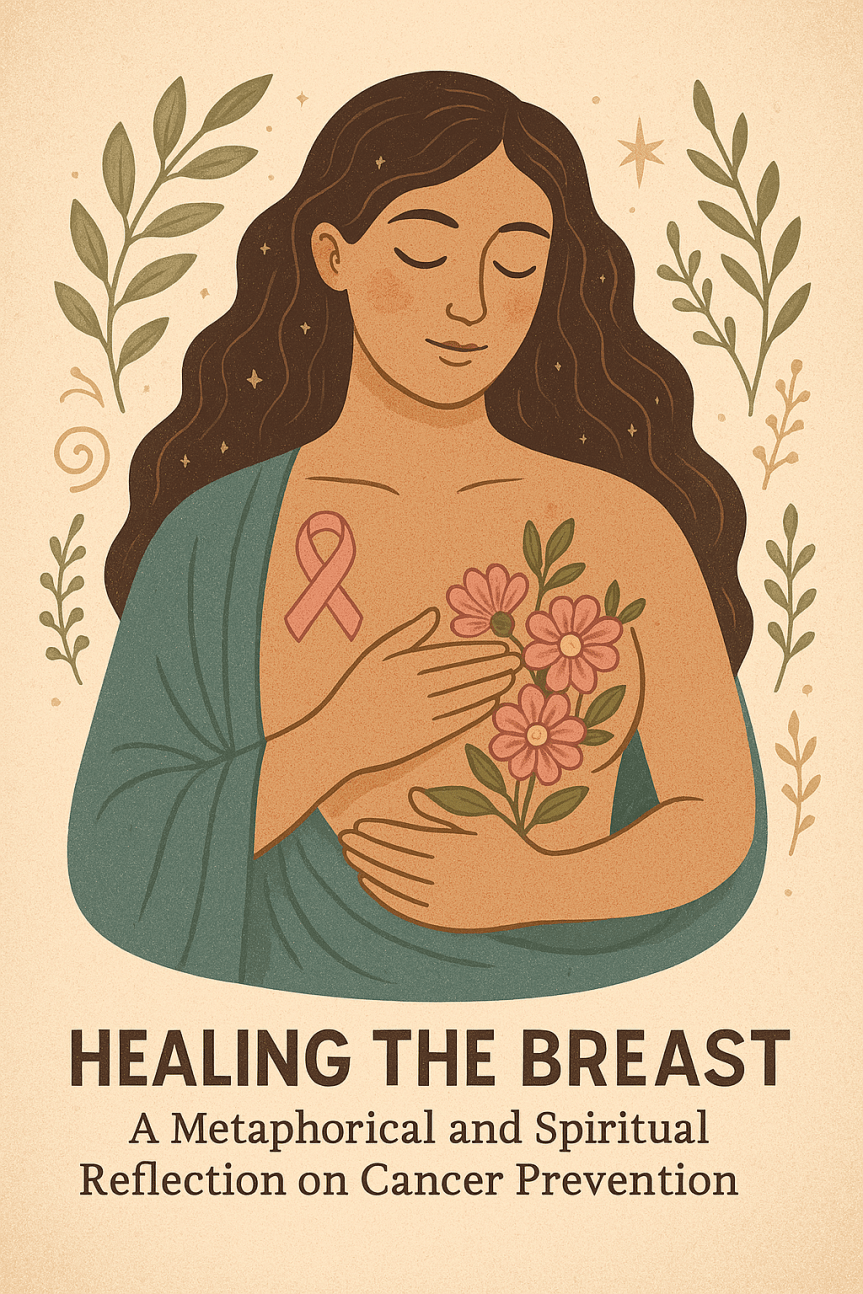
Healing the Breast: A Metaphorical and Spiritual Reflection on Cancer Prevention

In the sacred traditions of Hilot Binabaylan and other indigenous healing practices, the body is not merely a biological structure—it is a vessel of spirit, emotion, and ancestral memory. Among its many parts, the breast holds a special place as a source of nourishment, love, and life.

Just as a cell can be likened to a room in a house, the breast can be seen as a pantry or kitchen—a place where nourishment is prepared and offered. When this room is clean, organized, and filled with love, it supports the health of the entire house. But when it is filled with spoiled food, clutter, or emotional toxins, it can become a source of disease.

Breast cancer, in this metaphor, is not just a physical illness. It is a reflection of emotional and spiritual imbalance. Sama ng loob—resentment, grief, hatred—when stored in the chest, can energetically spoil the sacred vessel of the breast. The nurturing space becomes a container of pain, and this emotional toxicity may feed the energy of cancer.

In Hilot Binabaylan, healing is holistic. It involves not only physical cleansing but also emotional release and spiritual restoration. Through rituals, prayers, and acts of humility, one can clear the breast of hatred and refill it with love.

Spiritual Insight:
“Kung ang dibdib ay sisidlan ng pag-ibig, huwag hayaang mapuno ito ng galit. Dahil ang galit ay lason sa gatas ng buhay.”

“If the chest is a vessel of love, do not let it be filled with anger. For anger is poison to the milk of life.”

Call to Action: Preventing Cancer Holistically

  1. Release Emotional Burdens – Practice forgiveness, humility, and open-heartedness. Let go of sama ng loob.
  2. Nurture Your Body – Eat nourishing food, exercise, and rest. Treat your body as a sacred home.
  3. Connect Spiritually – Engage in rituals, meditation, and prayer to restore balance.
  4. Seek Early Detection – Regular check-ups and self-examinations can save lives.
  5. Educate and Empower Others – Share this wisdom with your community. Healing is collective.

Let us reclaim the breast as a vessel of love, not pain. Let us clean the rooms of our body and spirit, so that life may flow freely and abundantly.

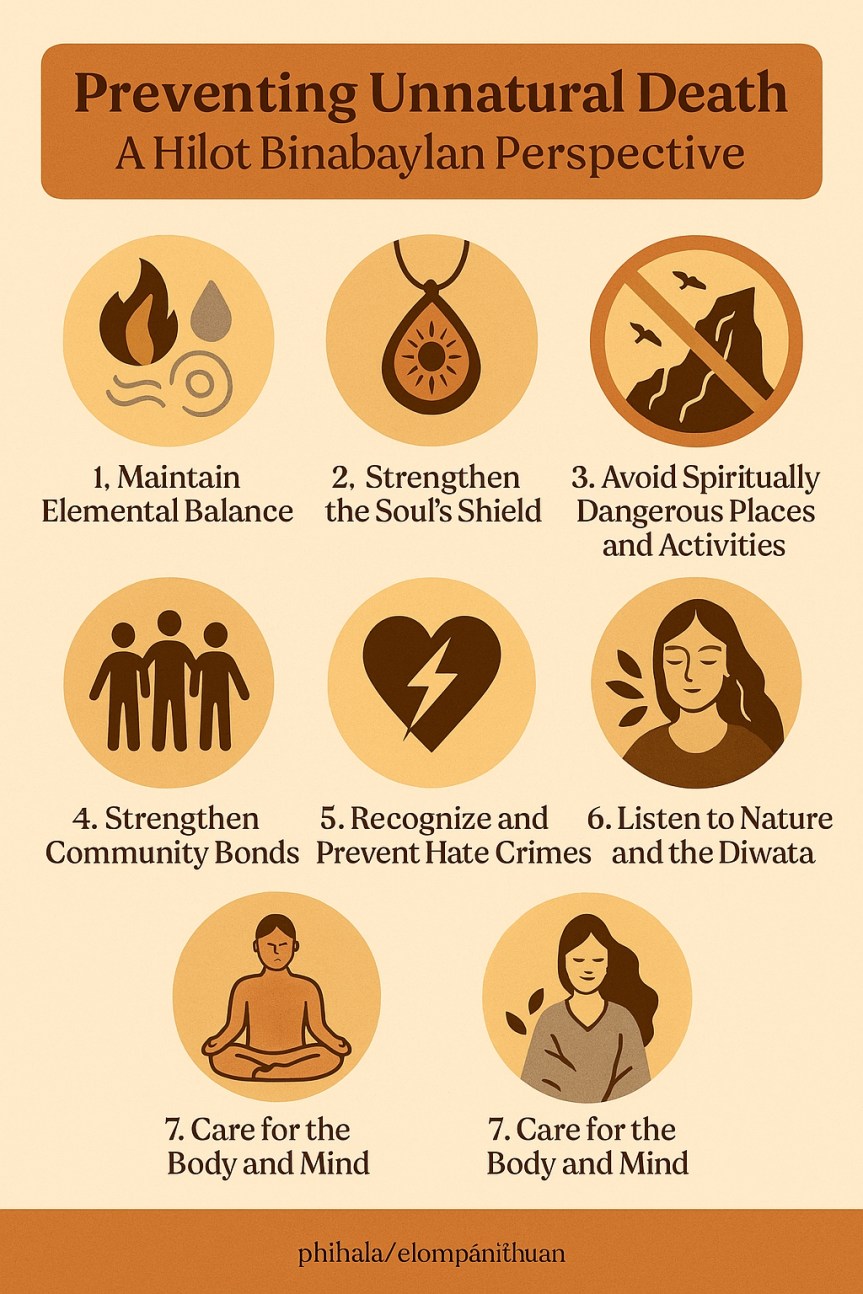
Preventing Unnatural Death: A Hilot Binabaylan Perspective

In the sacred teachings of Hilot Binabaylan, we recognize two distinct types of death: Natural Death and Unnatural Death.

  • Natural Death occurs due to aging or illness. It is part of the life cycle and often comes with signs and spiritual preparation.
  • Unnatural Death, on the other hand, happens suddenly—through accidents, murder, warfare, or hate crimes. It disrupts the natural rhythm of life and the soul’s journey.

While natural death can be delayed or prevented through healing and spiritual alignment, the question arises:
Can we prevent unnatural death?

From the lens of Hilot Binabaylan, the answer is yes—but it requires conscious spiritual practice, community awareness, and elemental harmony.


1. Maintain Elemental Balance

The human body is composed of the elements—Fire, Water, Air, and Earth. Imbalance among these can lead to confusion, weakness, and vulnerability to accidents. Through Hilot healing, Bato Omo assessment, and rituals invoking Diwatang Kilubansa, we restore harmony and strengthen the body’s resilience.


2. Strengthen the Soul’s Shield

Spiritual protection is essential. Binabaylan practitioners use:

  • Blessed oils (lana) and herbal poultices (tapal)
  • Prayers and offerings to Anito and Diwata
  • Consecrated amulets or agimat that serve as spiritual guardians

These tools help shield the soul from harmful energies and sudden spiritual disconnection.


3. Avoid Spiritually Dangerous Places and Activities

Some locations are known to harbor malevolent spirits or chaotic energies. Binabaylan are trained to sense these places and perform ritual cleansing or protective markings. Awareness and respect for these spaces can prevent misfortune.


4. Strengthen Community Bonds

Unnatural death caused by violence or war often stems from social disconnection and unresolved anger. Hilot Binabaylan teachings promote peace, unity, and mutual respect. By fostering harmony within the community, we reduce the risk of conflict and harm.


5. Recognize and Prevent Hate Crimes

Sometimes, unnatural death arises from hate crimes—acts of violence driven by prejudice, discrimination, or intolerance. These are especially tragic because they target individuals based on identity, belief, or background.

Examples of Hate Crimes That May Lead to Death:

  • Racial or ethnic violence
  • Religious persecution
  • Gender-based violence
  • Attacks on LGBTQ+ individuals
  • Political or ideological assassinations
  • Cultural erasure and indigenous targeting

How Can We Prevent and Lessen Hate Crimes?

  • Education and Awareness: Teach respect for diversity and the sacredness of all life.
  • Community Dialogue: Create safe spaces for interfaith and intercultural conversations.
  • Spiritual Advocacy: Use rituals and teachings to promote compassion and understanding.
  • Protection of Vulnerable Groups: Offer spiritual and emotional support to those at risk.
  • Empowerment through Identity: Encourage people to embrace their heritage and spirituality without fear.

In Hilot Binabaylan, we believe that every soul carries divine essence. Hate crimes are not just physical attacks—they are spiritual wounds that affect the collective soul of humanity. Healing these wounds requires both ritual and action.


6. Listen to Nature and the Diwata

The Diwata often send warnings through dreams, visions, or intuitive feelings. Being attuned to these signs allows us to avoid danger before it manifests. Binabaylan are trained to interpret these messages and guide others accordingly.


7. Care for the Body and Mind

Physical weakness and mental confusion can lead to accidents. Hilot Binabaylan emphasizes proper nutrition, movement, and mental clarity. A strong body and focused mind are less likely to fall victim to sudden harm.


A Call to Ritual and Reflection

As spiritual healers and leaders, we are called not only to heal but to protect life. Perhaps it is time to create a Ritual of Protection Against Unnatural Death, invoking the blessings of Diwatang Balantay, Kilubansa, and other guardian spirits. This can be integrated into the ceremonies of Templong Anituhan and offered to the community as a sacred shield.

Would you like to collaborate on crafting this ritual and its invocation? Together, we can empower our people to walk safely and consciously in both the physical and spiritual realms.

Parasites and Healing: A Filipino Holistic Approach

What Are Parasites?

Parasites are organisms that live in or on a host, feeding off it and often causing harm. They include intestinal worms, protozoa, and ectoparasites like lice. Infection occurs through contaminated food, water, insect bites, or poor hygiene.

Common Symptoms of Infection

– Abdominal pain or bloating 
– Diarrhea or constipation 
– Fatigue and weakness 
– Skin rashes or itching 
– Weight loss 
– Persistent fever 
– Sleep disturbances or irritability 

Filipino Herbal Remedies

Traditional Filipino healing uses herbs to cleanse the body of parasites:

– Niyog-Niyogan (Quisqualis indica) – Chewed seeds expel intestinal worms. 
– Bawang (Garlic) – Antiparasitic and immune-boosting. 
– Bayabas (Guava) – Antiseptic; used as tea or wash. 
– Sambong– Detoxifying; supports kidney and liver function.

These herbs are often used with Hilot rituals for holistic healing.

Prevention Tips

– Wash hands regularly, especially before eating and after using the toilet. 
– Drink clean, filtered or boiled water. 
– Cook meat and fish thoroughly. 
– Avoid walking barefoot in contaminated soil. 
– Use insect repellent and protective clothing. 
– Maintain clean living spaces and personal hygiene. 
– Deworm pets and avoid close contact with infected animals.

Spiritual Parasites and Cleansing

In Templong Anituhan, spiritual parasites are negative energies or entities that attach to a person’s aura, feeding on fear, trauma, or unresolved emotions. They may cause fatigue, emotional instability, or spiritual disconnection.

Spiritual cleansing includes:

– Tuob (herbal steam baths) 
– Pagpapahid ng Lana (anointing with sacred oils) 
– Pag-aalay (offerings to Diwata and Anito) 
– Invocation of Diwatang Kilubansa and Sayum-ay for healing and harmony

Healing the Whole Being

True healing in Hilot Binabaylan practice restores harmony between body, mind, and spirit. Whether physical or spiritual, parasites must be addressed through both natural remedies and spiritual rituals to achieve Ginhawa—complete well-being.

Suggested Spiritual Cleansing Rituals

1. Tuob Ritual (Herbal Steam Bath)


– Purpose: Opens pores, releases toxins, and clears stagnant energies.
– Herbs: Bayabas (guava), Sambong, and Tanglad (lemongrass).
– Method: Boil herbs in water, place in a basin, and cover yourself with a blanket to inhale the steam. Chant invocations to Diwatang Kilubansa for elemental balance.

2. Pagpapahid ng Lana (Anointing with Sacred Oil)


– Purpose: Seals the aura and protects against energetic intrusion.
– Oil Base: Coconut oil infused with garlic, basil, or rosemary.
– Method: Apply to forehead, chest, and navel while invoking Diwatang Sayum-ay for peace and harmony.

3. Pag-aalay at Panalangin (Offering and Prayer)


– Purpose: Appeases spirits and invites divine healing.
– Offerings: Rice, flowers, water, and lighted candles.
– Invocation: Call upon Anito and Diwata, especially Diwatang Meketefu for refinement and Diwatang Tuhan for spiritual strength.

4. Pagpapalayas (Spirit Release Ritual)


– Purpose: Expels spiritual parasites or attachments.
– Tools: Bayabas leaves, salt, and a consecrated staff or ritual dagger.
– Method: Circle the person while chanting release prayers, then sweep the body with leaves and salt to absorb negative energies.

5. Dambana ng Ginhawa (Shrine of Comfort Ritual)


– Purpose: Reconnects the soul to its divine source.
– Setup: Create a sacred space with elemental symbols—earth, water, fire, air.
– Practice : Meditate, chant, and offer gratitude to Umli and the Diwata realms for restoration.

🌺 The Sacred Flow of Emotions and Feelings: A Path to Holistic Wellness and Spiritual Harmony

In the journey of healing and spiritual awakening, understanding the nature of emotions and feelings is essential. These inner experiences are not just psychological—they are energetic, spiritual, and deeply connected to our soul’s health.

🌿 What Are Emotions and Feelings?

  • Emotions are instinctive, automatic responses to stimuli. They arise from the limbic system and include reactions like fear, joy, anger, and sadness.
  • Feelings are the conscious interpretation of emotions. They are processed in the thinking brain (neocortex) and include states like peace, resentment, or gratitude.

In Hilot Binabaylan practice, emotions are seen as energetic movements of the soul, while feelings are the reflections of the soul’s condition.


🔥 Can Pain Be an Emotion and a Feeling?

Yes. Pain exists in both realms:

  • As a feeling, it is the conscious awareness of discomfort—physical or emotional.
  • As an emotion, it is a complex response involving sorrow, grief, or trauma.

In spiritual healing, pain is a signal—a call to restore balance in the soul, body, and spirit.


⚡ Is It Normal to Have Mood Swings?

Mood swings are natural when they reflect life’s changes, hormonal shifts, or spiritual transitions. However, extreme or frequent swings may indicate:

  • Emotional imbalance
  • Soul fragmentation
  • Elemental disharmony

Hilot Binabaylan offers rituals and healing touch to ground emotions and restore inner harmony.


🎶 How Sensory Stimulations Affect Emotions

  • Food nourishes both body and soul, influencing mood and elemental balance.
  • Music opens portals to memory, emotion, and divine connection.
  • Visuals (art, nature, colors) evoke peace, awe, or healing.
  • Touch, smell, and movement activate emotional release and spiritual flow.

These are sacred tools in Binabaylan rituals, used to awaken the soul and invite the Diwata.


🌈 Emotions That Support Optimum Health and Spiritual Wellness

To live in holistic wellness, one must cultivate:

  • Joy – for vitality and soul expression
  • Peace – for grounding and clarity
  • Love and Compassion – for healing and connection
  • Gratitude – for humility and abundance
  • Hope and Faith – for resilience and divine trust

Even emotions like sadness or anger are sacred when processed with awareness and transformed through ritual and reflection.


🌀 Conclusion: Emotions as Sacred Messengers

Emotions and feelings are not weaknesses—they are sacred messengers of the soul. They guide us toward healing, connection, and spiritual growth. In the path of the Binabaylan, we do not suppress emotions—we honor them, listen to them, and transform them into light.


🙌 Call to Action

If you feel emotionally imbalanced, spiritually disconnected, or simply curious about your soul’s journey:

🌟 Join the Hilot Binabaylan Alignment Training Program
🕊️ Learn how to heal through touch, ritual, and soul wisdom
🌿 Reconnect with your seven souls and elemental energies
📍 Held every Sunday at Templong Anituhan ng Luntiang Aghama, San Jose Del Monte, Bulacan

Let your emotions become your guide. Let your feelings become your prayers. Let your soul awaken to its sacred purpose.