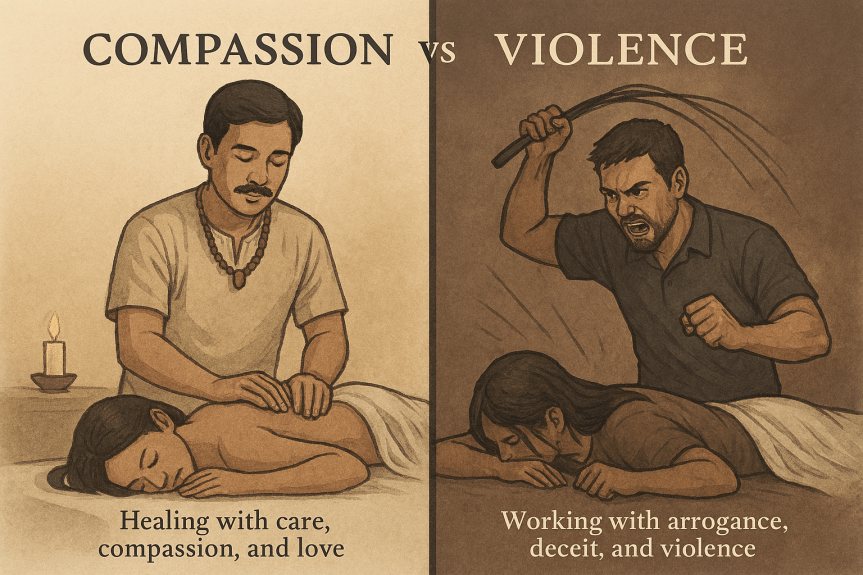
In recent times, a circulating video has raised serious concern within the healing community—a portrayal of a so-called “spiritual healer” using forceful and painful methods that appear violent, aggressive, and devoid of compassion. Such representations not only alarm the public but also mislead people about the true nature of traditional Filipino healing.
As practitioners and guardians of Hilot Binabaylan, it is our duty to clarify:
Authentic Hilot is not violence. It is healing grounded in care, alignment, and love.
Hilot Is Not Just Massage
One of the most common misconceptions is that Hilot is simply a form of massage meant for relaxation. This is not entirely accurate.
While massage focuses on soothing muscles and providing comfort, Hilot goes deeper. It is a traditional healing art that:
- Identifies imbalances within the body
- Restores alignment and energetic flow
- Addresses physical, emotional, and spiritual disturbances
In Hilot Binabaylan, healing is intentional and corrective, not merely superficial.
Why Hilot Can Be Painful—But Only Briefly
It is true that Hilot can sometimes feel painful—but this must be properly understood.
The discomfort experienced during a Hilot session is not meant to harm. Rather, it is a natural response of the body when an imbalance is being corrected. When a part of the body is misaligned or blocked, the initial touch may trigger a moment of pain.
However, this follows a clear pattern:
- First stroke (unang hagod): discomfort or sharp sensation where imbalance exists
- Subsequent strokes: gradual reduction of pain
- Final phase: relief, lightness, and restored flow
The goal is not to inflict pain, but to reduce it until it completely disappears.
Gentleness Is Central to Hilot Practice
True Hilot is never executed through aggression.
A legitimate Hilot practitioner works with:
- Controlled, gentle movements
- Heightened awareness of the body’s response
- Calm and focused intention
- Respect for the patient’s limits
Healing is not achieved by force, anger, or punishment.
It is achieved through precision, sensitivity, and compassion.
The behavior shown in the viral video—violent striking, harsh handling, and use of instruments with aggression—does not represent Hilot Binabaylan.
Traditional Healing Tools: Purposeful, Not Harmful
Hilot does involve the use of tools, but always with therapeutic intention and care. These include:
- Baso (glass cupping) for bentusa (suction therapy)
- Leaves (dahon) used for scanning and diagnosing imbalances
- Bamboo or guava sticks for controlled pressure application
- Coconut midrib (tingting) used in gentle tapping techniques
For example, in the pa-tapik method using 13 coconut sticks, the tapping is light and rhythmic, designed to stimulate circulation—not to injure or punish the body.
Every tool in Hilot serves a healing purpose, never a destructive one.
Healing Is Rooted in Love and Care
The core principle of Hilot Binabaylan is simple yet profound:
Healing must come from love (pag-ibig) and compassion (pagmamalasakit).
Without these, any act cannot be called healing.
A true healer:
- Does not dominate the patient
- Does not inflict unnecessary pain
- Does not act out of ego or anger
Instead, the healer becomes a channel of balance, care, and restoration.
Guidance for Patients Seeking Spiritual Healing
For those seeking the help of a spiritual healer, discernment is essential. Not all who claim to heal are legitimate practitioners.
Before entrusting your well-being, consider the following:
✅ Check for Ordination Credentials
A true spiritual healer should be ordained by a legitimate spiritual or religious institution, authorizing them to practice healing responsibly.
✅ Verify Legal Compliance
If they accept payments or donations:
- Look for DTI Registration
- Ensure they have a Mayor’s Permit
If they operate a chapel or organization:
- Ask for SEC Registration
- Confirm BIR Registration and official receipts
✅ Observe Their Conduct
A legitimate healer:
- Works with calmness and respect
- Explains the process clearly
- Prioritizes your safety and consent
Never trust a healer who:
- Uses fear, intimidation, or violence
- Claims absolute power or authority over your body
- Justifies harm as “necessary suffering”
A Call to Spiritual Healers: Walk the Path with Integrity
If you feel called to become a spiritual healer, remember that healing is not just a gift—it is a sacred responsibility. It requires proper guidance, ethical grounding, and spiritual accountability.
At the Hilot Academy of Binabaylan, we invite you to take a higher step in your journey by becoming a Certified Spiritual Wellness Facilitator.
This program is designed to:
- Provide proper spiritual formation and guidance
- Ground your healing practice in authentic Filipino Indigenous wisdom
- Ensure your work is aligned with ethics, compassion, and legitimacy
- Offer ordination credentials that affirm your role as a responsible healer
Ordination is not about titles—it is about accountability to the people you serve and the spiritual forces you work with.
If you are truly called to heal, then walk the path with discipline, humility, and love.
👉 Begin your journey today. Become an ordained Spiritual Wellness Facilitator.
Visit: https://www.hilotacademy.com
Let us uphold the honor of healing by becoming instruments of
care, not harm… balance, not fear… love, not violence.

