In our Code of Ethics, we have mentioned that we are Healthcare providers whose goals consist of prevention of premature death and disability, maintenance or improvement of life, maximization of
personal growth and development, and preparation for a good death.
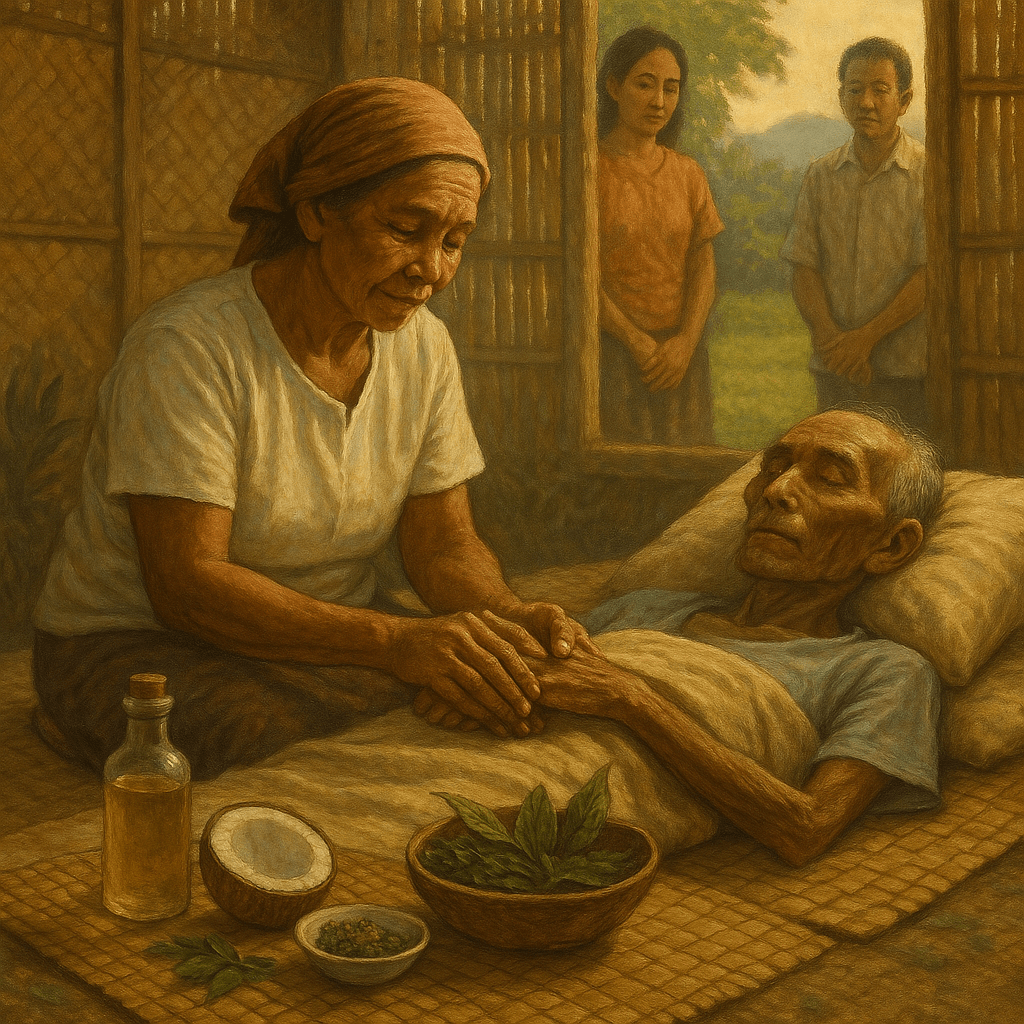
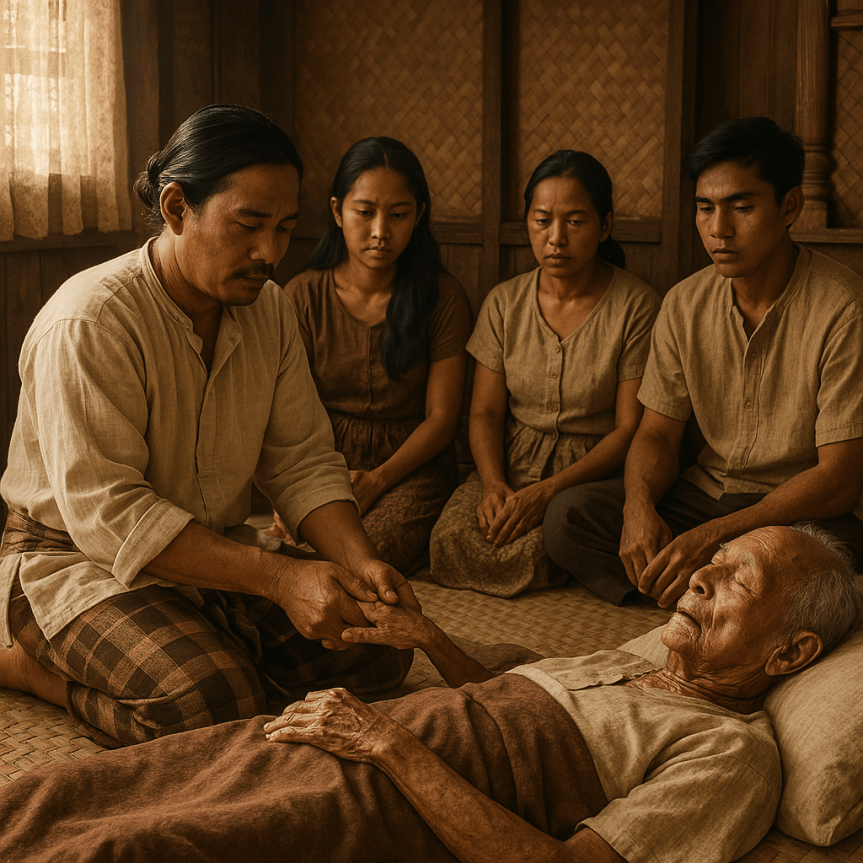
As a manghihilot, our role is not to promise a long life to our patients. Instead, we offer something deeper—we help them embrace life fully, with all its challenges and transitions. We guide them to find comfort, meaning, and joy in every moment, no matter how difficult.
We do not see death as an enemy to be fought. Rather, we recognize it as a gentle guide—one that reminds us to live with purpose, to cherish our relationships, and to find peace in the present. In our healing practice, death is not the end, but a companion that helps us appreciate the beauty of life.
“It has been taught to us as Manghihilot, our role in caring is from the time of conception to the moment of transition from this plane of existence to the next life.”
In our tradition as Manghihilot, healing is not just a profession—it is a sacred calling. We are taught that our responsibility begins at the very start of life, even before birth, and continues until the final breath. Our care spans the entire human journey, from conception to transition, from the womb to the world beyond.
More Than Healing the Body
Our work is not limited to treating physical ailments. We are called to listen deeply—to the body, the spirit, and the emotions. We understand that true healing involves the whole person, and that pain can come not only from the body, but also from the heart and mind.
Honoring Life and Death
As Manghihilot, we do not fear death. We do not see it as something to fight or avoid. Instead, we recognize it as a natural part of life’s sacred cycle. We walk with our patients through every stage of life, including the final one, offering comfort, peace, and dignity.
A Tradition That Evolves
Our practice is rooted in the wisdom of our ancestors, but it is not stuck in the past. We continue to learn, grow, and adapt—bringing Hilot into the modern world while staying true to its spiritual essence. We believe that healing is a lifelong journey, and our presence is a gift of love and service from beginning to end.
Recently, a graduate of the Hilot Academy asked me whether we have any documented cases involving palliative care or end-of-life care within the practice of Hilot. Regretfully, I had to respond that we do not. The graduate pointed out that other traditional healing modalities have such documentation, while Hilot appears to lack it.
This absence is not due to a lack of experience or wisdom among Manghihilot, but rather a reflection of how our tradition has been preserved. Most Manghihilot have not been formally educated in colleges or universities. Their knowledge is deeply rooted in oral tradition and lived experience. They act rather than write. Their learning is carried in the mind and heart, passed down through narration and demonstration, not through modules or modern training materials.
This way of transmission is sacred and powerful, but it also means that much of our healing work remains undocumented. As we move forward, perhaps it is time to begin bridging the gap—honoring our oral traditions while also finding ways to preserve them in written form, so that future generations may continue to learn, grow, and share the wisdom of Hilot.

For the sake of documentation, I want to share a personal experience on how I, as a Manghihilot, have cared for a dying patient.
First and foremost, it is never our intention for a patient to die under our care. If that were the case, why would we devote time, energy, and spirit to preserving life? Our role is rooted in the belief that life is sacred and worth fighting for—even in its most fragile moments.
When a patient is facing a serious illness, it may seem that death is near. But as Manghihilot, we do not simply accept this. Instead, we plead with death—asking it to grant the patient another chance to live. It is a spiritual negotiation, a bargaining of life with death.
And if death allows the patient to stay, a promise must be made and fulfilled. This promise is not just a ritual—it is a sacred commitment to honor the life that was spared. In this way, our healing practice becomes not only physical but deeply spiritual, rooted in reverence for both life and the mystery of death.
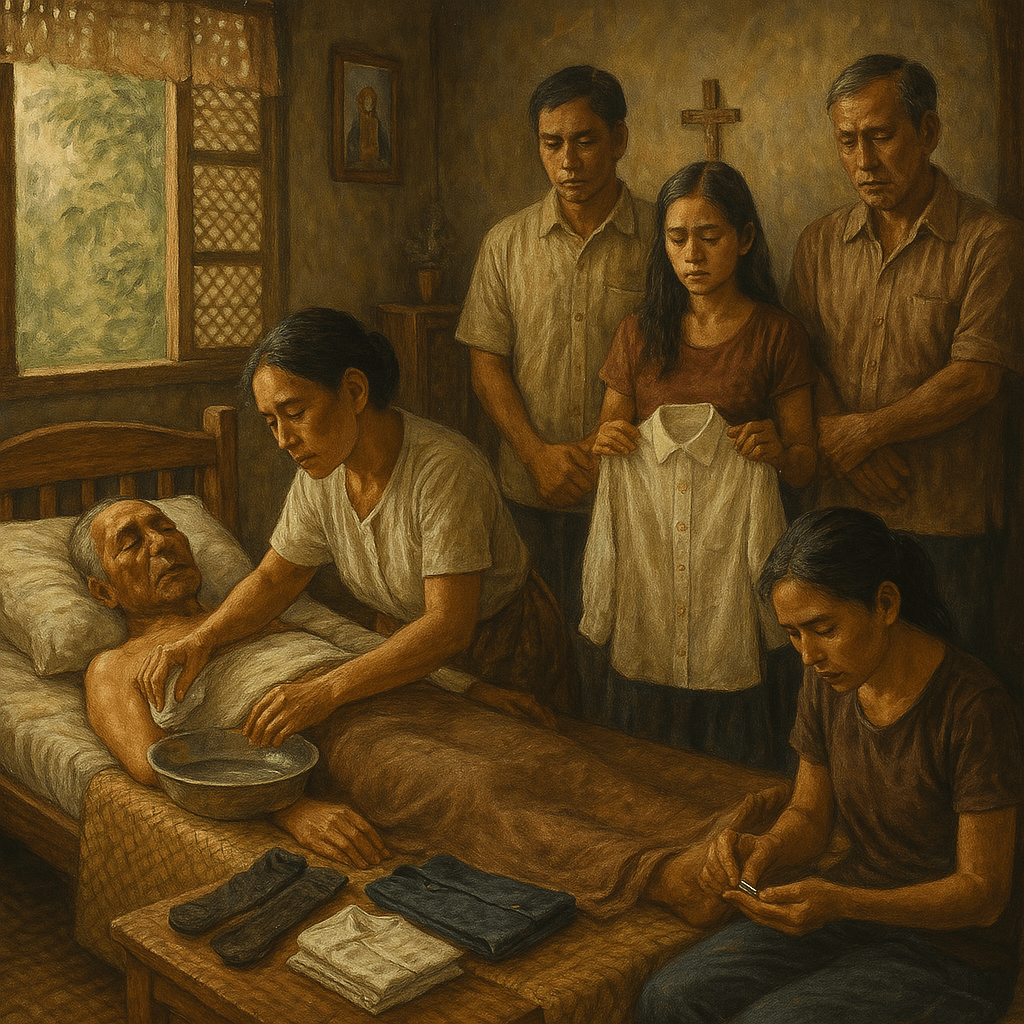
I remember my 80-year-old neighbor, Tata Piyo, who was undergoing dialysis for a kidney condition. His daughter, Ate Belen, came to me one day and asked for help in caring for her father. Despite his age and fragile condition, we chose to fight for life. As a Manghihilot, I did everything I could to ease his suffering—applying hilot pahid to relieve his pain, performing suob and paligo, and even designing a special diet to support his condition.
One day, Tata Piyo was in great pain. Ate Belen rushed to my house, asking me to attend to him. When I entered his bedroom, he looked at me and said in Tagalog, “Ihatid mo na ako.” I responded in a light-hearted way, “Where do you want me to send you? Don’t worry, when you regain your strength, we’ll go to Jollibee.” He laughed, gathering all his remaining strength, and replied, “Hindi, ihatid mo na ako sa ating Ama sa langit.”
I wasn’t prepared for those words. But I kept my composure and gently asked Ate Belen to call the rest of the family. I told them that Tata Piyo was asking to rest, and that the decision must come from them—not from me.
Together, we discussed whether to continue fighting for his life or to let him go peacefully. The family, acknowledging his age, his weakened body, and their readiness to accept his passing, decided to let him go. They remained composed, not wanting Tata Piyo to see them cry.
Everyone began preparing his clothes—underwear, socks, pants, t-shirt, and barong. I clipped his fingernails and toenails and gave him his last bed bath, ensuring he was clean and dignified for his journey.
At exactly 6:00 PM, Tata Piyo took his final breath.
This experience reminded me that as Manghihilot, our care extends beyond healing—it reaches into the sacred space between life and death. We do not just treat the body; we honor the soul. And in moments like these, we become witnesses to the most profound transitions of life.
 Hilot Academy of Binabaylan
You must be logged in to post a comment.