As i do my research on the value of Traditional and Natural Medicine in the Philippines, i came to the website of Western Pacific Region of the World Health Organization and they got this article on the Health Service Delivery Profile in the Philippines as they compile it on 2012.
Let us take a look on its content as they reported the role of Traditional Medicine in Health Care Delivery Service:
Traditional medicine practice
Traditional medicine and complementary and alternative medicines are widely used in the Philippines. Filipino traditional medicine has been in practice for more than a thousand years. Many forms of complementary and alternative medicine introduced from other countries are also used, such as Chinese traditional medicine, acupuncture, herbal medicines, chiropractic, homeopathy, and Ayurveda. Significantgroups of people depend to varying degrees on different forms of traditional and complementary medicines for their health care. A 2010 WHO WPRO study estimated that 70% of the population uses traditional and complementary medicines. Of those, 89% do so for particular illnesses, symptoms, or cultural needs which biomedicine cannot address, as well for financial reasons. Traditional practitioners’ services are accessible, available and affordable, particularly in remote areas.
The Traditional Medicine unit now the Philippine Institute for Traditional and Alternative Health Care(PITACH), an attached agency of the DOH supports the integration of traditional and complementarymedicine into the national health care system. It is responsible for carrying out the responsibilities stated in the Traditional and Alternative Medicine Act (1997) (currently being updated). There are also three national research institutions covering traditional and complementary medicine: the National Institute for Health, the National Integrated Research Programme on Medicinal Plants, and the Philippine Council for Health Research and Development.
Acupuncture services are covered by PhilHealth, but no other traditional or complementary medicineservices are covered. Acupuncture delivered in hospital is US$0.22-0.44, although private practitioners may charge up to five times more than a physician’s office fee. Traditional birthing attendants charge much lower fees than other birth attendants; PHP755-947 (approx USD15-20), compared to up toPHP3,175 (approx USD60) for a midwife, PHP7,000 (approx USD140) for a nurse, and PHP10,000
(approx USD200) for a physician. Almost uniformly, traditional medicine practitioners do not have setfees, and many accept donations.
Providers of traditional medicine
Traditional and complementary medicine is practiced by private practitioners or healers, and in homesand barangay health stations. They play an important role in primary health care in the Philippines. Traditional birth attendants are used by a significant proportion of birthing women. In 2008 36% of deliveries were assisted by a traditional birth attendant, or Hilot. In 2002 there were 250,000 traditional healers in the Philippines. Compared to medically trained doctors,traditional medicine practitioners are far more accessible. While there is only one doctor for every 80,000 people, there is one traditional healer for every 300 people.
Licensing of practitioners
Traditional medicine and complementary medicine practitioners are recognised in legislation but havedifferent licensing requirements than conventional medicine practitioners/doctors. There are two formal professional self-regulating bodies for traditional and complementary medicine: the National Accreditation Committee for Acupuncture and the Board of Chiropractic both established in 2008. A committee for Homeopathy is in the process of being established. Also in 2008, the Philippine Institute of Traditional and Alternative Health Care issued competency standards for the practice of acupuncture for physicians and non-medical practitioners. In June 2009, a standardized curriculum for acupuncture certification, based on WHO 1999 guidelines, has been delivered to approximately 300 physicians. It is currently under evaluation. There are also plans for the regulation of Chiropractic, Homeopathy and Hilot-Massage. Training and education in traditional and complementary medicine, including at Masters
level, has been supported by several NGOs since 2008.
The Department of Health through the Committee of Examiners for Masseurs conducts bi-annual licensing for massage therapist in the country, consisting of theoretical and practical examinations. Those who pass the exams are given a license to practice massage in the country. The masseur’s license is renewable every 3 years with corresponding medical and continuing education required for it to be renewed.
Traditional Medicines
Herbal medicines can be sold in pharmacies as prescription medicines or as non-prescription medicines,self-medication, or over-the-counter medicines. There are also community produced herbal medicines.
These must stay within the limit of not more than 400 bottles per annum, and are their use is restricted to within the practitioner’s own community.
Quality and safety of traditional medicine
In the Philippines, herbal medicines are regulated in the same way as conventional pharmaceuticals, and can be listed in the Philippine National Drug Formulary. Good Manufacturing Practice requirements for herbal medicines were issued in 1999 and manufacturers of herbal medicines must achieve compliance before they are granted a license to operate. Exclusive safety requirements for herbal medicines were issued in 2004. Reference to safety data in documented scientific research on similar products is
sufficient. A post-market surveillance system for safety of herbal medicines exists.
Of the more than 2,000 herbs identified in the Philippines, only four are currently included in the formulary. Herbal medicines that are sold with any type of health claim will have undergone randomized controlled trials. Such condition does not apply to food supplements which are heavily promoted in the country with little scientific or regulatory control on their claims.
The first edition of the Philippine Pharmacopeia for Herbal Medicine was issued in 2005. Other pharmacopoeia has also been used including those from the United States, Europe, India, China and Japan. The information in these is legally binding.
Guidelines on the Registration of Traditional Herbal Products were issued in 2004, and since then only 50 herbal medicines have been registered. There is a national essential medicines list, and the 2008 version includes five herbal medicines.
To get the full detail of this report, you may click on the link to view it. Health Service Delivery Profile 2012
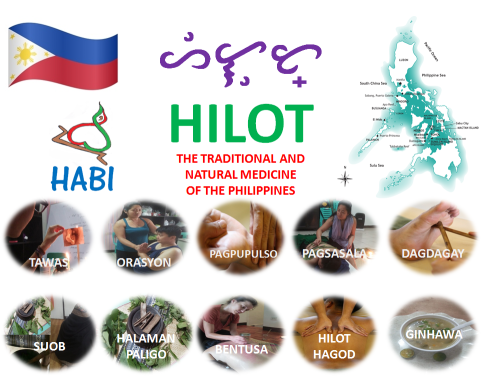 In Promoting Hilot as the Philippine Traditional and Natural Medicine, we must be reminded that our Country is an Archipelago that is composed of 1,107 islands that been inhabited by almost more than 175 ethnolinguistic tribes. From these Tribes, we will find a diverse culture and tradition; at the same time methods of healing that we now call as Hilot. Modern Medicine arrived to our country during the Colonisation of Spain by the 1600’s to 1800’s. Prior to their arrival, the pre-colonial Filipino’s have our own medicine and as per record shows from the 17th to 18th centuries, the state-of-the-art medical and pharmaceutical science was developed by the Spanish Friars based on the system of healthcare provided by the Pre colonial practitioners of Medicine and Health Care which is the Babaylan.
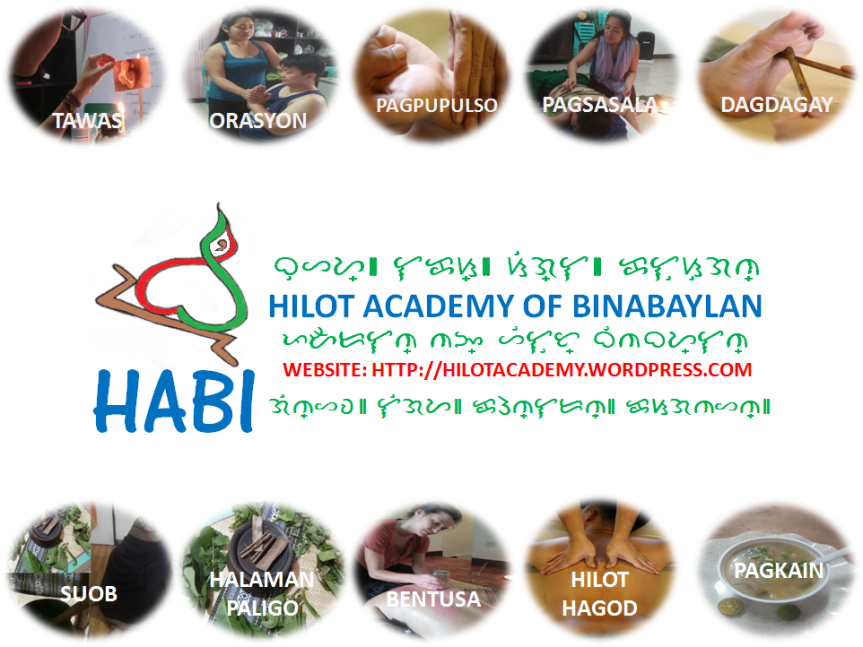


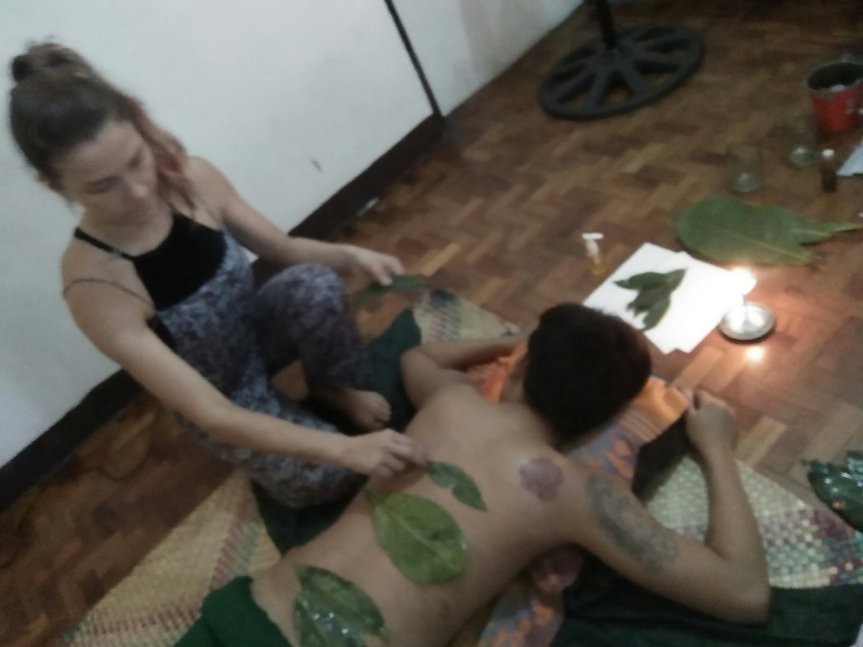


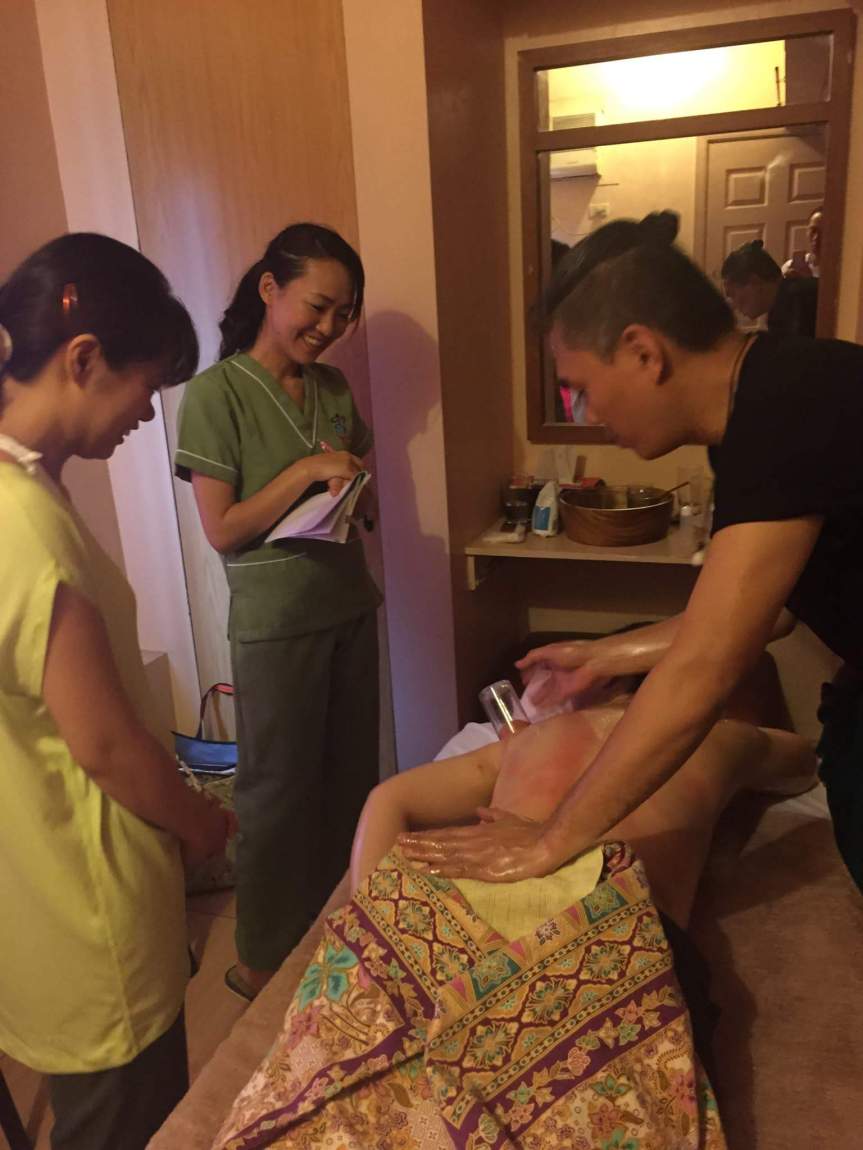
 As per WHO definition, we in the academy advocates that Hilot qualifies to be the Philippines Traditional Medicine as it qualifies World Health Organization definition of Traditional Medicine being used in maintenance of health as well as in prevention, diagnosis, improvement or treatment of physical and mental illness.
 Hilot Academy of Binabaylan
You must be logged in to post a comment.