Introduction
In today’s fast-paced world, people increasingly seek ways to restore balance, relieve stress, and maintain overall health. Two common approaches to bodywork and healing are modern spa massage and the traditional Filipino practice of Hilot Binabaylan. While both involve touch and therapeutic intent, they differ profoundly in philosophy, process, and impact.
This article explores these differences and highlights why Indigenous Filipino healing arts, particularly Hilot Binabaylan, offer a deeper and more holistic pathway toward optimal health and wellness.
Understanding the Two Systems
Spa Massage
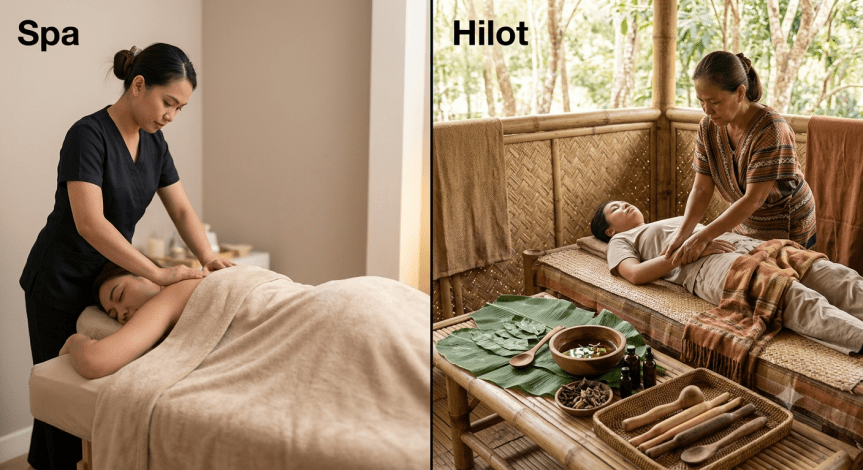
Spa massage is part of the global wellness industry. It is:
- Client-driven (the client chooses the service)
- Designed primarily for relaxation, stress relief, and muscle tension release
- Standardized and often commercialized
- Focused mainly on the physical body
It operates within a service model: the client pays for a predefined experience.
Hilot Binabaylan Treatment
Hilot Binabaylan is an indigenous Filipino system of healing rooted in ancestral knowledge and spiritual tradition.
It is:
- Healer-guided (the Manghihilot diagnoses and prescribes treatment)
- Holistic, addressing body, mind, energy, spirit, and environment
- Ritual-based and culturally grounded
- A sacred encounter, not merely a service
It operates within a healing relationship, where the Manghihilot serves as a mediator of balance and harmony.
Key Differences in Practice
1. Decision-Making and Authority
| Spa Massage | Hilot Binabaylan |
|---|---|
| Client chooses treatment | Manghihilot determines treatment after diagnosis |
| Preference-based | Condition-based |
Insight:
Hilot recognizes that the body’s needs are not always consciously known by the client. Healing requires discernment, not preference.
2. Assessment and Diagnosis
Spa Massage:
- Brief consultation
- Focus on pain areas or desired pressure
Hilot Binabaylan:
- Comprehensive diagnostic system:
- Pasubay (Finger Alignment)
- Tudluan (Poking Assessment)
- Pulse Reading
- Sensory observation (5 senses)
- Energetic, physical, and intuitive evaluation
Insight:
Hilot treats the root cause, not just the symptoms—bridging physical and energetic imbalances.
3. Preparation and Cleansing
Spa Massage:
- Optional shower or foot soak
- Focus on hygiene and comfort
Hilot Binabaylan:
- Ritual cleansing is essential:
- Foot cleansing (spiritual grounding and purification)
- Punas (wiping away negative energy)
- Suob (herbal steaming)
- Paligo with hilod (deep cleansing)
Insight:
Hilot acknowledges that illness may arise from energetic and environmental impurities, not just physical strain.
4. Treatment Approach
Spa Massage:
- Uses a single modality (e.g., Swedish, deep tissue)
- Focus on muscle relaxation
Hilot Binabaylan:
- Multi-layered approach based on diagnosis:
- Pagsasala (leaf scanning)
- Bentusa (cupping)
- Dagdagay (pressure stick therapy)
- Hilot masahe (manual manipulation)
Insight:
Hilot is adaptive and integrative, addressing multiple dimensions of imbalance simultaneously.
5. Role of the Body and Clothing
Spa Massage:
- Often requires partial undressing
- Direct skin contact is standard
Hilot Binabaylan:
- Can be performed with clothing
- Works through energy pathways and body awareness
- Often begins in supine position (face up)
Insight:
Hilot affirms that healing is not dependent on exposure of the body, but on alignment and flow.
6. Spiritual and Cultural Dimension
Spa Massage:
- Secular, commercial environment
- Focus on ambiance and comfort
Hilot Binabaylan:
- Sacred healing space
- May include:
- Prayer or invocation
- Connection to Diwata and ancestral guidance
- Respect for nature and elements
Insight:
Hilot restores the sacred relationship between human, nature, and spirit, often missing in modern wellness practices.
7. Aftercare and Integration
Spa Massage:
- Water or tea
- Minimal follow-up
Hilot Binabaylan:
- Herbal tea and nourishment
- Home care recommendations
- Follow-up sessions
Insight:
Hilot is not a one-time relief—it is part of a continuing journey toward balance and transformation.
Why Hilot Binabaylan is Essential for Optimal Health and Wellness
1. Holistic Healing
Hilot addresses:
- Physical pain
- Emotional stress
- Energetic imbalance
- Spiritual disconnection
This leads to deeper and longer-lasting healing.
2. Preventive Care
Through early detection via Pasubay and pulse reading, Hilot can:
- Identify imbalance before it becomes illness
- Restore flow and harmony proactively
3. Cultural Identity and Ancestral Connection
Hilot reconnects individuals to:
- Indigenous Filipino knowledge
- Ancestral healing traditions
- Cultural identity and pride
Healing becomes not only personal, but cultural restoration.
4. Energy Awareness and Balance
Unlike spa massage, Hilot recognizes:
- Lamig (cold imbalance)
- Bara (blockage)
- Disruptions in life force (UliRat)
This expands healing beyond anatomy into vital energy systems.
5. Sacredness of Healing Space
Hilot transforms treatment into a:
- Ritual of purification
- Space of transformation
- Act of reverence for life
Conclusion
While spa massage provides comfort and temporary relief, Hilot Binabaylan offers a more profound and transformative healing experience rooted in Indigenous Filipino wisdom.
- Spa massage relaxes the body
- Hilot Binabaylan restores the whole being
In reclaiming and practicing Hilot, we are not only healing individuals—we are:
- Reviving ancestral knowledge
- Strengthening cultural identity
- Re-establishing harmony between humans, nature, and the unseen
Final Reflection
In the language of healing:
- Spa asks: “What feels good right now?”
- Hilot asks: “What must be restored for you to be whole?”
 Hilot Academy of Binabaylan