Understanding the Seasons and Health Risks During Habagat in the Philippines

The Philippines, a tropical archipelago, experiences only two distinct seasons—the Dry Season and the Wet Season—unlike countries above and below the equator that enjoy four.

  • Dry Season: November to May
  • Wet Season: June to October

These seasons are largely influenced by monsoon winds:

  • Amihan (Northeast Monsoon): Brings cooler air and less rainfall, typically from November to February.
  • Habagat (Southwest Monsoon): Brings warm, moist air and heavy rains, usually from June to October.

You might notice that March to May isn’t covered by either monsoon. This period is known as the Inter-Monsoon Period, which marks the Philippine summer. During this time, another wind system called the Easterlies—part of the global trade wind system—blows from the Pacific Ocean toward the eastern parts of the country, contributing to hot and humid weather.


🌧️ What Happens During the Habagat Season?

As of this writing, we are in the Habagat season, when typhoons are more frequent. The wind blows from the southwest to the northeast, carrying warm, moist air from the Indian Ocean and the South China Sea. This results in:

  • Heavy and frequent rainfall
  • Thunderstorms and typhoons
  • High humidity and cloudy skies
  • Flooding, landslides, and increasingly, storm surges

🩺 Common Health Risks During Habagat

The wet conditions during the Habagat season create an environment that fosters several illnesses. Here are the most common health risks:

🦟 1. Dengue Fever

  • Cause: Mosquito bites (Aedes aegypti)
  • Why it spreads: Stagnant water from floods becomes breeding grounds for mosquitoes
  • Symptoms: High fever, rash, muscle and joint pain, bleeding

💧 2. Waterborne Diseases

Caused by contaminated water due to flooding and poor sanitation:

  • Cholera: Severe diarrhea and dehydration
  • Hepatitis A: Jaundice, fever, abdominal pain
  • Typhoid Fever: High fever, weakness, stomach pain
  • Prevention: Boil drinking water, maintain proper hygiene, and dispose of waste properly

🐀 3. Leptospirosis

  • Cause: Contact with floodwater contaminated by rat urine
  • Symptoms: Fever, muscle pain, vomiting; severe cases may lead to kidney or liver damage
  • Prevention: Avoid wading in floodwaters; wear protective boots if necessary

🤧 4. Influenza-like Illnesses

  • Cause: Viral infections spread in crowded, damp environments
  • Symptoms: Fever, cough, sore throat, body aches
  • Prevention: Practice good hygiene, avoid crowded places, and maintain proper nutrition

Stay safe and informed during the Habagat season. Understanding the weather patterns and health risks can help you prepare and protect yourself and your family.

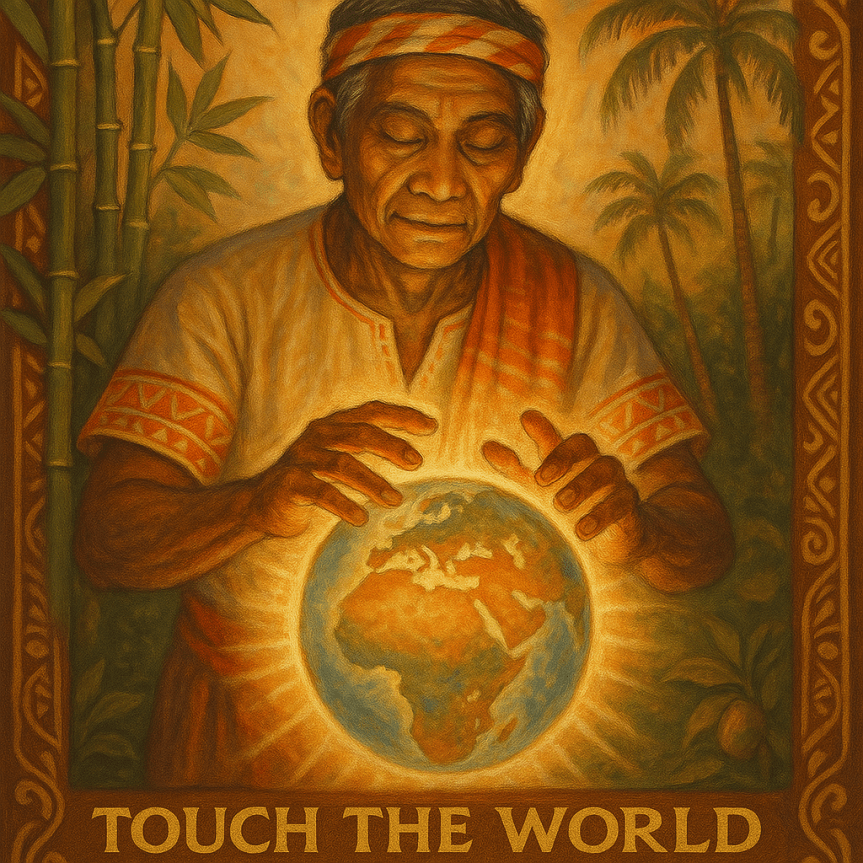
TOUCH THE WORLD WITH HILOT

When we start Hilot Academy of Binabaylan on 2016, I know from that time that our Hilot will be different from what the people know about it and even on how the Philippine Government promote it to the Public. I would say that our Hilot reflects the vision of my Teacher, Dr. Rueben M. Galang Jr., MD who is the founder of the School of Alternative Medicine at St. Francis Divine College in Novaliches, Queson City that he says:

The power of Health to the hands of the People and one manghihilot in every Filipino Home.

In the Philippines, we have approximately 116.79 million as our total population this 2025 and if the average household compose of 4 to 5 persons, then we will have approximately 28.5 million families. And aside from the Philippines Filipino can also be found in the United States of America, which according to the U.S. Census Bureau, there are approximately 4.45 Million Filipinos living in USA especially in:

  • California that has 1,705,090 Filipinos
  • Hawaii that has 369,479 Filipinos
  • Texas that has 231,992 Filipinos
  • Washington that has 194,965 Filipinos
  • Nevada that has 184,225 Filipinos
  • Florida that has 178,012 Filipinos
  • Illinois that has 174,442 Filipinos
  • New York that has 160,566 Filipinos
  • New Jersey that has 152, 507 Filipinos
  • Virginia that has 119,497 Filipinos

Though this map only shows the number of Filipino that can be found in the United States of America, this will also serve as our road map in reaching out to our Kababayan in remembering our Indigenous Healing Arts and Science. Mostly Filipinos in United States of America are immigrants and either 2nd to 3rd Generation Filipino American.

Next to the United States of America, there are also large Filipino Community that can be found in the Kingdom of Saudi Arabia mostly Overseas Filipino Worker that works in Construction Firm, Health Care and House Hold Services. In general, there are 898,014 Filipinos in the entire kingdom that can be distributed on the following provinces:

  • Riyadh there are approximately 250,000-300,000 Filipinos
  • Jeddah there are approximately 150,000 – 200,000 Filipinos
  • Al Kobar and Dammam (Eastern Province) there are approximately 120,000- 150,000 Filipinos
  • Mecca and Medina there are approximately 50,000 – 70,000 Filipinos

Filipino workers in Saudi Arabia are increasingly diversified, with many now employed in private sector jobs, including healthcare, education, retail, and even small business ownership.

Next will be in Canada which many Filipinos have Migrated for permanent residency, work and Education. It is estimated that there are around 1 million Filipino migrated in Canada which is shown below:

  • Ontario: There are 363,655 Filipinos
  • British Columbia: There are 216,710 Filipinos
  • Alberta: There are 174,280 Filipinos
  • Manitoba: There are 94, 320 Filipinos
  • Saskatchewan: There are 43,760 Filipinos
  • Quebec: There are 44,880 Filipinos
  • Nova Scotia: There are 6,615 Filipinos
  • New Brunswick: There are 5,190 Filipinos
  • Newfoundland and Labrador: There are 2,265 Filipinos
  • Yukon: There are 1,945 Filipinos
  • Northwest Territories: There are 1,665 Filipinos
  • Prince Eduard Islands: There are 1,760 Filipinos
  • Nunavut: There are 310 Filipinos

Fourth in our list is the United Arab Emirates where there are significant numbers of Overseas Filipino Workers which approximately in 700,000 making up 6.8% of the country’s population.

  • In Dubai, there are already 450,000 Filipinos which roughly accounts to 21.3% of Dubai’s population. Filipinos here work in hospitality, healthcare, retail, construction, and other service industries.
  • Abu Dhabi: Estimated ~150,000 Many are employed in government services, oil and gas, and education.
  • Sharjah, Ajman, and other emirates: ~100,000 combined These areas host Filipinos working in manufacturing, logistics, and domestic services.

Next is in Japan, where Filipinos work in caregiving, entertainment and technical fields. There are many Filipino Japanese Families. Approximately there are 341,518 Filipinos Living in Japan.

As shown, the largest Filipino communities are in:

  • Tokyo (~72,000)
  • Aichi (~42,000)
  • Kanagawa (~39,000)
  • Osaka (~36,000)
  • Saitama (~31,000)

Nest to Japan is Australia which has a growing population of Filipino, especially in Sydney and Melbourne due to skilled migration and education. Approximately 361,860 Filipino-born people living in Australia, making them the fifth-largest migrant community in the country. This represents about 1.4% of Australia’s total population.

State/TerritoryFilipino-born Population
New South Wales (NSW)98,510
Victoria (VIC)75,480
Queensland (QLD)60,360
Western Australia (WA)35,120
South Australia (SA)18,740
Australian Capital Territory (ACT)4,880
Northern Territory (NT)2,800
Tasmania (TAS)1,700

After Australia we are also in the United Kingdom on which Filipinos work in healthcare, especially as nurses and caregivers. As of 2025, there are approximately 165,000 to 200,000 Filipinos living in the United Kingdom 

1. This includes both:

  • Philippines-born residents: Around 164,962 as of the 2021/22 census 1
  • Ethnic Filipinos (including those born in the UK or with Filipino ancestry): Estimated to be over 200,000

🇬🇧 Filipino Population by Region

Here’s a breakdown based on available data:

RegionFilipino Population
England149,474
Scotland6,245
Wales5,542
Northern Ireland3,701

🏙️ Areas with Significant Filipino Communities

  • London: Home to about 40% of the UK’s Filipino population
  • English Midlands
  • North West England
  • South East England

Filipinos in the UK are active in sectors such as healthcare (especially nursing), hospitality, education, and domestic services.

HONGKONG

As of January 2024, there are approximately 201,104 Filipinos living in Hong Kong, most of whom are employed as foreign domestic helpers (FDHs) 

1. This makes Filipinos the largest ethnic minority in Hong Kong, comprising 55.6% of the total FDH population.

🇭🇰 Filipino Presence in Hong Kong

  • Primary Occupation: Domestic work, caregiving, hospitality, and retail
  • Community Hubs: Central (especially around Statue Square), Victoria Park, and areas in Kowloon and the New Territories
  • Support Services: Numerous Filipino churches, consular services, and community organizations are active in Hong Kong

SINGAPORE

As of 2025, there are an estimated over 220,000 Filipinos living in Singapore, based on growth trends from previous years 

1. This includes:

  • Work permit holders (majority)
  • Permanent residents
  • Singapore citizens of Filipino origin (though not officially counted separately)

🇸🇬 Filipino Presence in Singapore

  • Occupations: Domestic work, healthcare, education, IT, finance, hospitality, and retail
  • Community hubs: Lucky Plaza (Orchard Road), East Coast, and areas near churches and consular services
  • Cultural footprint: Active Filipino churches, community groups, and events like Independence Day celebrations

SOUTH KOREA

As of 2025, there are approximately 70,000 Filipinos living in South Korea 

1. This includes:

  • Permanent residents: Around 6,000
  • Undocumented individuals: Estimated 14,000–15,000
  • Temporary workers and students: The majority of the population

🇰🇷 Filipino Communities in South Korea

Filipinos are primarily concentrated in:

  • Seoul – Especially in areas like Hyehwa-dong and Dongsung-dong in Jongno-gu
  • Busan – A growing community of workers and students
  • Incheon, Daegu, and Daejeon – Smaller but active Filipino populations

Filipinos in South Korea are engaged in:

  • Manufacturing and industrial work
  • Healthcare and caregiving
  • Education and entertainment
  • Religious and community services

ITALY

As of 2025, there are approximately 165,000 Filipinos living in Italy, making them one of the largest non-EU foreign communities in the country 

1.

🇮🇹 Filipino Population by Region

According to the Italian Ministry of Labour and Social Policies:

  • Lombardy: ~34.8% of the Filipino population (~57,420 people)
  • Lazio: ~27.4% (~45,210 people), including Rome
  • Emilia-Romagna: ~8.6% (~14,190 people)
  • Other regions include Tuscany, Veneto, and Piedmont with smaller but active Filipino communities.

Filipinos in Italy are primarily employed in:

  • Domestic work and caregiving
  • Hospitality and services
  • Healthcare and education

SPAIN

As of 2025, there are approximately 200,000 Filipinos living in Spain 

1. This includes:

  • Filipino citizens: Around 40,000 officially registered in municipal records
  • Filipino-born residents: Estimated 57,498
  • Spanish citizens of Filipino ancestry: Making up the rest of the estimated total

🇪🇸 Filipino Population by Region

Here’s a breakdown of Filipino citizens by region:

RegionFilipino Population
Community of Madrid17,471 (43.39%)
Catalonia12,239 (30.40%)
Andalusia3,372 (8.37%)
Balearic Islands2,357 (5.85%)
Canary Islands1,782 (4.43%)
Valencian Community1,011 (2.51%)

Filipinos in Spain are active in sectors such as domestic work, caregiving, hospitality, education, and healthcare, and many are long-term residents or descendants of earlier migrants due to historical ties between the Philippines and Spain.

Through these, we envision to reach out all Filipino in Diaspora and call them back to walk to the Path of our Race on which Hilot can be a doorway in reconnecting them back to their ancestral root by embracing our own heritage and culture.

We are now Part of Wellness Tourism Association of the Philippines

Greetings Mga Kalahi and KaHabi!

Happy New Year to all!

Year 2024 has been a Great and Amazing Year for us here at Luntiang Aghama Natural Divine Arts Shrine of Healing Inc. as well as at Hilot Academy of Binabaylan as we have produced 34 new Ordained Hilot Binabaylan that will administer our Indigenous Traditional Medicine in their country of residence. Along side with that we have also administered Hilot all year through to our Neighboring community in Brgy. Francisco Homes Narra that some came from different barangay and cities.

On 2024 we also have help to create a Curriculum Standards for an Organization Filipino Bone Setter that we pray they could be approved either by TESDA or Philippine Institute of Traditional Alternative Health Care.

And as we move along to our Journey in 2024, we have been an official Member of Wellness Tourism Association of the Philippines or WeTap since November 18, 2024 and just today as of writing this, I also send my message for WeTap as I read:

A Happy New Year to everyone.

I am Apu Adman Aghama or Rev. Rolando Gomez Comon, the Chief Binabaylan of Luntiang Aghama Natural Divine Arts Shrine of Healing Inc. located in the City of San Jose Del Monte, Province of Bulacan and serving the community of Brgy. Francisco Homes Narra and neighboring Barangays.

First of all, I am happy that your humble servant has been given the opportunity to be one with the Purpose of the Wellness Tourism Association of the Philippines Inc. for which I am also very grateful to Ms. Cathy Turvil, Sir Atho Dela Cruz and Sir Ryan Kenneth Escubido.

To be honest, when I was invited to the WeTap Viber group, I was shy and embarrassed because the people in the group were big names in the Wellness Tourism Industry. I thought that I was not suitable to be part of this organization. So I examined myself to see if I was worthy of being part of WeTap. I studied whether the Purpose of WeTap is suitable for my Goals to introduce Hilot to the whole World.

So now, I remain in the Association and want to share with you my deep gratitude for the year 2024 and my visions that I should walk with you for the year 2025.

My work in Filipino Traditional Medicine began at the beginning of the New Century and this was in the year 2000. I had formal studies at St. Francis Divine College and had a Diploma on Alternative Medicine. And in 2008 I became an Accredited Trainer and Assessor of Hilot Wellness and Massage Therapy NC2. During those same times, we established the Philippine Certified Wellness Therapist Association with Ms. Grace Sanico, my former boss, in 2009. Meanwhile, from 2010 to 2012, I was a member of the Philippine Wellness and Spa Association where I first met Ms. Cathy Turvil. I was also the Training Director of the Philippine Japan Hilot Association from 2011 to 2013 until 2016 when I founded the Hilot Academy of Binabaylan as the Educational Ministry of Luntiang Aghama Natural Divine Arts Shrine of Healing Inc.

The Hilot Academy of Binabaylan is a small school without a roof. The students in our school are our compatriots who were born abroad who want to know and learn again the indigenous healing methods of our Ancestors. From 2016 to 2024 we have 81 graduates of training and are serving as Hilot Binabaylan in their respective Countries of Residence and these are the following Countries: United States of America, Canada, Chile, London, Italy, France, Austria, Spain, Japan and Australia.

When we started the Hilot Academy, it seemed that our school served as a bridge and a window of history that our school became a living Museum that they not only saw and knew but also experienced through the implementation of the wisdom of our Ancestors in medicine.

It is true that the Purpose of every treatment we perform is to have Wellness. And this comfort is for everyone, not only for the wealthy but also for the Hikahos and the Poor. This is also the work of Luntiang Aghama, we extend health care to those who cannot afford to receive treatment through modern methods and also serve as a bridge to introduce modern medicine to people who are too poor to go to our Barangay Health Centers.

In the year 2024, in the month of February, I met with Nawa Wellness of Calatagan, Batanggas to consult with your servant on how to align their Wellness Services with Indigenous methods. At first, I rejected his approach and insisted that my services were only for the poor. But after praying about the situation, I realized that comfort is for everyone. This means that it is not only for the poor but it can also be experienced by the rich. Thus, the relationship between Hilot Academy and Nawa Wellness was formed. Although Nawa Wellness has its own method of restoring Ginhawa, we still share the method of Pasubay or Diagnostic methods where they can better identify the needs of their guests who will stay at their resting place.

I also see the efforts of our friend Sir Atho Dela Cruz who has set out to develop Hilot knowledge by creating modern methods of treatment based on the indigenous practices of our ancestors, so I greatly admire him in these matters.

And in response, we will try to build a bridge from indigenous methods to modern treatment through integration. In the year 2025, I will strive as a Hilot educator to create a Curriculum that will integrate Hilot into the National Health Care Delivery System where our manghihilot will be considered Professional and not just as a Blue Collar Job. I envision that our Manghihilot can have a Doctor Title like Acupuncturists, Chiropractors, Homeopaths, and Naturopaths. This will only happen if we level it according to the standards of the Philippine Qualification F ramework of TESDA, DepEd, CHED, PRC and DOLE which is the National Coordinating Council which is according to the Law implementing Rules and Regulation of Republic Act 8423 or Philippine Traditional Alternative Medicine Act of 1997 which states that:

The Institute in close coordination with Technical Education and Skills Development Authority (TESDA), Department of Education, Culture and Sports (DECS), Commission on Higher Education (CHED), Philippine Council for Health Research and Development (PCHRD) and others shall formulate guidelines, rules and regulations for the development of learning/training materials for short courses as well as for graduate and post-graduate courses. It shall develop Human Resource Development (HRD) Programs for medical and nonmedical professionals with appropriate public and private institutions particularly, Academic Centers of Excellence.

Currently, only short courses are given National Certification by TESDA and PITAHC and there is no Graduate and Post Graduate Course yet in the study and practice of Hilot. Although, your servant helped to have a Diploma Course of Filipino Indigenous Medicine or Hilot Therapy in London through ThinkTreeHub; it is still better that the study of Hilot originates in our Country. This is also the thinking of my former students why they traveled from the west back here to our beloved motherland. As is our Prayer to our Ancestors, that they call upon each one they have chosen to promote and continue the wisdom and introduce indigenous Filipino medicine to the country and town where they are and bring honor to our beloved country of the Philippines.- End of my Message for WeTap

And as part of our continues effort in promoting Filipino Indigenous Traditional Medicine which is Hilot, I have dismissed our 2025 Hilot Binabaylan Curriculum that will last for 16 days for non-medical/healthcare practitioners and 9 days for Health Care Professionals. And we have resolved that the Administration of Hilot Academy of Binabaylan will now be under Bahay SiAdTala Binabaylan Inc. which serves our Training Venue Host since 2023.All Changes and updates regarding policy of Hilot Binabaylan Training are now subject to the Administration of Bahay SiAdTala Binabaylan Inc. that includes the Certification of Students. Though in terms of Ordination, instead of Luntiang Aghama Natural Divine Arts Shrine of Healing Inc. it will now go to the Templong Anituhan Inc. which is an upgrade of Luntiang Aghama in the fulfillment of our promise to the Ancestors in Reviving the Philippine Indigenous Spiritual beliefs and practices that includes Hilot Binabaylan.

Regarding our Training Program in Hilot Binabaylan, we are still on process of making a proposal to maintain the 9 days training but will add days for internship which will enable our students to apply in real situation what they have learned during the 9 days. At the same time, this will also provide them experience and compliance to PITAHC Policy, which they will still be supervised by Certified Hilot Binabaylan Mentor or Tanglaw.

Our vision to our Hilot Binabaylan is that their knowledge, skills, abilities and attitude may be integrated into the National Health Care Delivery System that will not only end up working at Spa Centers but also may have an employment opportunities at Government Health Units such as in Barangay Health Centers, Municipal/City Health Units, Provincial and Regional Health Units, Government Hospitals and even Private Hospitals and Clinics.

We are looking forward that we could create a means that our practitioners may claim Liability insurances from any Health Insurance company and that our Manghihilot may also have the benefits that other workers obtain from the Government such as Social Security and personal Health Insurance. Having these benefits that our Manghihilot will receive, our Children and grand children will have a desire to become a Manghihilot in the Future. For this to happen, we need to rise now the Standards in the Practice of Hilot through Training. This is why we are considering including the study of Human Anatomy and Patho- Physiology, Fundamentals of Health Care, Developmental Psychology, Phyto Pharmacology and other related subjects in the study and training of Hilot.

We also envision to widen the Job opportunities of our Hilot Binabaylan graduates that will not only limit them to work in a Spa Industry and by establishing their own Hilot Treatment/ Healing Centers but also to be employed in Government Health Care Facilities.

Our Hilot Binabaylan can also be employed as a Researcher that can be part of Barangay Health Center in knowing the health status of the constituents of the specific barangay. Aside from knowing the Health Care Needs of specific families in the Barangay, our Manghihilot can also make documentation of every plant, herbs and trees that grows endemically in the specific barangay they are serving. Upon documentation, they will coordinate to PITAHC and submit what they have documented so that they could conduct intensive study in determining the medicinal properties of the plant/herbs/trees.

When the medicinal properties are properly determined, the Manghihilot now can cultivate the plants and may manufacture it as tea, oil, ointment and other herbal products which then can be given freely to their constituents or sell it in a lower cost which is affordable and cost effective.

We also envision that our Manghihilot should be the expert in terms of Herbal Medicine and other herb related food supplements.

These visions that we have on the practice of Manghihilot has been declared and keep it our Altar that through the Grace of the Divine and the Ancestors it may manifest in time.
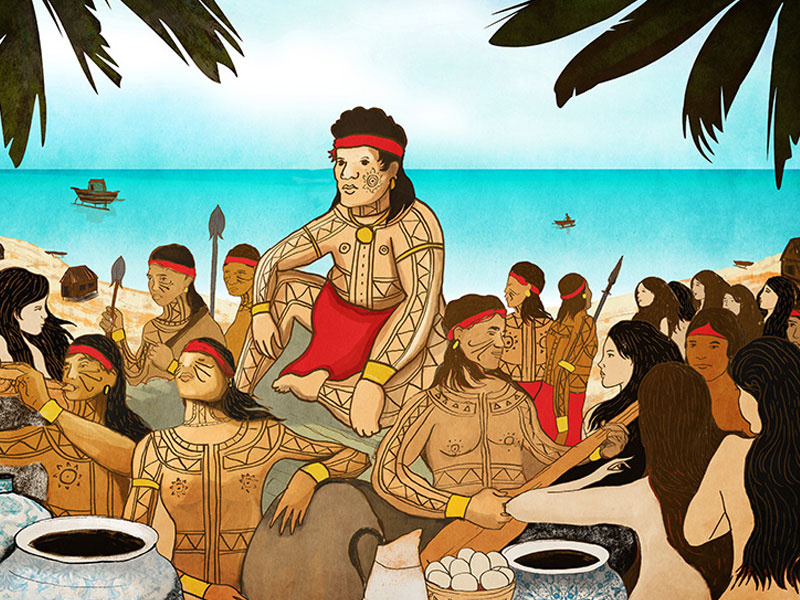
November as Philippine Traditional Health Care Month

image taken from dribbble

Imagine how do we live now if our Ancestors did not know how to care for themselves. Our History as Filipino People does not start from the coming of Spain in our Archipelago. When Ferdinand Magellan arrives, he was welcomed by Rajah Humabon on March 21, 1521. This only signifies that prior to the coming of Spain in our Archipelago, human beings (which is part of our ancestry) already existed in our land. So, imagine at that time, how do the Spanish Colonizer found our Ancestors, how do they look like? and how do they live before they came? Actually, they already have their Civilizations. People know how to wear clothes, they have jewelries and other accessories, they eat and drink. They also have mode of transportation and so as politics and government system. That is why we all know that there is also Lapu Lapu who killed Magellan. But that is different story to tell. What I want to point out here that our ancestors are already Civilized.

Though we may connect the lineage of Rajah Humabon to the 10 Bornean datu who fled and find refuge to our country during the 13th century. But even though these Bornean datu take refuge to our land, they are also welcomed by native inhabitant of our Archipelago which is an Aeta Chieftain named Datu Marikudo. And historically it is known that the Negrito Groups are the first inhabitants of our Archipelago which is now known as the Philippines which can be dated back 47,000 years ago.

And according to archeologist, the first human existed in our Archipelago besides from the Negrito group are the ones that can be found in Callao Cave in Cagayan. Their existence gives us idea on how they live 67,000 years ago. Of course, we do not look like them now, but their wisdom on survival still exists as of this day. And Hilot Academy of Binabaylan, credit our Hilot Healing Modality to them. As the way of Hilot is how to maintain life within our physical body and to keep us safe. Our Work as Manghihilot is not just to heal illnesses and ailments, but also to protect our Physical, Emotional, Mental, Social and Spiritual Body from harm.

And through this, aside from the Historical Evidence of our Ancestral Healing Arts and Science, the month of November has been declared as Traditional and Alternative Health Care Month by the virtue of Republic Act 8423 or the Philippine Traditional Alternative Medicine Act of 1997. and through this, Hilot Academy of Binabaylan will provide a month- long Free Webinar on the Fundamentals of Hilot Practice that will happen on the following dates and the topics to be discussed:

  • November 2, 2024 – Definition, History, Philosophies and Principles of Hlot
  • November 9, 2024- Hilot concept of Life, Health, Illness & Wellness
  • November 16, 2024- Faculties and Aspect of Man
  • November 23, 2024- Traditional Health Care Delivery and Hilot Treatment Methodologies
  • November 30, 2024- Laws, Policies, Standards and regulations on the Practice of Hilot & Hilot Code of Ethics

To those who are interested to attend, kindly fill out the form through the link below. We are going to issue Certificate of Attendance to those who will attend the online class which can be credited to our Alignment Program on becoming a Hilot Binabaylan.

REGISTER NOW

For a limited time only!

Join us in this limited offer at 125 TOWN & COUNTRY DRIVE, DANVILLE, CALIFORNIA, USA

For a limited time, we will be offering 3 Hilot Training Program on August 2024 at Danville Yoga and Wellness Center at Danville, California, USA.

The trainings will be the following:

1. Hilot Daloy: This is a continuing Education Training Program for our Graduates who took the Non Contact Hilot Mind and Spirit Work during the Time of Pandemic on 2020-2022. This offering will provide opportunity to our Magaanito/Pangutanahan/Pangatauhan to earn their Full Hilot Binabaylan Status by enrolling in this 5 days Training Program at Danville Yoga and Wellness Center.

2. Hilot Tanglaw: Your growth as practicing Hilot Binabaylan is important that we create this continuing education program for all of our Practitioners who completed our Hilot Binabaylan Training Program. This program will certify you to be an accredited Mentor on selected Hilot Binabaylan Knowledge, Skills and Abilities or the Full Hilot Binabaylan Competencies. This will be a 10 days training.

3. Hilot Binabaylan: This is an entry level program that will ordain an Individual to administer Philippine Indigenous Traditional Health Care, either privately to your Family or Publicly to your community. This is an 8 days Training Program.

To register kindly scan the QR Code.