In a world where healing systems are often traced to written texts and institutional traditions, the story of Filipino healing begins much earlier—far beyond recorded history, deep within the consciousness of our earliest ancestors.
Today, in the year 2026, we stand in what may be understood as:
Year 50,026 of Filipino Healing Tradition
—a lineage that began with the first inhabitants of our land and continues to live through us.
This is not merely history.
This is inheritance.
The Beginning: Healing as Instinct (Tabon Era, ~48,000 BCE)
The earliest known humans in the Philippines, discovered in Tabon Cave, Palawan, lived around 48,000 BCE.
They left no written records.
No carvings of rituals.
No identified healers.
And yet, they survived.
From this alone, we understand something essential:
They knew how to heal.
Their healing was not yet called medicine. It was:
- instinctive
- embodied
- rooted in nature
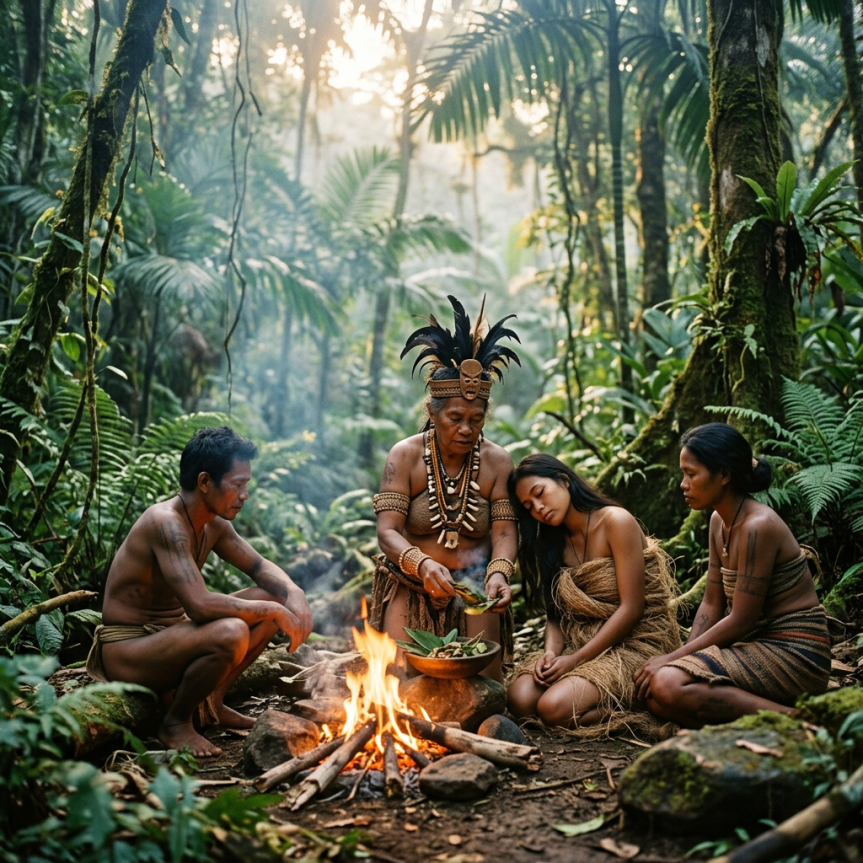
They likely:
- treated wounds using plants, ash, and natural materials
- cared for one another through touch and presence
- learned through observation of nature and experience
This was the first form of Filipino healing:
Healing as survival.
Healing as intuition.
Healing as part of life itself.
The Emergence of Ritual Healing (~10,000–5,000 BCE)
As communities grew and knowledge passed through generations, healing evolved.
The appearance of burial practices in the Philippines shows a shift:
- the dead were handled with care
- bodies were positioned intentionally
- there was a belief in continuity beyond death
These are not just cultural acts—they are healing responses to life and loss.
Healing became ritual.
Care was no longer only for the living body, but also for:
- the spirit
- the departing soul
- the balance between worlds
Healing as Sacred Expression (Angono Petroglyphs, ~3000 BCE)
The Angono Petroglyphs in Rizal mark a turning point.
Here, for the first time, Filipino spirituality and healing were expressed in symbol.
The carvings suggest:
- ritual actions
- communal gatherings
- symbolic representations of life and energy
Some interpretations connect them to:
- healing rites
- sympathetic magic
- spiritual invocation
Healing was no longer only practiced—it was expressed and shared.
Understanding the Soul: The Manunggul Jar (~900–700 BCE)
The Manunggul Jar from Palawan reveals one of the most profound aspects of Filipino healing:
- a belief in the soul
- a journey beyond death
- the transition between worlds
The image of two figures in a boat represents:
- the soul being guided to the afterlife
This signifies a deeper development:
Healing now includes understanding the journey of the spirit.
Healing becomes:
- physical
- emotional
- spiritual
Honoring Identity: The Maitum Jars (~200 BCE – 300 CE)
The Maitum Anthropomorphic Burial Jars of Mindanao show:
- human faces and identities preserved in burial vessels
- recognition of individuality even after death
This teaches us:
Healing includes remembrance.
The ancestors were not forgotten.
They were honored, preserved, and spiritually present.
Movement and Balance: The Balangay Tradition (~300 CE onward)
Ancient balangay boats symbolize more than travel—they represent:
- life as a journey
- movement between physical and spiritual realms
- connection between communities
Some were even ritually buried, showing that:
Even movement, transition, and journey were part of healing and sacred life.
The Rise of Indigenous Healing Traditions
From these foundations emerged a rich and complex system:
- Hilot — body-based healing and energy balance
- Binabaylan / Babaylan — spiritual healers and mediators
- Anito — ancestral spirits
- Diwata — divine beings of nature
Here, healing became fully integrated:
✅ Body
✅ Mind
✅ Spirit
✅ Community
✅ Nature
This is a complete healing system—developed long before colonization
50,026 Years of Living Healing
From Tabon to the present:
- Healing began as instinct
- Became ritual
- Became expression
- Became understanding
- Became system
- And now becomes practice once again
We are not reviving something lost.
We are continuing something that never ended.
Hilot Academy of Binabaylan: The Healing Continuum Today
Today, Hilot Academy of Binabaylan stands not as a new creation—but as a living continuation.
It carries:
- the instinct of Tabon
- the ritual of early ancestors
- the symbols of Angono
- the soul wisdom of Manunggul
- the ancestral connection of Maitum
- the journey of the Balangay
Through:
- Hilot
- ritual practice
- spiritual teaching
- community healing
The 50,026-year lineage lives on.
A Call to Reclaim Our Healing Heritage
This is your inheritance.
Not something foreign.
Not something borrowed.
But something deeply Filipino.The ability to heal has always been within us.
🔥 Your Invitation
🌿 Reconnect
Learn from your ancestors, your body, and your land.
🤲 Practice
Begin with simple acts:
- mindful touch
- gratitude to nature
- awareness of your energy
🕯️ Remember
Honor those who came before you.
🌊 Walk the Path
Join the living tradition.
Final Reflection
For 50,026 years, the Filipino people have been healing—
through touch, through spirit, through community, and through the sacred connection to life itself.
Now, that lineage continues through you.
👉 Be part of the living tradition.
👉 Learn, heal, and walk with us at Hilot Academy of Binabaylan.

