
Yesterday April 24,2024-me and Lakay went to Rotary Club District 3780 at Quezon City to meet with the Filipino Bone Setters Inc. 2 of its Board of Directors which is Mr. Gary O. Trinidad and Ms. Ailyn Mea P. Bactol asking me if our Training Program is accredited by PITAHC or Philippine Institute of Traditional Alternative Health Care which is an attach agency of the Philippine Department of Health, which obviously I answer yes as we are the one who made Curriculum for Hilot Philippines Development Center with the Former Secretary of Health, Dr. Jaime Galvez Tan through the initiative the former Secretary of Tourism, Dr. Mina Gabor.

We have worked together since the time of Pandemic on 2020 and finally, we have completed our work with her in establishing Hilot Philippines Development Center upon receiving the Certificate of Accreditation and recognized as the very first Hilot School accredited by PITAHC. Though the accreditation process was a long Journey as PITAHC is just new in doing this for Hilot as it requires more work compared to other Traditional Medicine Modality such as on Acupuncture, Chiropractic, Homeopathy and Naturopathy as foreign countries already have standards for accreditation which I think they just applied it in our Country; whereas on the Modality of Hilot, they still have no Idea not until we came in and guide them on the process just only to have the Accreditation for HPDC.
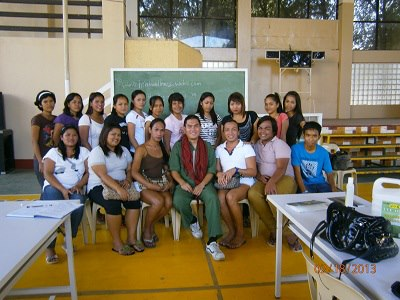
My experience of being a Former TESDA (Technical Education Skills Development Authority)) Accredited & Certified Trainer and Assessor on Hilot Wellness & Massage Therapy have helped me how to create a Curriculum based on the Standards ask by a Governing Agency which I am very grateful that I still carry the knowledge that I acquired from TESDA and become very useful in terms of creating Training programs independently for Hilot Academy of Binabaylan which is an Educational Ministry/Seminary of Luntiang Aghama Natural Divine Arts Shrine of Healing Inc. in reviving and promoting Philippine Indigenous Traditional Healing Arts and Science which is popularly known as Hilot.
In Barangay: The 16th Century Philippine Culture and Society written by William Henry Scott on Page 118 that we have 5 general category in treating a Disease, and they are:
- Massage which was applied for injured or dislocated muscles or applying pressures to nerve centers
- Fumigating or sweating
- prescription of herbal medicine
- Counter Sorcery
- and propitiation of supernatural beings.
With these 5 categories of Treatment, we may see the kind of disease people had during the 16th century which are on the first three treatment modality, it deals with the Physical Illness and the last 2 are Spiritual Illness or Disease. William Henry Scott also mentions about the Mamarukpok which is a masseur that pummeled the back along the area of the spine, which we know now as Bone Setter.
Our History have included the work of Mamarukpok or Bone Setter or now in the 21st century is known as Lagatok as part of the treatment modalities employed by our Ancestors but in this present time is not recognized and included on the Standards and Regulation on the Practice of Hilot by TESDA or even PITAHC-DoH. At this time, this modality of pummeling the back and spine is under the modality of Chiropractic which was developed on September 18, 1895 by Daniel David Palmer at Davenport, Iowa, USA. and on 1990, the first Chiropractic Clinic was established in Metro Manila which is the United Nations Chiropractic Center.
By that time, Bone Setting is considered as Folk Medicine together with Hilot but on 2008, Hilot has been given recognition by TESDA as they see it as employable skills that they created a Training Standard and Curriculum on Hilot as a Wellness Massage on August 29, 2008. under TESDA Board Resolution no. 2008-19 with Qualification code HHCHL208. (I am writing the details here so that, I may not forget).
Though at Philippine Statistic Office in their website we can find the Philippine Standards of Occupation Classification 2012, and there we can find the occupation of Traditional and Complementary Medicine Associate Professionals with Occupational Code Number 3230 which described as:
Traditional and complementary medicine associate professionals prevent, care for and treat human physical and mental illnesses, disorders and injuries using herbal and other therapies based on theories, beliefs and experiences originating in specific cultures.
Their tasks include:
a) examining patients and interviewing them and their families to determine their health status and the nature of physical or mental disorders or illnesses or other ailments;
b) recommending and providing care and treatment for illnesses and other ailments using traditional techniques and medicaments, such as physical manipulation and exercises, blood-letting using natural vessels, and preparations using herbs, plants, insects and animal extracts;
c) providing care and treatment for physical injuries such as setting and healing fractured and dislocated bones using traditional methods of physical manipulation and herbal therapies;
d) advising individuals, families and the community on health, nutrition, hygiene, lifestyle and other issues to maintain or improve health and well-being; and
e) referring patients to, and exchanging information with, other health care providers to ensure comprehensive and continuing care.
Examples of occupations classified here:
- Drugless treatment healer
- Bonesetter
- Faith healer
- “Healer of indigenous people (e.g. Mansi-bok (Ibaloi); Mansip-ok (Kankana-ey) in Cordilleras)”
- Herbalist
- Scraping and cupping therapist
- Village healer
- Witch doctor
Some related occupation classified elsewhere:
Acupressure therapist – 3255
Acupuncturist – 2230
Ayuverdic practitioner – 2230
Chinese herbal medicine practitioner – 2230
Chiropractor – 3259
Homeopath – 2230
Hydrotherapist – 3255
Naturopath – 2230
Osteopath – 3259
Traditional midwife – 3222
Though here, we cannot see at PSOC the name Hilot, but our work can be classified as Indigenous Healer, Village Healer, Herbalist and Witch Doctor. Maybe soon, you will be surprised that Philippine Schools will offer a course on being a Witch Doctor! 😛 Unfortunately, PITAHC and TESDA does not recognize the practice of Bone Setting as part of Hilot Practice even Historically it is part of Hilot Modality.
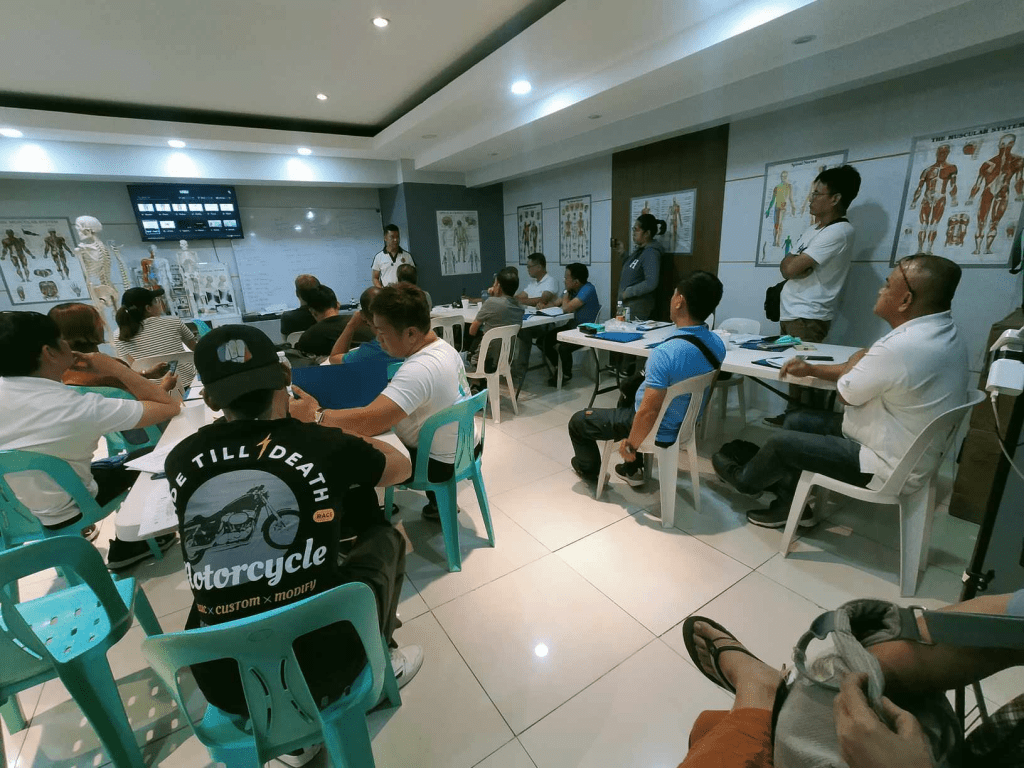
But now as of this writing, I have hope for Filipino Bone Setter Inc. and the practice of Bone Setting in the Philippines can be recognize by the government accrediting body. As the FBS seeks to be regulated for the safety of their patients. But the problem is both Tesda and Pitahc won’t accept their practice as part of Hilot but instead referred them to Chiropractic modality. And to be honest, when I saw them conducting their training, the model is near to the Chiropractic practice. Their teachings were heavily scientific and modern, which is good though I have not heard any indigenous and traditional concept from them except that they desire to preserve the identity of healing modality aligned to our Philippine Culture and Tradition. And also the fact that there are many Bone Setter who call them self as Hilot Lagatok in Social Media that is not licensed and Certified that may bring dishonor to the practice of Hilot.

So as lead advocate of Hilot in the Philippines, I am standing up to help the Filipino Bone Setters Inc. so that they may have their own recognition and be regulated by our government accrediting body for the safety of patients and avoid confusion in terms of the Healing Modality. Though as Hilot Binabaylan, I desire to reclaim back the practice of Mamarukpok or Hilot Lagatok that has been separated to us together with Hilot Paanak or Traditional Birth Attendant that has an occupational code of 3222 acording to this website. https://psa.gov.ph/classification/psoc/unit
So last night, I Assess and evaluated them to confirm their bone setting practice as I ask them the following questions which pertains to the practice of Traditional Bone Setter.
- in accordance to Philippine Culture and Society on 16th Century, the Mamarukpok or Bone Setter of that time do pummel the back and Spine.
- Bone Setter are expected to do Joint Manipulation.
- Reducing Joint Dislocation
- Reset Bone Fracture
- and treat Musculo Skeletal Injuries
Out of 5 questions, they said no to the most important one of the work of Bone Setter which is resetting bone fracture which is quite understandable these days as indeed it requires more of medical attention rather than of primary healthcare. Though this could be work out if we can develop competency that may boost their confidence in performing the task, I believe they could do that as Traditional Bone Setter of Ifugao that is still known up to this date as Mun’apyuh do it.

With that, I drafted for them a Sample Standard that they may use for to update their Curriculum.
Course Title: The Practice of Filipino Bone Setter
Objectives:
- To define the practice of Bone Setting in the Philippines and its history and scope of practice.
- To Identify the Health Benefits of Bone setting and its contraindications.
- To apply the practical knowledge of Human Anatomy and Pathophysiology in the Practice of Bone Setting.
- To Formulate Code of Ethics/conducts on the Practice of Bone Setting in accordance to its Principles and Philosophy.
- To create a therapeutic environment for the Bone Setting Practice & Treatment Session
- To observe the Bone setting Diagnostic procedures prior to the treatment session,
- To conduct pre conditioning warm up to patients prior to the Bone Setting Treatment.
- To apply Bone Setting Treatment Manipulation Techniques to patients.
- To conduct post treatment assessment feedback
- To provide supplementary/self-care treatment for continues improvement of Bone Setting Patients at home.
And through these, Hilot Academy of Binabaylan is looking forward to work collaboratively with Filipino Bone Setters Inc. in reviving our Very own Ancestral Healing Arts and Science. As we bring back practice of Bone Setting in the Philippines to Hilot, I pray that soon we could also bring back the practice of Hilot Paanak or Traditional Birth Attendant to Hilot once more and maintain it firmly into our hands.
 Hilot Academy of Binabaylan