Introduction: Redefining Rehabilitation
In the modern world, rehabilitation is often viewed as a clinical process—a way to fix a broken body or a wayward mind. However, in the heart of Philippine tradition, rehabilitation is restoration. It is the act of bringing a person, a family, or a community back into a state of Harmony (Pagkakaisa) and Balance (Patas).
The Anatomy of Imbalance: Pasmo, Bughat, and Baldao Traditional healing recognizes that “damage” isn’t just physical. Baldao (Ilocano): A physical dislocation that requires the manual “resetting” of the frame. Pasmo: A thermal and energetic imbalance caused by the collision of “hot” and “cold,” often manifesting as tremors or weakness. Bughat/Binat: A spiritual and physical relapse. It is a reminder that the body is a temple that requires “sealing” and respect after a period of opening, such as illness or childbirth.
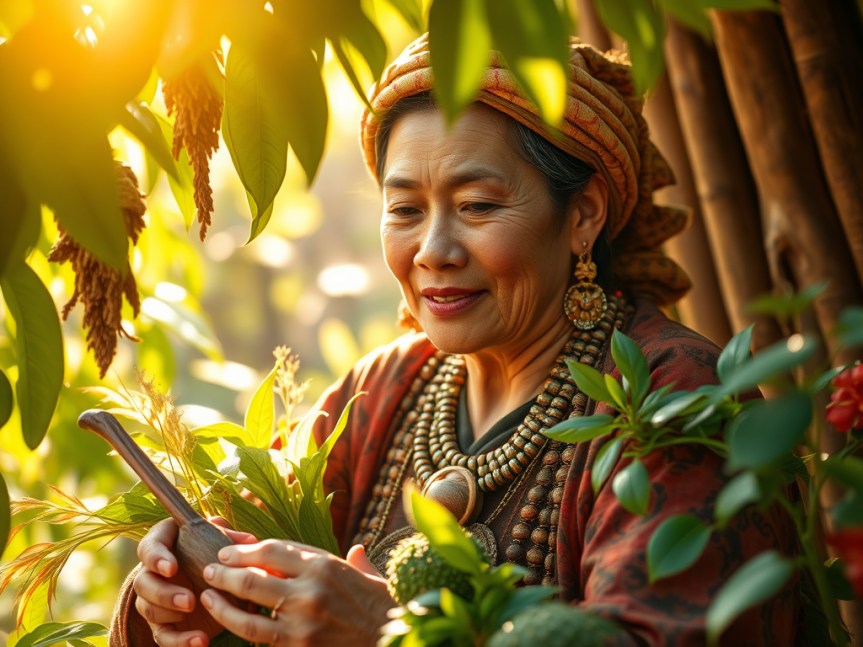
In these cases, the Hilot or Albularyo acts as the architect of recovery, using herbs, heat, and touch to reconstruct what was lost. The “Maaram” and the Neutrality of Knowledge At the center of this world is the Maaram (The Knower/The Wise). The etymology of the word—rooted in Alam (Knowledge)—parallels the English “Witch,” which comes from Wit (to know). A true Maaram is a Keeper of Ancient Mysteries.
They understand that knowledge is a neutral tool, like electricity or a blade. It has no inherent “color” until it is dyed by the Intention of the user. White Intent: Used for healing and protection.
Black Intent (Kulam): Traditionally defined by colonial history as “evil,” but philosophically viewed as the use of power to inflict consequence.
Kulam: The Tool of Restorative Justice Our discussion challenged the modern “demonization” of Kulam. Rather than a purely destructive act, Kulam can be viewed as a constructive tool for the oppressed.
A Self-Defense Mechanism: For those who are poor or powerless against the “rich” or the “mighty,” the cry for divine help awakens the Mangkukulam within.
A Teacher of Lessons: It serves as a spiritual classroom where pain is the medium for a lesson. It forces the offender to face their guilt and restore what they have stolen or broken.
The Universal Ki: This power is not reserved for “special” people. It is the Ki or Chi—the life force—within every individual. It is the manifestation of the human will to defend its own dignity and restore universal balance.
Conclusion: The Flow of Life The ultimate goal of all these mysteries is to ensure that life energy flows freely. Whether through the gentle touch of a healer or the sharp “correction” of a manifest intent, the purpose is the same: to maintain the harmony of the whole. The Maaram does not seek fame or fortune, but lives an ordinary life as a silent guardian of these laws. Knowledge, like Ki, must flow to give life to those who need it. When the “Mangkukulam within” awakens, it is not an act of evil, but the soul’s natural response to restore what is broken.
 Hilot Academy of Binabaylan