What Are Parasites?
Parasites are organisms that live in or on a host, feeding off it and often causing harm. They include intestinal worms, protozoa, and ectoparasites like lice. Infection occurs through contaminated food, water, insect bites, or poor hygiene.
Common Symptoms of Infection
– Abdominal pain or bloating
– Diarrhea or constipation
– Fatigue and weakness
– Skin rashes or itching
– Weight loss
– Persistent fever
– Sleep disturbances or irritability
Filipino Herbal Remedies
Traditional Filipino healing uses herbs to cleanse the body of parasites:
– Niyog-Niyogan (Quisqualis indica) – Chewed seeds expel intestinal worms.
– Bawang (Garlic) – Antiparasitic and immune-boosting.
– Bayabas (Guava) – Antiseptic; used as tea or wash.
– Sambong– Detoxifying; supports kidney and liver function.
These herbs are often used with Hilot rituals for holistic healing.
Prevention Tips
– Wash hands regularly, especially before eating and after using the toilet.
– Drink clean, filtered or boiled water.
– Cook meat and fish thoroughly.
– Avoid walking barefoot in contaminated soil.
– Use insect repellent and protective clothing.
– Maintain clean living spaces and personal hygiene.
– Deworm pets and avoid close contact with infected animals.
Spiritual Parasites and Cleansing
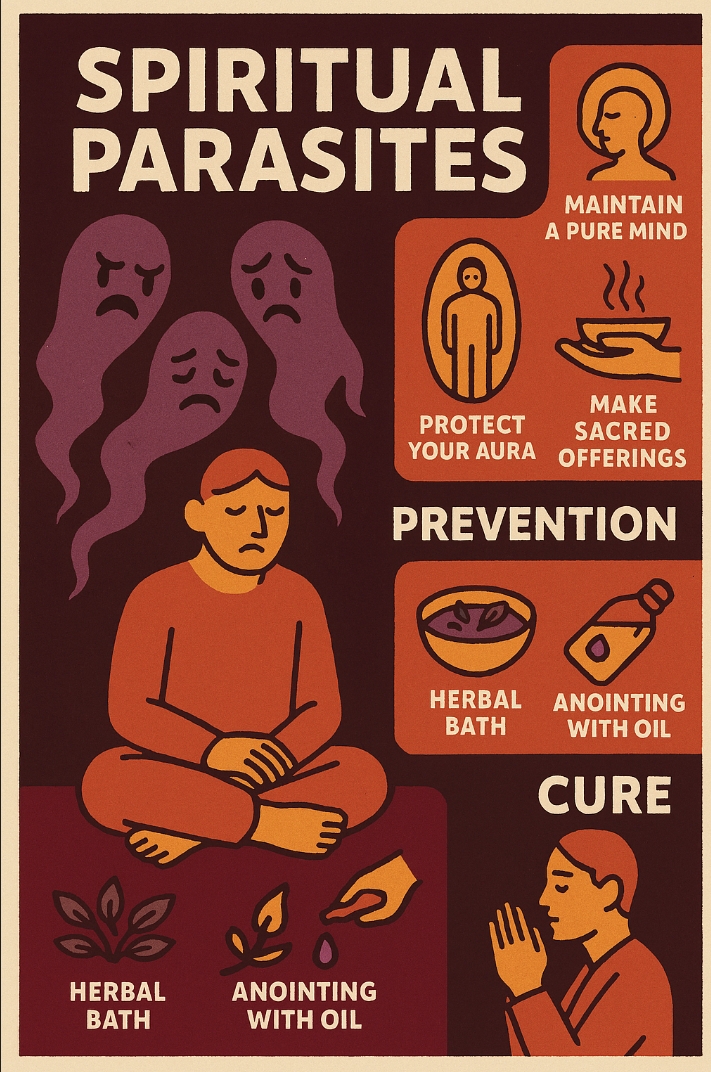
In Templong Anituhan, spiritual parasites are negative energies or entities that attach to a person’s aura, feeding on fear, trauma, or unresolved emotions. They may cause fatigue, emotional instability, or spiritual disconnection.
Spiritual cleansing includes:
– Tuob (herbal steam baths)
– Pagpapahid ng Lana (anointing with sacred oils)
– Pag-aalay (offerings to Diwata and Anito)
– Invocation of Diwatang Kilubansa and Sayum-ay for healing and harmony
Healing the Whole Being
True healing in Hilot Binabaylan practice restores harmony between body, mind, and spirit. Whether physical or spiritual, parasites must be addressed through both natural remedies and spiritual rituals to achieve Ginhawa—complete well-being.
Suggested Spiritual Cleansing Rituals
1. Tuob Ritual (Herbal Steam Bath)
– Purpose: Opens pores, releases toxins, and clears stagnant energies.
– Herbs: Bayabas (guava), Sambong, and Tanglad (lemongrass).
– Method: Boil herbs in water, place in a basin, and cover yourself with a blanket to inhale the steam. Chant invocations to Diwatang Kilubansa for elemental balance.
2. Pagpapahid ng Lana (Anointing with Sacred Oil)
– Purpose: Seals the aura and protects against energetic intrusion.
– Oil Base: Coconut oil infused with garlic, basil, or rosemary.
– Method: Apply to forehead, chest, and navel while invoking Diwatang Sayum-ay for peace and harmony.
3. Pag-aalay at Panalangin (Offering and Prayer)
– Purpose: Appeases spirits and invites divine healing.
– Offerings: Rice, flowers, water, and lighted candles.
– Invocation: Call upon Anito and Diwata, especially Diwatang Meketefu for refinement and Diwatang Tuhan for spiritual strength.
4. Pagpapalayas (Spirit Release Ritual)
– Purpose: Expels spiritual parasites or attachments.
– Tools: Bayabas leaves, salt, and a consecrated staff or ritual dagger.
– Method: Circle the person while chanting release prayers, then sweep the body with leaves and salt to absorb negative energies.
5. Dambana ng Ginhawa (Shrine of Comfort Ritual)
– Purpose: Reconnects the soul to its divine source.
– Setup: Create a sacred space with elemental symbols—earth, water, fire, air.
– Practice : Meditate, chant, and offer gratitude to Umli and the Diwata realms for restoration.
 Hilot Academy of Binabaylan