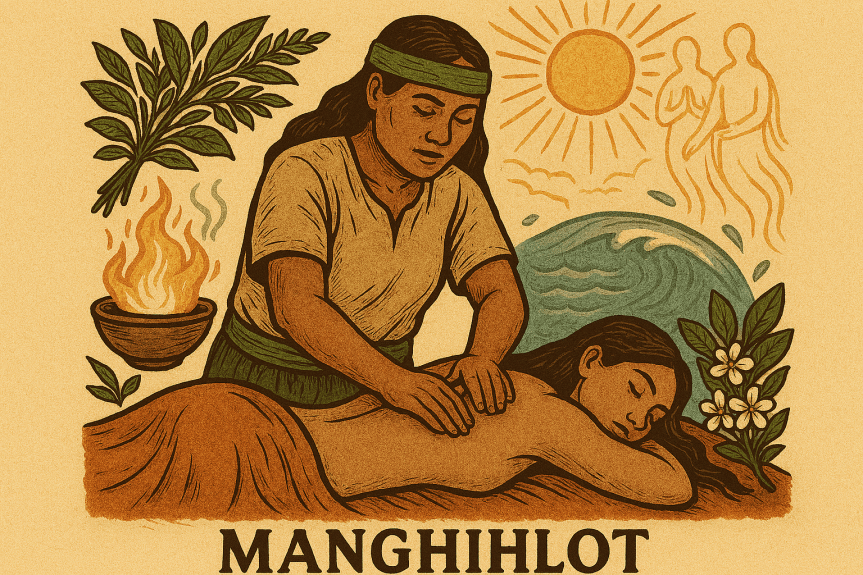
As a Manghihilot, my work goes beyond simple massage. I practice bodywork manipulation by applying herbal healing oils to areas where my patient feels discomfort. But my role does not end there. When a patient suspects that their illness is caused by unseen forces or spiritual harm, I perform Tawas—a traditional spiritual diagnostic method.

For us Filipinos, this has always been the way of the Manghihilot in rural communities. We believe that sickness can come from two sources: physical illness and spiritual imbalance. Our mission is to restore harmony and well-being. If physical manipulation does not bring relief, we call upon the forces of nature—herbs, heat, light, prayer, and water—to aid in healing.
Traditionally, these services are offered on a donation basis. There is no fixed income for a Manghihilot. This is why many of us in rural areas take on other jobs—farming, fishing, laundry work—to sustain our families. Hilot is often a calling, not a primary source of livelihood.
The Modern Challenge: Regulation and Certification
Today, the practice of Hilot is regulated and standardized by PITAHC and TESDA. To legally practice, one must obtain national certification and register as a Manghihilot. This requires schooling, which costs around ₱5,000, plus ₱1,500 for certification and another ₱1,500 for registration.
Despite these expenses, most certified Manghihilot end up working in spas on a commission basis, earning just enough to get by—often not enough to cover daily living costs. Many fall into financial debt, even after investing in their training.
The Need for Higher Education
To improve the livelihood of Manghihilot, we may need to introduce a formal four-year degree program. This would allow practitioners to climb the salary grade ladder and qualify for employment in community health centers, public hospitals, or private health facilities.
Graduates should be equipped with knowledge, skills, and abilities in Traditional Health Care, making them fit for roles such as Traditional Public Health Specialists. This is the future we envision for Hilot.
Our Legal Foundation
The practice of Hilot is protected by our laws:
- 1987 Philippine Constitution, Article XIV, Sections 17–22
- Republic Act 8371 (Indigenous Peoples’ Rights Act)
- Republic Act 8423 (Traditional and Alternative Medicine Act)
- Republic Act 100 (related provisions on health and indigenous practices)
These laws affirm that our work as Hilot Binabaylan practitioners is recognized and safeguarded. We should not fear performing our duties. Instead, we should embrace the bright future that lies ahead for Hilot.
Final Thoughts
Hilot is more than a profession—it is a heritage and a calling. As we move forward, let us continue to honor our traditions while adapting to modern standards. Together, we can ensure that Hilot remains a vital part of Filipino health and wellness.
 Hilot Academy of Binabaylan